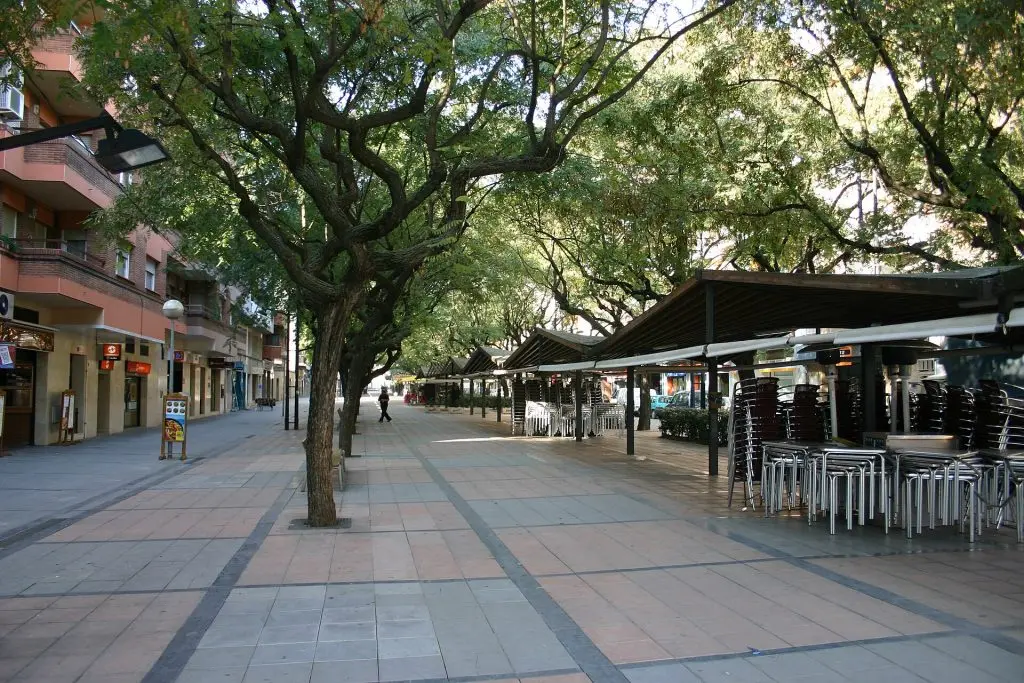
Viladecans
CataluñaClimate
What to see in Viladecans: the essentials
Viladecans has a heritage that surprises with its contrasts: from a 13th-century medieval fortification to unspoilt beaches with dune vegetation. Here is what you cannot miss.
Torre Roja (La Torre-roja)
The Torre Roja is a medieval fortification declared a Site of Cultural Interest in the Monument category on 8 November 1988. Its construction dates back to the 13th century and it features Gothic architecture. It was originally called Torre Burguesa because it controlled the Cuadra Burguesa, a territory under the jurisdiction of the Castell d’Eramprunyà. Its current name comes from the characteristic red colour of the rocks in the Eramprunyà area. It is surrounded by a public park, making it a perfect stop to combine history and a stroll.
Ermita de Santa Maria de Sales
The Ermita de Santa Maria de Sales is a thousand-year-old building documented since 1141, and one of Viladecans’ most beloved symbols. It is a church in Romanesque and late Gothic style, built between the 12th and 16th centuries, located next to the cemetery on the Pla de les Deodates. Inside, remarkable Gothic paintings are preserved and can be admired during guided tours, which last approximately 30 minutes and are organised between 11:00 and 13:00. The building is listed as a Cultural Asset of Local Interest.
Parc Agrari del Baix Llobregat (Viladecans sector)
This agricultural park is spread across 14 municipalities, from El Prat de Llobregat through Sant Boi, Viladecans and El Papiol. It is home to 324 active farms and is a living territory where dozens of farmers and livestock breeders work every day to offer fresh produce. Among all the crops that thrive here, the El Prat artichoke stands out, having become a symbol of the park’s agricultural identity. It is an ideal plan for those who want to see up close the origin of the products later served in the city’s tapas bars.
Ca n’Amat – Museu de Viladecans
This museum includes the beaches of La Pineda, La Murtra and Cal Francés, as well as the unspoilt Remolar beach with dune vegetation. It is a perfect gateway to understanding Viladecans’ relationship with its natural and coastal surroundings.
Torre del Baró (Torre del Moro / Torre d’en Viala)
A Gothic-style tower from the 13th and 19th centuries, declared a BCIN. It is part of the Can Modolell heritage complex and preserves architectural elements from the medieval period and later renovations.
Torre de Can Modolell
A Gothic-style tower built between the 13th and 14th centuries, also known as Torre Roja, Quadra Burguesa or Torre Burguesa, and declared a Cultural Asset of National Interest. It is very well preserved and visible from the outside, and a circuit can be walked around the building. It currently houses a municipal facility.
Estanque del Remolar and Filipines marsh
A protected area of the Llobregat Delta with water zones, reed beds, coastal sands and stone pine woodland, habitat to numerous water birds such as the golden plover. From the Reguera Salabrosa viewpoint you get a panoramic view of the whole, and horses graze freely in the marsh. It is an ideal plan for families and birdwatching enthusiasts.
Parc Forestal del Mas Ratés
A large municipal forest park with trails and areas of Mediterranean pine woodland, highly valued by locals for leisure and contact with nature. It is a natural space open 24 hours a day every day of the week, ideal for hiking.
Parc de la Marina
Parc de la Marina is the largest park in Viladecans and a genuine green lung in the urban core, on the border with the Parc Agrari (Agricultural Park). It is characterised by its raised areas, designed to bridge the Sant Climent stream, as well as its auditoriums, green spaces and two lakes. More than 600 trees dress the park, which also has meadow areas and planted slopes. It also includes a garden of aromatic plants, the Olorètum, and offers a children’s play area and three leisure and relaxation zones.
Platges de Viladecans (La Pineda, La Murtra, Cal Francés, El Remolar)
The coastal stone pine grove, planted in the early 20th century to stabilise the dunes, separates the beach from the rest of the territory. The beaches of La Pineda, La Murtra and Cal Francés differ somewhat from one another, but all allow visitors to enjoy this natural area; the first two have car parks and lockers, and the last is surrounded by pine groves. El Remolar beach is a virgin beach that allows visitors to enjoy nature through responsible use, with much of its surface covered by dune vegetation and temporary water pools.
Viladecans The Style Outlets
It brings together around 80 boutiques with fashion for women, men and children, homeware and wellbeing ideas, plus services such as Tax Free shopping and additional discounts for visitors. It has a dining area with cafés and restaurants offering Spanish tapas, Italian pizzas, American burgers, Japanese sushi and other varied options. Its opening hours are 09:00 to 21:00.
Espai Natural Remolar-Filipinas
Commercial or entertainment establishment.
En record a les víctimes i suport a les seves famílies, i també en reconeixement a les persones i col·lectius ciutadans que han lluitat per pal·liar els efectes i vèncer la pandèmia de la COVID-19
Commemorative monument.
🍂 Otoño
Si visitas Viladecans en otoño, el clima sigue siendo agradable, sobre todo en septiembre y octubre, que están entre los mejores meses para venir. Es el momento de vivir la Festa Major d'Estiu en septiembre y de recorrer la Torre del Baró o Ca n'Amat con temperaturas suaves. Lleva algo para la lluvia ocasional y disfruta de los atardeceres más tempranos en la playa.
What to do in Viladecans
Viladecans offers walks through agricultural and forest parks, birdwatching in the Llobregat Delta, outlet shopping, and major festivals with correfocs, castellers and gegants.
The local calendar revolves around two major events: the Festa Major d’Estiu (Summer Festival) in September, in honour of the Mare de Déu de Sales, with concerts, correfocs, castellers, gegants, havaneres, a pyromusical show and the peculiar Mamullada del mamut; and the Festa Major d’Hivern (Winter Festival) in January, around Sant Sebastià, with a charity festival, guided tours, family shows, music, gegants, Diables, the Nit del Mamut and a popular vermouth gathering.
If you like fresh produce, during the Feria de Sant Isidre a mercat de pagès (farmers’ market) is held with batches of local market-garden produce for 5€, in the food space ‘La Terrassa de la Fira’. It is a direct way to connect with the Parc Agrari del Baix Llobregat and its artichoke from El Prat.
For nature lovers, the Estanque del Remolar y marisma Filipines (Remolar pond and Filipines marsh) is a protected area ideal for watching water birds such as the golden plover, with viewpoints and horses grazing freely. And if you prefer walking among pines, the Parc Forestal del Mas Ratés is open 24 hours every day.
Viladecans in a day: express itinerary
This route lets you see the essentials of Viladecans in a single day, combining medieval heritage, nature and local gastronomy.
- 09:30 – Torre Roja: Start the day at this 13th-century Gothic fortification, declared a Monument in 1988. Stroll through the public park that surrounds it and photograph its distinctive red colour.
- 10:30 – Ermita de Santa Maria de Sales: Head to this ancient building, documented as far back as 1141. If you happen to visit during guided tour hours (11:00-13:00), you can admire the Gothic paintings inside.
- 12:00 – Parc Agrari del Baix Llobregat: Take a walk through the Viladecans section of this agricultural park, home to 324 active farms. Look out for the El Prat artichoke, the symbol of the park’s farming identity.
- 14:00 – Tapas lunch: Try tapas made with produce from the Agricultural Park, homemade croquettes or patatas bravas in the bars in the centre. If it’s time for the Feria de Sant Isidre, look for the ‘La Terrassa de la Fira’ space.
- 16:30 – Parc de la Marina: Explore Viladecans’ largest park, with its two lakes, amphitheatre, elevated walkways and the Olorètum aromatic plant garden.
- 18:00 – Platges de Viladecans: End the day at the beaches of La Pineda, La Murtra or Cal Francés, separated from the town by a coastal pine grove of stone pines planted in the early 20th century.
Where to eat in Viladecans: local gastronomy
Where to sleep in Viladecans
Centre / Casc Antic
Núcleo histórico de Viladecans, con calles estrechas y plazas como la Plaça de la Vila. Acoge el ayuntamiento, la iglesia de Sant Joan y comercio local tradicional. Ambiente tranquilo y auténtico.
Can Palmer
Barrio residencial situado al norte del centre, con una mezcla de viviendas unifamiliares y bloques. Cuenta con el Parc de Can Palmer, zona verde importante para el ocio local. Ambiente familiar y tranquilo.
La Montserratina
Barrio obrero de tradición industrial, con viviendas de los años 60-70. Se encuentra el Centre Cultural La Montserratina y el Parc de la Montserratina. Ambiente popular y reivindicativo.
Barri de Sant Climent
Zona residencial al sur del municipio, cerca del límite con Sant Climent de Llobregat. Predominan las casas unifamiliares con jardín. Ambiente tranquilo y bien comunicado por carretera.
Barri de la Roureda
Barrio residencial al este del centre, con bloques de pisos y zonas verdes. Dispone del Parc de la Roureda y el Centre Cívic La Roureda. Ambiente familiar y bien equipado.
Barri de Can Sellarès
Zona residencial periférica con viviendas unifamiliares y algunos equipamientos deportivos. Se encuentra el Camp Municipal de Futbol de Can Sellarès. Ambiente tranquilo y menos denso.
How to get to Viladecans
Viladecans is just 7 km by road from Barcelona-El Prat Airport (BCN), making it a convenient base for exploring the Barcelona metropolitan area. The nearest train station is Sant Boi, with no AVE service, and urban transport is covered by city buses.
| Medio | Duración | Precio aprox. | Frecuencia |
|---|---|---|---|
| Avión (BCN) + coche | 14 min en coche desde el aeropuerto | Variable según tarifa aérea + alquiler de coche | Vuelos nacionales e internacionales según aerolínea |
| Tren (estación Sant Boi) | Según origen, sin AVE | Según Renfe | Según Renfe |
| Bus urbano | Según ruta | Económico | Frecuente en horario diurno |
Getting around Viladecans
Urban transport in Viladecans revolves around the urban bus, which connects the main neighbourhoods and points of interest. To get between the centre, the Parc de la Marina, the beaches or the Parc Forestal del Mas Ratés, the bus is the most practical option if you don’t have a car.
Many of the natural attractions, such as the Estanque del Remolar (Remolar Pond) or the beaches, are easier to reach by car or bicycle. If you stay in the Centre or Casc Antic, you can get around the historic core and its tapas bars on foot without needing transport. For more practical information on opening times, tickets and events, see the official Viladecans tourism website.
Weather in Viladecans
Live webcam — Sant Boi de Llobregat*
Viladecans* The nearest webcam to Viladecans is in Sant Boi de Llobregat, 4.2 km away.
Source: Windy Webcams
Best time to visit Viladecans
The best time to visit Viladecans is from May to October, when average summer temperatures reach 23.8°C and let you make the most of the beaches, parks and tapas terraces. Annual rainfall is 569.8 mm, concentrated mainly outside the summer, which makes the warm months a safe bet for outdoor plans.
Winter, with an average temperature of 10.1°C, is colder and wetter, although January has the added draw of the Festa Major d’Hivern (Winter Festa Major) in honour of Sant Sebastià. If you’re after good weather and a cultural calendar, September is ideal: it coincides with the Festa Major d’Estiu (Summer Festa Major) and it’s still warm enough for the beach.
Day trips from Viladecans
Viladecans is an excellent base for exploring the Bajo Llobregat region and the Barcelona metropolitan area. Its proximity to the airport and the road network makes getaways easy.
The region’s cities offer a whole range of options: from the cultural and culinary bustle of Barcelona, just a few minutes away by public transport, to coastal and inland towns of the Bajo Llobregat with medieval heritage, local markets and nature trails. If fresh produce interests you, you can follow the Parc Agrari del Baix Llobregat route through municipalities such as El Prat, Sant Boi or El Papiol.
Fascinating facts about Viladecans you didn’t know
More than 50,000 years ago, mammoths and rhinoceroses roamed Viladecans. In 2008, fossilised bones of large animals such as horses, deer, rhinoceroses and mammoths were found at one of the largest prehistoric sites in Catalonia. A fact that completely changes the image of this metropolitan city.
The Torre del Baró hid a treasure of coins. This building, constructed in the 14th century on 10th-century foundations, kept a great secret discovered a few years ago: a treasure of coins that remained hidden for centuries. Today it is one of the municipality’s most intriguing monuments.
The name Torre Roja is no coincidence. Its current name comes from the characteristic red colour of the rocks in the Eramprunyà area, a geological detail that gives identity to Viladecans’ most emblematic medieval fortress.
Who is Viladecans for
Viladecans is a city for curious travellers who aren’t in a hurry. Families will find spacious parks such as the Parc de la Marina or the Parc Forestal del Mas Ratés, natural beaches and festa majors with activities for all audiences. History lovers will enjoy the Torre Roja, the Ermita de Santa Maria de Sales and the municipality’s medieval towers. Foodies have the tapas of the Parc Agrari and the mercat de pagès (farmers’ market) as a perfect excuse to visit the city. And birdwatchers and hikers have the Estanque del Remolar and the unspoilt beaches as a unique protected area in the Delta del Llobregat. It isn’t a city of grand monuments, but of authentic experiences and local rhythm.
💡 ¿Sabías que...?
- ● En Viladecans se encontraron en 2008 huesos fosilizados de grandes animales como caballos, ciervos, rinocerontes y mamuts de hace más de 50.000 años, en uno de los mayores yacimientos prehistóricos de Cataluña. (https://www.viladecans.cat/es/la-ciudad)
- ● La Torre del Baró es un edificio construido en el siglo XIV con fundamentos del siglo X, y escondía un tesoro de monedas descubierto hace unos años. (https://fundaciosigea.org/els-edificis-historics-de-viladecans/)
- ● La Torre del Baró es un edificio muy antiguo que escondía un gran secreto descubierto hace unos años: un tesoro de monedas. (https://www.viladecans.cat/es/torre-del-baro-2)
Frequently asked questions about Viladecans
How many days do I need to see Viladecans?
With a full day you can see the essentials: the Torre Roja, the Ermita de Santa Maria de Sales, the Parc Agrari and the Parc de la Marina. If you want to add beaches, birdwatching at the Estanque del Remolar and shopping at Viladecans The Style Outlets, 2-3 days are ideal. The city has 67,000 inhabitants and a relaxed pace, so you don’t need to rush.
What is the best time to visit Viladecans?
The best time is from May to October, with an average summer temperature of 23.8°C according to AEMET. September is especially recommended because it coincides with the Festa Major d’Estiu and it is still warm enough to go to the beaches. Winter registers an average of 10.1°C and annual precipitation of 569.8 mm, more concentrated outside the summer.
How do I get to Viladecans from Madrid?
The fastest option is to fly to Barcelona-El Prat Airport (BCN), located 7 km by road from Viladecans (about 14 minutes by car). From the airport you can rent a car or take public transport. The nearest train station is Sant Boi, with no AVE service, so if you travel by train from Madrid you will have to change in Barcelona.
What beaches are there in Viladecans?
Viladecans has four beaches: La Pineda, La Murtra and Cal Francés, which present certain differences among themselves but all allow you to enjoy the natural area (the first two have parking and lockers), and the virgin beach of Remolar, with dune vegetation and temporary water pools, ideal for responsible use of nature.
Where can I shop with discounts in Viladecans?
Viladecans The Style Outlets brings together around 80 boutiques with fashion, homeware and wellness, with services such as Tax Free shopping and additional discounts for visitors. It opens from 09:00 to 21:00 and has a dining area with Spanish tapas, Italian pizzas, American burgers and Japanese sushi.