Rubí
CataluñaClimate
What to see in Rubí: the essentials
The smell of fresh fruit at the Saturday market mingles with the pealing of bells from Sant Pere as the mid-morning sun lights up the stone of the castle. This is how Rubí wakes up, a city of 78,000 inhabitants just 28 kilometres from Barcelona that retains the pulse of a town with centuries of history. Among centuries-old masies, a chapel surrounded by woodland and an old town where the Vallès accent can still be heard, this corner of the Vallès Occidental is best explored slowly and savoured at leisure. If you’re looking for an authentic escape without the crowds, here’s a perfect plan.
Castell de Rubí
The Castell de Rubí is the visit that best sums up the city’s history, and it does so from its elevated position above the old town. This building, once a defensive fortress and later a manor house, is today home to the Museu Municipal Castell, conceived as an urban ecomuseum. Inside you’ll discover how the municipality has evolved over the centuries, from the earliest settlements to contemporary Rubí. Head up to the outdoor amphitheatre and the Arborètum del Castell, a botanical garden created in 2010 that preserves some 40 species of trees and shrubs across 179 specimens. The visit is unhurried, educational and perfect for orienting the rest of your tour of the city.
Església de Sant Pere de Rubí
The parish church of Sant Pere is documented as far back as the 11th century, although its current appearance largely reflects an 1884 extension designed by Antoni Casademunt. From its Romanesque origins it retains the west façade, the vestibule and the vault up to the transept, with a façade crowned by blind arches and a geminate window with a marble shaft and a 10th-century reused capital. It stands at Plaça del Doctor Guardiet, 4-5, and its bell tower is visible from much of the centre. Enter respectfully during the church’s opening hours, avoiding services, and take note of the side chapels framing the main nave.
Museu Etnogràfic Vallhonrat
To understand the agricultural and industrial Rubí of before the 20th century, the Museu Etnogràfic Vallhonrat is an essential stop. Its collections are organised into themed rooms such as the Sala Pons Cirac, the Sala de Armas, the Sala Arqueològica, the Sala de Mobiliario, the Sala del Celler and the Sala de inventos de los siglos XIX y XX. The route takes you through the domestic, agricultural, craft and industrial life of the area, with pieces that speak of vineyard work, traditional trades and Vallès society. It also has an auditorium, a library space and areas for cultural activities and temporary exhibitions.
Ermita de Sant Muç
On the outskirts of Rubí, surrounded by woodland and fields, the Ermita de Sant Muç is a short escape that changes the landscape entirely. Its existence is documented from the 14th century, although the current building dates mainly from the 18th century, with a single nave and a spacious atrium. For centuries it was an important centre of popular devotion, as attested by the numerous preserved ex-votos linked to favours attributed to the saint. If you happen to visit during the Aplec de Sant Muç or the Festa dels Xatos, a celebration dating back to the 19th century, you’ll see the chapel at its most lively and festive.
Escoles Ribas
The Escoles Ribas is a school with more than a hundred years of history, located at Carrer Lluís Ribas, 2-4. The building forms part of Catalonia’s historic educational architecture and is a notable element of the local educational heritage. Its façade and its roots in the neighbourhood make it an architectural and sentimental point of interest for the people of Rubí.
Antiga Estació de Rubí
The old railway station, located on Carrer Historiador Josep Serra, is a 1918 building in a popular style with a neoclassical composition, preserved as a testament to the arrival of the railway and the city’s industrial expansion.
Pont de Can Claverí
This 1753 bridge-aqueduct, located over the Can Ramoneda stream on the Camí de Sant Muç, is a civil engineering work in the traditional style that has been restored and forms part of the local hiking routes.
Can Mir
The historic Can Mir farmhouse, in the neighbourhood of the same name, preserves interiors that reveal great moments in the history of Rubí through free guided tours with prior registration.
Casetes de Can Fatjó
This group of traditional small houses and dwellings reflects the popular and rural architecture of the municipality, and is included among the standout elements of Rubí’s cultural heritage map.
Vapor Nou
The Vapor Nou is a former industrial complex from 1879 located at passeig de la Riera, 71-79, listed as a bé cultural d’interès local (local cultural heritage asset) and linked to Rubí’s manufacturing past.
Parc de Ca n’Oriol
This 3-hectare urban park, integrated into the surroundings of the old Ca n’Oriol farmhouse, combines landscaped areas, its own woodland, cultivated fields, a swimming pool, a multi-sports court, a children’s playground and picnic areas.
Ateneu Municipal de Rubí
The Ateneu Municipal, at Carrer de Cervantes, 126, is the city’s main performance venue, with a year-round programme of theatre, music and dance.
Can Rosés
Can Rosés is a Catalan farmhouse with a classic structure protected as a Bé Cultural d’Interès Local (local cultural heritage asset), originating in the 13th century with documented renovations in 1581 and the 17th century, located on the road to Terrassa, km 27.1.
Antic Castell de Sant Genís
The Antic Castell de Sant Genís is a historic palace linked to the medieval origins of Rubí.
Torre de les Martines
The Torre de les Martines is a monument included in Rubí’s local heritage.
A les víctimes de la rierada del 25 de setembre de 1962
This monument commemorates the victims of the tragic flood of 25 September 1962, an episode that left a deep mark on the city’s memory.
🍂 Otoño
Si visitas Rubí en otoño, el clima empieza a refrescar y los días se acortan, pero aún hay tardes soleadas muy agradables. Es una época tranquila para recorrer el Ateneu Municipal de Rubí o el Casino de Rubí sin prisas. Lleva una chaqueta impermeable por si cambia el tiempo y consulta los horarios, porque algunos equipamientos reducen su actividad.
What to do in Rubí
Rubí offers a lively festive calendar, long-established local markets and neighbourhoods with a character all their own for unhurried strolling. The Fiesta Mayor de Sant Pere in June fills the streets with popular culture, music and activities for all ages over several days around 29 June. If you travel in January, the Fiesta de los Tres Tombs in honour of San Antonio Abad includes the flag planting, the porter’s breakfast and the Tres Tombs parade, a tradition rooted in the world of muleteers and charcutiers. In February, Carnival takes over the city with parades, a comparsa competition, the mantones dance and a mask exhibition. And in July, Carrer de Sant Jaume is transformed with neighbourhood decorations, children’s activities, concerts and a popular butifarrada.
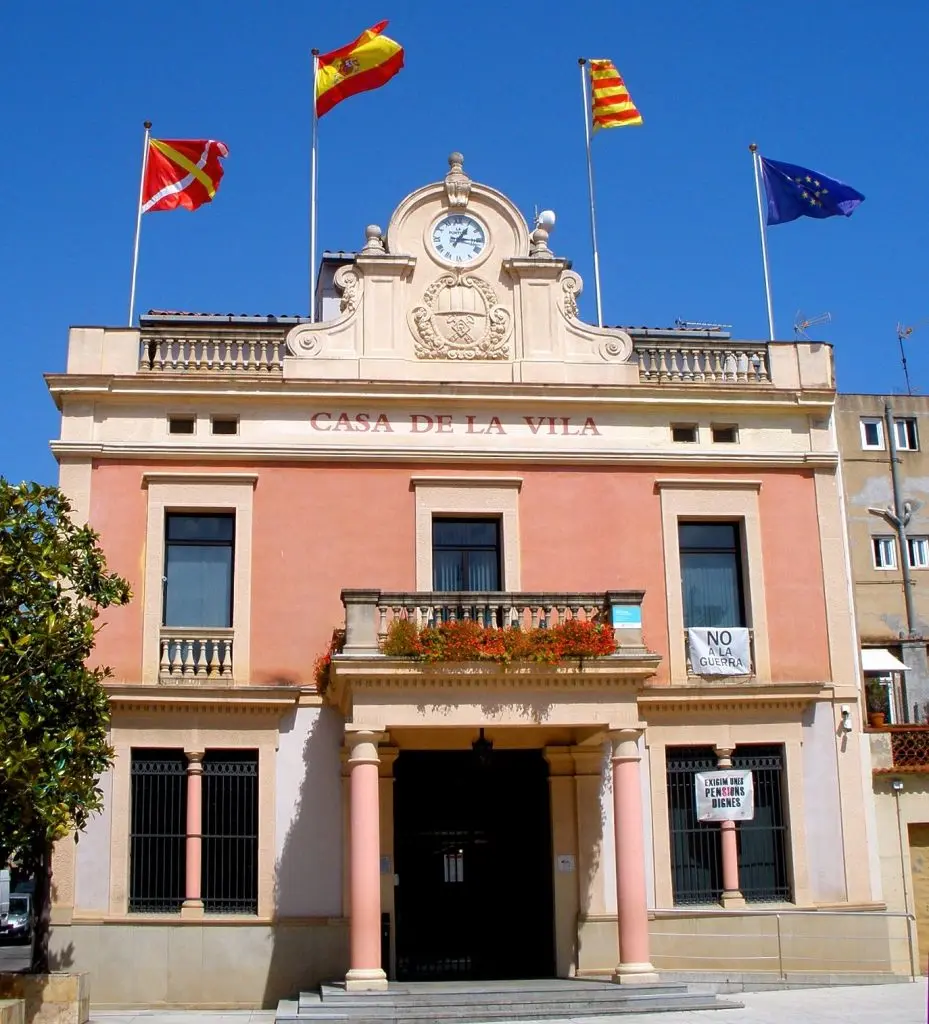
For everyday life, the Saturday market is a must: stalls selling seasonal fruit and vegetables, textiles, footwear and local products in a genuine local-market atmosphere. Afterwards, you can lose yourself in the neighbourhoods: the Centre is home to the church of Sant Pere, the Town Hall and the liveliest shopping streets; Les Torres retains an authentic, working-class feel with local shops; and Sant Muç or Can Fatjó offer green spaces and residential tranquillity to switch off.
Rubí in a day: express itinerary
- 09:30 – Castell de Rubí and Arborètum: Start at the city’s historic viewpoint. Visit the Museu Municipal Castell to understand how the town has evolved and stroll among the 40 species in the botanical garden.
- 11:00 – Església de Sant Pere: Head down to the centre and step into the parish church to see its Romanesque façade, the mullioned window and the bell tower. Take the chance to wander around Plaça del Doctor Guardiet.
- 12:00 – Museu Etnogràfic Vallhonrat: Spend an hour in the themed rooms of the ethnographic museum discovering the agricultural and industrial Rubí of before the 20th century.
- 13:30 – Lunch in the Centre: Look for a bar or restaurant in the old town and try a caneló de secret i pernil ibèric or a carpaccio de bacallà amb tomàquet confitat.
- 16:00 – Ermita de Sant Muç: Climb up to the chapel surrounded by woodland for a quiet afternoon. If you’re lucky enough to coincide with the Aplec, you’ll experience a centuries-old popular celebration.
- 18:30 – A stroll through Can Mir or Can Rosés: End the day with a guided tour of the Can Mir farmhouse or a walk around the outside of Can Rosés, two examples of Rubí’s rural heritage.
Where to eat in Rubí: local cuisine
Where to stay in Rubí
Centre
Casco antiguo y centro histórico de Rubí. Reúne la iglesia de Sant Pere, el Ayuntamiento, calles comerciales y plazas con ambiente de pueblo. Es la zona más animada y con más servicios.
Can Oriol
Barrio residencial situado al norte del centro, con parques y zonas verdes. Ambiente tranquilo y familiar, bien conectado con el centro.
Les Torres
Barrio de carácter popular y obrero, con bloques de viviendas y comercio local. Ambiente auténtico y vida de barrio, menos turístico.
Ca n'Oriol
Zona residencial con viviendas unifamiliares y adosados, próxima a la estación de tren. Tranquila y bien comunicada.
Sant Muç
Barrio periférico situado al sur, con urbanizaciones y zonas verdes. Ambiente residencial y tranquilo, ideal para descansar.
Can Fatjó
Barrio residencial al este del centro, con parques y equipamientos. Zona tranquila y familiar, con buena accesibilidad.
How to get to Rubí
Rubí is well connected to Barcelona and the rest of the Vallès Occidental. The nearest airport is Barcelona-El Prat (BCN), 28 km away by road, a journey of about 33 minutes by car. The Valldoreix train station serves the area, although it doesn’t have AVE. To get around the city, you have an urban bus service.
| Medio | Duración | Precio aprox. | Frecuencia |
|---|---|---|---|
| Coche desde Barcelona | 30-40 min | Variable (peajes/combustible) | Según tráfico |
| Coche desde Aeropuerto BCN | 33 min | Variable (peajes/combustible) | Según tráfico |
| Tren (estación Valldoreix) | Según origen | Según Renfe | Según Renfe |
| Bus urbano | Según recorrido | Económico | Según línea |
How to get around Rubí
Rubí’s centre is perfectly walkable, especially the old town, the castle and the shopping streets. For longer journeys, the urban bus connects the outlying neighbourhoods with the centre and the train station. If you want to visit the Ermita de Sant Muç, the Pont de Can Claverí or the surrounding farmhouses, the most practical option is to go by car or taxi, as they are scattered across the town’s natural and residential surroundings.
Weather in Rubí
Live webcam — Cerdanyola del Vallès*
Rubí* The nearest webcam to Rubí is in Cerdanyola del Vallès, 8.8 km away.
Source: Windy Webcams
Best time to visit Rubí
Day trips from Rubí
Rubí is an excellent base for exploring the Vallès Occidental and the surroundings of Barcelona. The Catalan capital is just 28 km away by road, with everything that entails: modernist architecture, museums, gastronomy and urban life. The nearby cities of the region offer half-day or full-day getaways, combining industrial heritage, natural parks and charming villages. If you’re driving, Barcelona-El Prat airport is about 33 minutes away, which also makes round-trip connections easy. For a closer excursion, the natural surroundings of Sant Muç and the hiking routes that pass by the Pont de Can Claverí are a perfect option without venturing too far.
Curiosities about Rubí you didn’t know
The name Rubí has nothing to do with the precious stone. It comes from the Latin Rivo Rubeo, meaning “red stream”, in reference to the clay carried by the stream as it passed through the town. A detail that has connected the landscape with the identity of the municipality for more than a thousand years.
The first written mention of Rubí dates back to the year 986. That document already mentions the Rivo Rubeo, the castle of Sant Genís and the church, which makes Rubí a place with more than a thousand years of documented history. Not every municipality in the area can boast such an ancient birth certificate.
Rubí had its first royal mayor in 1396. King Joan I appointed Pere de Xercavins as the first Royal Mayor of Rubí, an administrative milestone that shows the importance the town already had in the Late Middle Ages. A fact that surprises those who think Rubí is just a modern dormitory town.
Who is Rubí for
Rubí is ideal for travellers seeking an authentic Catalan experience without the crowds of Barcelona. Families will enjoy parks such as Ca n’Oriol, the markets and the popular festivals; couples will find quiet corners like Sant Muç or the Arborètum del Castell; and lovers of history and rural heritage will have plenty to explore with its masies, hermitages and museums. Foodies can follow the local tapas route and backpackers will appreciate the unpretentious atmosphere of the Les Torres neighbourhood. It isn’t a luxury or mass-tourism destination, and that’s precisely why it has a charm that is savoured slowly.
💡 ¿Sabías que...?
- ● El nombre de Rubí proviene del latín Rivo Rubeo, que significa 'riera roja', en referencia a la arcilla que arrastraba la riera. (https://es.wikipedia.org/wiki/Rub%C3%AD_(Barcelona))
- ● La primera referencia escrita a Rubí data del año 986 y menciona el Rivo Rubeo, el castillo de Sant Genís y la iglesia. (https://www.rubi.cat/es/rubi-ciudad/historia/patrimonio/medieval-y-epoca-moderna)
- ● En 1396, Joan I nombró a Pere de Xercavins el primer Alcalde Real de Rubí. (https://www.rubi.cat/es/rubi-ciudad/descubre-la-ciudad/ruta-de-las-masias)
Frequently asked questions about Rubí
How many days do I need to see Rubí?
With a full day you can see the essentials: the Castell de Rubí (Rubí Castle), the Església de Sant Pere (Church of St Peter), the Museu Etnogràfic Vallhonrat (Vallhonrat Ethnographic Museum) and the Ermita de Sant Muç (St Muç Chapel). If you want to add guided tours of farmhouses such as Can Mir, walks through the parks and a nearby excursion, two or three days are ideal.
What is the best time of year to visit Rubí?
The best time is from May to August, with an average summer temperature of 23.0°C (according to AEMET) and a very lively festive calendar. June stands out for the Fiesta Mayor de Sant Pere (St Peter’s Main Festival), and July for the street parties of San Jaume. In winter the average temperature drops to 8.0°C, but January and February have the Tres Tombs and Carnival.
How do I get to Rubí from Madrid?
The fastest option is to fly to Barcelona-El Prat Airport (BCN), located 28 km by road from Rubí, and from there take a rental car or public transport. The Valldoreix train station serves the area, although it does not have AVE. According to Renfe, connections from Madrid usually require a transfer in Barcelona.
Is Rubí a good destination for families?
Yes, especially for its urban parks such as the Parc de Ca n’Oriol, with a pool, multi-sports court, playground and picnic areas. Popular festivals such as the Fiesta Mayor de Sant Pere or Carnival offer activities for children, and the Can Oriol and Can Fatjó neighbourhoods are quiet and family-friendly.
What typical dishes should I try in Rubí?
Don’t miss the caneló de secret i pernil ibèric (caneloni with pork secret and Iberian ham), covered with ham béchamel, melted cheese and Parmesan crisp, or the carpaccio de bacallà amb tomàquet confitat (salt cod carpaccio with confit tomato) with taggiasca olive pâté and pistachio. Both are served as tapas on the local food route. For spoon dishes, look for the plats cuinats cassolans (home-style casseroles) such as pollo al ast (spit-roast chicken) in prepared-food shops.