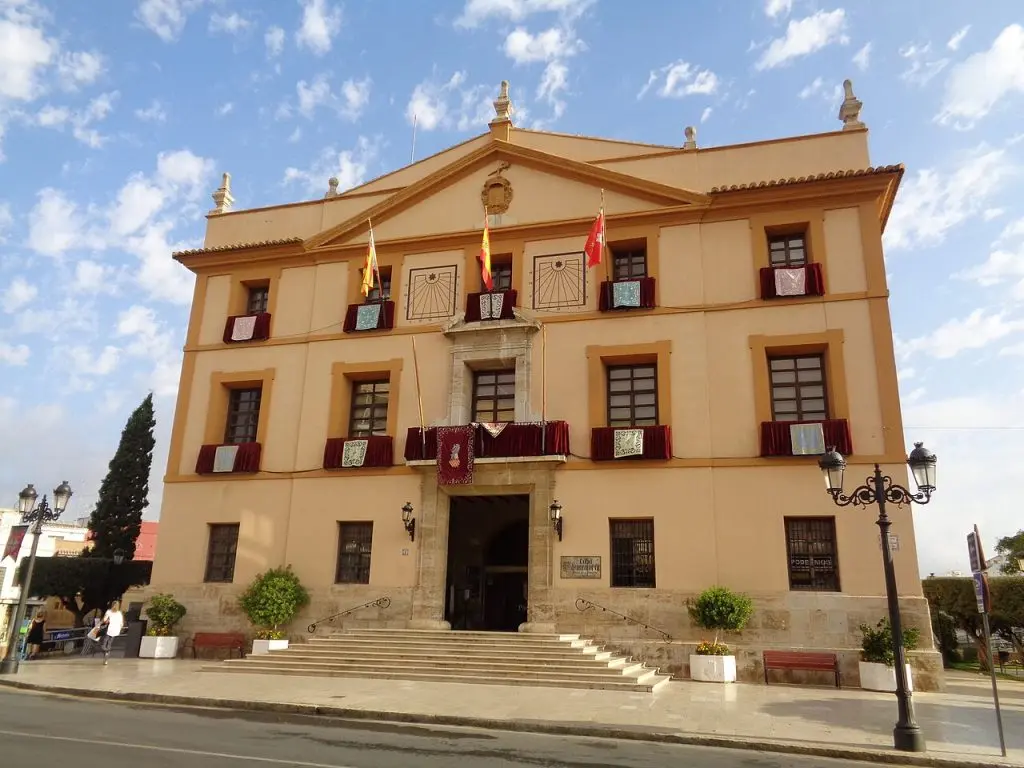
Paterna
Comunidad ValencianaClimate
What to see in Paterna: the essentials
Paterna is not the typical commuter town that many imagine. Here a medieval defensive tower, a museum that tells the story of Mediterranean ceramics and an elite sports complex that breathes football from every corner all coexist. Let’s explore it.
Torre de Paterna (Paterna Tower)
This defensive monument is the great emblem of the old town. Its silhouette defines the city’s skyline and is the perfect starting point for understanding why Paterna was a strategic enclave for centuries. Come at sunset, when the stone takes on a beautiful golden hue and the streets of the old town begin to empty. It’s a brief but essential visit, and from here you can connect with the rest of the old town at your leisure.
Museo de Cerámica (Ceramics Museum)
Paterna is known as the cradle of Mediterranean ceramics, and this museum proves it with pieces from its potteries dating from the 10th–11th to the 16th centuries. The most fascinating part is knowing that these ceramics travelled across Europe and are now found in museums and cities across half the continent. The visit gives you a completely different perspective on the city: it’s not just a place to pass through, it’s a production centre that marked an era. Set aside at least a quiet hour for it.
El Terrer
This monument is part of Paterna’s heritage landscape and deserves a stop on your route. Its presence recalls the town’s link to its surroundings and to the activities that have shaped its identity over time. You don’t need much time to see it, but it’s worth paying attention to the details and how it fits into today’s urban fabric.
Monumento a “El bigotes” (Monument to “El Bigotes”)
A tribute with plenty of local character that surprises anyone who stumbles upon it unawares. It’s one of those corners that brings a smile to your face and shows that Paterna doesn’t take itself too seriously. Look for the contrast between this light-hearted monument and the solemnity of the Tower: that mix sums up the spirit of the municipality very well.
Guitarras Raimundo
Paterna has a special connection with musical craftsmanship, and this monument celebrates it. It’s a nod to the guitar-making tradition that has brought fame to the town and that many travellers know nothing about. If you’re interested in music or craftsmanship, this is a must-stop on your walk.
Mirador El Pontó (El Pontó Viewpoint)
A viewpoint to catch your breath and contemplate the surroundings from another perspective.
Monumento Moros y Cristianos (Moors and Christians Monument)
A reference to the town’s most deeply rooted festival, present in public space all year round.
Estatua Amazon (Amazon Statue)
A sculptural piece that adds interest to the urban route.
Coves de la Torre (Tower Caves)
A monument linked to Paterna’s underground history, with centuries of memory in its walls.
🍂 Otoño
Si visitas Paterna en otoño, el calor empieza a remitir y las lluvias siguen siendo escasas, así que es una estación cómoda para caminar. Puedes acercarte al Monumento Moros y Cristianos o a la Estatua Amazon sin prisas. Lleva algo de abrigo ligero para el final del día y calzado cómodo.
What to do in Paterna
Paterna offers a range of experiences that runs from the controlled roar of gunpowder to the calm of a morning street market, by way of strolls through neighbourhoods with very distinct identities. If you happen to be there in August, it’s an easy call: the Cordà is an experience you won’t forget. Hundreds of shooters fire more than 70,000 rockets along Calle Mayor, and the spectacle has been declared an Intangible Cultural Heritage Asset and a Fiesta of National Tourist Interest. This isn’t distant fireworks: it’s total immersion in a tradition lived from the inside.
The Fiestas Mayores in honour of the Santísimo Cristo de la Fe and San Vicente Ferrer fill twelve days of August with a proclamation, Moors and Christians, religious events, free concerts and the Cordà as the centrepiece. If you’d prefer something quieter, the Tuesday market is a date with local life: around 140 stalls selling fresh produce, meat, fish and everyday goods set up from 8:00 to 13:00. It’s one of the busiest markets in the town and the perfect place to mix with the locals.
To move between atmospheres, alternate the old town with neighbourhoods such as Santa Rita or El Alborgí. Each has its own pulse: narrow streets and historic squares in the centre, mid-20th-century blocks and neighbourhood shops in Santa Rita, and a mix of traditional and modern housing in El Alborgí. There isn’t just one Paterna, there are several, and exploring them on foot is the best way to understand it.
Paterna in a day: express itinerary
- 9:00 – Old Town and Torre de Paterna: Start early to wander the narrow streets and squares of the historic centre without the crowds. The Tower is the logical first stop and places you in the town’s history.
- 10:30 – Ceramics Museum: Spend an hour discovering why Paterna is a cradle of Mediterranean ceramics. The pieces from the 10th–11th to the 16th centuries will change how you see the town.
- 12:00 – El Terrer and Monument to “El bigotes”: A stroll that combines serious heritage with a tribute full of local humour. A good moment for photos and for slowing the pace.
- 13:00 – Lunch in the old town: Try the ajo pringue or the arròs amb fesols i naps in the bars and restaurants of the area. If it’s Tuesday, stop by the market beforehand to soak up the atmosphere.
- 17:00 – Guitarras Raimundo and Coves de la Torre: Round off the afternoon with guitar-making tradition and Paterna’s underground history. If you still have energy, head up to the Mirador El Pontó to finish with the views.
Where to eat in Paterna: local cuisine
Where to stay in Paterna
Casco Antiguo
Núcleo histórico de Paterna, con calles estrechas, plazas y edificios de interés como la Iglesia de San Pedro y la Torre de Paterna. Ambiente tranquilo y auténtico, ideal para pasear y conocer la historia local.
La Canyada
Zona residencial y urbanización extensa, con viviendas unifamiliares y zonas verdes. Cuenta con servicios locales y es tranquila, aunque alejada del centro histórico. Ambiente familiar y residencial.
Terramelar
Barrio residencial moderno con bloques de pisos y zonas ajardinadas. Bien comunicado por metro y cercano a la Universidad de Valencia (Campus de Burjassot). Ambiente universitario y familiar.
Santa Rita
Barrio de carácter obrero y tradición industrial, con viviendas de mediados del siglo XX. Cuenta con comercio local y ambiente de barrio auténtico. Menos turístico pero con encanto local.
El Alborgí
Zona residencial cercana al casco antiguo, con una mezcla de viviendas tradicionales y modernas. Ambiente tranquilo y bien comunicado, con acceso a servicios y al metro.
Campamento
Barrio popular con viviendas de protección oficial y ambiente familiar. Cuenta con zonas verdes y servicios básicos. Es una zona tranquila y bien conectada por transporte público.
How to get to Paterna
Paterna is very well connected to Valencia and its metropolitan area. The main reference train station is Burjassot-Godella, with no AVE service, but sufficient for getting around on the Cercanías commuter rail. For urban transport, the city bus covers journeys within the municipality and connections to neighbouring towns.
| Medio | Duración | Precio aprox. | Frecuencia |
|---|---|---|---|
| Tren (cercanías, estación Burjassot-Godella) | Variable según origen | Económico | Consultar horarios |
| Bus urbano | Variable según ruta | Económico | Frecuente en días laborables |
Getting around Paterna
The city bus is the backbone of transport within Paterna. It connects the main neighbourhoods and brings you close to points of interest without depending on a car. For the old town, walking is best: distances are short and the narrow streets invite a stroll. If you’re staying in areas like La Canyada or Terramelar, the bus gets you to the centre without any hassle. Getting around Paterna is simple and you need little more than comfortable shoes and a little patience with the timetables.
Weather in Paterna
Live webcam — Valencia*
Paterna* The nearest webcam to Paterna is in Valencia, 6.6 km away.
Source: Windy Webcams
Best time to visit Paterna
Day trips from Paterna
Paterna is an excellent base for exploring the Valencia region. Its location in Valencia’s metropolitan area lets you hop to the capital in just a few minutes and return to calm by night. The region’s cities offer enormous variety: coast, inland countryside, history and gastronomy all within easy reach. Without needing to get up too early, you can plan half-day or full-day trips and come back to sleep in Paterna feeling you’ve made the most of your time.
Things you never knew about Paterna
A Paterna-born actor made history in Hollywood. Antonio Ferrandis, the unforgettable Chanquete from ‘Verano azul’, was born here on 28 February 1921. And he didn’t stop at television: he starred in ‘Volver a empezar’ (Start Over), the first Spanish film to win an Oscar for Best Foreign Language Film. Paterna can boast of having a neighbour with a statuette to his name.
Beneath the ground lies a city that once housed 20% of the population. The caves of Paterna, used as dwellings, peaked in 1945 with 509 occupied structures. They were not temporary shelters: they were homes where one in five people registered in the municipality lived. Today they are the living memory of an underground Paterna that few travellers expect to find.
Paterna’s ceramics travelled across Europe. From the 10th-11th to the 16th centuries, local potteries produced pieces that are now exhibited in museums and cities across half the continent. Paterna was no ordinary workshop: it was an exporting centre that shaped Mediterranean ceramics for centuries.
Between 1939 and 1956, Paterna was the setting for a deep wound. A total of 2,237 people were executed by firing squad under court-martial sentences, and most remain buried in mass graves in the municipal cemetery. It is a harsh fact that forms part of the city’s historical memory and is worth knowing in order to understand its present.
Who Paterna is for
Paterna is for travellers seeking a Valencian experience without the tourist noise of the capital. Families enjoy neighbourhoods such as La Canyada or Campamento, with green spaces and a quiet atmosphere. History lovers have a richly rewarding route through the Torre, the Ceramics Museum and the Coves de la Torre. Foodies will find more than enough reasons to stay for lunch in the ajo pringue (a garlicky local stew) and the catxap (a traditional rabbit dish). And if you’re into festivities, the August Cordà is a pyrotechnic spectacle that exists nowhere else. Paterna doesn’t ask permission: it pulls you into its rhythm and makes you feel like one of its own.
💡 ¿Sabías que...?
- ● Antonio Ferrandis, recordado por su papel de Chanquete en 'Verano azul', nació en Paterna el 28 de febrero de 1921. (https://es.wikipedia.org/wiki/Antonio_Ferrandis)
- ● Antonio Ferrandis protagonizó 'Volver a empezar', la primera película española en ganar un Óscar a la mejor película de habla no inglesa. (https://es.wikipedia.org/wiki/Antonio_Ferrandis)
- ● Entre 1939 y 1956, 2.237 personas fueron fusiladas en Paterna por sentencias de consejos de guerra, y la mayoría siguen enterradas en fosas comunes del cementerio municipal. (https://doi.org/10.21001/rap.2021.31.13)
- ● Paterna es conocida como cuna de la cerámica mediterránea, con piezas de sus alfares desde los siglos X-XI hasta el XVI encontradas en museos y ciudades de toda Europa. (https://www.paterna.es/images/pdf/es/municipio/oficina-turismo/PATERNA-CORTO.pdf)
- ● Las cuevas de Paterna, usadas como vivienda, alcanzaron su máximo en 1945 con 509 construcciones ocupadas, que albergaban al 20% de la población censada. (https://www.lrmcidii.org/casas-cueva-paterna/)
Frequently asked questions about Paterna
How many days do I need to see Paterna?
With a full day you can see the essentials: Torre de Paterna (Paterna Tower), Museo de Cerámica (Ceramics Museum), El Terrer, Guitarras Raimundo and the Coves de la Torre (Torre Caves). If you want to take it easy, mingle with the Tuesday market and explore the neighbourhoods at a leisurely pace, two days are ideal. To coincide with the Fiestas Mayores (Major Festivals) and the Cordà, plan at least two or three days in August.
What is the best time of year to visit Paterna?
From April to October, according to climate data. The average temperature in summer is 25.1°C and in winter 11.2°C, with annual rainfall of 420.3 mm. August is the month of the festivals and the Cordà, but if you prefer to avoid the crowds, April, May, September and October combine good weather with a local atmosphere.
How do I get to Paterna from Madrid?
The most direct way is to reach Valencia by high-speed train and from there connect to Paterna via Cercanías to Burjassot-Godella station or by city bus. There is no direct AVE service to Paterna, but the Cercanías network and the bus cover the final stretch well.
What typical dishes should I try in Paterna?
Don’t leave without trying the ajo pringue, a thick soup of remilled bread with paprika and spices, typical of the old town. The arròs amb fesols i naps is a hearty rice stew with beans and turnips that you’ll find near the Plaza del Pueblo (Town Square). For dessert, the catxap, a local sweet sold in the centre’s pastry shops and horchaterías.
What is the Cordà de Paterna?
It is a pyrotechnic spectacle held in August on Calle Mayor, where hundreds of shooters fire more than 70,000 rockets. It has been declared an Intangible Asset of Cultural Interest and a Festival of National Tourist Interest. It is the central event of the Fiestas Mayores in honour of the Santísimo Cristo de la Fe and San Vicente Ferrer.