Pozuelo de Alarcón
Comunidad de MadridClimate
What to see in Pozuelo de Alarcón: the essentials
Church of Santa María de Caná
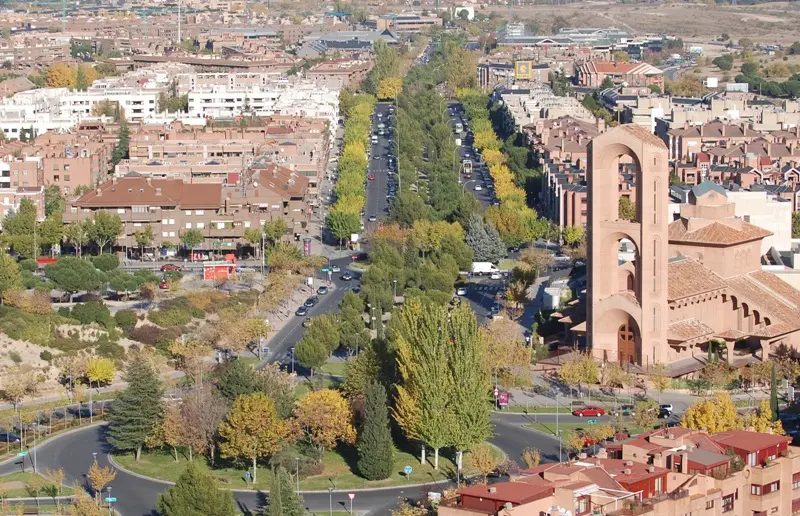
The Church of Santa María de Caná is one of the modern architectural gems of Pozuelo de Alarcón, designed by the architect Fernando Higueras and built between 1995 and 1999. Its spacious nave and contemporary design clearly set it apart from other churches in the Community of Madrid, making it a religious landmark for locals. The building was inaugurated in 1999 and belongs ecclesiastically to Vicariate VII of the Diocese of Madrid. If you are interested in 20th-century religious architecture, this Catholic temple is well worth a visit for its aesthetic singularity and its interior luminosity.
Fuente de la Salud
The Fuente de la Salud (Fountain of Health) is a monument that forms part of the local heritage of Pozuelo de Alarcón, linked to the tradition of wells and springs that gave the municipality its name. It is a point of interest for those who wish to connect with the everyday history of the town.
Monte del Pilar
Monte del Pilar forms part of a forested area of some 800 hectares that extends across three municipalities: Madrid, Majadahonda and Pozuelo de Alarcón, with 450 hectares falling within the latter. It is a relic of the former Royal Hunting Ground of Madrid, an area linked to the court of Philip II. This urban forest of holm oaks and pines is one of the green lungs of the western metropolitan area, with signposted trails for walking, birdwatching and enjoying nature. It has maps, routes of interest and a dog area with an agility course, as well as maintenance and surveillance services.
Somosaguas palaeontological site
The Somosaguas site contains fossil remains of mid-Miocene mammals and is linked to the Somosaguas Campus of the Complutense University. It has international scientific relevance thanks to the vertebrate fossils found in its excavations. It is an educational and palaeontological research resource that surprises all who visit.
Nuevo Centro Cultural
The Nuevo Centro Cultural (New Cultural Centre) is a museum space in Pozuelo de Alarcón that forms part of the municipality’s cultural offering.
Other places of interest
Cruz de la Atalaya: The oldest monument in the municipality, located at the start of Calle Camino Viejo, in the Parque Forestal Cruz de la Atalaya; it marked roughly the halfway point on the road between Pozuelo and Húmera when they were separate municipalities, and it is linked to the pilgrimage to the Húmera meadow.
Plaza Mayor de Pozuelo: A neighbourhood meeting point and the setting for local events and celebrations, with the traditional layout of a Castilian square, an open pedestrian space that shapes the administrative and social life of the municipality.
Parque de las Cárcavas: A forest park characterised by its gullies (cárcavas) formed by erosion of the land, one of the most unusual landscapes in the centre of the peninsula, with walking routes, panoramic views, ornamental fountains and lagoons.
Parque Forestal Adolfo Suárez: A large peripheral park of 150 hectares located in the expansion area of the Casa de Campo, reforested with 25,000 trees and 95,000 shrubs, with two walking trails: the Senda de la Antequina (2.5 km) and the Senda del Roble (2 km).
Parque de la Ciudad de la Imagen: A park located in the surroundings of the Ciudad de la Imagen, a business and audiovisual district, combining landscaped green areas with promenades in a modern development area.
Conjunto Hidráulico de La Poza: A historic hydraulic system essential to the municipality’s water supply for centuries, representing the lesser-known industrial and water heritage of Pozuelo.
Sala de Exposiciones: The town’s exhibition space.
Placa: A local commemorative monument.
Eucalipto Rojo: A unique natural monument of the municipality.
Tipi de Madera: A unique monument of Pozuelo de Alarcón.
La Finca Grand Cafe: A contemporary monument of the town.
En memoria a Lorena Enebral: A commemorative monument.
🍂 Otoño
Si visitas Pozuelo de Alarcón en otoño, el clima se vuelve más fresco y las lluvias son escasas, así que podrás seguir disfrutando de zonas verdes como el Parque Forestal Adolfo Suárez. En septiembre se celebran las Fiestas de Nuestra Señora de la Consolación, un buen momento para conocer el ambiente local. Lleva algo de abrigo ligero para las horas finales del día.
What to do in Pozuelo de Alarcón
Pozuelo de Alarcón offers activities centred on its patron saint festivities, traditional markets, forest parks and neighbourhoods with a character all their own. In September, the Fiestas de Nuestra Señora de la Consolación fill the streets with the opening speech, parades, concerts, bullfighting events, children’s and sports activities, a fair and the procession in honour of the patron saint. On Saturday mornings, the Mercadillo Municipal brings together more than 100 stalls selling vegetables, greens, nuts and gourmet products, perfect for a morning stroll with a local flavour. For lovers of the outdoors, forest parks such as the Monte del Pilar and the Parque Forestal Adolfo Suárez offer signposted trails, birdwatching and dog agility courses. The Casco Antiguo invites you to stroll unhurried through narrow streets and traditional buildings, while the Avenida de Europa is home to shopping centres, restaurants and the Auditorio de Pozuelo for those looking for a more urban plan.
Pozuelo de Alarcón in one day: express itinerary
- 09:00 – Plaza Mayor and Old Town: Start the day in the historic heart of Pozuelo, strolling through its narrow streets and discovering the Church of Nuestra Señora de la Asunción (Church of Our Lady of the Assumption) and the Town Hall in a quiet, residential atmosphere.
- 10:30 – Church of Santa María de Caná: Visit this modern-architecture temple designed by Fernando Higueras and inaugurated in 1999; its spacious nave and contemporary design surprise every visitor.
- 12:00 – Monte del Pilar: Follow one of its signposted trails among holm oaks and pines; this 450-hectare urban forest within the municipality of Pozuelo is ideal for a morning walk and birdwatching.
- 14:00 – Lunch in the town centre: Try callos a la madrileña (Madrid-style tripe) or a traditional stew in one of the centre’s taverns or traditional-cuisine restaurants.
- 16:30 – Somosaguas palaeontological site: Head to this Middle Miocene site linked to the Complutense University, with vertebrate fossils of international scientific importance.
- 18:00 – Parque de las Cárcavas: End the afternoon walking among eroded gullies, one of the most unusual landscapes in the centre of the peninsula, with panoramic views and lagoons.
Where to eat in Pozuelo de Alarcón: local gastronomy
Where to stay in Pozuelo de Alarcón
Casco Antiguo
Núcleo histórico de Pozuelo de Alarcón, con calles estrechas y edificios tradicionales. Alberga la Plaza Mayor, la Iglesia de Nuestra Señora de la Asunción y el Ayuntamiento. Ambiente tranquilo y residencial, con algunos comercios locales y restaurantes.
Somosaguas
Zona residencial de alto standing, conocida por sus urbanizaciones con chalets y amplias zonas verdes. Acoge el campus de la Universidad Complutense de Madrid (Somosaguas) y el Palacio de Somosaguas. Ambiente exclusivo y tranquilo, con pocos servicios turísticos.
La Finca
Urbanización cerrada de lujo, una de las más exclusivas de la Comunidad de Madrid. Residencia de futbolistas y empresarios, con seguridad privada y grandes parcelas. No es una zona turística, pero impresiona por su opulencia y entorno ajardinado.
Avenida de Europa
Zona moderna y comercial, articulada en torno a la Avenida de Europa. Concentra centros comerciales, oficinas, restaurantes y el Auditorio de Pozuelo. Ambiente urbano y dinámico, con buena accesibilidad y vida durante el día.
Estación
Área alrededor de la estación de cercanías de Pozuelo, con edificios de viviendas y algunos comercios. Es una zona de paso, bien conectada con Madrid, pero con escaso atractivo turístico propio.
Pozuelo Norte
Zona residencial en expansión al norte del municipio, con urbanizaciones modernas y áreas verdes. Incluye el Parque Forestal de Pozuelo y el Hospital Universitario Puerta de Hierro. Ambiente familiar y tranquilo, con servicios básicos.
How to get to Pozuelo de Alarcón
Pozuelo de Alarcón is well connected to Madrid by commuter train and urban bus. The Bélgica train station serves the municipality, although it does not have AVE. To get there from the capital, the commuter train is the fastest and most comfortable option.
| Medio | Duración | Precio aprox. | Frecuencia |
|---|---|---|---|
| Tren de cercanías (estación de Bélgica) | 20-30 minutos desde Madrid | 2-4 € por trayecto | Alta, con salidas frecuentes a lo largo del día |
| Autobús urbano | 30-45 minutos desde Madrid | 1-2 € por trayecto | Media, con varias líneas disponibles |
| Coche particular | 20-35 minutos desde Madrid | Variable según combustible y peajes | Según tráfico |
The Cuatro Vientos aerodrome, in its civilian area, is the nearest aeronautical facility, although its main use is not commercial passenger transport.
Getting around Pozuelo de Alarcón
Pozuelo de Alarcón has an urban bus network connecting the municipality’s main neighbourhoods and points of interest. To travel between the Old Town, Avenida de Europa, Somosaguas or Pozuelo Norte, the urban bus is the most practical option if you don’t have your own vehicle. Many of the forest parks and green areas, such as Monte del Pilar or Parque de las Cárcavas, are accessible on foot or by bicycle from the nearby residential areas. If you stay in the Old Town, you can walk to the Plaza Mayor, the Church of Santa María de Caná and the local shops without needing transport.
Weather in Pozuelo de Alarcón
Live webcam — Madrid*
Pozuelo de Alarcón* The nearest webcam to Pozuelo de Alarcón is in Madrid, 3.6 km away.
Source: Windy Webcams
Best time to visit Pozuelo de Alarcón
Day trips from Pozuelo de Alarcón
Pozuelo de Alarcón is an excellent starting point for exploring other cities in the Madrid region. Its location in the metropolitan area, to the west and slightly north of the capital, provides easy access to Madrid by commuter train for a full day of culture. You can also head to neighbouring towns such as Majadahonda, with which it shares the Monte del Pilar, or explore the natural spaces of the western metropolitan area. The commuter rail and urban bus network makes for quick trips to the capital and other nearby towns, turning Pozuelo into a quiet, green base for sightseeing around the Community of Madrid without giving up the proximity of the big city.
Curiosities about Pozuelo de Alarcón you didn’t know
The name Pozuelo first appears in 1208. It was King Alfonso VIII who established the boundaries of Segovia with Toledo, Madrid and Alamín, leaving the first written record of the place name in history. Eight centuries later, that name lives on in one of the most prosperous municipalities in Spain.
Pozuelo de Alarcón is currently the municipality with the highest per capita income in Spain. This fact surprises many visitors who associate wealth with major capitals, but it is here, in this town in the western metropolitan area, that the country’s highest income per inhabitant is concentrated.
It owes its surname to Rodrigo de Alarcón, according to legend. Tradition has it that during a hunt, Rodrigo de Alarcón became separated from his retinue while searching for water and found a well where a young girl offered him a bowl to quench his thirst. From that encounter would come the surname that today completes the name of the municipality.
In 1923, remains of the first prehistoric settlers were found. José Pérez de Barracadas found a flint axe head, flakes and scrapers at the Cañada de la Carrera, evidence of human presence in the area since ancient times, long before the Reconquista.
The Cruz de la Atalaya is the oldest monument in the municipality. It marked roughly the halfway point of the road between Pozuelo and Húmera when both were independent municipalities, and it remains linked to the local tradition of the pilgrimage to the Húmera meadow.
Locals still walk to Húmera on the day of San Gregorio Ostiense. This centuries-old tradition consists of walking to the Húmera meadow for an open-air picnic, keeping alive a custom that connects the people of Pozuelo with their history and their land.
Don Francisco de Húmera was born in 1536 in Pozuelo de Aravaca. He was chaplain to Don Juan de Austria and to the Duke Alexander of Farnese, and he founded a wheat granary by mortgaging his properties, leaving an indelible mark on local history.
Who Pozuelo de Alarcón is for
Pozuelo de Alarcón is an ideal destination for families and travellers seeking peace and quiet, green spaces and an exclusive residential atmosphere without straying far from Madrid. Nature lovers will enjoy its forest parks, trails and natural areas such as Monte del Pilar (El Pilar Forest) and Parque de las Cárcavas (Las Cárcavas Park). Those interested in history and heritage will find plenty to enjoy in the Casco Antiguo (Old Town), the Cruz de la Atalaya and the Somosaguas palaeontological site. Foodies can sample traditional Castilian cuisine in the taverns and roast houses of the town centre. It is not a destination for budget backpackers, since its upscale residential character is reflected in accommodation and restaurant prices, but it is perfect for those who value calm, safety and proximity to the capital.
Frequently asked questions about Pozuelo de Alarcón
How many days do I need to see Pozuelo de Alarcón?
One full day is enough to cover the main attractions: the Plaza Mayor and the Casco Antiguo in the morning, the Iglesia de Santa María de Caná (Church of Santa María de Caná), Monte del Pilar for a walk, and the Somosaguas site or Parque de las Cárcavas in the afternoon. If you want to enjoy the forest parks at a leisurely pace, shop on Avenida de Europa or coincide with the September patron saint festivities, 2 days will allow for a more relaxed pace.
What is the best time of year to visit Pozuelo de Alarcón?
According to climate data, the best time is from May to September, with an average summer temperature of 24.8°C and annual rainfall of only 412.3 mm. September is especially recommended thanks to the Fiestas de Nuestra Señora de la Consolación (Festivities of Our Lady of Consolation), with a proclamation, parades, concerts and a procession. Winter, with an average of 7.1°C, is colder but still suitable for urban and culinary plans.
How do I get to Pozuelo de Alarcón from Madrid?
The fastest way is the Cercanías commuter train to Bélgica station, taking approximately 20-30 minutes with a high frequency of departures. You can also take the urban bus, which takes between 30 and 45 minutes. If you drive, the journey from Madrid takes between 20 and 35 minutes depending on traffic.
Is Pozuelo de Alarcón a good destination for families?
Yes, especially for its extensive green spaces, forest parks with signposted trails, dog areas with an Agility course and a quiet residential atmosphere. Neighbourhoods such as Somosaguas or Pozuelo Norte offer modern housing developments, green spaces and basic services that are ideal for family stays.
Which typical dishes should I try in Pozuelo de Alarcón?
Don’t miss the callos a la madrileña (Madrid-style tripe), a stew of beef tripe with chorizo, morcilla and spices cooked slowly over a low heat. Also essential are game dishes (venison, wild boar or partridge), the grilled meats at local roast houses and old-fashioned spoon dishes such as potajes (stews), cocidos (chickpea stews) and soups. For fresh produce, visit the Mercado de Pozuelo (Pozuelo Market) or the Saturday Mercadillo Municipal (Municipal Market) with more than 100 stalls.