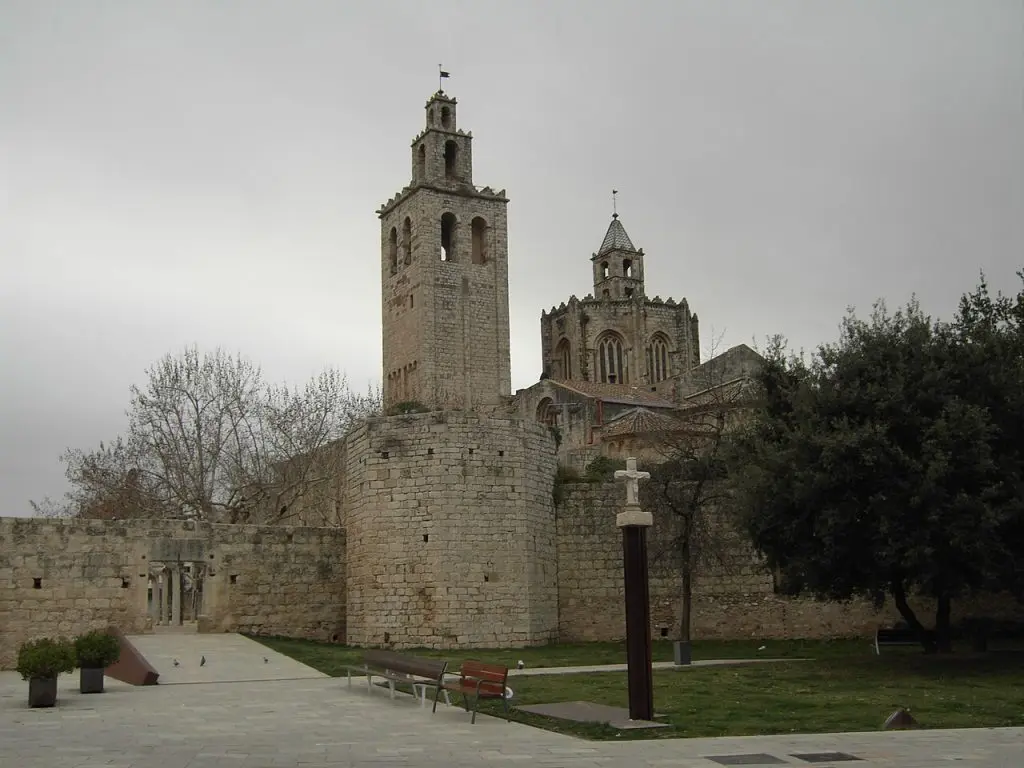
Sant Cugat del Vallès
CataluñaClimate
What to see in Sant Cugat del Vallès: the essentials
Monestir de Sant Cugat
The heart of the city beats inside this monumental complex that is, without exaggeration, one of the benchmarks of Catalan Romanesque and Gothic architecture. The visit takes you through the church, the cloister —with its historiated capitals that seem to tell the story of monastic life in stone— and the rooms of the former Benedictine monastery. The museum housed in its dependencies explains the architecture and the lives of the monks through archaeological pieces and works of art, and admission is free. It opens Tuesday to Saturday from 10:30 to 13:30 and from 16:00 to 19:00 (until 20:00 in summer), and on Sundays only in the morning. On the first Sunday of each month there is a free guided tour of the permanent exhibition, a perfect opportunity to understand what you are seeing. It is located at Plaça de l’Om, 1, and the church also opens for worship from 10:00 to 12:00 and from 18:00 to 20:00.
Parc Natural de Collserola
This natural park is the green lung that embraces Sant Cugat and hides 25 walking routes of different levels, from gentle strolls to demanding hikes. The itineraries lead you to discover springs, valleys, paths and charming masies (traditional Catalan farmhouses), and are available on an interactive map, with downloadable tracks and 3D visualisation. Access is free and there are tourist information points such as the office at Plaça d’Octavià, 10 (telephone 936 759 952). Wear suitable footwear, because the signposted trails, hermitages and viewpoints deserve a comfortable walk.
Torre Negra
The Torre Negra is a medieval building located in the heart of the Parc Natural de Collserola, in a privileged setting for hiking, cycling and horse riding. The complex is part of the Parc Rural de la Torre Negra and allows you to discover the cultural and natural heritage of the area, including the Pi d’en Xandri —one of the symbols of the city, standing more than 23 metres tall—. It is one of the most singular heritage elements in the municipality and a perfect excuse to combine nature and history.
Sant Adjutori
A singular monument within the municipal boundaries of Sant Cugat del Vallès.
Pont de Can Vernet
A historic monument that forms part of the city’s architectural heritage.
Parròquia de Sant Pere d’Octavià
The parish church of the historic centre is integrated into the monumental complex of the Monestir de Sant Cugat and preserves elements that reflect the transition from Romanesque to Gothic. Inside you can admire altarpieces and chapels of interest, as well as the monastery’s Romanesque cloister with its historiated capitals. The complex also includes the chapel of Santa Escolàstica, the subject of heritage conservation work.
Centre Grau Garriga d’Art Tèxtil
This contemporary textile art centre is housed in Can Quitèria, at Plaça de Can Quitèria, 1. It opens in the mornings on Wednesdays, Saturdays, Sundays and public holidays from 10:00 to 14:00, and in the afternoons from Tuesday to Saturday from 17:00 to 20:00; on Mondays it remains closed.
Recinte emmurallat del Monestir
Remains of the medieval wall that protected the monastic enclosure and the core of Sant Cugat, visible in the old town, with defence towers and gateways integrated into today’s urban fabric.
Plaça d’Octavià
It is the usual starting point for sightseeing visits and the setting for markets and civic events, such as the market held on Thursday mornings. From the FGC Sant Cugat station, the square can be reached on foot in about 10 minutes.
Jardins del Monestir
The garden area is articulated around the plaça d’Octavià and extends to the gardens located behind the Monastery, next to the walls and the passeig Paga-li Joan, integrating the heritage surroundings of the historic centre. They form part of the green space route that links the monastic complex with the Parc Arborètum, the passeig Antoni Gaudí, the parc de la Pollancreda and the parc de Cerdà.
Mercantic
Mercantic Vintage Market is a permanent market for antiques, vintage objects, collector’s pieces, crafts and décor, conceived as a vintage village that doubles as a leisure and shopping space. Every Sunday the Mercado de Almonedistas (auctioneers’ market) is held, and on the first Sunday of the month comes La Descarregada, a lively street market with around 150 stalls selling books, records, second-hand clothes and vintage curiosities. It is considered one of the most original markets in Spain.
Teatre-Auditori de Sant Cugat
A cultural venue inaugurated in 1993 and currently known as Teatre-Auditori Emma Vilarasau, with a stable programme of theatre, dance, music, opera, circus and family shows. It is the city’s main performing arts space and its official website is tasantcugat.cat.
Sala Rusiñol
Museum that forms part of the cultural offering of Sant Cugat del Vallès.
Can Vasconcel
Monument of the local architectural heritage.
Can Borrell
Monument located within the municipal area.
Centre Sant Medir
Monument linked to the city’s religious and festive tradition.
Rectoria de Sant Cebrià
Monument of Sant Cugat’s historical heritage.
🍂 Otoño
Si visitas Sant Cugat del Vallès en otoño, el clima se vuelve más fresco y húmedo, con días cortos que invitan a planes tranquilos. Es una buena temporada para recorrer el Centre Sant Medir o acercarte a la Torre Negra sin las aglomeraciones del verano. Lleva calzado cómodo e impermeable, porque las lluvias pueden aparecer sin aviso.
What to do in Sant Cugat del Vallès
Sant Cugat offers vintage markets with 150 street stalls, major festivals with correfocs and sardanas, hiking routes through Collserola and a stable cultural programme at its Teatre-Auditori. The city combines medieval heritage with neighbourhood life, and every season brings an excuse to get out and about.
If you happen to be there for the Fiesta Mayor in June, you’ll see the ‘Paga-li, Joan’ dance and fireworks filling the sky above the monastery. In March, the Aplec de Sant Medir draws crowds to the Collserola hermitage with giants, castellers and sardanas. And in February, Carnival rolls out more than 20 activities, including the Desfile de Comparses parade and the figure of the Gall de Sant Cugat.
For a quieter plan, Mercantic is perfect for spending a Sunday morning among antiques and live music. On Thursday mornings, Plaça d’Octavià fills with stalls at the weekly market, and the terraces in the centre invite you to enjoy an unhurried vermouth. If you’d rather get moving, rent a bike or put on good walking shoes and set off along one of the 25 routes in the Parc Natural de Collserola.
Sant Cugat del Vallès in a day: express itinerary
- 10:00 — Monestir de Sant Cugat: Start with the monumental complex, the Romanesque cloister and the free museum. It is the historic heart of the city and the best introduction to it.
- 11:30 — Plaça d’Octavià and Jardins del Monestir: Stroll through the square and the rear gardens, alongside the walls. If it’s Thursday, you’ll find the market in full swing.
- 12:30 — Recinte emmurallat and old town: Wander the pedestrian streets of the centre, discover the medieval towers and gateways woven into the urban fabric, and take a look at the Parròquia de Sant Pere d’Octavià.
- 14:00 — Lunch at the Mercat Vell or bars in the centre: Try a juicy potato tortilla or a rotisserie chicken with vermouth. The midday atmosphere in the centre is relaxed and local.
- 16:30 — Mercantic: Spend the afternoon at the permanent vintage market. If it’s Sunday, the Mercado de Almonedistas or La Descarregada (first Sunday of the month) make it an unmissable plan.
- 18:30 — Parc Natural de Collserola: End the day with a short route through Collserola to see the Pi d’en Xandri or head towards the Torre Negra. The views and fresh air are the perfect finale.
Where to eat in Sant Cugat del Vallès: local cuisine
Where to stay in Sant Cugat del Vallès
Centre - Casco Antiguo
Núcleo histórico de Sant Cugat, con calles peatonales, plazas y el Monasterio de Sant Cugat como epicentro. Ambiente animado durante el día, con comercios locales, terrazas y edificios modernistas.
Mira-sol
Barrio residencial tranquilo al norte del centro, con amplias avenidas y zonas verdes. Alberga el Hospital General de Catalunya y el Parc de la Pollancreda, ideal para pasear.
Sant Francesc - Monmany
Zona residencial y comercial al sur del centro, con el Parc de Sant Francesc y el Centre Comercial Sant Cugat. Ambiente familiar y buena conexión con la carretera de Barcelona.
Valldoreix
Entidad municipal descentralizada al oeste de Sant Cugat, con carácter de pueblo residencial rodeado de bosque y campos. Tiene su propia estación de tren y un ambiente tranquilo y disperso.
La Floresta
Barrio residencial boscoso al noroeste, conocido por sus casas entre pinos y su ambiente bohemio. Tiene una estación de Ferrocarrils y una pequeña zona comercial con encanto.
Coll Favà - Can Magí
Zona residencial al noreste del centro, con parques y equipamientos deportivos. Incluye el Parc de Can Magí y el Camp Municipal de Futbol, ambiente tranquilo y familiar.
How to get to Sant Cugat del Vallès
From Barcelona, the fastest option is driving: 26 min.
Sant Cugat Coll Favà (1,1 km from the centre)
| From | Direct train | Direct bus | Car |
|---|---|---|---|
| Barcelona | 29 min · 237/day S1 | 30 min · 44/day Marfina Bus, Autocares R. Font, SAU i Marfina Bus | 26 min 19 km |
| Terrassa | 17 min · 116/day S1 | 33 min · 5/day Marfina Bus | 17 min 15 km |
| Sabadell | 19 min · 116/day S2 | 1 h 30 min · 3/day Marfina Bus | 16 min 12 km |
| Rubí | 8 min · 116/day S1 | 7 min · 54/day Marfina Bus | 11 min 6 km |
| Cerdanyola del Vallès | — | 15 min · 76/day Marfina Bus, Autocares R. Font, SAU i Marfina Bus | 11 min 6 km |
| Santa Coloma de Gramenet | — | 35 min · 39/day Marfina Bus, Autocares R. Font, SAU i Marfina Bus | 20 min 18 km |
| Granollers | 21 min · 16/day Rodalies R8 | — | 27 min 26 km |
| Mollet del Vallès | 13 min · 16/day Rodalies R8 | — | 19 min 18 km |
Direct trains and buses from the official timetables published by the operators on Spain's National Transport Access Point (a reference Wednesday); driving times from OpenStreetMap. Operators that do not publish their timetables may run more services. Check the timetable before you travel.
Getting around Sant Cugat del Vallès
The historic centre of Sant Cugat is perfectly walkable: the monastery, Plaça d’Octavià, the gardens and the pedestrian streets are all within a short distance of each other. To get to neighbourhoods such as Mira-sol, Valldoreix or La Floresta, the urban bus covers the main residential areas and connects with the FGC station. If you come by train, La Floresta station leaves you in the northwest of the municipality, while the main Sant Cugat station puts you about 10 minutes’ walk from Plaça d’Octavià. To get around Collserola or head towards the Torre Negra, the best option is the car, the bicycle or simply walking if you’re staying near the park.
Weather in Sant Cugat del Vallès
Live webcam — Cerdanyola del Vallès*
Sant Cugat del Vallès* The nearest webcam to Sant Cugat del Vallès is in Cerdanyola del Vallès, 4.8 km away.
Source: Windy Webcams
Best time to visit Sant Cugat del Vallès
Day trips from Sant Cugat del Vallès
Sant Cugat is an excellent base for exploring the province of Barcelona and the comarca of Vallès Occidental. Its location, well connected by train and road, makes it easy to take round-trip excursions without any hassle.
The nearby cities in the region offer an interesting contrast: from the Catalan capital with its boundless cultural and architectural offerings to the towns of the Vallès with their industrial and commercial character. You can combine the tranquillity of Sant Cugat with the bustle of Barcelona in less than an hour’s journey, or discover the Modernista heritage and traditions of other towns in the comarca. Each excursion brings you back in the evening to the calm of Sant Cugat’s old town, with its illuminated monastery and its open-air terraces.
Little-known facts about Sant Cugat del Vallès
A monastery that was a feudal power. The Monastery of Sant Cugat was founded in the 9th century and played a leading role in the history of Catalonia as a centre of feudal power. It was not just a place of prayer: it controlled land, people and wealth, and its influence extended far beyond its walls.
The town that changed its name. In 1937, in the midst of the Civil War, the municipality of Sant Cugat del Vallès changed its name to Pins del Vallès. It was a brief but telling episode in the political swings of the era, and today it survives only in local history books.
The first selfie in history is here. The monastery’s Romanesque cloister houses a stone self-portrait of Arnau Cadell, the master builder who constructed it. It is possibly the first selfie in history: a stonemason who carved himself to leave a record of his work for eternity.
Who is Sant Cugat del Vallès for
Sant Cugat del Vallès is a city for travellers seeking heritage, nature and local life without the noise of big cities. Couples will enjoy wooded neighbourhoods such as La Floresta and Valldoreix, the terraces in the centre and walks through Collserola. Families will find parks, sports facilities and a peaceful atmosphere in Mira-sol and Coll Favà – Can Magí. History and art lovers have more than enough reasons to stay more than a day at the Monastery, the Romanesque cloister and the Centre Grau Garriga d’Art Tèxtil. And foodies and vintage enthusiasts will make the Mercat Vell and the Mercantic essential stops. It is not a destination for backpackers on a very tight budget or for those seeking intense nightlife, but if you value calm, authenticity and quick access to Barcelona, Sant Cugat will suit you.
💡 ¿Sabías que...?
- ● El Monasterio de Sant Cugat fue fundado en el siglo IX y tuvo un papel preeminente en la historia de Cataluña como centro de poder feudal. (https://museu.santcugat.cat/espais/monestir-de-sant-cugat/)
- ● El municipio de Sant Cugat del Vallès cambió su nombre por el de Pins del Vallès en 1937. (https://www.enciclopedia.cat/gran-enciclopedia-catalana/sant-cugat-del-valles)
- ● El monasterio de Sant Cugat alberga el que posiblemente sea el primer selfie de la historia: un autorretrato en piedra de Arnau Cadell en su claustro románico. (https://www.escapadarural.com/blog/el-primer-selfie-de-la-historia/)
Frequently asked questions about Sant Cugat del Vallès
How many days do I need to see Sant Cugat del Vallès?
With a full day you can see the Monastery, the old town, Plaça d’Octavià and Mercantic, and do a short route through Collserola. If you want to explore the neighbourhoods at a leisurely pace, the Parc Natural de Collserola with its 25 routes, and coincide with a Sunday market, the ideal is 2-3 days. The city is not huge, but its offer of nature and heritage invites you not to rush.
What is the best time to visit Sant Cugat del Vallès?
The best time is from May to August, with an average summer temperature of 23.0°C. In June the Fiesta Mayor is celebrated, with correfocs, sardanas and the dance of ‘Paga-li, Joan’. Winter is cold, with an average of 8.0°C, but the covered markets and the old town still have life.
How do I get to Sant Cugat del Vallès from Madrid?
The most usual way is to first reach Barcelona by high-speed train or plane, and from there take a Ferrocarrils de la Generalitat de Catalunya (FGC) train to Sant Cugat. The journey from Barcelona lasts between 30 and 40 minutes and has a high frequency, especially at peak times. La Floresta station is one of the stops in the municipality, with no AVE service.
Is it free to visit the Monastery of Sant Cugat?
Yes, admission to the Monastery museum is free. The museum opens from Tuesday to Saturday from 10:30 to 13:30 and from 16:00 to 19:00 (until 20:00 from 1 June to 30 September), and on Sundays and public holidays from 10:30 to 14:30. On the first Sunday of each month there is a free guided tour of the permanent exhibition. The church opens from 10:00 to 12:00 and from 18:00 to 20:00.
What is Mercantic and when is it held?
Mercantic Vintage Market is a permanent market for antiques, vintage objects, collector’s pieces, crafts and decoration, conceived as a vintage village. Every Sunday the Mercado de Almonedistas is held, and on the first Sunday of the month La Descarregada takes place, with about 150 stalls of books, records, second-hand clothes and curiosities. On the following Sundays the sunday market is held with musical performances and food offerings.