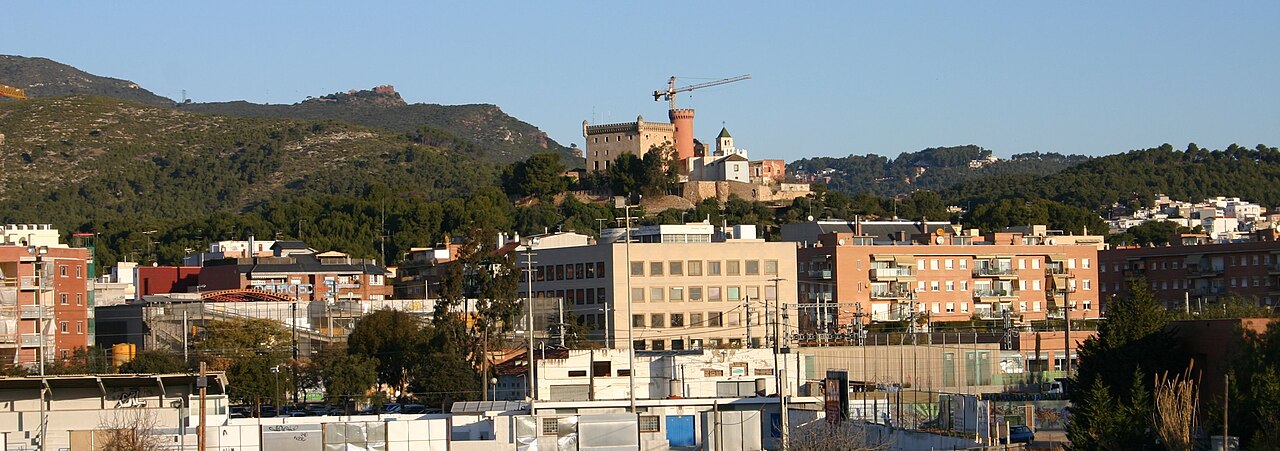
Castelldefels
CataluñaClimate
The scent of wild rosemary mingling with the salty Mediterranean breeze greets you even before you glimpse the 5 kilometers of fine sand that define this coastline. It is not merely a stopover on the way to Sitges, but a destination where the history of scattered masías (traditional Catalan farmhouses) blends with the summer bustle of the 68,000 inhabitants who bring life to the province of Barcelona. Here, beneath the watchful gaze of a castle standing guard from 58 meters above, time seems to stand still between the sway of the waves and the echo of ancient pre-Roman legends.
The must-seesWhat to see in Castelldefels: the must-sees
Castelldefels offers a heritage that goes far beyond its famous stretch of beach, hiding historic corners and monuments that tell the story of its evolution from antiquity to the present day. Below, I detail the key points you cannot miss if you want to understand the essence of this city in the Baix Llobregat region.
Centre d’Història de la Ciutat (City History Centre)
This museum is the perfect gateway to understanding the town’s transformation, from its origins as a collection of farmhouses to its urban consolidation. Inside, you will find exhibitions detailing everyday life in times gone by and the demographic evolution that has led the city to have a population close to 70,057 inhabitants according to the INE in 2025. It is a recommended visit for the first days of your stay, as it will give you the necessary context to appreciate the rest of the monuments. Admission is usually affordable and it is an ideal place to take shelter if the midday sun is too intense.
Antiga ermita de Bruguers (Old Hermitage of Bruguers)
Set in a privileged natural environment, this hermitage is a silent testimony to the devotion and religious architecture of the area. It stands out for its integration into the landscape, offering a different perspective from the usual beach view. It is a point of interest for those seeking tranquillity and wishing to connect with the more rural and serene side of Castelldefels, far from the noise of the seafront promenade.
General Moragues
This monument pays homage to a historical figure of great relevance to the town, standing as a meeting point in the public space. When visiting it, you can observe the sculptural details that honour his legacy and understand his importance in the collective memory of the municipality. It is a brief but significant stop as you walk along the streets that bear his name or the surrounding areas.
la Font Groga
Popularly known for its waters and its surroundings, la Font Groga is a monument that reflects the importance of water resources in the development of human settlements. It is a charming spot where vegetation usually accompanies the structure, creating a pleasant microclimate. I recommend visiting it during the cooler hours of the day to fully enjoy its fresh and historic atmosphere.
Can Flocant
This building represents the traditional architecture of the area, serving as a reminder of the farmhouses that originally formed the scattered nucleus of the population. By observing its walls and layout, you can imagine what life was like in the 20th century before the great tourist boom. It is a tangible example of how Castelldefels has managed to preserve part of its rural identity amidst modernity.
Other points of interest
- Celler de Can Bassoles and Pou de Glaç: A monumental ensemble that showcases the region’s former wine production and food preservation.
- Cova del Rinoceront (Rhinoceros Cave): A site of great value that connects with the prehistoric past mentioned in the local curiosities.
- Santa Magdalena del Sitjar: Another religious gem that complements the route of hermitages and chapels in the municipality.
- Dry stone huts: Including the one at Font Sangonera 3852, number 12921, 9817 and dels Abellots 9818, these rural constructions bear witness to traditional agriculture.
- Mar i Muntanya (Sea and Mountain): A monument in memory of and tribute to Josep Guinovart that adds a contemporary artistic touch to the landscape.
- Dr. Romuald Claverol i Fenosa: Monument dedicated to a local figure of relevance to the community.
- Donar i rebre (Giving and Receiving): An artistic work that invites reflection in the public space.
🍂 Otoño
Si visitas Castelldefels en otoño, aún podrás aprovechar el buen tiempo ya que la mejor época se extiende hasta octubre. Es ideal para quienes buscan tranquilidad después del bullicio estival sin renunciar a temperaturas suaves. Revisa siempre la previsión meteorológica antes de salir, pues las lluvias pueden aparecer ocasionalmente.
What to do in Castelldefels
Castelldefels offers vibrant cultural and festive activities that fill the annual calendar, from traditional celebrations to international music festivals. If you visit the city in June, don’t miss the Fiesta Mayor de Castelldefels (Main Festival of Castelldefels) in honor of Sant Joan Baptista, where the correfocs (fire runs) and castellers (human towers) create the festive atmosphere. For culture lovers, the Festival Internacional de Música (International Music Festival) in July brings prestigious orchestras to the Auditori del Parc Cultural or directly to the beach. If you prefer history, the Mercat Medieval (Medieval Market) in December recreates the era with fire shows and crafts, while the Festa del Bolet (Mushroom Festival) in October celebrates the mushrooms of the Garraf Natural Park with tastings. Finally, the Castelldefels Beach Festival in August ensures nights of electronic and pop music by the sea.
Castelldefels in a day: express itinerary
If you’re short on time but want to make the most of your visit, this 24-hour itinerary will let you see the essentials without rushing, combining history, nature, and gastronomy.
- 09:00 – El Castell: Start your day by heading up to the historic center on the hill. Enjoy the panoramic views from the old castle and stroll through its cobbled streets before the heat sets in.
- 11:30 – Centre d’Història de la Ciutat: Head down to the center and visit the museum to contextualize what you just saw on the hill and understand the evolution from farmhouses to the current city.
- 13:30 – Lunch in La Platja: Make your way to the main tourist area to try the famous Arròs de Castelldefels (Castelldefels rice) at one of the restaurants participating in the Ruta del Arròs (Rice Route).
- 16:00 – Stroll along the beach and coastal monuments: Walk along the 5 kilometers of sand and look for monuments such as the Torre del Senyor or the dry-stone huts near the coast.
- 19:00 – Sunset in Les Botigues de Sitges: End the day in this old fishing neighborhood at the southern end, enjoying the small rocky coves and the tranquil atmosphere ideal for couples.
Where to eat in Castelldefels: local gastronomy
Where to stay in Castelldefels
El Castell
Es el núcleo histórico de la ciudad, situado en una colina alrededor del antiguo castillo. Ofrece un ambiente tranquilo con calles empedradas y vistas panorámicas, alejado del bullicio playero.
La Platja
Zona turística principal que se extiende a lo largo del paseo marítimo y la arena. Concentra la mayor oferta de restauración, chiringuitos y hoteles frente al mar con un ambiente vibrante en verano.
Bellamar
Barrio residencial situado entre el centro urbano y la zona costera, caracterizado por zonas ajardinadas y un entorno más silencioso. Es ideal para quienes buscan descanso sin estar aislados de los servicios.
Les Botigues de Sitges
Antiguo barrio de pescadores ubicado en el extremo sur del municipio, limítrofe con Sitges. Mantiene un encanto tradicional con casas bajas y pequeñas calas rocosas en lugar de playa de arena extensa.
Centre Vila
El corazón comercial y administrativo de la ciudad donde se encuentra el ayuntamiento y el comercio local diario. Es una zona funcional con menos atractivo turístico específico pero bien conectada.
Can Bou
Área principalmente residencial e industrial situada en la parte norte, cerca de la autovía y el aeropuerto. Carece de puntos de interés turístico destacados y su ambiente es puramente local y funcional.
How to get to Castelldefels
The main connection is via the rail and bus network, with accessibility from Barcelona being quite straightforward for travelers.
| Medio | Duración | Precio aprox. | Frecuencia |
|---|---|---|---|
| Tren (Estación Gavà) | Variable según origen | Económico | Frecuente (sin AVE) |
| Bus Urbano | Corta distancia | Bajo | Regular |
How to get around Castelldefels
Once in the city, the most practical option for getting around is the urban bus, which connects the different neighborhoods such as La Platja, El Castell, and Centre Vila. Since the nearest train station is in Gavà, the bus is essential for covering the distance to the center of Castelldefels if you arrive by rail. For short distances, especially in the La Platja or El Castell area, walking is an excellent way to soak up the atmosphere.
Weather in Castelldefels
Best time to visit Castelldefels
Day trips from Castelldefels
Located in the province of Barcelona and in the Baix Llobregat region, Castelldefels is a strategic starting point for exploring cities in the region. You can plan quick excursions to discover other coastal towns or head inland to visit natural parks such as Garraf, mentioned in the Festa del Bolet (Mushroom Festival). The proximity to Barcelona also allows you to combine beachside tranquility with cultural visits to the Catalan capital in a single trip.
Things you didn’t know about Castelldefels
Did you know that the city’s name hides a geological secret? The name Castelldefels etymologically derives from the Latin ‘Castellum de Fals’, where ‘Fals’ is a pre-Roman place name referring to a rocky or rugged area, perfectly describing the spot where the fortification stands.
Hollywood and European cinema have passed through here without many people knowing. Castelldefels was a filming location for numerous Spanish film productions in the 1960s and 70s, known as ‘Spaghetti Westerns’ and horror films, taking advantage of its dunes and still-undeveloped coastal landscapes to simulate deserts or isolated coastlines.
The sand you walk on has a very specific fluvial origin. Castelldefels beach is one of the longest in Catalonia, with approximately 5 kilometers of continuous length and an average width of 100 meters, formed by fine sand of fluvial origin from the Llobregat River.
The city’s history is much older than it appears at first glance. The municipality is home to one of the most important Neolithic archaeological complexes in Europe, specifically the Garraf caves and nearby settlements that demonstrate continuous human occupation for more than 4,500 years.
Olympic sport left an indelible mark on local infrastructure. The Castelldefels Olympic Canal, built for the 1992 Barcelona Olympic Games, is 200 meters long and was the exclusive venue for the flatwater canoeing competitions of those games.
Who Castelldefels is for
Castelldefels is a versatile destination that works especially well for families seeking the safety and services of the La Platja or Bellamar area, and for couples who prefer the romantic charm and views of El Castell or Les Botigues de Sitges. It is also ideal for history lovers interested in Neolithic and medieval heritage, and for foodies who want to try authentic sea-and-mountain rice with a quality seal. With 260,362 annual travelers (INE) and 60% foreigners, it is a cosmopolitan place with local essence.
💡 ¿Sabías que...?
- ● El nombre Castelldefels deriva etimológicamente del latín 'Castellum de Fals', que significa 'Castillo de Fals', siendo 'Fals' un topónimo prerromano que hace referencia a una zona rocosa o escarpada donde se asienta la fortificación. (Ayuntamiento de Castelldefels - Historia)
- ● El Castillo de Castelldefels, cuya estructura actual data principalmente de los siglos X y XI sobre restos romanos y visigodos, domina un promontorio a 58 metros de altura sobre el nivel del mar ofreciendo una vista estratégica de toda la costa. (Generalitat de Catalunya - Patrimoni Cultural)
- ● La playa de Castelldefels es una de las más largas de Cataluña con aproximadamente 5 kilómetros de longitud continua y una anchura media de 100 metros, formada por arena fina de origen fluvial del río Llobregat. (Agència Catalana de l'Aigua)
- ● El municipio cuenta con uno de los conjuntos arqueológicos neolíticos más importantes de Europa, específicamente las cuevas del Garraf y los asentamientos cercanos que demuestran ocupación humana continua desde hace más de 4.500 años. (Museu de Castelldefels)
- ● Castelldefels fue escenario de rodaje de numerosas producciones cinematográficas españolas de los años 60 y 70 conocidas como 'Spaghetti Western' y cine de terror, aprovechando sus dunas y paisajes costeros aún no urbanizados para simular desiertos o costas aisladas. (Filmoteca de Catalunya)
- ● La Torre del Senyor, una torre de defensa del siglo XVI situada junto a la playa, formaba parte del sistema de vigilancia costera contra las incursiones de piratas berberiscos que asolaron el Mediterráneo durante siglos. (Diputació de Barcelona - Patrimoni Local)
- ● El Canal Olímpico de Castelldefels, construido para los Juegos Olímpicos de Barcelona 1992, tiene una longitud de 200 metros y fue la sede exclusiva de las competiciones de piragüismo en aguas tranquilas de aquellos juegos. (Comité Olímpico Internacional (COI))
- ● La iglesia de Santa María, documentada por primera vez en el año 967 d.C., conserva elementos arquitectónicos románicos originales y ha sufrido múltiples reconstrucciones debido a los daños sufridos durante la Guerra de Sucesión y la Guerra Civil Española. (Obispado de Sant Feliu de Llobregat)
Frequently asked questions about Castelldefels
How many days do I need to see Castelldefels?
With an average stay of 2.28 nights according to the INE, you have enough time to explore the main attractions such as the Centre d’Història and the beach, and enjoy the local cuisine at a relaxed pace.
What is the best time of year to visit Castelldefels?
The best time is from May to October, when the average summer temperature reaches 23.8°C, allowing you to fully enjoy the 5 kilometers of beach and the music festivals.
How do I get to Castelldefels by public transport?
You can get there using the Gavà train station (no AVE) and then take the local bus to connect with the town, as this is the main urban transport available.
What typical dish should I not miss?
You must try Arròs de Castelldefels, an official recipe that combines cuttlefish, shrimp, and pork rib, available at restaurants participating in the Ruta del Arròs during the summer season.