Arrecife
CanariasClimate
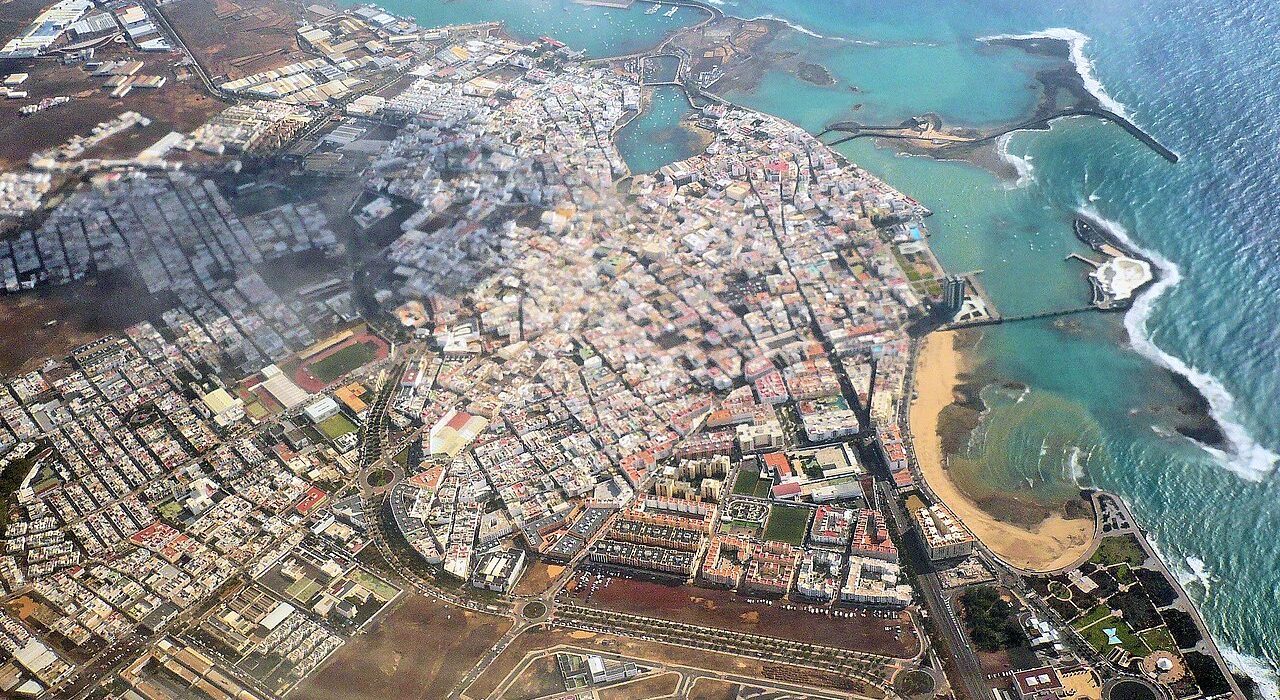
Forget the typical image of Lanzarote full of isolated resorts; Arrecife is the island’s real urban heartbeat, a vibrant capital where maritime history blends with the daily life of its 65,000 inhabitants. Far from being just a stopover point, this city will surprise you with a historic center full of life, natural lagoons in the middle of the asphalt, and a cuisine that smells of the sea from the very first street. Get ready to walk across bridges over the ocean and discover why this municipality, although the smallest on the island, concentrates the most authentic soul of the Canary archipelago.
The must-seesWhat to see in Arrecife: the must-sees
Arrecife condenses centuries of defensive and spiritual history into a compact space, offering monuments that tell the story of the city’s evolution from its fishing origins to its current status as capital.
Castillo de San José (San José Castle)
This fortification in Arrecife, Lanzarote, is not just a military relic, but a perfect example of how the city has integrated its heritage into modern life. It stands out for its strategic location overlooking the coast, offering privileged views of the Atlantic Ocean that alone justify the visit. As a historic monument, it represents the island’s defensive capacity against the pirate raids that marked its past. It is the ideal place to understand Canarian military architecture without having to leave the urban center.
Temple Hall
This unique ship-shaped monument is one of the most recognizable images of the port, acting as a cultural beacon on the coastline. What you should highlight is its unique architectural design that pays homage to the city’s seafaring tradition, creating a fascinating visual contrast with the blue of the sea. It serves as an emblematic meeting point for both locals and visitors strolling along the seafront promenade. Its presence confirms Arrecife’s naval identity in the contemporary urban landscape.
Iglesia Matriz de San Ginés Obispo (Mother Church of San Ginés Obispo)
Declared a Site of Cultural Interest, this Baroque-style mother parish is dedicated to San Ginés Obispo, the island’s patron saint, and is located next to the emblematic Charco de San Ginés. Built in 1665, the historic building represents the spiritual heart of the fishing quarter, with its traditional white facades shining under the Canarian sun. It is a religious heritage landmark visible in the capital’s urban layout that you cannot miss. Its interior holds centuries of devotion from the city’s inhabitants.
Charco de San Ginés
More than just a park, the Charco de San Ginés is a natural saltwater lagoon that serves as the scenic and social heart of the city. Surrounded by old fishermen’s houses and restaurants, this enclave offers a tranquil, traditional atmosphere that contrasts with the nearby urban bustle. It is the perfect place to observe local life and enjoy the cuisine in a unique setting where the sea enters the city. The beauty of the place lies in that perfect symbiosis between nature and vernacular architecture.
Museo Internacional de Arte Contemporáneo (International Museum of Contemporary Art)
The MIAC is Lanzarote’s museum par excellence, housed in the Castillo de San José, and it holds a collection that puts the island on the international modern art map. It stands out for exhibiting works of great value that dialogue with the historic space of the fortress, creating a unique cultural experience. It is a must-visit point to understand the artistic influence that has shaped Lanzarote’s aesthetic in recent decades. The combination of art and military architecture makes this museum an unrepeatable space.
Other points of interest
- La Quesera de Zonzamas is an archaeological site essential for understanding the island’s first inhabitants.
- The façade of the building at numbers 23 and 25 on León y Castillo street is a site of cultural interest showcasing civil architecture.
- The Old Wooden Boat in Las Salinas is a shipwreck-style monument decorating the coastline.
- The Tribute to All Sailors is a monument dedicated to the sport of sailing.
- The Equatorial sundial at the Castillo de San Gabriel is a historic sundial in Arrecife.
- The Memorial to Blas Cabrera Felipe is a statue honouring local figures in the city.
- The Puente de las Bolas (Bridge of the Stone Balls) is the main access to the Castillo de San Gabriel, built in 1771 by architect José Ruiz Cermeño and decorated with stone balls.
- The Fontana Navidad is a decorative monument in the city.
- The Cat Cactus is a quirky monument that catches the attention of passers-by.
- El Juguete del Viento (Fobos) (The Wind Toy) is an artistic work that interacts with the weather.
- The Monument to the Martyrs of the Sea remembers those who lost their lives in the ocean.
- Parque José Ramírez Cerdá is an essential green space for relaxing in Arrecife.
- The Arrecife seafront promenade connects to the Port of Los Mármoles, keeping the scent of fresh fish in the air.
- Playa del Reducto is the main urban beach with golden sand, ideal for swimming without leaving the city.
🍂 Otoño
Si visitas Arrecife en otoño, el clima se mantiene estable con muy pocas probabilidades de lluvia. Es ventajoso para caminar por el centro histórico con comodidad después del calor estival. Te recomendamos reservar tus actividades al aire libre por la mañana para aprovechar la mejor luz.
What to do in Arrecife
Arrecife offers a vibrant cultural and festive calendar that goes beyond sun and beach, centred on seafaring traditions and urban events. You can immerse yourself in the festivities during the Fiestas de San Ginés in August, when the International Regatta and maritime processions take over the city, or enjoy the atmosphere of the Arrecife Carnival in February with its murgas (satirical street bands) and parades. For a quieter experience, the Romería de San Ginés (pilgrimage) in August features ox-drawn carts and offerings, while in December the Mercadillo Artesanal de La Recova (artisan market) lets you buy local ceramics and textiles. Also, don’t miss the Teatre Cívic Music Festival in November, a concert series promoting local and national music in public spaces.
Arrecife in a day: express itinerary
If you only have 24 hours, this plan lets you see the essentials on foot, making the most of the capital’s compact nature.
- 10:00 AM – Charco de San Ginés and Iglesia Matriz: Start your morning in the fishing quarter to see the 1665 church and enjoy the peaceful atmosphere beside the saltwater lagoon before the midday heat arrives.
- 12:30 PM – Castillo de San José and MIAC: Walk to the fortress to visit the contemporary art museum and enjoy panoramic ocean views from the historic ramparts.
- 14:30 PM – Lunch at La Recova: Head to the restored traditional market to sample fresh fish or goat cheese tapas in the renovated dining area.
- 16:30 PM – Puente de las Bolas and Castillo de San Gabriel: Cross the emblematic 1771 bridge decorated with stone balls to reach the historic defensive fortress on the islet.
- 18:30 PM – Seafront promenade and Temple Hall: End the day strolling through the fishing and sporting enclave of the Port of Los Mármoles, watching the sunset beside the boat-shaped monument.
Where to eat in Arrecife: local cuisine
Where to stay in Arrecife
El Centro
Es el corazón comercial y administrativo de la ciudad, caracterizado por calles peatonales llenas de tiendas y edificios modernistas. Ofrece un ambiente urbano vibrante durante el día que se tranquiliza por la noche, siendo ideal para pasear y hacer compras.
Charco de San Ginés
Una zona histórica única formada por una laguna de agua salada natural rodeada de antiguas casas de pescadores de un solo piso y restaurantes de mariscos. Es el enclave más pintoresco y fotogénico de la ciudad, con un ambiente tranquilo y tradicional.
Playa del Reducto
La principal playa urbana de arena dorada ubicada muy cerca del centro, protegida por el Castillo de San Gabriel. La zona cuenta con un paseo marítimo amplio, chiringuitos y acceso fácil a los ferris hacia otras islas.
Altavista
Un barrio residencial situado en una colina que ofrece vistas panorámicas sobre la ciudad y el océano. Es una zona más local y tranquila, alejada del bullicio turístico, donde se encuentra el parque principal de la ciudad.
Argana Baja
Zona densamente poblada y popular que se extiende desde las cercanías del puerto hacia el interior, conocida por su ambiente auténticamente canario y sus fiestas locales. Es un área principalmente residencial con servicios básicos y menos orientada al turismo convencional.
How to get to Arrecife
The capital’s connectivity is excellent thanks to its strategic position on the east of the island and its transport infrastructure.
| Medio | Duración | Precio aprox. | Frecuencia |
|---|---|---|---|
| Avión | Variable según origen | Variable | Diario (Aeropuerto César Manrique-Lanzarote) |
| Bus Intercity | Depende de la ruta | Económico | Regular (Estación de Guaguas de Arrecife / IntercityBus Lanzarote) |
| Coche | Rápido | Gasolina + Alquiler | Libre (Carreteras LZ-1, LZ-2, LZ-3, LZ-20) |
How to get around Arrecife
Getting around the city is simple and convenient. The center is pedestrian-friendly, making it easy to explore the shopping streets and Charco de San Ginés on foot without worries. For longer distances or to reach neighborhoods like Altavista or Argana Baja, you can use the urban bus, which covers the capital’s main routes. If you prefer total freedom, the LZ-1, LZ-2, LZ-3, and LZ-20 roads connect the city perfectly with the rest of the island, although within the urban center a car can be less practical due to traffic and parking.
Weather in Arrecife
Best time to visit Arrecife
Day trips from Arrecife
As the capital and the main link between Lanzarote and the rest of the Canary archipelago on the east coast, Arrecife is the perfect starting point. From here you can organize excursions to the cities of the region, taking advantage of connections via the LZ-1 and LZ-2 roads to explore other municipalities on the island. Additionally, the Port of Los Mármoles serves as a high-volume passenger hub, facilitating maritime connections if you wish to visit other islands in the archipelago.
Curious facts about Arrecife you probably didn’t know
Did you know that Arrecife was not always the capital? The city has held this title since 1852, succeeding Teguise, and today it is the municipality with the highest population density on the island, exceeding 1,000 inhabitants per km².
The city’s name is no coincidence: it comes from its original geographical condition, as it began as a fishing village around a natural reef that protected the bay, now known as El Charco de San Ginés.
Its defensive history is fascinating: the Castillo de San Gabriel (San Gabriel Castle), initially built in 1574 and rebuilt after the attack by the pirate Amurat in 1586, stands on a small islet connected to the mainland by the Puente de las Bolas (Bridge of the Balls), built in 1695.
In the nautical sphere, the city boasts an important milestone: the Puerto Deportivo Rubicon (Rubicon Marina), opened in 1991 in the Playa Blanca area, was the first private marina in the Canary Islands.
The artistic legacy runs deep: César Manrique, the most influential artist and architect in Lanzarote, was born in Arrecife on April 24, 1919, leaving a legacy that shaped the island’s unique landscape protection law.
A curious tradition is the Fiesta de San Ginés (Festival of Saint Genesius), whose maritime procession carries the saint’s image around the Charco in a decorated boat, a celebration documented for centuries.
As for modern events, the Parque Islas Canarias was the first modern fairground in the Canary Islands, opened in 1982 to host international exhibitions.
A surprising historical fact is that during World War II, the port of Arrecife was a strategic supply point for German and Italian submarines, with records of discreet logistical operations between 1940 and 1943.
Who Arrecife is for
Arrecife is perfect for travelers seeking urban authenticity mixed with coastal charm. It is ideal for couples who enjoy romantic strolls around El Charco de San Ginés and fresh fish dinners, as well as for families who need full services and safe urban beaches such as Playa del Reducto. History lovers will find a fascinating story in its castles and churches, while foodies will enjoy the gastronomic variety at La Recova. It is also a viable destination for backpackers looking for budget accommodation in neighborhoods such as Argana Baja and a less touristy experience.
💡 ¿Sabías que...?
- ● Arrecife es la capital de Lanzarote desde 1852, sucediendo a Teguise, y es el municipio con mayor densidad de población de la isla, superando los 1.000 habitantes por km² en décadas recientes. (Instituto Canario de Estadística (ISTAC))
- ● El nombre de la ciudad proviene de su condición geográfica original, ya que surgió como un pueblo de pescadores alrededor de un arrecife natural que protegía la bahía, conocido actualmente como El Charco de San Ginés. (Ayuntamiento de Arrecife)
- ● El Castillo de San Gabriel, construido inicialmente en 1574 y reconstruido tras el ataque del pirata Amurat en 1586, se encuentra sobre un islote conectado a tierra firme por un puente de piedra llamado Puente de las Bolas, edificado en 1695. (Ministerio de Cultura y Deporte de España)
- ● La ciudad cuenta con el primer puerto deportivo privado de Canarias, el Puerto Deportivo Rubicon, inaugurado en 1991 en la zona de Playa Blanca, marcando un hito en la náutica de recreo del archipiélago. (Autoridad Portuaria de Las Palmas)
- ● César Manrique, el artista y arquitecto más influyente de Lanzarote, nació en Arrecife el 24 de abril de 1919, dejando un legado que determinó la ley de protección paisajística única de la isla. (Fundación César Manrique)
- ● En Arrecife se celebra la Fiesta de San Ginés, patrón de la ciudad, cuya tradición incluye la procesión marítima donde la imagen del santo recorre el Charco en una barca decorada, una celebración documentada desde hace siglos. (Gobierno de Canarias - Turismo)
- ● El Parque Islas Canarias, ubicado en Arrecife, fue el primer recinto ferial moderno de Canarias, inaugurado en 1982 y diseñado para albergar exposiciones internacionales en un espacio de más de 50.000 metros cuadrados. (Cabildo de Lanzarote)
- ● Durante la Segunda Guerra Mundial, el puerto de Arrecife fue punto estratégico de avituallamiento para submarinos alemanes e italianos, aunque oficialmente España se mantenía neutral, existiendo registros de operaciones logísticas discretas entre 1940 y 1943. (Archivos Históricos Provinciales de Las Palmas)
Frequently asked questions about Arrecife
How many days do I need to see Arrecife?
1 or 2 days is enough to see the main attractions such as the Castillo de San José, El Charco de San Ginés and the MIAC, as the city is compact and walkable.
What is the best time of year to visit Arrecife?
The best time is from January to December thanks to the mild temperatures (average of 24.4°C in summer and 18.1°C in winter) and the low annual rainfall of 101.4 mm.
How do I get to Arrecife from Madrid?
You need to fly to César Manrique-Lanzarote Airport (ACE) and from there take an IntercityBus Lanzarote bus or a rental car along the LZ-1 road to the Estación de Guaguas de Arrecife (Arrecife Bus Station).
Where can I find official information about opening hours and tickets?
You can find more practical information, opening hours and events by checking the official Arrecife tourism website.