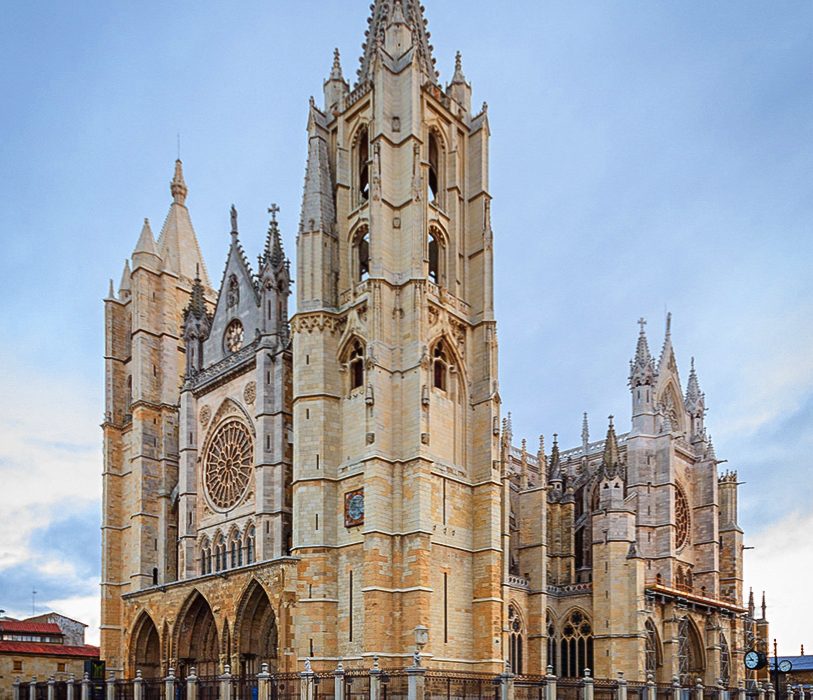
Salamanca → León
212 kmCovering the 212 kilometers that separate Salamanca from León means venturing into the heart of a Castile that changes its skin before your eyes, shifting from the golden stone of the capital charra to the imposing Gothic murals of the north. This journey is not just a transfer; it is a passage through the history of the Ruta de la Plata (Silver Route) and the Autovía del Duero (Duero Highway), where the freedom of the road lets you stop time in villages steeped in legend before reaching your destination.
How to get from Salamanca to León: quick overview
The most efficient and recommended way to cover the distance between Salamanca and León is undoubtedly by private vehicle, since it allows you to make the most of the toll-free highways and make strategic stops on a route that barely exceeds two hours. Although there is a direct bus option, which is convenient for those who do not want to drive, the flexibility of a car is unbeatable for exploring the region.
For the traveler who prioritizes economy and comfort without worrying about driving, the bus is a valid alternative with a competitive fixed price. However, if your goal is to enjoy the landscape and have full control over your schedule, the road route is the undisputed winner. There is no direct rail connection, so the train is ruled out as a main option for this specific route, forcing you to look for alternatives at the Salamanca-La Alamedilla station that are not practical for a point-to-point trip.
By car from Salamanca to León
Driving from Salamanca to León is a smooth and economical experience, since the entire route takes place on a network of completely free highways and national roads, with no tolls of any kind to make the trip more expensive. The total distance to cover is 212 km, a journey that, under normal traffic conditions, is completed in approximately 2 hours and 15 minutes of actual driving time.
The main and most logical route for this journey uses the A-66, known as the Autovía Ruta de la Plata (Silver Route Highway). This road is the backbone of the trip, allowing you to leave Salamanca heading north in total comfort. Along the way, you may come across connections to other important roads listed in the area’s road network, such as the A-11 (Autovía del Duero) or the A-50 (Autovía Ávila-Salamanca), depending on your exact departure point in the capital charra. These roads are designed to handle fluid traffic and offer well-maintained asphalt.
As you advance toward the north of the region, the network connects with the A-62, the Autovía de Castilla (Castile Highway), which facilitates cross-movement across the meseta (plateau). If your route takes you around certain urban areas or onto specific detours toward Valladolid, you could use sections of the A-6 (Autovía del Noroeste) or the A-60 (Autovía Valladolid-León), the latter being crucial for the final entry into the city of León. You may also drive on sections of the N-122, the road connecting Zaragoza with Portugal via Zamora, or the A-52, Autovía de las Rías Baixas, if the specific route varies slightly due to roadworks or GPS, although all share the characteristic of being high-capacity roads at no cost to the driver.
It is important to note that, since there are no tolls on any of these roads (neither on the A-66, nor on the A-6, nor on the A-60), the only variable cost will be fuel. Signage is clear and service areas are well distributed, which makes the 2h 15min journey very manageable even for less experienced drivers.
By bus from Salamanca to León
There is a direct bus connection between Salamanca and León that offers a comfortable alternative for those travelers who prefer not to drive or do not have their own vehicle. This public transport option runs regularly and is designed to meet the demand between these two provincial capitals.
The ticket price for this direct route is around €35, a standard fare that includes the onboard service. Although exact data on the duration of the bus journey may vary depending on traffic and the intermediate stops made by the operating company, it should be noted that the time will be longer than by private car due to entering and leaving the bus stations of both cities. The companies that operate this route usually have modern fleets equipped with air conditioning and reclining seats, making the journey pleasant despite being a little longer than the car option.
Recommended stops along the way
One of the greatest advantages of making this journey by car is the possibility of breaking up the trip into memorable experiences. Although the route is short, there are three verified key points where it is worth stopping the engine and stretching your legs.
Santa Marta de Tormes
Just as you leave Salamanca, you will come across Santa Marta de Tormes. This town is practically an extension of the capital, but it deserves a stop if you want to see the Tormes River in all its splendor before heading onto the highway. It is a quiet place, ideal for a first coffee with views of the water and to prepare for the journey. Its proximity to the city’s exit makes it the perfect starting point to leave the urban bustle behind.
Benavente
Halfway along the route, Benavente stands as the strategic stop par excellence. Located at a crucial communications hub, this town in Zamora has a rich historical heritage that often goes unnoticed by travelers in a hurry. It is the ideal place to have lunch, as it has a wide range of restaurants serving the traditional cuisine of the area. In addition, its Torre del Caracol (Snail Tower) and the old town offer a perfect cultural respite to divide the two-hour journey into two more enjoyable blocks.
Trobajo del Camino
Almost at the end of your route, just before fully entering the metropolitan area of León, lies Trobajo del Camino. As its name suggests, it has historically been a stopping point for walkers and travelers. It is a useful stop if you want to avoid the traffic entering León at peak times or if you simply want to approach the city at a relaxed pace. Its location makes it the perfect prelude to discovering the capital of León without rushing.
Where to stay in León
Once you arrive at your destination, León offers a variety of areas to stay that suit different budgets and travel styles, without needing to search for specific hotel names to find quality.
The Centro Histórico (Historic Centre) is the most sought-after area. Staying here allows you to step out of your accommodation and be just a few minutes from the Cathedral, the Casa de Botines and the Barrio Húmedo. It is ideal for tourists who want to experience the city intensely and don’t mind the weekend night-time noise. Prices in this area tend to be higher, especially in charmingly restored buildings.
For those seeking peace and quieter prices, the Ensanche or the area around the train station are excellent options. These are more modern neighbourhoods, with wide streets and good urban bus connections to the centre. Here you will find chain hotels and tourist apartments that offer better value for money, perfect for families or travellers who use a car and need easier parking.
Finally, the university area near the faculty offers a vibrant and budget-friendly alternative, full of hostels and guesthouses aimed at a young crowd, although it can be somewhat further from the main monuments.
Frequently asked questions about the Salamanca-León route
How long does it take to get from Salamanca to León?
The estimated driving time is 2 hours and 15 minutes, covering a total distance of 212 kilometres by motorway.
Which is cheaper, the train or the bus?
There is currently no direct train between these cities, so the most viable and economical public transport option is the bus, with an approximate price of €35.
Is it worth renting a car?
Yes, it is worth it if you plan to make stops along the route such as Benavente or Santa Marta de Tormes, as the bus is direct and does not allow you to explore the surroundings freely.
When is the best time to travel?
The best time to travel is during spring or autumn, when temperatures on the plateau are mild and driving on the A-66 and A-60 is more pleasant than in the months of extreme heat or winter.
📍 También te puede interesar
Qué ver en Salamanca →
Qué ver en León →