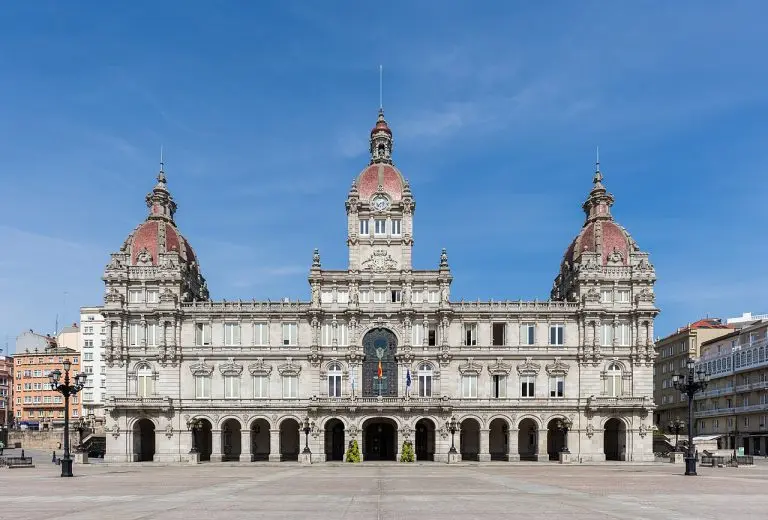
Vigo → A Coruña
156 kmConnecting Galicia’s most vibrant rías in under two hours is a luxury this corner of the Atlantic grants itself every day. Between Vigo and A Coruña stretches one of the most scenic motorways in northern Spain, with the sea forever peeking out between mountains and the promise of a seafood feast waiting at the end of the road.
How to get from Vigo to A Coruña: quick summary
The Vigo-A Coruña route offers three main options: private car (1h 40min via the AP-9), direct Renfe train (between 88 and 144 minutes depending on the service) and direct bus (140 minutes, between €14.55 and €20.54). There is no direct flight between the two cities. For those who prioritise flexibility and want to explore the stops along the way, the car is unbeatable. For travellers without a vehicle, the MD train is the fastest and most comfortable option, while the bus is the cheapest alternative.
By car from Vigo to A Coruña
The road journey covers 156 km in approximately 1 hour and 40 minutes, running almost entirely along the AP-9, the Autoestrada do Atlântico (Atlantic Motorway). This toll road forms the backbone of Galicia’s Atlantic axis and offers constant views over the rías of Vigo, Pontevedra and Arousa. The initial stretch passes through the Teis tunnel (AP-9V), which connects Vigo with the northern shore of the ría and avoids the detour inland. From there, the motorway heads north past Redondela, Pontevedra and Vilagarcía, always with the sea as a backdrop. It is worth carrying cash or a card for the tolls and checking traffic during peak hours, especially on Friday afternoons heading towards A Coruña.
By train from Vigo to A Coruña
Renfe operates direct trains between Vigo Urzaiz station and A Coruña with a frequency of 16 trains per day, from 05:08 to 21:50. The fastest option is the MD (Media Distancia) service, with 11 trains a day completing the journey in 88 minutes. There are also REGIONAL trains, with 5 daily departures and a duration of 131 minutes. The departure station is Vigo Urzaiz, located in the city centre, and the destination is A Coruña, next to the plaza de Ourense. Prices vary depending on how far in advance you book and the type of train, but the MD usually offers the best balance between time and cost. For exact schedules and daily fares, it is best to check directly on the Renfe website.
By bus from Vigo to A Coruña
The direct bus between Vigo and A Coruña takes 140 minutes and costs between €14.55 and €20.54, making it the cheapest option for this journey. Several companies operate the route: Transporte Público de Galicia, ALSA, Monbus and Flixbus, with departures throughout the day from the bus stations in both cities. The journey takes longer than the MD train, but the savings can make up for it for travellers on a tight budget or in no hurry. The buses are usually modern, with air conditioning and, in some cases, free wifi. Booking in advance is recommended on weekend or holiday routes, when demand rises considerably.
Recommended stops along the way
The AP-9 makes it easy to detour to towns that deserve a pause, whether to stretch your legs, grab a coffee or discover an unexpected corner of Galicia. These are the verified stops on the route:
Redondela
Just a few minutes from Vigo, Redondela is known as the town of viaducts for its imposing 19th-century railway bridges. Its old town preserves baroque churches and arcaded squares, and from the A Peneda viewpoint you get an excellent view of the ría de Vigo. It’s a brief stop, ideal for a first coffee before continuing north.
Pontevedra
The capital of the Rías Baixas is one of the most pleasant cities in Galicia to walk around. Its historic centre, entirely pedestrianised, is packed with interlinked squares such as A Ferrería, A Leña and O Teucro, as well as the basilica of Santa María la Mayor. Pontevedra deserves at least a couple of hours: a stroll through its stone streets, a tapa in the Plaza de la Verdura area and a visit to the sanctuary of la Peregrina.
Marín
Right next to Pontevedra, Marín is a fishing village with a busy fishing and military port. Its seafront promenade invites you to walk along the water, and the beaches of Portocelo and Mogor offer quiet stretches of sand in low season. It’s a discreet but authentic stop, far from mass tourism, perfect for eating fresh fish at one of the restaurants in the port.
Vilagarcía de Arousa
Vilagarcía is the main town on the ría de Arousa, with a lively marina and one of the best urban beaches in Galicia, A Concha-Compostela. Its food market is a good place to buy seafood, and the promenade connects with the beach and A Xunqueira park. If your trip coincides with lunchtime, this is the place for excellent rice dishes and seafood at more reasonable prices than in the big cities.
A Estrada
This stop is a slight detour from the main AP-9 axis, but it’s worth it for those seeking a quiet break inland. A Estrada is a municipality linked to the Camino de Santiago and to cattle-farming tradition, with inland cuisine based on meats, cheeses and empanadas. Its rural surroundings, dotted with hórreos and pazos, contrast with the coastal landscape of the rest of the route.
O Milladoiro
Located at the gates of Santiago de Compostela, O Milladoiro is a residential centre that has grown up around the Camino Portugués. Although it isn’t a tourist destination in itself, it’s a practical stop to refuel, grab a bite or rest before tackling the final stretch towards A Coruña. Its proximity to the AP-9 makes it a convenient, quick stop.
Bertamiráns
Also within the sphere of influence of Santiago, Bertamiráns is a quiet town with good dining options. Its location between the interior and the coast makes it ideal for a short break, especially if you want to avoid the crowds of the larger cities. The surrounding area offers gentle hiking routes among woods and rivers.
Carballo
Now in the province of A Coruña, Carballo is the gateway to the Costa da Morte. Its town centre has a lively commercial life and is famous for pan de Carballo, a product with a protected geographical indication. If the journey allows, from here you can detour to wild beaches such as Razo or Baldaio, two spectacular stretches of sand less than 15 minutes away by car.
Where to stay in A Coruña
A Coruña offers accommodation for every budget, concentrated mainly in three areas. The centre, around plaza de Lugo and calle Real, is ideal for those who want to get around on foot and have shopping and dining close at hand. The Pescadería neighbourhood, next to the port and plaza de María Pita, is the liveliest option, with tapas bars and a nightlife scene. The Orzán and Riazor area, facing the city beaches, is perfect for travellers looking for sea views and strolls along the promenade. Prices vary by season: in summer and on public holidays, mid-range hotels tend to range between €80 and €150 per night, while guesthouses and pensions offer double rooms from around €50. For longer stays or family trips, tourist apartments in the centre are a comfortable alternative, with rates from €70 per night.
Where to eat en route
Galician cuisine is one of the great draws of this trip, and both Vigo and A Coruña share the same larder and recipe book. These are the essential dishes worth trying along the way:
Pulpo a la gallega
Galicia’s most emblematic dish. It consists of boiled octopus sliced into rounds, served on a bed of boiled potatoes and seasoned with paprika, coarse salt and olive oil. It is typical throughout the region, especially at fiestas and romerías, and can be found in practically any restaurant or pulpería in Vigo, Pontevedra or A Coruña.
Empanada gallega
Bread dough filled with various ingredients, the most typical being tuna, onion and pepper. It is baked and eaten in portions, both hot and cold. A classic for snacks and road trips, easy to find in bakeries and markets in Vigo, Pontevedra and A Coruña.
Mejillones de roca
Mussels cultivated on the rocks of the rías, steamed with lemon or served in sauce. They are a highly prized seafood in the Rías Baixas, especially in Vigo and Pontevedra, where the bateas dot the horizon. They are served as a tapa or a ración in most bars and seafood restaurants along the coast.
Albariño
A young, aromatic, fruity white wine made from the albariño grape in the Rías Baixas. It pairs perfectly with seafood and fish, and is the ideal companion for a mariscada or a plate of octopus. In Pontevedra and Vigo it is served by the glass in almost any bar, and many wineries in the area offer visits and tastings.
Tarta de Santiago
A dessert made with ground almonds, eggs and sugar, topped with icing sugar and the cross of Saint James drawn on top. Although its origin is linked to Santiago de Compostela, it is eaten throughout Galicia and is the perfect end to any meal. It can be found in pastry shops and restaurants all along the route.
Licor de hierbas
An alcoholic drink obtained by macerating aromatic herbs in aguardiente. It is drunk as a digestif after meals and is typical of all Galicia, both in Vigo and in A Coruña. It is usually served in shot glasses, chilled or with ice, and is a traditional way to round off a hearty meal.
Frequently asked questions about the Vigo-A Coruña route
How long does it take to get from Vigo to A Coruña?
By car, the journey along the AP-9 and AP-9V covers 156 km in approximately 1 hour and 40 minutes. By train, Renfe’s MD service takes 88 minutes, while the REGIONAL takes 131 minutes. By bus, the duration is 140 minutes. There is no direct flight between the two cities.
Which is cheaper, the train or the bus?
The bus is the most economical option, with prices between 14.55€ and 20.54€ depending on the company and how far in advance you book. Renfe’s train usually has higher fares, especially on the faster MD services, although booking in advance can turn up competitive prices. For tight budgets, the bus is clearly the best option.
Is it worth renting a car?
It depends on the type of trip. If you just want to go from Vigo to A Coruña without stopping, the MD train is faster (88 minutes) and avoids tolls and parking. But if you want to explore stops such as Pontevedra, Vilagarcía or Carballo, the car is the only flexible option, since direct public transport doesn’t make it easy to hop on and off. For travellers with time and a desire to discover the Galician coast, renting a car is well worth it.
When is the best time to travel?
Spring and autumn are the best seasons: mild temperatures, fewer crowds than in summer and green landscapes after the rains. Summer draws the largest tourist numbers, especially on the beaches of the Rías Baixas and A Coruña, with higher accommodation prices. Winter is quiet and atmospheric, but there is a greater chance of rain and fewer hours of daylight to enjoy the stops.