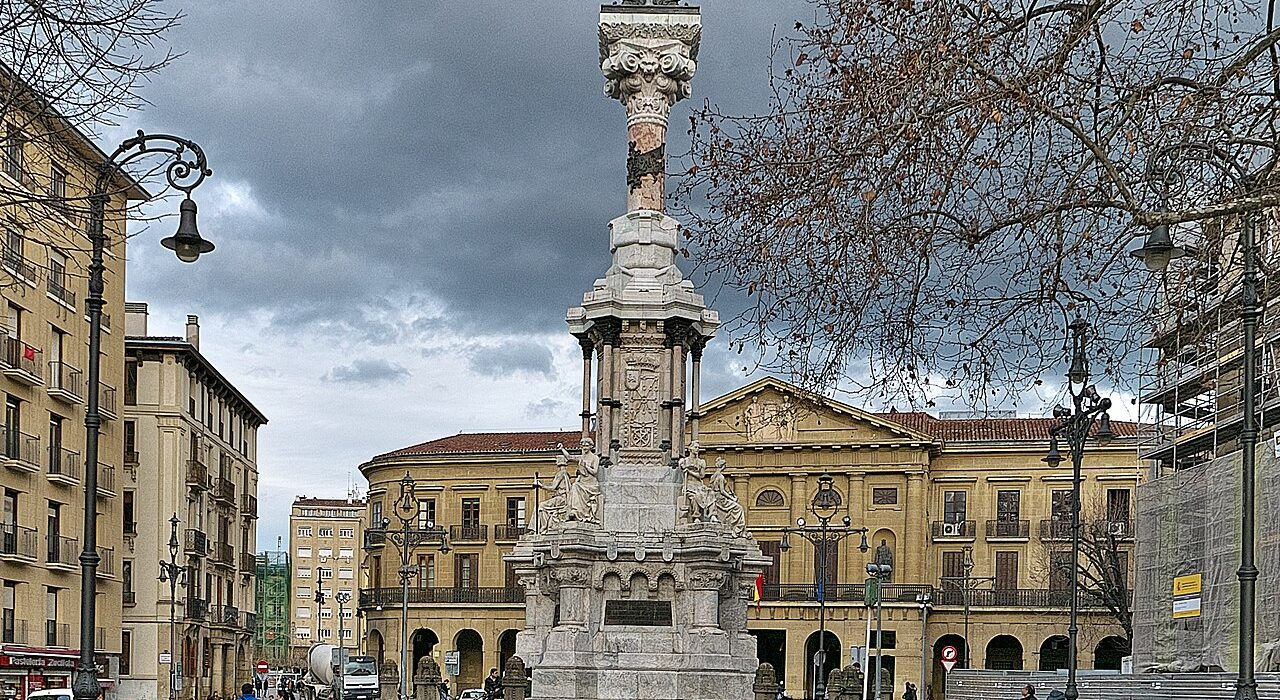
Bilbao → Pamplona
155 kmLeaving behind the gray concrete of the estuary to venture into the deep green of the Basque valleys is an experience that changes the rhythm of your pulse in just a few kilometers. This journey is not merely a 155-kilometer transfer; it is a visual voyage through the industrial and rural history of northern Spain, where the speed of the highway blends with the calm of the villages that dot the route.
How to get from Bilbao to Pamplona: quick overview
The fastest and most flexible option for covering this route is undoubtedly a private car, although the bus offers an economical and direct alternative for those who prefer not to drive. If you prioritize speed and the freedom to stop wherever you like, a private vehicle will allow you to cover the distance in 1h 35min, enjoying a landscape that transitions smoothly from the coast to the interior. On the other hand, if you are traveling alone or looking to save money without worrying about parking at your destination, the bus is the logical solution, connecting both provincial capitals with a regular and comfortable service. There is no direct train option, so your choices essentially come down to the road, whether behind the wheel or in a passenger seat.
By car from Bilbao to Pamplona
Driving from Bilbao to Pamplona will take you approximately 1 hour and 35 minutes covering a total distance of 155 kilometers along a network of toll-free highways. The driving experience is remarkably smooth thanks to the quality of the asphalt and the fact that the vast majority of the main roads along this corridor are toll-free, eliminating last-minute surprises for your wallet. Leaving Bilbao, you will find the A-8 or Autovía del Cantábrico (Cantabrian Highway), an essential route that allows you to pick up speed quickly as you leave the urban core behind. Depending on your exact route and preferences, you can connect with the A-636, which links Beasain with Bergara, offering a route that cuts through the geographic heart of the region.
For those who prefer more inland routes or need to connect south before heading up, the A-1 or Autovía del Norte (Northern Highway) is a fundamental artery that guarantees a steady flow of traffic. Also highly relevant is the A-12 or Donejakue Bidearen autobia, whose name evokes the Camino de Santiago (Way of St. James) and which serves as a strategic link in this area. If your route takes you through the Vitoria area or you need to bypass the capital of Álava, the N-1 and the N-622 are national road options that, although they may have more local traffic, bring you closer to population centers. Finally, as you approach your destination, the A-15 or Iruñeko mendebaldeko sahiesbidea will act as the ring road that allows you to enter Pamplona without getting caught in downtown traffic, while the A-10 or Sakanako autobia is another toll-free route that facilitates access from the north to the Navarrese capital. This entire road network is designed to make the journey swift, with no added toll costs and clear signage.
By bus from Bilbao to Pamplona
Direct bus service is the most efficient public transport alternative, operated mainly by the companies Autobuses La Unión and La Burundesa. This means of transport is ideal for travelers looking to switch off during the journey, as the estimated travel time is 195 minutes, giving you enough time to read, work, or simply watch the Basque landscape from the window. The ticket price is very competitive, around €15.60, making it an attractive option compared to the cost of fuel and wear and tear on your own vehicle if you are traveling alone. It is important to bear in mind that, as there is no direct train between these two cities, the bus stands out as the only mass-market public transport linking the centers of both cities without complicated transfers. Departures tend to be regular, catering to both business travelers and tourists arriving at the Pamplona bus station ready to start their visit.
Recommended stops along the way
If you decide to make the journey by car, you have a golden opportunity to turn the transfer into a small sightseeing route through some of the most charming towns in the Basque Country. Below, I detail the strategic points where it is worth stopping the engine:
- Durango: This town is a must-stop if you are interested in medieval history and local commerce. Its old town retains a fascinating irregular layout and is famous for its market, one of the oldest and busiest in the region. It is the perfect place to stretch your legs and have a coffee in one of its arcaded squares before getting back on the road.
- Azkoitia: Known for its connection to the Loyola family, Azkoitia offers impressive palatial architecture. Stopping here allows you to walk along cobbled streets that breathe tranquility and visit historic buildings that tell the noble past of the area, all in a setting very close to the main route.
- Azpeitia: Right next to Azkoitia, this town is a cultural landmark thanks to the Basque Railway Museum (Museo Vasco del Ferrocarril). It is an ideal stop for lovers of engineering and industrial history, as well as having a very well-preserved old town where local gastronomy plays a leading role in its bars and restaurants.
- Beasain: Located in a strategic enclave, Beasain is a communications hub that deserves a visit for its urban atmosphere and green spaces. It is a perfect midway point to refuel or grab a quick bite, taking advantage of its central location in the road network connecting the coast with the interior.
- Vitoria-Gasteiz: Although it deviates slightly from the most direct straight line, passing through the capital of Euskadi is an enriching experience. Its green belt and its medieval old town, one of the best preserved in Europe, justify any detour. It is the most urban stop on the list, ideal for a leisurely lunch and a cultural walk.
- Bergara: This town is famous for its arms-making tradition and its Renaissance architecture. Stopping in Bergara allows you to discover a very dense historical heritage in a small space, with palaces and emblazoned houses that transport you to other centuries, as well as being a key point in the area’s road connections.
- Arrasate / Mondragón: An industrial center with a deeply cooperative and social soul, Mondragón offers an interesting mix of modernity and tradition. Its main square is a vibrant meeting point and it is an excellent option for understanding the social and economic reality of inland Gipuzkoa while taking a break on your journey.
- Hernani: Very close to San Sebastián but on the route toward the interior, Hernani stands out for its history and its connection to literary figures such as Victor Hugo. It is a quieter stop, perfect for enjoying the local gastronomy in a less crowded atmosphere than that of the major tourist capitals.
Where to stay in Pamplona
When you arrive at your destination, you’ll find a varied range of accommodation to suit different budgets and travel styles, although booking in advance is advisable if you’re traveling on key dates such as the Sanfermines (Running of the Bulls festival). The most recommended areas to stay are the Casco Viejo (Old Town) and the Ensanche (modern city center). The Casco Viejo is ideal if you’re looking for atmosphere, lively pedestrian streets, and being close to the main monuments and pintxos bars; boutique hotels and charming guesthouses predominate here, with prices that can vary considerably depending on the season. On the other hand, the Ensanche offers a more modern and quieter experience, with larger buildings and wider streets, perfect for business travelers or families who value comfort and peace and quiet. As for price ranges, you can find everything from budget guesthouse-style options under €50 a night to four-star hotels exceeding €100–120, with the average standard-quality hotel being quite affordable for the level of services the city offers.
Frequently asked questions about the Bilbao-Pamplona route
How long does it take to get from Bilbao to Pamplona?
Travel time varies depending on the mode of transport chosen: by private car the journey takes approximately 1 hour and 35 minutes, while if you opt for the direct bus, the time extends to 195 minutes due to intermediate stops and vehicle speed.
Which is cheaper, the train or the bus?
There is currently no direct train line between Bilbao and Pamplona, so a direct comparison isn’t possible; the most economical and viable public transport option is the bus, with fares around €15.60.
Is it worth renting a car?
Yes, it’s worth it if you plan to go sightseeing along the way, as it allows you to visit recommended stops such as Durango, Azpeitia, or Vitoria-Gasteiz at your own pace and enjoy the freedom offered by toll-free highways like the A-8 and the A-15.
When is the best time to travel?
The best time to travel is during spring and autumn, when the weather is mild enough to enjoy the scenery along the 155 km route and temperatures are pleasant for exploring the recommended stops without the typical summer or winter crowds.
📍 También te puede interesar
Qué ver en Bilbao →
Qué ver en Pamplona →