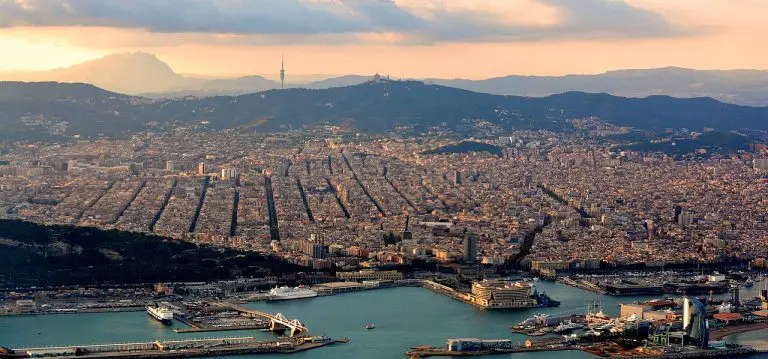
Vic → Barcelona
70 kmHow to Get from Vic to Barcelona: Quick Summary
The connection between Vic and Barcelona comes down to three main options: driving yourself along the C-17 (55 minutes), taking the direct Rodalies R3 train (65 minutes to Fabra i Puig), or catching a bus with one of several operators (60 minutes, between €7.5 and €14). If you’re looking for flexibility to explore stops along the way such as Caldes de Montbui or Badalona, the car is unbeatable; if price is your priority and you don’t mind arriving in northern Barcelona, the Rodalies R3 train with 49 daily services is the most convenient and frequent option.
Driving from Vic to Barcelona
The drive takes roughly 55 minutes to cover the 70 km route, with the C-17 forming the backbone of the journey for about 47 km of the total. This highway connects Barcelona, Vic and Ripoll, and offers a fast, well-maintained road that cuts through the landscape of the Osona and Vallès Oriental districts.
As you approach the metropolitan area, the route links up with the C-33, which covers about 7 km and serves as a transition to Barcelona’s access roads. Finally, the B-10, accounting for around 10 km of the trip, acts as a coastal ring road to distribute traffic toward different parts of the city. Together, these three roads allow for a gradual descent from the inland hills to the coast with no tolls or notable complications.
Taking the Train from Vic to Barcelona
The direct train between Vic and Barcelona is operated by Renfe on the Rodalies R3 line, with a journey time of 65 minutes and a frequency of 49 trains per day. The departure station is Vic and the arrival station on this route is Barcelona Fabra i Puig, located in the northern part of the city.
The first train leaves at 06:00 and the last at 22:00, guaranteeing coverage from early morning until night. As this is a commuter service, there’s no need to book in advance and tickets can be purchased directly at the station or from the vending machines. The R3 line is a particularly useful option for those heading to the Sant Andreu area or needing to connect with the metro network at Fabra i Puig.
Taking the Bus from Vic to Barcelona
The direct bus between Vic and Barcelona takes 60 minutes, with a price ranging from €7.5 to €14 depending on the operator and type of service. The companies running this route are Osona Bus, Transports Elèctrics Interurbans SA (TEISA) and Sagales.
The journey time is practically identical to the train, but the bus has the advantage of arriving at different terminals in central Barcelona, depending on the operator. Tickets can be purchased at the ticket offices of Vic bus station or through each operator’s online platforms. For travellers with bulky luggage or those who prefer a guaranteed seat, the bus is often a comfortable alternative with good value for money.
Recommended stops along the way
The route between Vic and Barcelona passes through a series of towns of interest in their own right, from historic centres to areas of industrial and residential transition. These are the verified stops along the journey:
Badalona
A coastal city located to the northeast of Barcelona, right at the end of the route along the B-10. Its seafront promenade and the Pont del Petroli (Petrol Bridge) are points of interest for a brief stop before entering the capital. Badalona combines beach, Roman remains and a dining scene focused on fresh fish.
Santa Coloma de Gramenet
A densely populated municipality that stretches between the Besòs river and the Serra de Marina. It is mainly a functional stop, with access to shopping areas and a direct connection to the Barcelona metro network. Its location makes it a natural passing point for those approaching the northeastern part of the metropolitan area.
Parets del Vallès
A town in the Vallès Oriental with a compact old quarter and several industrial areas on its outskirts. It is a practical stop for refuelling or taking a break on the journey, with direct access from the C-17. Its weekly market and quiet squares offer a contrast to the pace of the motorway.
Montcada i Reixac
The gateway to the metropolitan area from the north, Montcada i Reixac extends on both sides of the Ripoll river. It is an important communications hub where roads and railway lines converge. For the traveller, it can be useful as a connection point or for a brief stop in its garden areas beside the river.
Barberà del Vallès
A municipality located on the C-58 axis and close to the C-33, with a residential and industrial profile. Its main appeal for a stop is the range of services and fast food, as well as its proximity to shopping areas. It is a practical alternative if you want to avoid the crowds of Barcelona at peak times.
La Llagosta
A small town in the Vallès Oriental that has grown up around the train station and the transport routes. Its compact size allows for a quick stop with barely any detour from the main route. It stands out for its quiet village atmosphere just a few kilometres from the metropolitan bustle.
Corró d’Avall
A settlement belonging to the municipality of Les Franqueses del Vallès, located very close to the C-17. It is a discreet stop, ideal for those looking for a break in the journey without venturing into larger urban centres. Its semi-rural surroundings still preserve fields and scattered farmhouses.
Caldes de Montbui
The most interesting stop from a tourist point of view on the entire route. Caldes de Montbui is known for its thermal waters, which spring up at over 70 °C, and for its medieval old town. The Font del Lleó (Lion Fountain) and the Roman baths are essential visits. It requires a short detour from the C-17, but it is well worth it if you have time.
Where to stay in Barcelona
Barcelona offers a wide variety of areas to stay, each with a distinct character. The Eixample is the most central and elegant option, with mid-range and high-end hotels in a Modernista setting. The Barri Gòtic and El Born are ideal for those seeking historic atmosphere and nightlife, with accommodation ranging from hostels to boutique hotels.
For tighter budgets, Gràcia and Sants offer affordable options and a more local atmosphere, well connected by metro. The Fabra i Puig area, where the train from Vic arrives, has functional accommodation at moderate prices, useful if you plan to head back north soon. Price ranges vary from €40-60 per night in hostels and guesthouses to more than €150 in higher-category hotels.
Where to eat along the route
The cuisine along the Vic-Barcelona route reflects the cooking of inland and coastal Catalonia, with hearty dishes and seasonal produce. In the Osona region, the starting point, two essential recipes stand out: escudella i carn d’olla (a traditional meat and vegetable stew) and botifarra amb mongetes (grilled sausage with white beans).
Escudella i carn d’olla is a traditional winter stew made with pork, beef, chicken, butifarra sausage, chickpeas, potato and vegetables such as cabbage and carrot. It is served in two stages: first the broth with pasta or rice, and then the meat and vegetables. Botifarra amb mongetes, for its part, consists of grilled butifarra served with white beans sautéed with garlic and parsley, a simple and hearty combination found in almost any restaurant in the area.
Pa amb tomàquet is the universal accompaniment throughout Catalonia: country bread rubbed with ripe tomato, olive oil and salt, served with cured meats, cheese or ham. In the Vallès area, calçots are the great seasonal specialty: young onions roasted over embers that are eaten by peeling the charred stalk and dipping them in romesco sauce.
Closer to Barcelona, suquet de peix represents seafood cooking: a fish and shellfish stew with potato, tomato, garlic and saffron, served with aioli. To finish, crema catalana is the classic dessert: pastry cream flavoured with cinnamon and lemon, topped with sugar caramelised with a red-hot iron.
As for drinks, the route passes through wine regions of interest. DO Pla de Bages wine, with reds and whites made mainly from the Picapoll grape, comes from a region close to the route. DO Catalunya wine covers broad Catalan wine-growing areas with reds, whites and rosés from various varieties. And Penedès cava, made by the traditional method with Macabeo, Xarel·lo and Parellada grapes, is the benchmark sparkling wine to accompany any meal.
Frequently asked questions about the Vic-Barcelona route
How long does it take to get from Vic to Barcelona?
By car, the 70 km journey takes about 55 minutes via the C-17, C-33 and B-10. On the direct Rodalies R3 train, the time is 65 minutes to Barcelona Fabra i Puig. By direct bus, the duration is 60 minutes.
Which is cheaper, the train or the bus?
The bus has a price ranging from 7.5 to 14 € depending on the company (Osona Bus, TEISA or Sagales). The Rodalies R3 train has commuter fares that are usually competitive, although the exact price depends on the number of zones crossed. For one-off trips, the bus tends to be the most economical option at the lower end of its price range.
Is it worth renting a car?
It depends on your travel plans. If you are only going to Barcelona, the train with 49 daily services and a 65-minute journey is more than enough. If you want to visit stops such as Caldes de Montbui, Badalona or the municipalities of the Vallès, the car is clearly advantageous, as it lets you stop at will and continue along the C-17 without depending on timetables.
When is the best time to travel?
The route can be travelled all year round, but the best time to enjoy it is from March to June and from September to November, when temperatures are mild. In winter, escudella i carn d’olla and calçots (from January to March) are an added gastronomic draw. Summer can be hot inland, although the proximity of the coast in Barcelona softens temperatures at the end of the journey.
💡 ¿Sabías que...?
- ● Barcelona fue fundada por los romanos entre el año 15 a. C. y el 10 a. C. (https://es.wikipedia.org/wiki/Barcelona)
- ● Joan Miró, nacido en Barcelona en 1893, es considerado el pintor más reconocido de la historia de la ciudad. (https://barcelonasecreta.com/personajes-de-barcelona-historia/)
- ● Las playas de arena de Barcelona se crearon para los Juegos Olímpicos de 1992; antes no había ninguna. (https://www.getyourguide.com/es-es/explorer/barcelona-ttd45/fun-facts-about-barcelona/)
- ● Barcelona cuenta con nueve sitios declarados Patrimonio de la Humanidad por la UNESCO, siete diseñados por Gaudí. (https://www.getyourguide.com/es-es/explorer/barcelona-ttd45/fun-facts-about-barcelona/)
- ● Según una prestigiosa web de arquitectura, Las Ramblas es la séptima calle más famosa del mundo. (https://www.rtve.es/television/20240514/cinco-curiosidades-sobre-barcelona/16102622.shtml)
- ● El panot, el adoquín con forma de flor de cuatro pétalos, se originó a principios del siglo XX cuando el Ayuntamiento buscaba un pavimento resistente y uniforme para el Eixample. (https://historia.nationalgeographic.com.es/a/feliz-dia-merce-5-datos-que-quiza-no-conocias-sobre-historia-barcelona_24585)
- ● La Sagrada Familia se esperaba que estuviera terminada en 2026, pero el pronóstico se retrasó por la pandemia; su construcción ya se prolonga más de 140 años. (https://www.abc.es/viajar/abci-diez-curiosidades-barcelona-quiza-desconocias-202202151417_noticia.html)
📍 También te puede interesar
Qué ver en Vic →
Qué ver en Barcelona →