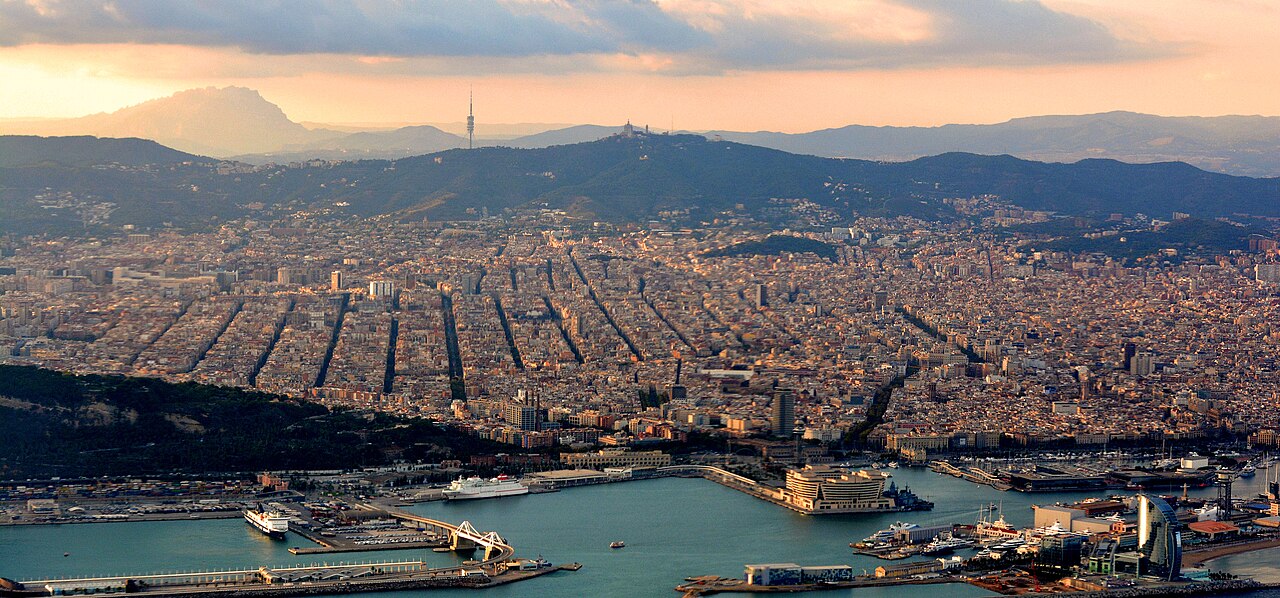
Málaga → Barcelona
997 kmImagine swapping the scent of orange blossom and the southern sun for the sea breeze and cutting-edge architecture of the northeast in a single day. This journey is not just a trip of nearly 1,000 kilometres; it is a voyage through the heart of Spain where the speed of the AVE competes with the freedom of the open road, offering you landscapes that range from coastal market gardens to the vast plains of the interior.
How to get from Málaga to Barcelona: quick overview
The best option for travelling from Málaga to Barcelona depends entirely on whether you prioritise absolute speed or the freedom to move around during the trip. If your goal is to arrive in the shortest possible time and enjoy comfort, the AVE train is unbeatable at just over 6 hours of travel; however, if you plan to go sightseeing along the way and visit intermediate cities, the car offers a flexibility that no other transport can match, although it will require an investment of 10 hours behind the wheel. For budget-conscious travellers who don’t mind a journey that is somewhat longer than the train but more comfortable than driving their own car, the bus presents itself as a solid and economical alternative.
By car from Málaga to Barcelona
Driving from Málaga to Barcelona means covering a distance of 997 km, which you can complete in approximately 10 hours of effective driving. The Spanish motorway network allows you to make this journey mostly toll-free, using a strategic combination of roads connecting the south with the Levante area. When leaving Málaga, you will take the A-45 (Autovía de Málaga), which will take you out of the Costa del Sol capital to link up with the major arteries of the interior or the coast. One of the backbones of this trip is the A-7 (Autovía del Mediterráneo), which runs along much of the coastline and is essential for approaching your final destination.
Depending on the exact route you choose and the stops you decide to make, you can connect with other important motorways listed in the national network. If you detour inland to visit cities like Albacete or connect with the north, you could use sections of the A-30 (Autovía de Murcia) and the A-31 (Autovía de Alicante), which are fast, toll-free roads. To link specific areas such as the connection between Almansa and Játiva, the A-35 is a key step. On the final stretch, as you approach Catalonia, the A-2 (Autovía del Nordeste) and the A-27 (Autovía Tarragona-Montblanc) will leave you at the gates of Barcelona. It is important to note that, although the list of available motorways is extensive (including the A-1, A-6 or A-15 for more northerly routes or detours towards Madrid), the logical combination for this journey focuses on the roads linking the Mediterranean and the southern peninsula, guaranteeing a smooth and mostly free trip.
By train from Málaga to Barcelona
The train is the fastest option for linking Málaga and Barcelona, with a journey time ranging between 363 and 400 minutes. Operated by Renfe, the High-Speed (AVE) service is the star of this route, offering a travel experience where time is drastically reduced compared to the road. The current frequency is 2 direct trains per day, which requires planning your schedule in advance. The first train leaves at 8:22 in the morning, allowing you to enjoy almost the entire day in the Catalan capital, while the last available train departs at 15:55. The journey begins at Málaga María Zambrano station and ends at Barcelona-Sants station, two transport hubs perfectly connected to the rest of the city. With a minimum duration of 363 minutes, the AVE turns a considerable distance into a comfortable and efficient journey.
By bus from Málaga to Barcelona
The bus is the most affordable alternative for travelling between these two cities, with fares starting at €42.15 and reaching up to €113.96 depending on how far in advance you book and demand. Established companies such as Alsa and FlixBus operate this route with direct services that eliminate the need for inconvenient transfers. The bus journey takes 394 minutes, placing it in a middle ground: it is slower than the AVE (which takes 363 minutes at its best) but offers very competitive value for money for travellers who do not need the urgency of the high-speed train. It is an ideal option for those looking to save on transport without sacrificing the comfort of a reserved seat and a continuous journey.
Recommended stops along the way
If you decide to drive, the route offers the chance to turn the transfer into a small sightseeing adventure by visiting key cities. Here are the verified stops to enrich your journey:
- Madrid: The capital of Spain is a monumental stop if you choose a more inland route. Although it involves a detour, it offers unrivalled cultural and leisure options to stretch your legs.
- Alacant / Alicante: Located on the coast, this is a perfect stop to enjoy the Mediterranean Sea. Its castle and beaches make it a welcome breather while driving along the A-7.
- Garrucha: A coastal enclave in the province of Almería. It is ideal for a technical gastronomic stop, famous for its fresh fish and seafaring atmosphere before continuing north.
- Huércal-Overa: Another town in Almería that serves as a connection point between the coast and the interior. It is a historic place that helps you understand the geography of southeastern Spain.
- Segovia: If your route passes through the centre of the peninsula, Segovia is a must-see stop for its Roman aqueduct and its alcázar (fortress). It is a heritage gem that justifies the detour from the main route.
- Albacete: Known as the “New York of La Mancha,” it is a spacious and modern inland city. It is an excellent halfway point to rest if you avoid the coast.
- Torrevieja: Famous for its colourful salt lakes and seafront promenade. It is a very popular stop on the coastal route for those seeking saline landscapes and sun.
- València: The third-largest city in Spain is a strategic and fascinating stop. You can visit the City of Arts and Sciences or get lost in the El Carmen neighbourhood before rejoining the A-7 towards Catalonia.
Where to sleep in Barcelona
Barcelona offers an immense variety of accommodation, from budget hostels to luxury hotels, spread across neighbourhoods with very distinct personalities. For a first visit, areas close to the centre such as the Eixample are ideal for their connectivity and safety, allowing you to walk to the main attractions. If you are looking for a historic atmosphere and charming streets, the Barrio Gótico (Gothic Quarter) and El Born are the preferred areas, although they can be noisier at night. For a more local and bohemian experience, the neighbourhood of Gràcia offers a village-like atmosphere within the city, with accommodation prices generally more moderate than in the absolute centre. Price ranges vary enormously depending on the season, but booking in advance is key to finding competitive rates in any of these areas.
Frequently asked questions about the Málaga–Barcelona route
How long does it take to get from Málaga to Barcelona?
Travel time varies by transport: by car it takes 10 hours (997 km), by AVE train between 363 and 400 minutes, and by bus 394 minutes.
Which is cheaper, the train or the bus?
The bus is generally cheaper, with fares from €42.15, while the AVE train, although faster, usually has higher fares and less schedule flexibility.
Is it worth renting a car?
Yes, it is worth it if you plan to make tourist stops in cities like Valencia, Alicante or Madrid, as public transport does not give you that freedom of movement in between.
When is the best time to travel?
It is best to travel avoiding peak traffic hours if you are driving (10h route) or booking in advance the 2 daily trains available (8:22 and 15:55) to secure a good price.
📍 También te puede interesar
Qué ver en Málaga →
Qué ver en Barcelona →