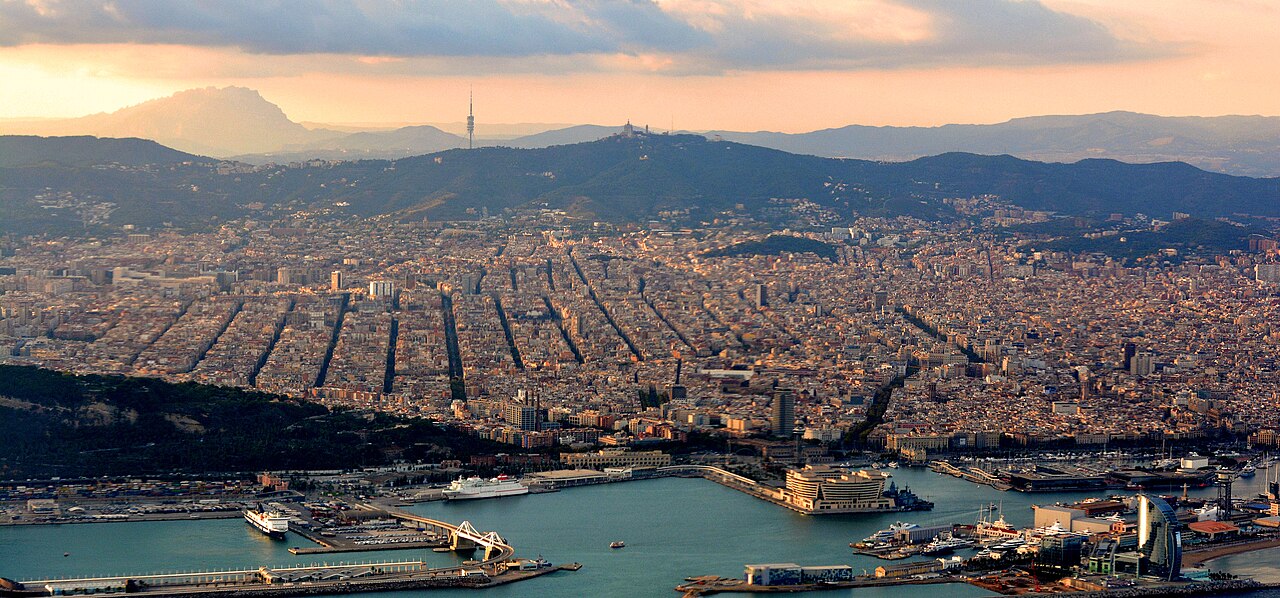
Valencia → Barcelona
349 kmImagine leaving the vibrant light of Valencia and, in just a few hours, finding yourself immersed in the cosmopolitan bustle of Barcelona, crossing landscapes that shift from fertile orchards to the golden Mediterranean coast. This journey is not just a transfer between two major metropolises; it’s an experience that combines the efficiency of the Mediterranean Corridor with the chance to stop at historical gems dotted along the highway, making the trip as memorable as the final destination.
How to get from Valencia to Barcelona: quick overview
The best way to travel from Valencia to Barcelona depends entirely on whether you prioritize speed, budget, or freedom of movement during the journey. If you seek maximum speed and comfort without worrying about traffic, the Euromed train operated by Renfe is the winning choice, covering the distance in just over 3 hours. On the other hand, if your priority is saving money or you need the flexibility to make intermediate stops, the bus offers fares from €5 and the car allows you to explore the route at your own pace along 349 kilometers of toll-free motorway.
For business travelers or tourists short on time, the rail connection is unbeatable, offering up to 12 daily services connecting the center of both cities. However, for families or groups of friends looking to share costs and enjoy the scenery, a private car is very competitive, especially since the main connecting roads, like the A-7, are toll-free. The bus stands out as the quintessential budget alternative, ideal for backpackers or travelers in no hurry who prefer to spend that money on the Barcelona experience.
Driving from Valencia to Barcelona
Driving from Valencia to Barcelona involves covering a distance of 349 kilometers, which takes approximately 3 hours and 30 minutes using a network of modern, toll-free motorways. The backbone of this route is the A-7, known as the Autovía del Mediterráneo (Mediterranean Motorway) or Autovia de la Mediterrània, which hugs the coast offering spectacular views and well-maintained asphalt that makes for a relaxed drive. With no tolls on this main route, the cost of the trip is reduced exclusively to fuel and vehicle wear and tear, making it very attractive for groups of up to four people.
In addition to the A-7, the verified road network for this connection includes other toll-free motorways that can serve as alternatives or secondary connections depending on your exact starting point or specific detours. The A-2, or Autovía del Nordeste (Northeast Motorway), is another crucial toll-free route connecting the interior with the Catalan capital. The available infrastructure also includes the A-3 (Autovía del Este, East Motorway), the A-27 (Autovia Tarragona-Montblanc), and the A-23 (Autovia Mudèixar), all of which are free of toll charges, ensuring you won’t encounter any unexpected financial surprises at payment barriers during your road trip.
By train from Valencia to Barcelona
The train journey between Valencia and Barcelona is operated exclusively by Renfe and connects Valencia-Estació Del Nord station with Barcelona-Sants, offering the fastest option with times ranging from 189 to 409 minutes depending on the type of service chosen. The frequency is remarkably high, with a total of 12 daily trains covering the route, allowing great schedule flexibility for the traveler, with departures starting at 6:30 in the morning and running until 19:47 in the evening.
There are four types of train available for this route, each with different speed and frequency characteristics. The fastest option is the Intercity, which has 4 services per day and completes the journey in just 189 minutes, followed very closely by the Euromed, with 6 daily frequencies and a travel time of 193 minutes. For those seeking other alternatives, the Alvia is available with 1 daily train taking 232 minutes, and finally the Regional Exprés (REG.EXP.), which is the slowest option with 1 train per day and a duration of 409 minutes, ideal for those who want to enjoy the scenery at a leisurely pace and save on the ticket.
By bus from Valencia to Barcelona
Traveling by bus from Valencia to Barcelona is the most economical option available, with fares that can be as low as €5 and a maximum of €37, operated by established companies such as Alsa, Transportes Bacoma S.A. and Hife. The estimated journey time by bus is 230 minutes, placing it at an intermediate point between the speed of high-speed trains and the flexibility of a car, making it a solid alternative for budget travelers who do not want to give up the comfort of a direct service.
The companies operating this route, specifically Alsa, Transportes Bacoma S.A. and Hife, guarantee a direct connection without the need for transfers, which greatly simplifies travel logistics. Although the 230-minute journey is longer than the fastest train, the price difference can be significant, especially if booked in advance, making the bus the undisputed king of savings on this Mediterranean corridor.
Recommended stops along the way
If you decide to make the journey by car, the route is dotted with cities of enormous tourist potential that deserve a stop to stretch your legs or even stay overnight, starting with Castelló de la Plana / Castellón de la Plana, a strategic stop north of Valencia known for its heritage and proximity to the sea. Continuing northwards, Tarragona stands out as a must-see stop due to its impressive Roman legacy, offering a perfect historical contrast before arriving at the modernity of Barcelona, while very close by is Reus, famous for its Modernista architecture and its connection to Gaudí.
For those who prefer more inland routes or specific detours using the aforementioned highway network, Caspe and Alcañiz offer a quieter, more authentic inland experience, far from the coastal bustle but full of history and local gastronomy. Another interesting stop is Montblanc, a walled medieval town that seems frozen in time and is directly connected via the A-27, providing a unique cultural breather. Finally, before fully entering the metropolitan area of Barcelona, l’Hospitalet de Llobregat serves as the urban gateway, a vital connection point marking the definitive transition into the great city of Barcelona.
Where to sleep in Barcelona
Barcelona offers a wide variety of areas to stay, from the historic Barrio Gótico (Gothic Quarter) to the modern Eixample district, with price ranges to suit all budgets, although booking in advance is advisable due to high tourist demand. In the historic centre, you will find boutique hotels and charming hostales (family-run guesthouses) that allow you to walk to the main attractions, while areas like Gràcia offer a more local and tranquil atmosphere, ideal for longer stays or for travellers looking to escape the intense noise of the Ramblas.
As for accommodation types, the city covers the full spectrum, from budget pensiones (guesthouses) perfect for backpackers to five-star luxury hotels with views of the sea or the Sagrada Familia. Prices can vary drastically depending on the season, with the summer months and events like the Mobile World Congress being the most expensive periods, so looking for options in areas well connected by metro but slightly away from the ultra-touristy core can result in significant savings without sacrificing the quality of the experience.
FAQs about the Valencia-Barcelona route
How long does it take to get from Valencia to Barcelona?
Travel time varies by means of transport: by car it takes 3 hours and 30 minutes, the fastest train (Intercity) takes 189 minutes, and the bus takes 230 minutes.
Which is cheaper, the train or the bus?
The bus is generally cheaper, with prices ranging from €5 to €37, while train prices are not specified in a range but tend to be higher than the minimum bus fare.
Is it worth renting a car?
Yes, it is worth it if you plan to stop in cities like Tarragona, Reus, or Montblanc, as the 349 km route is covered by toll-free motorways like the A-7, offering total freedom.
When is the best time to travel?
The best time to travel depends on your preferences, but given that there are 12 daily trains and multiple bus frequencies, you can travel at any time of the year, perhaps avoiding peak summer periods if you are looking for lower accommodation prices.
📍 También te puede interesar
Qué ver en Valencia →
Qué ver en Barcelona →