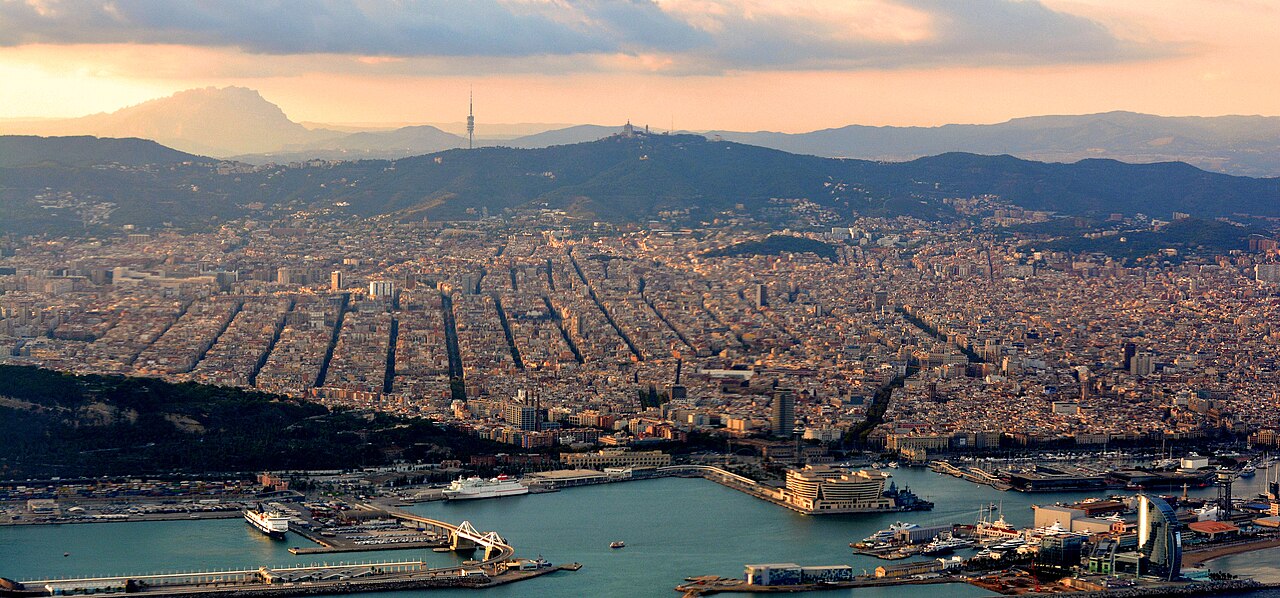
Madrid → Barcelona
621 kmImagine crossing the Iberian Peninsula from west to east, leaving behind the Castilian plateau to embrace the Mediterranean breeze in just a few hours. This journey is not merely a geographical shift between two of Spain’s most vibrant cities, but an experience that combines the dizzying speed of the AVE with the freedom to roam through ever-changing landscapes under the sun.
How to Get from Madrid to Barcelona: Quick Overview
The most efficient and recommended option for the majority of travelers is undoubtedly the high-speed train, which connects both nerve centers in under three hours. If you prefer the flexibility of setting your own pace and discovering charming villages, the car is a solid alternative covering 621 km, while the bus presents itself as a direct option operated by companies like FlixBus for those who prioritize economy over speed.
Madrid to Barcelona by Car
Driving from Madrid to Barcelona involves covering a total distance of 621 km, a journey that, under normal traffic conditions, takes approximately 6 hours. The backbone of this trip is the A-2, known as the Autovía del Nordeste (Northeast Highway), which is completely free and without tolls, facilitating a smooth journey through the interior of the peninsula. Although the A-2 is the direct route par excellence, the Spanish highway network offers multiple alternatives and toll-free connections that might interest you if you decide to make a slight detour or explore surrounding areas. Among the available toll-free roads that form part of the national infrastructure are the A-7 (Autovía del Mediterráneo), the A-23 (Autovía Mudéjar), and the A-27 (Autovía Tarragona-Montblanc), which can serve as strategic links depending on your exact point of departure or final destination within the cities. Other major arteries such as the A-1 (Autovía del Norte), A-3 (Autovía del Este), A-4 (Autovía del Sur), A-5 (Autovía del Suroeste), and A-6 (Autovía del Noroeste) make up the radial network from Madrid, although for this specific eastbound journey, the A-2 remains the undisputed protagonist, accompanied in its final stretches by the A-7 and the A-27 to enter the Catalan region.
Madrid to Barcelona by Train
The train is, without a doubt, the fastest and most comfortable way to connect Madrid and Barcelona, with an operator like Renfe dominating the route. The offering is extensive, featuring an impressive frequency of 26 daily trains departing from Madrid Pta. Atocha – Almudena Grandes station and arriving at Barcelona-Sants station. The jewel in the crown is the AVE service, with 25 daily departures that cover the journey in a record time of 182 minutes, allowing passengers to enjoy almost three hours of productivity or absolute rest. Additionally, there is an AVE INT (International or Intercity according to internal coding) option with 1 daily departure that takes 209 minutes. The schedules are designed to cover the entire day, with the first train leaving at 6:16 a.m. and the last at 20:30, offering total flexibility for business travelers or tourists who want to maximize their time at the destination.
Madrid to Barcelona by Bus
The bus is a viable alternative for those seeking a direct connection between the two cities, with FlixBus being the company that operates this service on the route. Although specific data on the exact duration in minutes and the ticket price may vary depending on the season and demand, the existence of a direct line confirms that it is an accessible option for the traveler. Without fixed pre-established times in the current data, it is recommended to check real-time availability, but the main advantage lies in point-to-point connectivity without the need for transfers, ideal for backpackers or budget-conscious travelers who are in no rush to arrive.
Recommended stops along the way
If you decide to travel by road, the route is dotted with fascinating towns that deserve a pause to stretch your legs and soak up the local culture. Below, we detail the verified stops that will enrich your experience:
- Alcalá de Henares: Located very close to the start of the route, this city is an essential historical treasure. Famous as the birthplace of Miguel de Cervantes, its old town, declared a UNESCO World Heritage Site, features a historic university and cobblestone streets that transport the traveler back to the Spanish Golden Age (Siglo de Oro).
- Torrejón de Ardoz: Just after Alcalá, this town offers a strategic stop. Known for its air base and extensive green areas, it is an ideal resting point before tackling the long straight stretch of the A-2 motorway.
- Daganzo de Arriba: A municipality that represents the essence of the Community of Madrid at its borders. It is a brief but authentic stop to observe the traditional architecture of the central region before the landscape changes.
- Caspe: Already entering the province of Zaragoza, Caspe stands as a fundamental historical landmark. Here, the Compromiso de Caspe (Compromise of Caspe) was signed, an event that changed the history of the Crown of Aragon. Its collegiate church and its setting on the banks of the Ebro River make it a top-tier cultural stop.
- Alcañiz: Known as the “Gateway to Aragon,” Alcañiz offers a stunning visual contrast with its castle-palace of the Order of Calatrava dominating the skyline. It is the perfect place to sample the cuisine of Bajo Aragón and enjoy a vibrant main square (Plaza Mayor).
- Andorra: Not to be confused with the principality, this Andorra is located in the province of Teruel. It is a surprising stop for its industrial and mining heritage, as well as its thermal power station and the surrounding natural environment, offering a different perspective of inland Spain.
- Reus: Already in Catalan lands and very close to the coast, Reus is the city of Modernism. The birthplace of Gaudí, its streets are filled with buildings boasting spectacular facades. It is the perfect stop for a vermouth (vermú) before the final stretch.
- Tarragona: The final gem before reaching Barcelona. Tarragona combines Roman history, with its impressive seaside amphitheatre, and a relaxed Mediterranean atmosphere. Stopping here allows you to enjoy the coast and visit one of the most important archaeological sites on the peninsula.
Where to stay in Barcelona
Upon arriving in the Ciudad Condal (Countess City), your choice of accommodation will depend on what you are looking for: if you prefer the hustle and bustle and proximity to tourist attractions, the Eixample and Barrio Gótico (Gothic Quarter) areas are ideal, although prices tend to be higher. For a more local and tranquil experience, neighbourhoods like Gràcia or Poblenou offer a more moderate price range and an authentic community atmosphere. Price ranges in the city are wide, varying from budget hostels to five-star luxury hotels, so booking in advance is recommended, especially if you travel during high season, to secure the best available rates on the market.
FAQs about the Madrid-Barcelona route
How long does it take to get from Madrid to Barcelona?
Travel time varies depending on the mode of transport you choose: by car it takes approximately 6 hours covering 621 km, while the fastest AVE train journey takes just 182 minutes.
Which is cheaper, the train or the bus?
Generally, buses operated by companies like FlixBus tend to have cheaper fares than the Renfe AVE train, although exact bus prices vary and are not fixed across all schedules, while the train offers different classes and prices depending on how far in advance you book.
Is it worth renting a car?
Renting a car is worth it if you plan to make several of the recommended stops along the route, such as Tarragona, Alcañiz, or Caspe, as it gives you total freedom, but if you just want to get from point A to point B quickly, the train is more efficient.
When is the best time to travel?
The best time to travel depends on your preferences, but considering the frequency of 26 daily trains and the availability of toll-free motorways, the route is passable all year round, with spring and autumn being ideal for enjoying the intermediate stops in pleasant weather.
📍 También te puede interesar
Qué ver en Madrid →
Qué ver en Barcelona →