Madrid → Segovia
91 kmHow to get from Madrid to Segovia: quick overview
Madrid and Segovia are separated by about 91 km by road, a journey that takes approximately 1 hour and 5 minutes by car. For most travelers, the train is the most convenient option: Renfe’s AVLO, AVE, and AVANT services complete the route in just 25 minutes from Madrid-Chamartín-Clara Campoamor station to Segovia Guiomar, with up to 45 daily departures. If you’d rather save some money, the direct bus with Avanzabus takes about 85 minutes and is the cheapest alternative. Driving is worth it if you want to stop in towns like San Lorenzo de El Escorial or Torrelodones, or if you plan to explore the province of Segovia afterward.By car from Madrid to Segovia
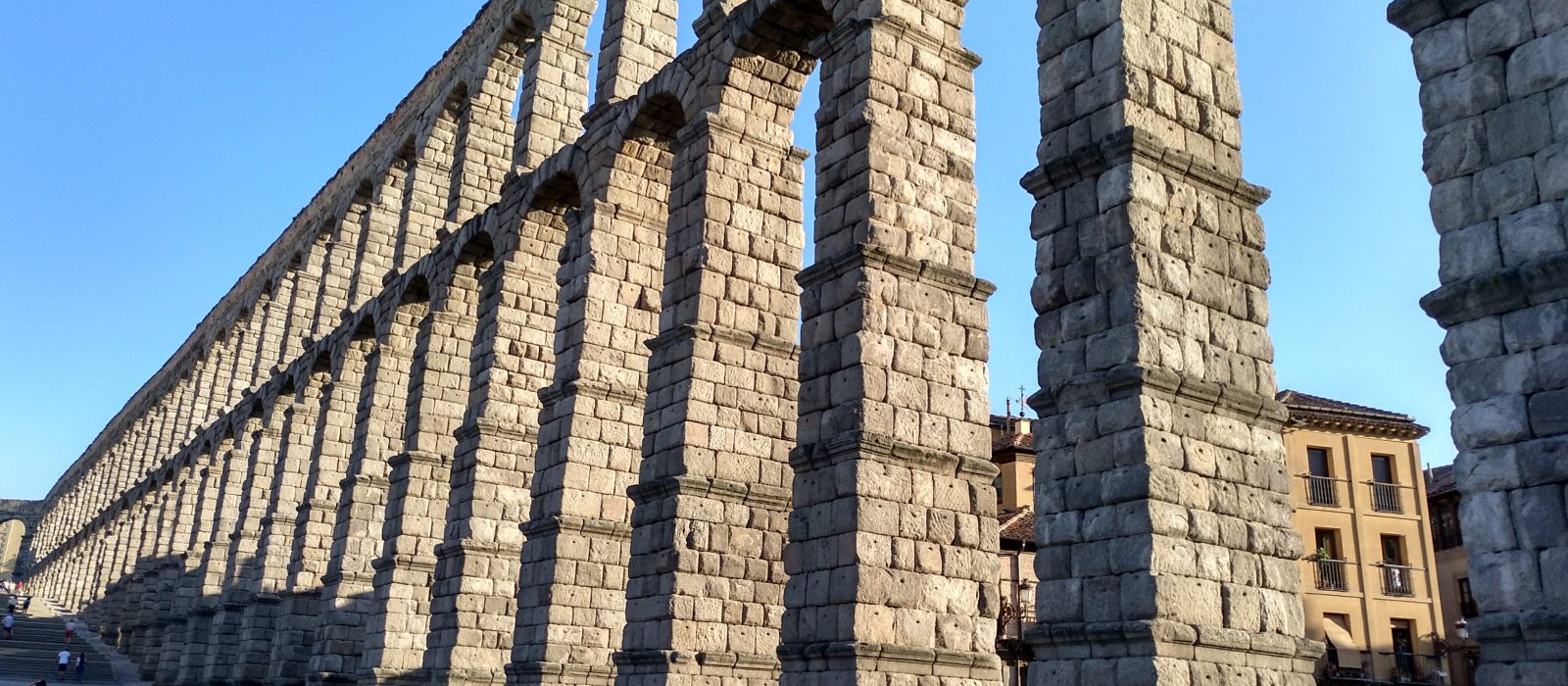
The road route totals 91 km and takes around 1 hour and 5 minutes under normal traffic conditions. To leave Madrid, you have several toll-free highways that take you toward the northwestern part of the region, where the final stretch to Segovia begins. The A-6 (Autovía del Noroeste) is the most common option for heading toward Villalba and connecting with the mountains; the A-1 (Autovía del Norte) also works if you’re coming from northern Madrid. None of these roads has tolls, so the cost of the trip is limited to gas. Once past the mountains, the road descends toward the Castilian plain and the silhouette of the Aqueduct appears in the distance like a promise. The highways that cross the capital —A-5, A-2, A-3, A-4, and A-42— are all toll-free and serve as access routes to the A-6 or A-1 depending on your starting point. That said, avoid the morning rush hour (7:30–9:30) and the evening one (17:30–19:30) if you want to keep that clean 65-minute travel time.By train from Madrid to Segovia
The train is, without question, the fastest way to get there: according to Renfe, high-speed services cover the 91 km in just 25 minutes. The origin station is Madrid-Chamartín-Clara Campoamor and the destination is Segovia Guiomar, located about 7 km from the historic center (there’s a shuttle bus and taxis that complete the journey in 15 minutes). Renfe operates up to 45 daily trains on this route, with the first service at 6:36 in the morning and the last at 21:30. The types of trains available are varied. The AVLO is the “low-cost” high-speed service, with 3 daily departures that complete the journey in 25 minutes and prices starting at the most affordable of the high-end range. The AVE (3/day) offers the premium experience, also in 25 minutes. The AVANT, with 21 daily departures, is the workhorse of the corridor: it covers the route in 25 minutes and usually offers the most competitive fares. The ALVIA (8/day) takes 26 minutes and the Intercity (2/day) arrives in 27 minutes. For those not seeking speed but price, the REGIONAL takes 111 minutes, almost double, but allows you to save a few euros. In short: if time is money, any high-speed service gets you there in under half an hour.By bus from Madrid to Segovia
The direct bus is an interesting alternative for those traveling on a tight budget or departing from parts of Madrid better connected by road. The companies Avanza and Avanzabus operate this line, with an average duration of 85 minutes and prices ranging from €2 to €12 depending on schedule, advance booking, and fare type. Although it takes longer than the AVE, the bus has the advantage of departing from several stations in Madrid and dropping you off right in Segovia, without the added transfer from Segovia Guiomar to the center. It’s a solid option for backpackers, students, and those who prefer to book at the last minute without surprises of high prices.Recommended stops along the way
If you decide to drive or simply want to make the most of the trip, the Madrid–Segovia route crosses the Sierra de Madrid and offers some very appealing stops.- San Lorenzo de El Escorial: the town that serves the Monastery of El Escorial, a World Heritage Site. It’s worth it even if only to grab a drink in its main square and take in the view of the mountains from the Silla de Felipe II (Philip II’s Seat).
- El Escorial: a town adjacent to San Lorenzo, with a good tapas scene and hiking trails heading into the mountains.
- Alpedrete: a quiet mountain municipality, ideal for a brief stop to stretch your legs.
- Torrelodones: a town with character, famous for its Plaza de la Constitución, its restaurants, and the atmosphere of the Colonia de Torrelodones neighborhood. Perfect for a mid-morning coffee.
- Collado Villalba: the largest urban center in the area, with all the services: gas stations, supermarkets, and a varied dining scene.
- Moralzarzal: a small town with rural charm, very popular on weekends with Madrid residents seeking fresh air.
- Colmenar Viejo: a historic town with a pretty old quarter and good tapas options. A good place for brunch before continuing the route.
- Villanueva del Pardillo: a modest but useful stop to refuel or take a breather before the climb into the mountains.
Where to stay in Segovia
For a short visit, the best option is to stay in the historic center, right by the Aqueduct: that’s where you’ll find the monuments, restaurants, and social life all in one place. You’ll find everything from charming guesthouses on cobblestone alleys to boutique hotels in restored palaces, with prices typically ranging between €60 and €150 per night for a standard double room. If you prefer something more functional and budget-friendly, the area around the station and the Paseo del Salón offers more affordable options, between €40 and €80. For a more relaxed getaway, you can also look for accommodation in La Granja de San Ildefonso, about 15 km away, where there are rural houses and small hotels with similar rates but surrounded by nature. If you’re traveling by car, be sure to ask about parking: Segovia’s old town has regulated parking zones and paid public parking lots.Where to eat along the route
Before leaving Madrid, two essential classics:- Cocido Madrileño: the capital’s signature stew. Chickpeas, potatoes, carrots, cabbage, beef, chicken, bacon, and cured sausages, served in three vuelcos (courses): soup, chickpeas with vegetables, and meats. Deeply comforting and perfect for fueling up before the excursion.
- Bocadillo de Calamares: Madrid’s most traditional tapa. Fresh squid, battered and fried, inside a crusty bread roll, often with a squeeze of lemon. It’s eaten standing at the bar and is an inseparable part of the Madrid experience.
- Cochinillo Asado: Segovia’s star dish. Suckling pig roasted in a wood-fired oven until the skin is crispy and the meat is so tender that, according to tradition, it’s cut with the edge of a plate. Few ingredients: salt, water, and hours of patience.
- Judiones de La Granja: a robust stew with large butter beans from La Granja de San Ildefonso, pig’s ear, chorizo, bacon, and vegetables. A spoon dish ideal for the cold days of inland Castile.
- Chorizo de Cantimpalos: a cured Segovian sausage made with pork, paprika, garlic, and oregano. Intense flavor, smoky aroma, and its own designation of origin. Perfect for tapas or to take home as a gastronomic souvenir.
Frequently asked questions about the Madrid-Segovia route
How long does it take to get from Madrid to Segovia?
The time varies greatly depending on the mode of transport. By high-speed train (AVLO, AVE, AVANT or ALVIA) the journey takes between 25 and 27 minutes. By car, the 91 km are covered in approximately 1 hour and 5 minutes via motorway. By direct bus with Avanzabus the trip takes about 85 minutes. The regional train is the slowest option, with a 111-minute journey.
Which is cheaper, the train or the bus?
The bus is clearly the most economical option, with tickets ranging from €2 to €12 depending on the fare. By train, prices vary greatly depending on the type of service: AVLO and AVANT offer the most competitive fares within high-speed services, while AVE tends to be the most expensive. The REGIONAL train can be competitive in price, although it takes over an hour and a half.
Is it worth renting a car?
It depends on your plans. If you are only visiting Segovia’s historic centre and don’t want to waste time, the train is unbeatable: 25 minutes and no parking worries. The car, on the other hand, is worth it if you want to stop in San Lorenzo de El Escorial, Torrelodones or Colmenar Viejo, or if you plan to move on afterwards to La Granja de San Ildefonso, the villages of the province or the mountains. Remember that the A-1 and A-6 motorways are toll-free, so the extra cost is only petrol and parking.
When is the best time to travel?
The best time is during the spring months (April–June) and autumn (September–October), when temperatures are mild and the Castilian-Leonese light is spectacular for photographing the Aqueduct. Winter can be cold but has its charm, especially if you coincide with a day of cochinillo (roast suckling pig) cooked in a wood-fired oven. In summer, avoid the central hours of the day by car: traffic jams leaving Madrid can double the travel time.
💡 ¿Sabías que...?
- ● El emperador romano Teodosio I el Grande, uno de los más importantes del Imperio Romano, nació en la provincia de Segovia. (https://famososespanoles.com/famosos-de-segovia/)
- ● El Acueducto de Segovia condujo agua a la ciudad hasta el año 1973, casi dos milenios después de su construcción a finales del siglo I o principios del II d. C. (https://es.wikipedia.org/wiki/Acueducto_de_Segovia)
- ● Segovia fue la primera ciudad castellana en proclamar a Isabel como reina, lo que motivó una importante rehabilitación del Acueducto como premio de los Reyes Católicos. (https://www.turismodesegovia.com/es/acueducto/noticias/el-misterio-de-los-36-arcos-del-acueducto-de-segovia)
- ● El ciclista Perico Delgado, uno de los mejores españoles de todos los tiempos, es natural de Segovia. (https://famososespanoles.com/famosos-de-segovia/)
📍 También te puede interesar
Qué ver en Madrid →
Qué ver en Segovia →