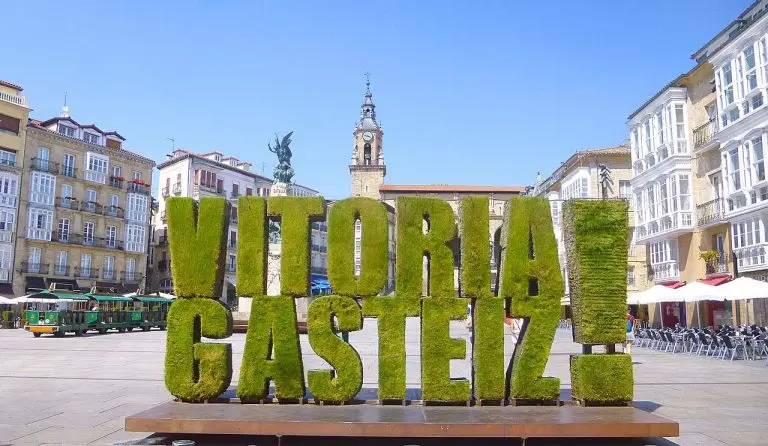
Logroño → Vitoria-Gasteiz
90 kmCrossing the Ebro valley to jump from Rioja red wine to Álava pintxos is one of those small travel pleasures that happens in the blink of an eye, with the profile of the Sierra de Cantabria escorting you through the window.
How to get from Logroño to Vitoria-Gasteiz: quick summary
The fastest and most flexible way to cover the 90 km separating Logroño from Vitoria-Gasteiz is by car, with a travel time of approximately 1 hour along the AP-68. If you don’t have your own vehicle, the direct bus is an excellent alternative: it takes 70 minutes and costs between 3 and 7 €, making it the cheapest option. There is no direct train between the two cities, so rail is ruled out for this particular journey. For travellers who want to make food stops in La Rioja Alavesa or simply go at their own pace, the car is the best choice; for those seeking simplicity and low cost, the bus wins hands down.
By car from Logroño to Vitoria-Gasteiz
The drive takes 1 hour and combines four roads: the AP-68 as the backbone of the route, followed by the A-1 and two short stretches on the N-124 and N-102. The AP-68, the Ebro Motorway, covers about 54 km of the journey and is a toll road; it is a comfortable, fast road that runs parallel to the Ebro river, offering a landscape of vineyards and Álava hills that makes the trip very pleasant. It then connects with the A-1, toll-free, for about 17 km, before continuing on the N-124 and N-102, each around 5 km, already in the vicinity of Vitoria-Gasteiz. It’s worth carrying cash or a card for the AP-68 toll and checking traffic conditions at peak times, although significant delays are rare.
By bus from Logroño to Vitoria-Gasteiz
The direct bus is the only public transport option without transfers, with a duration of 70 minutes and a price ranging from 3 to 7 €. Several companies operate on this route: Álavabus, ALSA, Bilmanbus and Alavabus (line 9), guaranteeing several departures throughout the day. The buses are usually comfortable and the journey is direct, with no relevant intermediate stops. To get the lowest fares, it’s best to book in advance on the ALSA or Bilmanbus websites, especially at weekends or on the eve of public holidays. Tickets can be purchased online or at the Logroño bus station, located next to the train station.
Recommended stops along the way
The road journey allows for two brief and very accessible stops before leaving the metropolitan area of Logroño: Lardero and Villamediana de Iregua. Both are right next to the Rioja capital, making them ideal for a quick break without deviating much from the main route.
Lardero is a municipality that serves as a gateway to the vineyards south of Logroño. Its proximity to the city centre makes it a practical stop to refuel, grab a coffee or stretch your legs before heading onto the AP-68. It’s a quiet town with a residential neighbourhood feel and a few family wineries nearby, perfect for a 15-20 minute logistical stop.
Villamediana de Iregua lies east of Logroño, very close to the start of the route towards Vitoria. It’s a growing town with good access and basic services. If you’re travelling by car, it’s a convenient option to buy something to eat or drink before getting on the motorway, avoiding the traffic of central Logroño. Its parish church and main square offer a pleasant scene for a brief stop.
Where to stay in Vitoria-Gasteiz
Vitoria-Gasteiz offers accommodation concentrated mainly in the Casco Viejo (Old Town), the Ensanche and the areas near the centre, with options for every budget. The Casco Viejo is the most picturesque area, with cobbled streets, pintxos bars and a lively atmosphere; here you’ll find charming hostales and pensiones, ideal for travellers who want to be close to local life. The Ensanche, around Calle Dato and Plaza de la Virgen Blanca, is home to mid-range and upscale hotels, with easy access to shops, restaurants and public transport. For cheaper stays, the outskirts and the area around the Palacio de Congresos Europa offer functional hotels with parking, very handy if you’re travelling by car. Prices vary by season, but in general you can find double rooms from around €50-60 in hostales and pensiones, while mid-range hotels cost around €80-120 per night.
Where to eat along the route
This journey is a feast for the palate, because it crosses three territories with legendary larders: La Rioja, Navarra and Álava. In the Rioja area, patatas a la riojana (Rioja-style potatoes) are the quintessential spoon dish: potatoes cut into irregular chunks, cooked with Rioja chorizo, pancetta and sometimes choricero pepper, making a hearty and very popular stew. Chuletillas de cordero (grilled suckling lamb chops) cooked over embers with coarse salt are another Rioja treasure, served very juicy in the region’s wineries and restaurants. As you approach Navarra, pimientos del piquillo rellenos (stuffed piquillo peppers) filled with minced meat, cod or seafood and covered in sauce are an essential classic. Trucha a la navarra (Navarrese-style trout), roasted or fried and wrapped in slices of jamón serrano, is another signature dish. Chistorra, a fresh pork sausage with paprika that gives it its reddish colour, is eaten fried or grilled as an appetiser. Once in Álava, perretxikos are highly prized seasonal mushrooms, sautéed with oil, garlic and parsley. To drink, Rioja is king in the first part of the trip, while txakoli, a young, lightly sparkling white wine, marks your arrival in the Basque Country.
Frequently asked questions about the Logroño-Vitoria-Gasteiz route
How long does it take from Logroño to Vitoria-Gasteiz?
By car, the 90 km journey takes approximately 1 hour via the AP-68 and the A-1. By direct bus, the journey takes 70 minutes. There is no direct train between the two cities.
Which is cheaper, the train or the bus?
The bus is the cheapest option and, in fact, the only viable one for direct public transport: it costs between €3 and €7. There is no direct train between Logroño and Vitoria-Gasteiz, so no comparison is possible in terms of price or time for this particular journey.
Is it worth renting a car?
Yes, especially if you want to make stops along the route through La Rioja Alavesa or explore the surroundings of Vitoria-Gasteiz freely. A car lets you cover the 90 km in 1 hour and stop wherever you like, something the direct bus doesn’t allow. If you’re only going to move around the centre of Vitoria, the bus is enough and much cheaper.
When is the best time to travel?
Spring and autumn are the best seasons for this journey: mild temperatures, green landscapes and, in spring, perretxiko season in Álava. Summer can be hot in the Ebro valley, while winter offers special light and less traffic, though with a higher chance of fog on the AP-68.
💡 ¿Sabías que...?
- ● En la Plaza del Machete, en época medieval, el Procurador General renovaba su juramento sobre un machete con el que se amenazaba con cortarle la cabeza si no cumplía. (https://www.tierrasinsolitas.com/curiosidades-de-vitoria-gasteiz-que-quiza-no-sabias/)
- ● Bajo el casco histórico de Vitoria-Gasteiz se extiende un laberinto de túneles subterráneos, como el que une el Palacio de Escoriaza-Esquivel con la Catedral de Santa María. (https://www.noticiasdealava.eus/que-mundo/2024/10/13/cinco-secretos-vitoria-seguramente-no-sabias-8801417.html)
- ● Vitoria-Gasteiz se asentó sobre una colina rodeada por dos ríos, el cauce Los Molinos y el río Zapardiel, a los que se suma un acuífero subterráneo. (https://www.gasteizhoy.com/la-historia-de-vitoria-gasteiz-a-traves-del-agua/)
- ● En el siglo XIX quedaban en Vitoria-Gasteiz 324 pozos, repartidos en 31 de sus 50 calles, y la ciudad se abastecía al completo tanto por el agua de los pozos como por la de las fuentes. (https://www.gasteizhoy.com/la-historia-de-vitoria-gasteiz-a-traves-del-agua/)
- ● Desde que en 1868 General Álava fuera la primera calle de Vitoria-Gasteiz en dedicarse a una persona ilustre, exceptuando los nombres de santos, muchas personalidades destacadas pueblan las calles, sendas y plazas de la ciudad. (https://www.gasteizhoy.com/quien-es-quien-calles-vitoria/)
- ● La Casa del Cordón debe su nombre al cordón franciscano esculpido en su fachada. (https://www.noticiasdealava.eus/que-mundo/2024/10/13/cinco-secretos-vitoria-seguramente-no-sabias-8801417.html)
📍 También te puede interesar
Qué ver en Logroño →
Qué ver en Vitoria-Gasteiz →