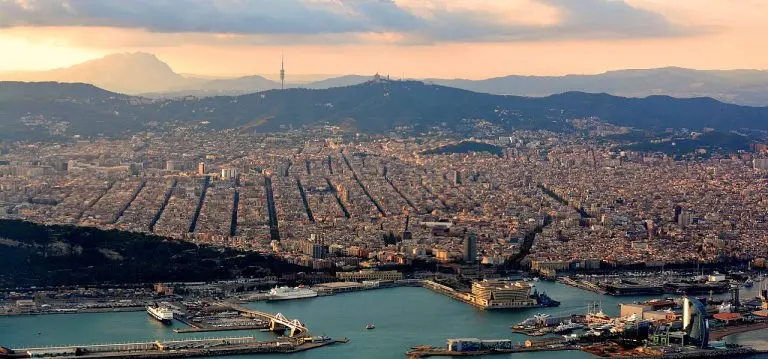
Montserrat → Barcelona
65 kmTraveling from Montserrat to Barcelona: a complete guide
Leaving behind the stone spires of Montserrat and heading down to the Mediterranean is one of those Catalan journeys best enjoyed with your nose pressed to the window: first you wind between rock walls, then you shoot along highways flanked by vineyards and Modernista factories, and in just over an hour you’re breathing in the salty air of Barcelona. It’s only 65 kilometers, but the change of scenery—and temperature—is so dramatic it feels like you’ve crossed an invisible border.
How to get from Montserrat to Barcelona: quick summary
There are two main options for covering the 65 km between Montserrat and Barcelona: the FGC train (60-64 minutes, 33 daily departures) or driving (1 hour via the C-16). The train is unbeatable if you don’t want to deal with traffic on the approach into Barcelona, while a car gives you the freedom to detour to Terrassa, Sabadell or Sant Feliu de Llobregat. The direct bus (55 minutes with La Hispano Igualadina or Autocares Julià) is a comfortable, frequent alternative, ideal for those staying near Sants station or Plaça Espanya.
Driving from Montserrat to Barcelona
The drive takes exactly 1 hour if there are no hold-ups, and combines three very different roads. The first is the BP-1121, the Montserrat road, which treats you to about 7 km of descending curves with the mountain in your rearview mirror: take it easy, because it’s narrow and tour coaches use it daily. Then you join the C-55, the Eix del Llobregat, for about 5 km, which connects you to the valley and drops you at the C-16 junction. The C-16, the Barcelona-Manresa highway, is the main event: some 40 km of fast road cutting through the Vallès Occidental and delivering you into Barcelona’s urban grid from the upper part of the city. Watch out for weekday rush hours between Terrassa and Barcelona, where the C-16 can get quite congested.
Taking the train from Montserrat to Barcelona
The direct FGC train is the fastest and most reliable option: the R5 line covers the route in 60-64 minutes and runs 33 times a day. The operator is FGC (Ferrocarrils de la Generalitat de Catalunya), and the departure station is Montserrat-Aeri, which sits at the foot of the mountain, not at the monastery. To reach the monastery from the station you have to go up on the Aeri de Montserrat cable car, a ride of about 5 minutes that is an attraction in itself. The destination is Barcelona – Plaça Espanya, a central station well connected to the metro and city buses. The first train leaves at 06:25 and the last at 22:45, which lets you make the trip to Montserrat with complete flexibility. Within the R5 line there are three types of service: the FGC R5 (28 trains a day, 60 minutes), the FGC R50 (3 trains a day, 60 minutes) and the FGC R53 (2 trains a day, 64 minutes).
Taking the bus from Montserrat to Barcelona
The direct bus is the fastest option on paper: 55 minutes of travel, even less than the train. Two companies operate it: La Hispano Igualadina and Autocares Julià, both departing from the vicinity of Montserrat and arriving at central stations in Barcelona. It’s a particularly practical alternative if you’re traveling with luggage, because you avoid the train and cable car transfers. The frequency isn’t as high as the FGC train, but for a same-day round trip it works perfectly if you check the timetables in advance.
Recommended stops along the way
If you’re driving, the 65 km route can easily stretch into half a day with stops in these towns, all of them accessible from the C-16 or the C-55 without too much of a detour.
Abrera
Abrera is the first logical stop on the way down from Montserrat, right where the BP-1121 meets the C-55. It’s a quiet municipality in the Baix Llobregat with a small, pleasant old town, ideal for a quick coffee before hitting the motorway. Don’t expect any great monuments, but it is a practical, uncrowded stop.
Sabadell
Sabadell is one of the big cities of the Vallès Occidental, with a large pedestrian centre and a very active commercial life. If you make a short detour off the C-16, you can stroll along the Eix Macià or through the Parc de Catalunya, one of the green lungs of the comarca. It’s a good option for lunch if you’d rather avoid Barcelona’s tourist prices.
Terrassa
Terrassa shares the spotlight of the Vallès with Sabadell, but it has more striking Modernista and industrial heritage: the Masia Freixa, the Vapor Aymerich and the group of churches of Sant Pere are all visits that justify the stop. What’s more, it’s directly connected to the C-16, so the detour is minimal.
Santa Coloma de Gramenet
Santa Coloma de Gramenet lies within Barcelona’s metropolitan area, on the other side of the Besòs river. It’s not a touristy stop, but it’s interesting if you’re staying in the northern part of the city or want to explore the lesser-known side of Barcelona’s outskirts. Access from the C-16 is straightforward via the Ronda de Dalt.
Montcada i Reixac
Montcada i Reixac is an elongated municipality stretching between the Besòs and the Collserola range. It’s a strategic stop if you’re coming along the C-16 and want to avoid city-centre traffic: from here you can take public transport into Barcelona or simply take a break in its green areas beside the river.
l’Hospitalet de Llobregat
l’Hospitalet de Llobregat is the second most populous city in Catalonia and sits right next to Barcelona on its southern side. If your accommodation is near the Fira or Sants station, this is the natural gateway. It isn’t a classic tourist stop, but it has neighbourhoods full of character and an excellent local food scene.
Sant Feliu de Llobregat
Sant Feliu de Llobregat is a mid-sized city on the banks of the Llobregat river, with a pleasant centre and a much slower pace of life than Barcelona. If you arrive via the C-55 from Montserrat, it’s a comfortable stop to stretch your legs before heading into the metropolitan area.
Pallejà
Pallejà is a small, residential municipality in the Baix Llobregat, very close to Sant Feliu. It’s the typical quiet stop for a leisurely drink, with the advantage of being just a stone’s throw from the motorway and the river. Ideal if you’re looking for a breather before the final stretch.
Where to stay in Barcelona
Barcelona has a huge range of accommodation, from hostels and guesthouses at €40-70 a night to design hotels and tourist apartments costing more than €150. The most practical areas for anyone arriving from Montserrat are Plaça Espanya and Sants, because they connect directly with the FGC station and with the main road arteries into the city. The Eixample is the most central and versatile option, with good value for money on its inner streets. The Barri Gòtic and the Born are ideal for a short stay with plenty of atmosphere, although prices go up and night-time noise can be a problem. Gràcia is perfect if you’re after a neighbourhood with local life, lively squares and more affordable accommodation. For tighter budgets, the hostels of the Raval and Poble Sec offer dorm beds from €20-35.
Where to eat along the route
Catalan cuisine is one of the great highlights of this journey, and the dishes you’ll find between Montserrat and Barcelona are hearty, market-driven and deeply rooted in the land.
Escudella i carn d’olla
This traditional Catalan stew is the quintessential winter dish in the comarques of Bages, Anoia and Baix Llobregat. It’s served in two stages: first the noodle soup, then the meats and vegetables. It contains chickpeas, potato, cabbage, carrot, botifarra, morcilla, chicken, beef and ham bone. It’s a meal in itself that leaves you ready to hit the road again.
Botifarra amb mongetes
Grilled botifarra sausage with white beans sautéed in garlic and parsley is a classic you’ll find at any roadside restaurant in Vallès, Baix Llobregat or Bages. It’s simple, filling and cheap — perfect for a quick meal without sacrificing authenticity.
Pa amb tomàquet
Bread with tomato is the essential accompaniment to any Catalan meal. It’s made by rubbing ripe tomato onto bread, then adding olive oil, salt and sometimes garlic, and it’s served with cured meats, cheeses or tortilla. There isn’t a single restaurant on this route that doesn’t offer it.
Calçots
If you’re travelling between January and April, calçots are a must-stop. These tender spring onions grilled over embers are eaten peeled and dipped in romesco sauce. Although their home region is Tarragona, popular calçotades are held throughout the season in Vallès and Baix Llobregat.
Crema catalana
To finish, crema catalana is the most iconic dessert: milk, egg yolks, sugar, cornstarch, cinnamon and lemon, topped with a crunchy layer of burnt sugar. It’s similar to French crème brûlée, but with a lighter texture and an unmistakable citrus aroma.
Pla de Bages DO wine
The comarca of Bages, right at the foot of Montserrat, has its own denomination of origin with a winemaking tradition dating back to Roman times. Its wines are made mainly from native grapes such as Picapoll, Macabeo, Parellada and Garnacha. It’s an excellent excuse for a wine stop before reaching Barcelona.
Cava
Catalan cava, made using the traditional champenoise method with Macabeo, Xarel·lo and Parellada grapes, is Catalonia’s most representative sparkling wine. Although its main area is Penedès, it’s also produced in Bages and other comarques. A glass of cava is the perfect finish to any meal on this route.
Frequently asked questions about the Montserrat-Barcelona route
How long does it take to get from Montserrat to Barcelona?
By car, the 65 km journey along the BP-1121, C-55 and C-16 takes 1 hour with no traffic. On the direct FGC train, the R5 line takes between 60 and 64 minutes, with 33 departures a day. On the direct bus, the journey takes 55 minutes with La Hispano Igualadina or Autocares Julià. Bear in mind that if you’re heading to the monastery, you’ll need to add about 5 minutes on the cable car from Montserrat-Aeri station.
Which is cheaper, the train or the bus?
There’s no verified data on exact prices for this route, but the FGC train usually has affordable fares for metropolitan journeys and offers combined tickets with the Montserrat cable car. The La Hispano Igualadina or Autocares Julià bus competes with the train on price and is often the cheapest option if you book in advance. If you’re on a tight budget, it’s worth comparing both at the time of booking.
Is it worth renting a car?
It depends on your plans. If you’re only going from Montserrat to Barcelona, the FGC train is faster (60-64 minutes), more frequent (33 trains a day) and avoids the traffic on the C-16 at rush hour. If you want to stop in Terrassa, Sabadell, Sant Feliu de Llobregat or any other town along the way, the car is clearly the best option, because it gives you total freedom and the drive takes just 1 hour.
When is the best time to travel?
Spring and autumn are the best seasons for this route: mild temperatures, fewer crowds at Montserrat and good light for driving. In summer, Barcelona can be very hot and Montserrat fills up with tourists, although the monastery tends to be cooler thanks to the altitude. In winter, escudella i carn d’olla and calçots (from January to April) are an extra culinary draw, and the FGC train runs perfectly normally even in bad weather.
💡 ¿Sabías que...?
- ● La fundación de Barcelona se sitúa entre el año 15 a. C. y el 10 a. C., en época del Imperio romano. (https://es.wikipedia.org/wiki/Barcelona)
- ● Barcelona tiene una población de 1 731 649 habitantes (INE 2025), lo que la convierte en la segunda ciudad más poblada de España y de la península ibérica después de Madrid. (https://es.wikipedia.org/wiki/Barcelona)
- ● Las playas de arena de Barcelona se crearon para los Juegos Olímpicos de 1992; hasta entonces no había ninguna y se despejaron 4,5 km de costa. (https://www.getyourguide.com/es-es/explorer/barcelona-ttd45/fun-facts-about-barcelona/)
- ● La estatua de Cristóbal Colón de Barcelona, situada al final de las Ramblas, fue construida con motivo de la Exposición Universal de 1888 y señala hacia Mallorca, no hacia América. (https://supercurioso.com/curiosidades-de-barcelona/)
- ● En la Fachada de la Pasión de la Sagrada Familia hay un cuadrado de números en el que la suma de los números en cualquier dirección siempre da 33, en referencia a la edad a la que murió Jesucristo. (https://www.abc.es/viajar/abci-diez-curiosidades-barcelona-quiza-desconocias-202202151417_noticia.html)
- ● La construcción de la Sagrada Familia ya se prolonga más de 140 años, y su finalización se esperaba para 2026 aunque el pronóstico se ha retrasado a causa de la pandemia. (https://www.abc.es/viajar/abci-diez-curiosidades-barcelona-quiza-desconocias-202202151417_noticia.html)
- ● Joan Miró (1893-1983), nacido en Barcelona, es considerado el pintor más reconocido de la historia de la ciudad. (https://barcelonasecreta.com/personajes-de-barcelona-historia/)
- ● Barcelona cuenta con nueve sitios declarados Patrimonio de la Humanidad por la UNESCO, siete de ellos diseñados por Gaudí. (https://www.getyourguide.com/es-es/explorer/barcelona-ttd45/fun-facts-about-barcelona/)
📍 También te puede interesar
Qué ver en Montserrat →
Qué ver en Barcelona →