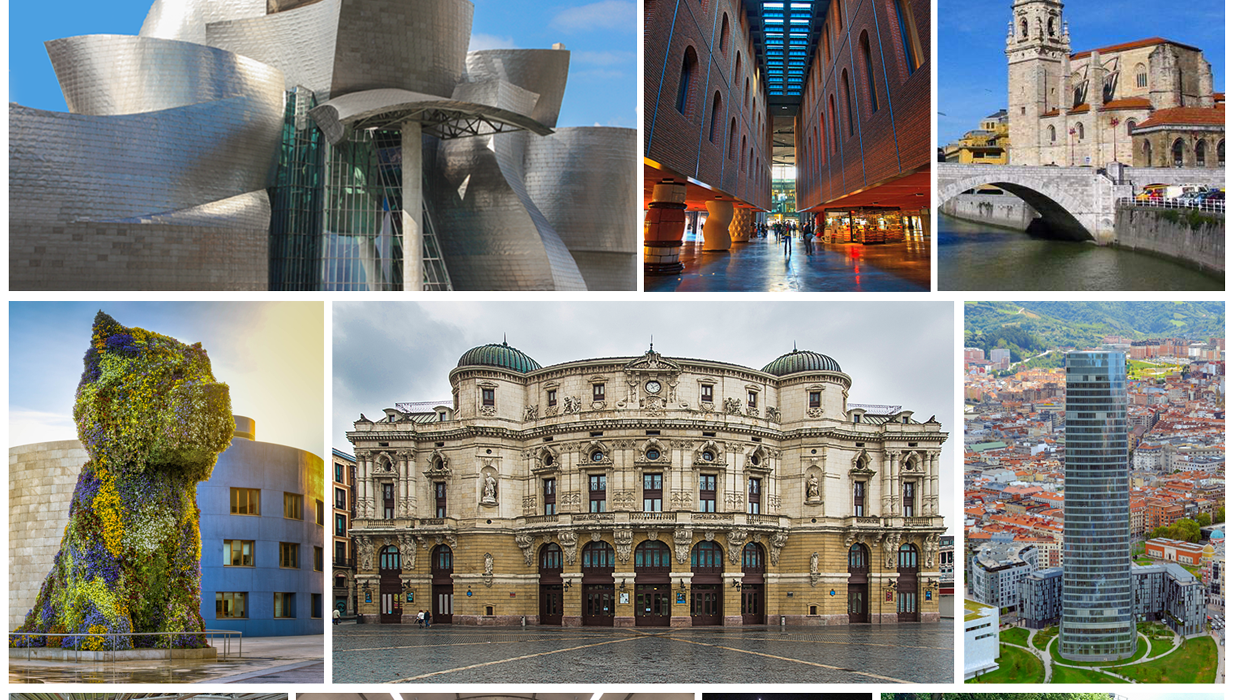
Vitoria-Gasteiz → Bilbao
65 kmCrossing the invisible border between the Alavese plateau and the Nervión estuary is one of the most pleasant journeys in northern Spain, where the highway becomes a green tunnel connecting two vibrant capitals in less than an hour. This trip is not just a logistical transfer, but a rapid landscape transition that takes you from the monumental tranquility of Vitoria to the industrial and modern energy of Bilbao, with the added advantage that the road is completely toll-free and surprisingly fluid for a connection between two major urban centers.
How to get from Vitoria-Gasteiz to Bilbao: quick summary
The most efficient and recommended way to travel between these two cities is by private or rental car, covering the 65 kilometers in just 45 minutes with no toll costs. Although trains are a common option on other Spanish routes, in this specific case there is no direct rail link comfortably connecting both stations, making the road the absolute protagonist of the journey. For travelers seeking flexibility, the car allows you to explore the numerous towns dotting the route, while for those prioritizing speed without parking worries, the lack of a direct train line means public transport options rely on indirect connections or intercity buses that essentially follow the same roadway as private vehicles.
By car from Vitoria-Gasteiz to Bilbao
The drive is mainly via the A-8 highway, known as the Autovía del Cantábrico (Cantabrian Highway), offering a smooth, toll-free journey throughout. Leaving Vitoria-Gasteiz, you will join the highway network that quickly connects you to the A-1, the Autovía del Norte (Northern Highway), which serves as the main artery taking you north out of the Alavese capital. Once linked to the A-8, driving becomes very straightforward; it is a high-capacity road designed to handle constant traffic but, except during very specific peak hours, allows you to maintain a steady cruising speed. It is important to note that, unlike other northern Spanish motorways that can be costly, both the A-8 and A-1, as well as the N-622, are free roads, making this trip very economical in terms of infrastructure. The N-622 appears as an alternative or service road in certain sections, also toll-free, offering a safe parallel route should there be incidents on the main highway. Signage is clear and the asphalt is usually in good condition, facilitating a relaxed drive where the only thing you need to watch for is the correct exit toward downtown Bilbao or the outer neighborhoods, as arriving in the city can present some complexity due to the topography if you are unfamiliar with the urban layout.
Recommended stops along the way
Although the journey is short, lasting only 45 minutes, the route is dotted with towns full of character that deserve special mention if you decide to take the trip at a more leisurely pace or need to stretch your legs.
- Durango: Strategically located on the route, Durango is an excellent stop if you want to break up the journey halfway. It is a town with a well-preserved historic center (casco histórico) offering the perfect opportunity to grab a quick coffee or pick up some local products before continuing toward the coast. Its location makes it a natural communications hub, so highway exits are accessible and well-signposted.
- Amorebieta: Just after Durango, Amorebieta presents itself as another point of interest in the Nervión corridor. It is a town combining industrial zones with residential areas and green spaces, making it a quiet spot for a technical stop. If you are traveling with children or pets, the service areas near this population are usually well-equipped for resting a few minutes before the final stretch to Bilbao.
- Arrigorriaga: As you approach the metropolitan area of Bilbao, Arrigorriaga marks the entrance to urban density. This town is known for being an important connection point and, although more industrial, it offers basic services very useful for travelers, such as gas stations and fast-food dining areas. It is the ideal place if you need to refuel at a good price before heading into the center of the Biscayan capital, where parking and traffic can be more complicated.
- Laudio / Llodio: This stop is unique because it deviates slightly from the straight line toward the estuary, offering a different perspective of the valley. Laudio / Llodio is a town with tradition and character, situated in a greener valley setting. Stopping here allows you to escape the bustle of the main highway and enjoy a more local and relaxed atmosphere, ideal for those who want to understand the human geography of the territory beyond the major cities.
- Galdakao: Already in the vicinity of Bilbao, Galdakao functions as a key commuter and industrial city. It is a recommended stop if your final destination is not the strict center of Bilbao, but rather the eastern zone of the metropolitan area. It has good connections and services, and is a strategic point to avoid inbound traffic to Bilbao if your meeting or destination lies in this specific area, saving valuable time on main access routes.
Where to sleep in Bilbao
To spend the night in Bilbao, the most recommended areas are concentrated around the Old Town (Casco Viejo) and the Abando district, where the accommodation offer is widest and most varied. In the Old Town, you will mainly find boutique hotels and charming guesthouses (pensiones) that allow you to be within walking distance of historical monuments and nightlife, with price ranges typically oscillating between mid-range and high-end due to tourist demand. On the other hand, the Abando area, near the train station and shopping center, offers large hotel chains and tourist apartments ideal for business travelers or families, with prices varying from budget options to five-star luxury. If you are looking for something quieter and away from the noise, the neighborhoods of Indautxu or Deusto offer mid-range accommodations with excellent metro connections to the center, allowing you to save on lodging costs without sacrificing transport convenience. It is advisable to book in advance, especially if traveling during weekends or event seasons, as occupancy in the city tends to be high and prices can fluctuate considerably.
Frequently Asked Questions about the Vitoria-Gasteiz to Bilbao Route
How long does it take to travel from Vitoria-Gasteiz to Bilbao?
The estimated driving time is 45 minutes, covering a total distance of 65 kilometers via motorway with hardly any congestion under normal traffic conditions.
Which is cheaper, the train or the bus?
Currently, there is no direct train between these cities, so a direct price comparison for rail transport is not feasible; the private car option is very economical as there are no tolls on the A-8 or A-1.
Is it worth renting a car?
Yes, it is worth renting a car if you plan to make stops in towns such as Durango, Amorebieta, or Laudio, since public transport does not cover these intermediate stops with the same flexibility and the road is free.
When is the best time to travel?
The best time to travel is on weekdays outside peak hours to avoid traffic entering Bilbao, although the route is passable year-round thanks to the well-maintained A-8 and A-1 highways.
📍 También te puede interesar
Qué ver en Vitoria-Gasteiz →
Qué ver en Bilbao →