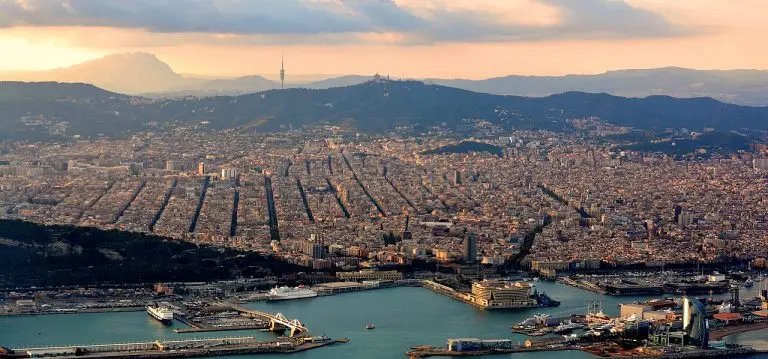
Sitges → Barcelona
42 kmHow to Travel from Sitges to Barcelona: A Complete Guide
Leaving the Mediterranean behind in Sitges and heading into the vibrant Catalan capital is a journey that can be done in just over half an hour, yet hidden among its roads and rails are some of the most changing landscapes of the Catalan coast: from the intense blue of the Garraf to Barcelona’s urban skyline, with stops that smell of freshly caught seafood and Penedès cava. Whether you’re after the fastest route or prefer to linger and savour the journey, here’s everything you need to know.
How to Get from Sitges to Barcelona: Quick Summary
The 42 km route between Sitges and Barcelona offers three main options: private car (35 minutes via motorway), direct Renfe train (43-58 minutes with high frequency) and direct bus (36 minutes from €3.8). For those who prioritise speed and flexibility, the car is unbeatable; for those seeking comfort and not depending on traffic, the Rodalies train is the most practical option with 72 daily departures; and for tighter budgets, the bus offers the best value for money with frequent departures.
By Car from Sitges to Barcelona
The 42 km drive takes approximately 35 minutes without traffic, running mainly along two roads: the C-32 motorway (Autopista Pau Casals), which covers about 23 km of the route, and the C-31C road, which adds another 11 km. The C-32 is a toll motorway that hugs the coast, offering panoramic views of the Mediterranean, especially on the stretch between Sitges and Castelldefels, where the Garraf massif plunges towards the sea, creating one of the most photogenic scenes on the Catalan coast. The C-31C links intermediate sections and provides access to the towns of the Baix Llobregat before joining Barcelona’s urban sprawl. Bear in mind that at peak times (7:30-9:30 and 17:30-20:00) the time can easily double as you approach the capital, especially on the approaches through the l’Hospitalet area and the Gran Via.
By Train from Sitges to Barcelona
According to Renfe, there is a direct train between Sitges and Barcelona operated by Rodalies de Catalunya, with a frequency of 72 trains per day and a journey time ranging from 43 to 58 minutes depending on the type of service. The departure station is Sitges and the destination is Barcelona-Passeig de Gràcia, an unbeatable location right in the city centre, just steps from Casa Batlló and La Pedrera. There are two variants: the Rodalies R2, with 3 services a day that complete the journey in just 43 minutes, and the Rodalies R2S, with 69 trains a day that take about 52 minutes due to intermediate stops. The first train leaves at 04:51 in the morning and the last at 22:22, making it possible both to rise early and make the most of the day in Barcelona and to return late after dinner or a show. Tickets can be purchased from the station machines or the Renfe app, and the journey is included in the integrated transport passes from zone 3 to zone 1.
By Bus from Sitges to Barcelona
The direct bus between Sitges and Barcelona is an economical and surprisingly fast alternative, with a duration of 36 minutes and prices ranging from €3.8 to €10 depending on the company and type of service. Several companies operate on this route: Cintoi Bus, Cintoi Bus – Empresa Plana, Mon-Bus, BusGarraf and Bus Garraf (MonBus), which guarantees a good rotation of schedules throughout the day. The buses usually stop at strategic points in Barcelona, such as Sants station or the Gran Via area, making it easy to connect with the metro and other urban transport. For those travelling with little luggage and looking to save, the bus is a very competitive option compared with the train, especially if you buy your ticket in advance or take advantage of return fares.
Recommended stops along the way
Between Sitges and Barcelona, the Baix Llobregat offers a string of towns with a character all their own that are well worth a stop, whether to stretch your legs, grab a coffee or discover industrial and natural heritage.
l’Hospitalet de Llobregat
The gateway to Barcelona from the south, l’Hospitalet is the second most populous city in Catalonia and surprises with its contrast between historic working-class neighbourhoods and modern urban developments. Its proximity to the airport and the Fira de Barcelona make it a key logistics hub, but it also hides corners such as the Sant Josep neighbourhood with its century-old market.
Sant Feliu de Llobregat
The capital of the Baix Llobregat comarca, Sant Feliu preserves an interesting Modernista heritage, such as the Catedral del Llobregat (church of Sant Llorenç) and several stately country houses. Its riverside promenade along the Llobregat invites a peaceful rest before plunging into the bustle of Barcelona.
Pallejà
A small residential town on the right bank of the Llobregat, Pallejà is ideal for a brief, uncrowded stop. Its natural surroundings stand out, with wooded hills and gentle hiking trails, perfect for escaping the asphalt for an hour.
Esplugues de Llobregat
Known for its famous parks and gardens, Esplugues is home to the Parc de Can Vidalet and the Parc de la Solidaritat, green lungs that contrast with the nearby urban density. It is also home to major educational and technology centres, which gives it a young, dynamic atmosphere.
Castelldefels
Between the sea and the mountains, Castelldefels boasts more than 5 km of golden beach and a medieval castle crowning the hill. It is a perfect stop for a quick swim in summer, a seaside promenade full of chiringuitos or a climb up to the castle with panoramic views of the Llobregat delta.
Corbera de Llobregat
Nestled in the foothills of the Serra de Ordal, Corbera is a haven of tranquillity just 25 km from Barcelona. Its steep streets, stone houses and views over the Llobregat valley make it a rural escape in miniature, ideal for those seeking nature without straying far from the main route.
Cornellà de Llobregat
A compact, well-connected city, Cornellà is known for the RCD Espanyol stadium and for the Splau shopping centre, one of the largest in the metropolitan area. Its neighbourhood dining scene, with vermouth bars and tapas bars, makes it a practical and tasty stop.
el Prat de Llobregat
Home to Josep Tarradellas Barcelona-El Prat airport, this town is much more than a transit zone. Its protected natural spaces, such as the Llobregat delta and the playa del Prat, offer a unique ecological breather just minutes from airport traffic, with birdwatching routes and unspoilt dunes.
Where to sleep in Barcelona
Barcelona offers accommodation for every budget and style, from budget hostels to luxury boutique hotels, with prices that vary enormously depending on season and location. The Eixample area is ideal for those seeking Modernista architecture and good connections to Passeig de Gràcia; the Barri Gòtic and El Born immerse travellers in the old town with its medieval alleyways; Gràcia offers a bohemian, less touristy atmosphere; and la Barceloneta is perfect for sea lovers. Approximate prices range from €25-40 per night in hostels, €60-120 in 2-3 star hotels, and more than €150 in 4-5 star or boutique hotels. For short stays, tourist apartments in neighbourhoods such as Sants or Sant Antoni tend to offer good value for money and direct transport access towards Sitges.
Where to eat along the route
The food between Sitges and Barcelona is a feast of Mediterranean produce and Catalan tradition. These are the essential dishes you must try on your journey.
Garraf prawns
Native to the Garraf area, next to Sitges, these prawns are actually fresh langoustines caught along the rocky coasts of the massif. They are almost always grilled with a touch of coarse salt, which enhances their sweet flavour and tender texture. It is a delicacy you will rarely find outside this comarca, so do not miss the chance at the restaurants along the seafront promenade of Sitges or Castelldefels.
Seafood fideuà
The close cousin of paella, fideuà replaces rice with short noodles that are lightly browned before being cooked in an intense fish broth. It contains assorted seafood —prawns, mussels, squid— and is traditionally finished with a blast of oven heat so the surface turns crispy. Especially popular in coastal areas such as Sitges and Barcelona, it is a hearty dish full of sea flavour.
Pa amb tomàquet
The quintessential accompaniment to any Catalan meal, present on every table from Sitges to Barcelona. It is made by rubbing ripe tomato over toasted bread, then adding a drizzle of extra virgin olive oil and a pinch of salt. Simple but addictive, it is the perfect base for cured meats, cheeses or simply for accompanying a good conversation.
Calçots with romesco sauce
Although their origin is associated with Tarragona, calçots are now a classic throughout Catalonia, especially in the winter and spring months. They are tender onions roasted over embers until charred on the outside and meltingly soft inside. They are peeled by hand, dipped generously in romesco sauce —made with tomato, ñoras, garlic, almonds and hazelnuts— and eaten tilting your head back. A gastronomic and social experience you will find in restaurants in Barcelona and around.
Cava (DO Penedès)
The Penedès, located between Sitges and Barcelona, is the birthplace of cava, the Spanish sparkling wine made by the traditional method with Macabeo, Parellada and Xarel·lo grapes. Visiting a winery in this region is almost obligatory if you are travelling by car, as many are just a few kilometres from the main route. Cava pairs perfectly with appetisers, seafood and celebrations, and taking a bottle home is the best possible souvenir.
Frequently asked questions about the Sitges-Barcelona route
How long does it take to get from Sitges to Barcelona?
The time varies depending on the means of transport: by car, around 35 minutes to cover the 42 km along the C-32 and C-31C; by direct Renfe train, between 43 and 58 minutes depending on whether it is Rodalies R2 (43 min) or R2S (52 min); and by direct bus, approximately 36 minutes. The train is the most predictable option during peak hours, while the car may suffer significant delays on the approaches to Barcelona.
Which is cheaper, the train or the bus?
The bus is generally cheaper, with prices ranging from €3.8 to €10 depending on the company (Cintoi Bus, Mon-Bus, BusGarraf, among others). The Renfe train has slightly higher fares, although it offers greater frequency (72 trains per day) and the advantage of arriving in the centre of Barcelona at Passeig de Gràcia. For tight budgets, the bus is the best option; for comfort and flexible schedules, the train is worth the difference in price.
Is it worth renting a car?
It depends on your plans. If you are only going to travel between Sitges and Barcelona, public transport is just as efficient and cheaper than the car. However, renting a car makes sense if you want to explore the intermediate stops at your own pace —Castelldefels, Corbera de Llobregat, el Prat— or visit cava wineries in the Penedès, where access by public transport is limited. Bear in mind the cost of the toll on the C-32 and parking in Barcelona, which can be expensive and scarce.
When is the best time to travel?
The best time to do this route is in spring (April-June) and autumn (September-October), when temperatures are mild, there are fewer tourist crowds and the Garraf landscape looks especially green or golden. Summer is ideal for enjoying the beaches of Castelldefels and Sitges, but traffic and demand for accommodation in Barcelona soar. Winter offers lower prices and the calçots season, although the sea loses its prominence.
💡 ¿Sabías que...?
- ● El mito atribuye la fundación de Barcelona a Hércules, quien la habría llamado Barca-nona (novena barca) tras el encuentro con un navío de Jasón y los Argonautas. (https://www.laramblabarcelona.com/curiosidades-de-barcelona/)
- ● Los cascos de los Soldados Imperiales de Star Wars están inspirados en las chimeneas de La Pedrera de Gaudí. (https://www.laramblabarcelona.com/curiosidades-de-barcelona/)
- ● En Barcelona, el dedo índice de la estatua de Colón no señala hacia las Indias, sino hacia Génova, según diversos estudios que han investigado la orientación real de su mano. (https://restaurantemyway.com/es/9-curiosidades-barcelona)
- ● Pompeu Fabra, nacido en el barrio de la Salud de Gràcia en 1868 y trasladado a Barcelona con seis años, fue el ingeniero y gramático que estableció la normativa moderna de la lengua catalana. (https://es.wikipedia.org/wiki/Pompeu_Fabra)
📍 También te puede interesar
Qué ver en Sitges →
Qué ver en Barcelona →