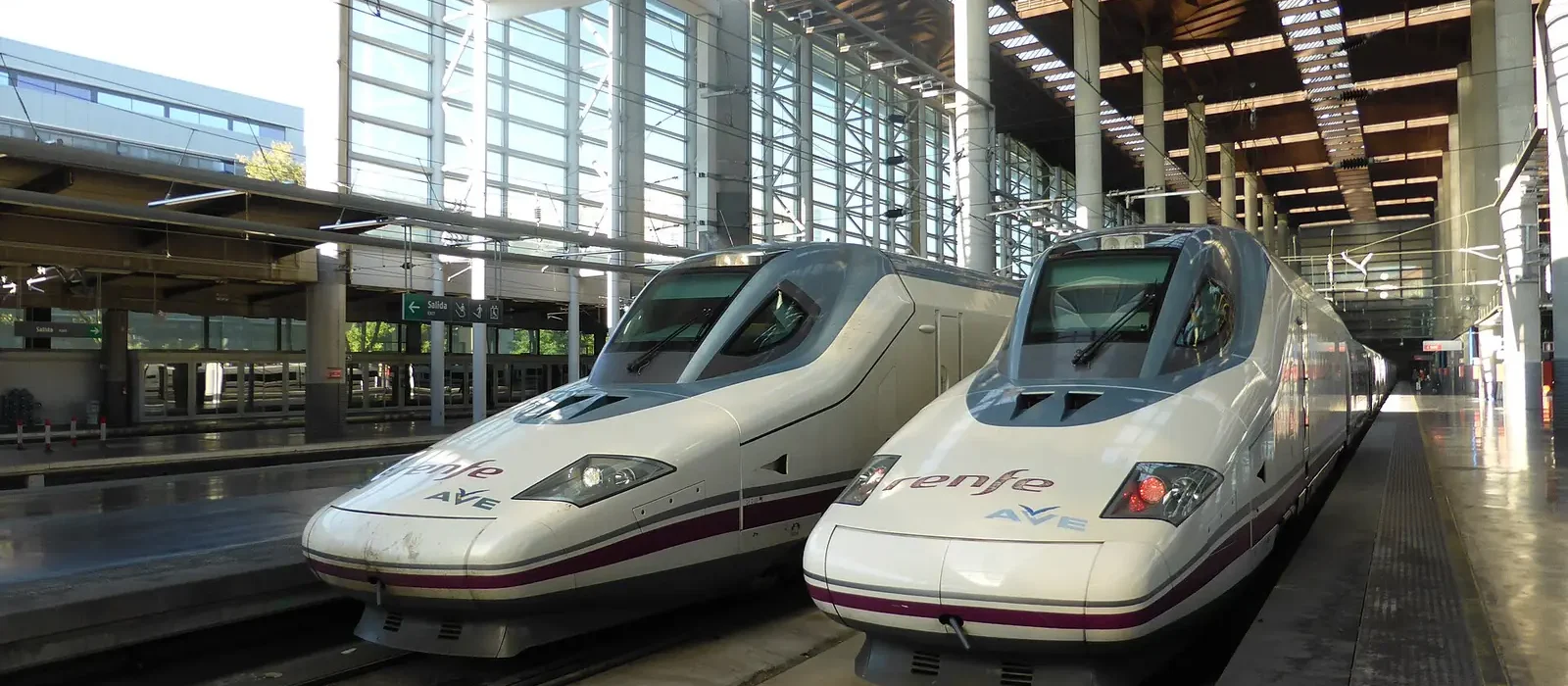
How to Travel Around Spain by Train: A Renfe Guide
Moving around Spain by train with Renfe is fast and efficient, provided you choose the right type of train for your route and book far enough in advance to avoid the highest dynamic fares. Unlike other European countries where the network is more uniform, in Spain you’ll encounter a “jungle” of names (AVE, Avant, Alvia, Media Distancia) that can confuse first-time travelers. However, once you crack the code, you’ll find that the train is often the most comfortable and scenic way to connect cities like Madrid, Barcelona, Seville, or Valencia.
In this guide, we won’t just explain the technical differences; we’ll also share the insider tips we use as travel editors to save money and avoid surprises on the platform. Forget the stress of airports; the Spanish train experience, with a coffee at your seat and its usual punctuality on high-speed lines, is part of the enjoyment of the journey.
1. Understanding the Hierarchy: Not All Trains Are Created Equal
The first mistake tourists make is thinking that “train” is synonymous with “AVE.” Renfe operates different services depending on the track infrastructure (standard gauge or Iberian gauge) and speed. To give you a clear and quick reference, we have prepared this comparison chart based on current data from the Spanish railway network.
| Tipo de Tren | Velocidad Máx. | Mejor para… | Precio Orientativo (Ida) |
|---|---|---|---|
| AVE (Alta Velocidad Española) | 310 km/h | Larga distancia entre grandes ciudades (ej. Madrid-Barcelona). | 25€ – 90€ (variable) |
| Avant | 250-300 km/h | Media distancia de alta velocidad (ej. Madrid-Toledo, Sevilla-Málaga). | 15€ – 40€ |
| Alvia | 250 km/h | Rutas que combinan alta velocidad y vías tradicionales (ej. Madrid-País Vasco). | 30€ – 70€ |
| Media Distancia | 160 km/h | Conexiones regionales y ciudades más pequeñas sin AVE. | 10€ – 30€ |
It is crucial to note that, according to the Spanish National Commission on Markets and Competition (CNMC), the liberalization of the sector has introduced competition (Ouigo, Iryo), but Renfe still holds the largest market share and the most extensive network, reaching over 3,000 municipalities.
2. Steps to Buy Your Ticket Without Overpaying
Renfe’s fare system is dynamic, similar to that of airlines. The price is not fixed; it fluctuates based on demand and how far in advance you book. Follow these steps to optimize your purchase:
- Book 60 days in advance: “Promo” and “Promo+” fares usually go on sale two months before departure. This is the sweet spot for finding AVE tickets for 20 or 30 euros.
- Download the official app: The Renfe mobile app is often more stable than the website during peak booking times. It also makes it easier to manage last-minute changes and travel disruptions.
- Consider the “Renfe Spain Pass”: If you are a non-resident traveler planning more than 4 trips in a month, this pass can save you up to 40% compared to standard flexible fares. It is purchased online and validated at the station.
- Double-check your departure station: In large cities like Madrid or Barcelona, there are multiple stations. It’s far less stressful to depart from Puerta de Atocha than to try to cross the city from Chamartín to Sants with luggage.
3. The Pros and Cons of Train Travel in Spain
To be completely honest in this guide, the train isn’t perfect for every situation. Here’s a realistic look at what you’ll encounter:
The Good (Pros)
- City-centre to city-centre connections: You arrive in the heart of the city, saving on taxis and transfers from outlying airports.
- Generous luggage allowance: Unlike low-cost flights, you can take up to 3 bags (totalling 290 cm and 25 kg per piece) at no extra cost on most fares.
- Comfort: More legroom than economy class on a plane and the freedom to walk around the carriage.
The Not-So-Good (Cons)
- Variable punctuality: While the AVE is very punctual (according to UNWTO reports, Spain leads in high-speed km), Media Distancia trains can suffer delays due to incidents on the conventional track.
- Complex naming system: As we’ve seen, distinguishing between an Alvia and an Intercity can be confusing for foreign visitors.
- Fare restrictions: The “Básica” (Basic) fare does not allow changes or refunds, which is a risk if your travel plans are flexible.
4. The Real Experience: What to Expect at the Stations
When travelling around Spain, we often say the station is the first point of tourist interest. Madrid’s Estación de Atocha, with its indoor tropical garden, or Barcelona’s Estación de Francia, are examples of architecture worth visiting in their own right. However, there are practical details you should know.
At major stations, the security check is similar to an airport (X-ray for luggage) but much faster. Our advice is to arrive 20 minutes early if it’s your first time, just to get your bearings with the departure boards, as platforms for Media Distancia services can sometimes change at short notice.
A common anecdote among travellers is the food situation. On long journeys (over 2 and a half hours), the train usually has a cafeteria. However, prices are typical of “onboard service”. We recommend bringing your own water and some snacks, or grabbing a famous “bocadillo de tortilla” (Spanish omelette sandwich) from the station kiosks before boarding.
Conclusion
Travelling around Spain by train is, without a doubt, the most balanced option between comfort, speed, and sustainability for medium and long distances. The key to success lies in understanding the difference between an AVE and a regional train, and above all, in booking in advance to take advantage of promotional fares. Although Renfe’s range of service names may seem overwhelming at first, once you’re in your seat, watching the Spanish landscape roll by at 300 km/h, you’ll understand why it’s a favourite among many travellers.
If you’re now clear on how to get around, the next step is deciding where to go. We recommend checking out our guide to the best routes in northern Spain or discovering the white villages of Andalusia, both destinations perfectly connected by the rail network we’ve just explained.