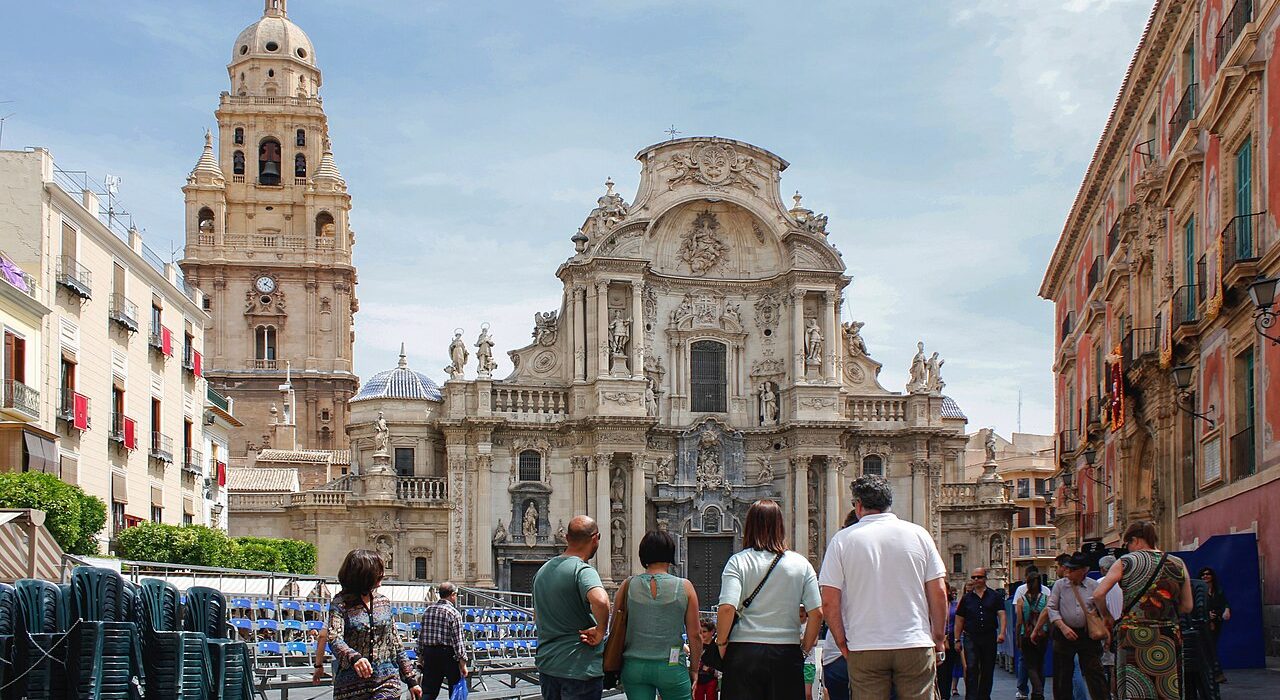
Valencia → Murcia
243 kmLeaving behind the vibrant light of Valencia to delve into the heart of the Spanish Levante is a journey that combines the comfort of the motorway with the promise of landscapes subtly shifting from fertile orchards to Mediterranean aridity. It is not just a 243-kilometer transfer; it is a crossing where time seems to stand still in the vineyards of Requena or speed up alongside the intense blue of the sea in Santa Pola, offering the traveler an experience that goes far beyond simply getting from point A to point B.
How to Get from Valencia to Murcia: Quick Overview
The connection between these two Mediterranean capitals is smooth and offers varied options to suit every traveler’s style, with the car being the most flexible choice for exploring the surroundings and the bus the most economical alternative for a direct trip. If you are looking for speed and comfort without worrying about driving, the Renfe train is a solid option, although with fewer daily frequencies than road transport. For the independent traveler who wants to discover the secrets of the coast and the interior at their own pace, a private vehicle is unbeatable, allowing detours to charming villages that would otherwise remain off the itinerary.
Driving from Valencia to Murcia
Driving from Valencia to Murcia is a pleasant and direct experience, undertaken almost entirely on high-capacity, toll-free motorways, covering a distance of 243 km in approximately 2 hours and 30 minutes. The main route is structured through a network of modern roads that facilitate transit, usually starting with the A-7 (Autovía del Mediterráneo), which acts as the backbone of the coastal connection, or taking the A-3 (Autovía del Este) if you prefer a quicker exit towards the interior before linking up with the south.
Once underway, the driver will encounter the A-31 (Autovía de Alicante), a fundamental stretch that brings the route closer to the province of Alicante, and the A-35 (Autovía Almansa-Játiva), which offers an efficient alternative by avoiding the denser coastal traffic on certain sections. For those who venture further inland before descending to Murcia, the A-33 (Autovía del Altiplano) and the A-38 complete the mosaic of available routes. The best part of this route is that all the mentioned roads (A-7, A-31, A-3, A-35, A-33, and A-38) are toll-free motorways, meaning the only variable cost will be fuel, making the journey very economical compared to other European routes. The driving is straightforward, with well-maintained road surfaces and clear signage, ideal for families or groups of friends who want to share the driving.
By train from Valencia to Murcia
The train journey between Valencia and Murcia is operated exclusively by Renfe and offers a comfortable alternative for those who prefer not to drive, with a duration ranging from 228 to 253 minutes depending on the type of service chosen. The current frequency is 4 trains per day, which requires planning your schedule in advance, as it is not a high-frequency service like Cercanías. The first train departs at 6:30 in the morning, ideal for those who want to make the most of the day at their destination, while the last available train leaves at 16:28, limiting options for night-time or last-minute travellers.
As for the types of train, most services fall under the MD (Media Distancia) category, with 3 running daily and a journey time of 228 minutes. There is also an Intercity option, with 1 train per day that takes slightly longer, 253 minutes. The departure point is always the iconic Valencia-Estació Del Nord, located right in the city centre, and the destination is Murcia station. Although the price is not specified in the data, the convenience of not having to find parking and the chance to work or rest during the journey make the travel time worthwhile for many users.
By bus from Valencia to Murcia
The bus stands out as the most economical option with the greatest schedule flexibility for travelling between Valencia and Murcia, with a journey time of 225 minutes, slightly less than the slowest train option. The companies operating this route are ALSA and Transportes Bacoma S.A., two operators with extensive experience in passenger transport along the Mediterranean coast. The bus’s competitive advantage lies in its price, which falls within a very affordable range of between €12 and €23, depending on how far in advance you book and current demand.
By choosing this option, the traveller benefits from a direct service that avoids transfers, generally departing from Valencia bus station and arriving in the heart of Murcia. It is the recommended choice for backpackers, students, or travellers who prioritise saving money over extreme speed, since the time difference compared to driving is minimal (barely 5 minutes more than the estimated drive) but the cost is significantly lower as you avoid adding fuel and vehicle wear and tear. Moreover, the companies usually offer basic onboard services that make the nearly 4-hour wait more bearable.
Recommended stops along the way
The route from Valencia to Murcia is no mere formality, but a cultural and scenic corridor full of must-see stops that enrich the journey; below, we detail each verified location for a break along the way:
- Alacant / Alicante: This city is a perfect strategic stop at the halfway point. Known for its imposing Santa Bárbara Castle, which watches over the bay from the top of Mount Benacantil, Alicante offers a seafront promenade (Explanada de España) ideal for stretching your legs. It is the spot where travelers can swap the hum of the motorway for the sound of the waves and enjoy a cuisine based on rice and fresh fish.
- Torrevieja: Located further south, Torrevieja is famous for its unique landscapes, especially the Lagunas de la Mata y Torrevieja, popularly known as the “pink lagoons” due to the color produced by microalgae. It is an excellent stop for nature and photography lovers, offering a strong visual contrast with the blue of the nearby Mediterranean.
- Requena: If your route veers slightly inland or you take the A-3, Requena is a top-tier cultural stop. Famous for its winemaking tradition and its underground cellars carved into the rock, this town invites you to explore its old quarter, declared a Historic-Artistic Site (Conjunto Histórico-Artístico). It is the perfect place for a gastronomic break based on local cured meats and wines.
- Elx / Elche: Just before reaching the deeper coastline, Elche surprises with its Palmeral (Palm Grove), the only palm grove in Europe declared a World Heritage Site by UNESCO. A visit to the Huerto del Cura (Priest’s Garden) or the Palm Grove Museum allows you to understand the city’s history and offers a shady, cool environment ideal for resting from the car journey.
- Novelda: This town is a hidden gem for lovers of architecture and history. It stands out for its Castillo de la Mola, an Arab fortress with spectacular panoramic views, and its unique Iglesia de Santa María Magdalena (Church of St. Mary Magdalene), whose dome imitates that of St. Peter’s in the Vatican. It is a brief but visually intense stop.
- Santa Pola: Neighbor to Elche and Alicante, Santa Pola is known for its salt flats and its significant birdlife, making it a key spot for birdwatchers. Its 16th-century castle-fortress and fine sandy beaches make it a perfect relaxation destination if you are traveling in summer, allowing for a quick swim before continuing on to Murcia.
- Almansa: Already in the province of Albacete, near the connection with Murcia, Almansa dominates the landscape with its gigantic castle, an impregnable fortress that seems to rise from the rock. It is a historical monument of great relevance, famous for the battle that bears its name, and offers a powerful image that summarizes the region’s military history.
Where to sleep in Murcia
Upon reaching your final destination, choosing the right area to stay will depend on your interests, as the city offers different atmospheres. For travelers looking to be in the heart of the action, the Casco Antiguo (Old Town) is the recommended area; here you’ll be close to the Cathedral, the Malecón promenade, and most of the tapas restaurants, though weekend nighttime noise can be louder. If you prefer peace and wider streets, the Ensanche (Expansion District) is a well-connected residential and commercial area, ideal for families seeking rest without sacrificing proximity to services.
Regarding accommodation types, the city boasts a varied offering ranging from international chain hotels to boutique hostels and tourist apartments. Price ranges usually fluctuate depending on the season, rising during the spring festivals or major cultural events. Booking months in advance is not necessary except on key dates, but it is recommended to look for accommodations that include parking if you are traveling by car, as the historic center may have limited parking zones (ORA).
Frequently asked questions about the Valencia-Murcia route
How long does it take to get from Valencia to Murcia?
Travel time varies depending on the chosen mode of transport: by car, the 243 km journey is completed in approximately 2 hours and 30 minutes via highway. If you opt for the bus, the duration is 225 minutes, while the train takes between 228 and 253 minutes depending on whether you travel on MD or Intercity services.
Which is cheaper, the train or the bus?
Based on available data, the bus is generally the most economical and predictably priced option, with fares ranging from €12 to €23 with companies like ALSA or Transportes Bacoma S.A. The train price is not specified in a fixed range, but it is usually higher than the bus on Media Distancia (Medium Distance) routes, in addition to having fewer daily frequencies.
Is it worth renting a car?
Yes, it is worth it if your goal is to visit the recommended stops along the route such as Almansa, Requena, or the beaches of Santa Pola and Torrevieja, as public transport will not allow you to explore these points freely. Furthermore, the route is traveled on toll-free highways (A-7, A-31, A-35), which considerably reduces the cost of the trip compared to other toll routes.
When is the best time to travel?
The best time to travel depends on your climate preference: spring and autumn are ideal for avoiding the extreme inland heat and enjoying coastal stops like Alicante or Elche with pleasant temperatures. If you travel in summer, it is advisable to leave early (taking the first train at 6:30 or leaving by car at dawn) to avoid the peak sun hours on the road.
📍 También te puede interesar
Qué ver en Valencia →
Qué ver en Murcia →