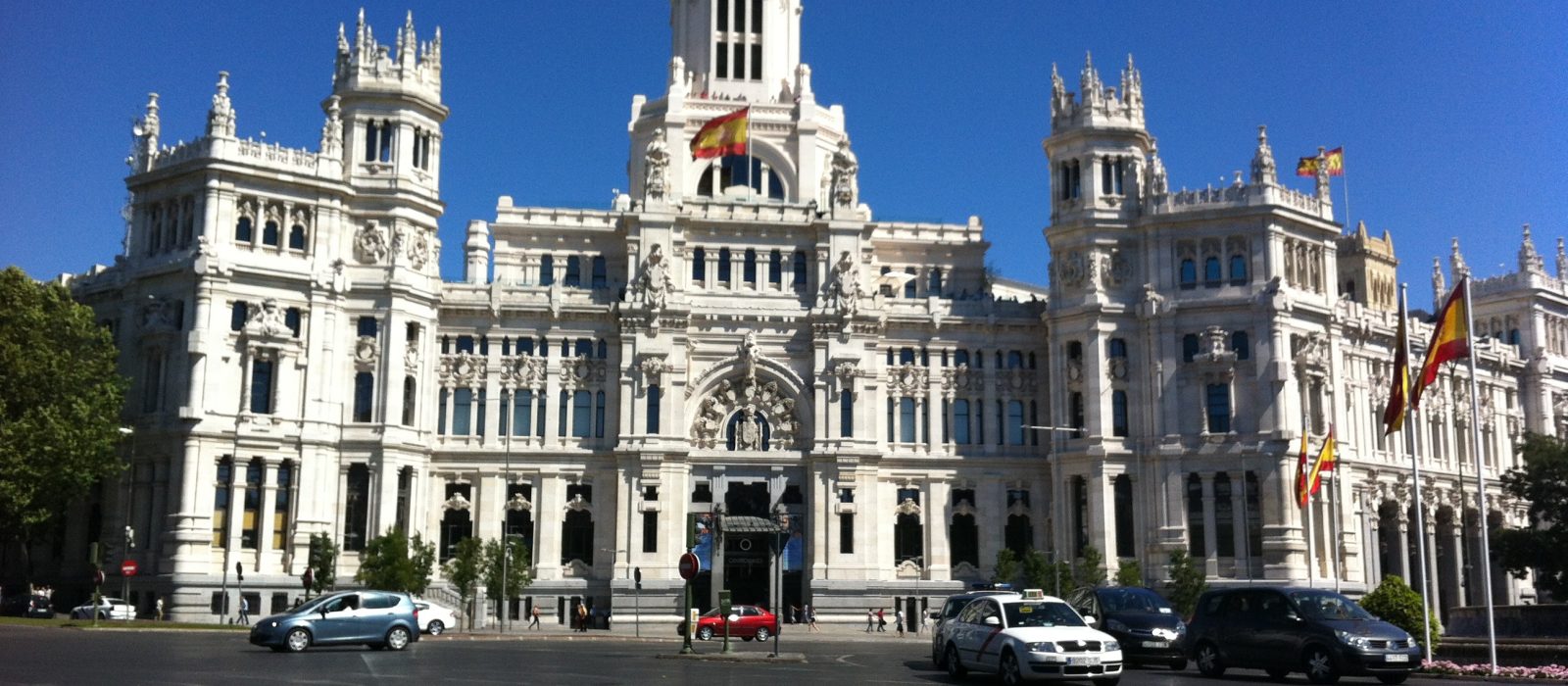
Menorca → Madrid
How to get from Menorca to Madrid: quick overview
The journey between Menorca and Madrid is made exclusively by plane or by combining a ferry with land transport, since the Spanish capital lies inland on the peninsula and there is no direct maritime connection to the city.
To plan your trip clearly, it is essential to understand that you have two main options: fly directly, which is the fastest choice, or take a ferry that will drop you off on the peninsula to continue your journey. Below, we present a detailed comparison with verified data so you can choose the best option according to your needs.
| Medio de transporte | Duración del trayecto principal | Precio aprox. (solo ida) | Frecuencia |
|---|---|---|---|
| Avión (Vuelo directo) | 87 minutos (1h 27m) | 38€ – 150€ | ~6 vuelos al día |
| Ferry + Tren/Coche | 3h 30m (travesía) + 6h (terrestre) | 20€ – 80€ (pasajero) | Hasta 2 salidas diarias (temporada alta) |
If your priority is time and you are travelling without a vehicle, the recommendation is clear: take the plane. With a flight duration of just 87 minutes, it is the most efficient way to cover the distance. On the other hand, if you are travelling with your own car or prefer to avoid airports, the ferry is your only option, although you will need to add the travel time from the arrival port (Barcelona or Valencia) to Madrid. For travellers looking for the lowest possible price and who have date flexibility, the ferry in low season or flights with occasional special offers (from €38) are the alternatives to consider.
By plane from Menorca to Madrid
The direct flight between Menorca Airport (MAH) and Adolfo Suárez Madrid-Barajas Airport (MAD) is the fastest option, with an average duration of 87 minutes according to data from the operating airlines.
Currently, there are three main airlines that cover this route regularly: Iberia, Vueling, and Air Europa. The flight frequency is quite high, with approximately 6 daily departures, giving you the flexibility to choose the time that best suits your schedule. It is important to note that the flight duration can vary slightly, ranging between 1 hour and 27 minutes and 1 hour and 40 minutes depending on weather conditions and the specific air route of the day.
As for cost, prices can vary significantly. Occasional special offers have been found in recent days with fares from €38, although this is an exceptional price. For a more realistic estimate, especially if you are travelling in high season (summer), you should budget between €96 and €150. Prices in November usually hover around €96-103, which serves as a reference for mid-season.
Once you land at Madrid-Barajas Airport (MAD), you will have several options to reach the city centre. The airport is well connected via the Metro network (line 8), express buses (Exprés Aeropuerto), and taxis. The transfer time to central Madrid is usually around 30 to 45 minutes depending on traffic and the means of transport you choose.
By ferry from Menorca
The ferry connects Menorca with the Spanish mainland, arriving at the ports of Barcelona or Valencia, from where you will need to continue your journey to Madrid by land.
It is crucial to clarify that there is no ferry that arrives directly in Madrid, as it is a landlocked city. The sea route will take you from the ports of Ciutadella or Mahón in Menorca to the mainland coast. The shipping companies operating these routes are Baleària, Trasmediterránea, and Grandi Navi Veloci (GNV).
The fastest option is the high-speed ferry operated by Baleària, which makes the crossing between Ciutadella and Barcelona in approximately 210 minutes (3 hours and 30 minutes). However, there are also conventional routes or routes with stopovers in Majorca operated by GNV or Trasmed, whose durations can extend between 7 and 10 hours. In addition to the connection with Barcelona, Trasmediterránea operates routes from Menorca to the port of Valencia, which can be an interesting alternative depending on your point of origin on the island.
The frequency of departures varies according to the time of year. In high season, you can find up to 2 daily departures, which adds up to approximately 28 weekly connections. As for prices, the cost for a foot passenger ranges between €20 and €80. Once you arrive in Barcelona or Valencia, you will have to add the cost and time of the train (AVE or Avant) or the rental car to complete the journey to Madrid, which adds about 3 hours by high-speed train or about 6 hours of driving from Barcelona.
Plane or ferry? Which is best for you
The choice between plane and ferry depends fundamentally on whether you are traveling with your own vehicle and how much time you have available for the total door-to-door journey.
If we analyze the time factor, the plane is the undisputed winner. Adding up the waiting times at the airport and the transfer to the city center, the total trip can be completed in about 4 hours. In contrast, the ferry option involves a crossing of at least 3.5 hours (if it is the fast one) plus the land journey from the port to Madrid, which easily brings the total travel time to more than 10 hours.
Regarding price, the ferry may seem cheaper at first glance (from €20), but this is only for the foot passenger. If you need to take your car, the price rises to a range of €80 to €150 just for the boat, not counting fuel and tolls to get to Madrid. On the other hand, flights can be found from €38 on offer, although the usual price is around €100. For a solo traveler or a couple without a car, the plane is usually more competitive in terms of value for money and time.
The decisive factor is luggage and the vehicle. If your plan is to get around Madrid and its surroundings with your own car, the ferry is the only viable option to transport it. If you travel light, with a backpack or cabin suitcase, the flexibility of the 6 daily flights by Iberia, Vueling, and Air Europa makes the plane the most comfortable and practical choice.
Taking your car on the ferry
The ferry is the only way to transport your vehicle from Menorca to the Spanish mainland, with fares ranging from 80€ to 150€ depending on the season and the size of the vehicle.
To board with your car, head to the departure port in Menorca, which will be Ciutadella (mainly for fast routes to Barcelona) or Mahón (for routes to Valencia or conventional ferries). It is advisable to arrive at the port at least one hour in advance to complete the vehicle check-in process. During boarding, follow the ground crew’s instructions to park your car in the ship’s hold.
Once on the mainland, after disembarking in Barcelona or Valencia, you will need to drive to Madrid. From Barcelona, the journey by motorway to the Spanish capital takes approximately 6 hours. From Valencia, the driving time is similar. Keep in mind that the ferry ticket price with a car (80-150€) does not include fuel or tolls for the subsequent road journey, so you should budget for these additional expenses.
Where to stay in Madrid
Madrid offers a wide variety of neighbourhoods to stay in, from the historic centre to more modern and tranquil districts, with prices varying according to category and location.
For a first visit, the most recommended areas are the Centro (Sol, Gran Vía, Ópera) and the Barrio de Las Letras (Literary Quarter). These areas put you within a few minutes’ walk of major sights like the Plaza Mayor and the Royal Palace. Another very popular option is the Barrio de Salamanca (Salamanca District), known for its elegant streets and luxury boutiques, ideal if you are looking for a more sophisticated atmosphere.
In terms of accommodation types, you will find everything from budget hostels perfect for backpackers to 4- and 5-star hotels with full services. Tourist apartments are also a highly sought-after option, especially for families or groups of friends who prefer to cook their own meals. Prices per night can vary dramatically: in low season you can find double rooms from 60-80€ in central areas, while in high season or at luxury hotels, rates can exceed 200€ per night.
What to eat in Madrid
Madrid’s cuisine is hearty and traditional, featuring standout dishes such as Cocido Madrileño (Madrid-style stew), Bocadillo de Calamares (calamari sandwich), and Callos a la Madrileña (Madrid-style tripe).
One of the most emblematic dishes is the Cocido Madrileño. This is a chickpea stew slow-cooked with various meats (such as beef shank, pork belly, and chorizo) and vegetables. Tradition dictates it be served in “tres vuelcos” (three stages): first the broth, then the chickpeas and vegetables, and finally the meats. It is an ideal dish for the colder days of autumn and winter.
If you are looking for something quicker and hugely popular among locals and tourists alike, the Bocadillo de Calamares is a must. It consists of battered and fried squid rings served in a crusty bread roll. It is the undisputed king of the bars surrounding the Plaza Mayor, where you can enjoy it with a perfectly poured caña (small draught beer).
For offal lovers, Callos a la Madrileña is a benchmark dish. This stew is made with beef tripe, slow-cooked for hours with chorizo, morcilla (blood sausage), and paprika, resulting in a dish with an intense flavour and a meltingly soft texture. Another classic you cannot miss is Huevos Rotos (broken eggs). Although several neighbourhoods claim to be its birthplace, it has become a city staple: fried eggs with runny yolks that are “broken” over a bed of fried potatoes, often topped with jamón serrano (cured ham) or chorizo. The average price for a traditional meal ranges from 25€ to 40€ per person.
Best time to make this trip
The best time to travel from Menorca to Madrid is during spring and autumn, when the weather is mild and tourist crowds are smaller.
Visiting Madrid in spring (April-June) or autumn (September-October) will allow you to enjoy the city by strolling through its parks and terraces without suffering the intense summer heat or the winter cold. Additionally, flight and accommodation prices tend to be more stable during these months than in July and August.
It’s important to mention the nuance of high season on the islands. During summer, flights and ferries from Menorca fill up quickly and prices rise considerably, sometimes even doubling. If you can avoid the peak dates in August, you will not only save money on transport (where fares can jump from €40 to over €150), but you’ll also find Madrid more livable and less crowded.
Frequently asked questions about the Menorca-Madrid route
How long does it take to get from Menorca to Madrid?
Travel time depends on the chosen means of transport. By plane, the direct flight takes 87 minutes (1h 27m). By ferry, the sea crossing to the mainland takes at least 210 minutes (3h 30m) on the fast ferry, but you must add the overland travel time from the port to Madrid, bringing the total journey to over 10 hours.
Can you drive from Menorca to Madrid?
There is no direct road connection because the sea is in between. To take your car, you must board a ferry from the ports of Ciutadella or Mahón to Barcelona or Valencia, and once on the mainland, drive to Madrid.
Which is cheaper, the plane or the ferry?
For a passenger without a car, flying can be very competitive, with offers starting from €38, while the ferry costs around €20-80. However, if you need to transport a vehicle, the ferry is the only option and the cost rises to €80-150 just for the boat, not including the fuel expense to reach Madrid.
When is the best time to travel?
According to climate and visitor traffic data, the best time is spring and autumn. In summer (high season), flight and ferry prices from Menorca increase significantly and availability decreases.
Which airlines fly from Menorca to Madrid?
The airlines operating direct flights between Menorca Airport (MAH) and Madrid-Barajas (MAD) are Iberia, Vueling, and Air Europa, with a frequency of approximately 6 daily flights.
📍 También te puede interesar
Qué ver en Menorca →
Qué ver en Madrid →