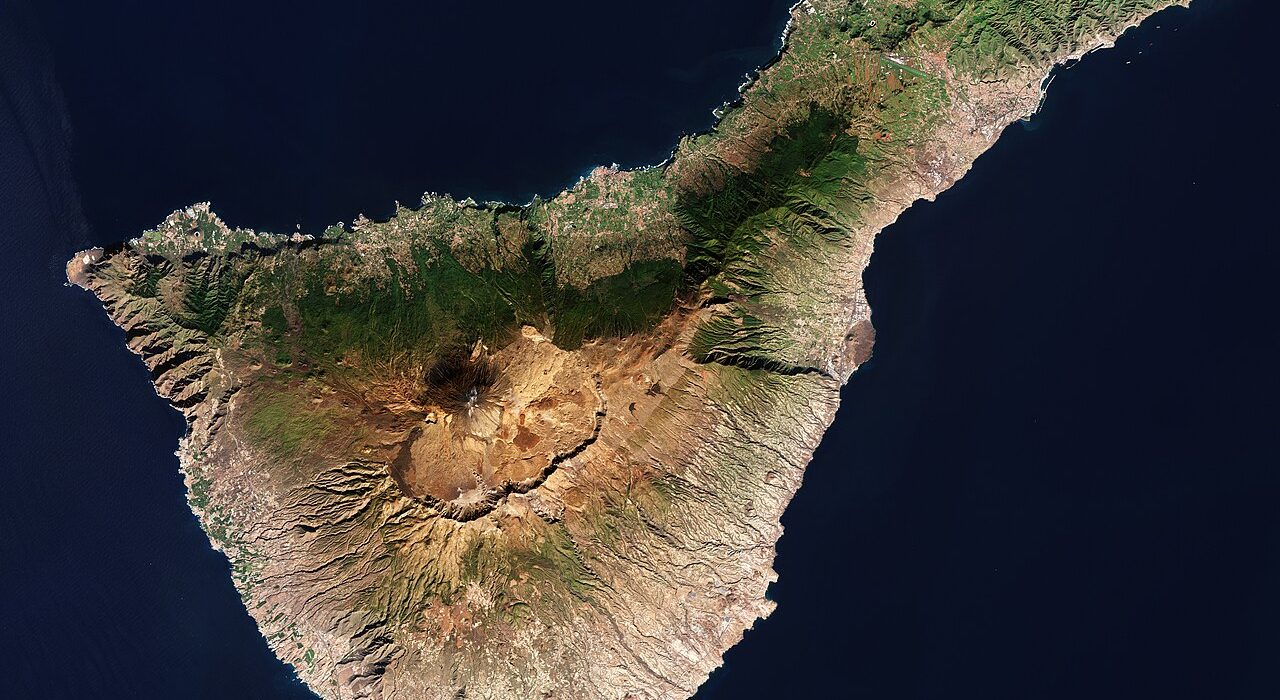
Madrid → Tenerife
How to get from Madrid to Tenerife: quick overview
To travel from Madrid to Tenerife you must take a plane or a ferry, since this route crosses the Atlantic Ocean and there is no direct land connection. The fastest option is flying, with a flight time of approximately 180 minutes.
Below, we offer a direct comparison of the only two ways to make this journey so you can choose the one that best suits your budget and schedule.
| Medio | Duración | Precio aprox. | Frecuencia |
|---|---|---|---|
| Avión | 180 min (3 horas) | 40 – 204€ | ~9 vuelos al día |
| Ferry | Travesía marítima larga | 116€+ (con coche) | Varias salidas semanales |
The recommendation depends entirely on your traveller profile. If you are short on time and value efficiency, flying is the only logical choice, connecting the capital with the islands in barely a morning. If, on the other hand, your priority is bringing your own vehicle to get around freely once in the archipelago, the ferry is the solution, though it requires advance planning to reach the departure port on the mainland. For travellers seeking the lowest possible price, flying often offers competitive fares when booked in advance, while the ferry becomes a value option when you weigh the cost of renting a car at your destination against bringing your own.
By plane from Madrid to Tenerife
The direct flight is the most common and efficient way to connect mainland Spain with the Canary Islands, operated by established airlines offering multiple daily frequencies.
Currently, you can fly direct from Adolfo Suárez Madrid-Barajas Airport (MAD) with airlines such as Iberia, Air Europa, Ryanair and Iberia Express. The flight time is approximately 180 minutes, i.e. 3 hours of actual flying time. The frequency on this route is high, with around 9 flights a day, giving you the flexibility to choose morning, afternoon or evening departures.
As for arrival airports, the route mainly connects to Tenerife North Airport (TFN), which is the closest to the capital, Santa Cruz de Tenerife, and the northern parts of the island. However, there are also flight options to Tenerife South Airport (TFS), ideal if your final destination is the southern tourist areas such as Playa de las Américas or Los Cristianos. It is important to check your ticket, as the distance between the two airports on the island is considerable.
The price range is between €40 and €204. This maximum price of €204 corresponds to specific return fares or high-demand dates, and is not the annual average. Once you land, the time to reach the centre depends on the airport: from Tenerife North (TFN) you will be in central Santa Cruz in about 15–20 minutes, while from Tenerife South (TFS) the drive or guagua (bus) journey can take up to 45–50 minutes depending on traffic.
Taking the ferry to Tenerife
The ferry is the option for those who want to bring their own car, but it’s essential to know that the ship does not depart from Madrid, since the city has no coastline. Instead, you must first travel to a seaport in the south of the peninsula.
The shipping companies covering this route are Fred. Olsen Express and Baleària. The main embarkation point for this connection is the port of Huelva, from where vessels set sail for Santa Cruz de Tenerife. Fred. Olsen Express operates this direct Huelva–Santa Cruz de Tenerife route, which can occasionally include a technical stop in Gran Canaria. Baleària, on the other hand, runs the route from the port of Cádiz to Santa Cruz de Tenerife.
Departures are scheduled several times a week, so you won’t have the same hourly flexibility as with a plane and you’ll need to plan your trip days in advance. As for prices, the fare structure differs from air travel. Verified data shows a price starting from €116, but this fare applies specifically to the option of one person plus vehicle in a cabin, purchasing a round trip with a resident discount. Prices for foot passengers or those without discounts can vary significantly.
The exact duration of the crossing is not given as a specific figure in the current data, although it is noted that Fred. Olsen offers one of the fastest connections available on the market. As a long-distance sea journey, the onboard experience includes dining services and cabins for overnight stays during the voyage.
Plane or ferry? Which one suits you best
Choosing between plane and ferry isn’t just a matter of price, but also of logistics and your mobility needs at the destination.
If we look at total door-to-door time, the plane wins hands down. Adding up the time to get to Barajas Airport, security checks, and the 3-hour flight, you’ll be in Tenerife in under 6 hours from the moment you leave home in Madrid. The ferry, requiring a prior journey to Huelva or Cádiz (which means several hours of driving or train travel from Madrid) plus the long sea crossing, turns the trip into an adventure lasting at least 24 hours or more.
The deciding factor is the car. If you need your vehicle on the island for work, living, or to save on long-term rentals, the ferry is your only realistic option. Taking the car on the plane is impossible. If you’re travelling purely for tourism for a week, the cost of putting the car on the ferry (from €116 just for the base fare with car) plus the fuel to get to Huelva often exceeds the cost of renting a small vehicle in Tenerife for those days.
As for luggage, the plane is usually more restrictive with weight and size if you book basic fares (like those of Ryanair or Iberia Express), charging extra for checked bags. The ferry allows you to bring much more luggage at no significant additional cost, which is ideal for moves or long-stay trips.
Taking your car on the ferry
Loading your vehicle is a straightforward process, but it requires arriving at the port well in advance for check-in and security procedures.
Both Fred. Olsen Express and Baleària allow the boarding of cars, motorbikes, and campervans. You must present yourself at the port of Huelva or Cádiz with the vehicle documentation and your reservations, either printed or on your mobile phone. The indicated price of €116+ is a reference for the resident fare with a vehicle; for non-residents or standard fares, the cost of the car is added to the passenger fare and can raise the total price considerably.
The process involves driving your car up the ship’s ramp, where the stevedoring staff will direct you where to park in the ferry’s hold. Once parked, you must leave the vehicle and go up to the passenger decks, where you can access cabins, restaurants, and common areas during the crossing. It is advisable to arrive at the port at least 2 hours before departure to complete the access checks.
Where to stay in Tenerife
Tenerife offers a wide variety of accommodation to suit different budgets and travel styles, mainly spread across two large geographical areas.
If you land in the north or are looking for a more authentic, less crowded experience, the area around Santa Cruz de Tenerife, La Laguna, and Puerto de la Cruz is ideal. Here you’ll find urban hotels, tourist apartments, and rural houses at more moderate prices, perfect for enjoying the local culture and gastronomy without the crowds of the south.
On the other hand, if your priority is guaranteed sunshine and beach life, the southern zone—including municipalities like Adeje, Arona, and San Miguel de Abona—concentrates the largest hotel offering. Large chain resorts, luxury hotels, and holiday apartments dominate here. Price ranges vary enormously: from budget hostels at €30–50 a night to 5-star resorts exceeding €200 per night, especially in high season.
For travellers with a car (arriving by ferry or with a rental), the inland areas or the La Orotava Valley offer a perfect balance of tranquillity, competitive prices, and quick access to both the north and south of the island.
What to eat in Tenerife
Canarian gastronomy is a cornerstone of the trip, distinguished by its use of fresh, local produce and recipes steeped in history.
- Papas arrugadas with mojo: The undisputed star dish. These are small, thin-skinned potatoes boiled in heavily salted water until they wrinkle. They are served with two traditional sauces: mojo picón (red, made with peppers and chilli) and mojo verde (green, made with coriander or parsley, and milder).
- Ropa vieja: A hearty, flavourful stew born from making the most of leftover cocido (stew). It consists of shredded meat (beef or chicken) sautéed with chickpeas, peppers, and potatoes, creating a unique, richly textured dish.
- Conejo en salmorejo: Very popular at local fiestas and traditional restaurants. The rabbit meat is first marinated in a mixture of wine, vinegar, garlic, and Canarian spices (such as cumin and pimienta picona pepper) and then stewed until tender.
- Gofio escaldado or escaldón: Gofio is a flour made from toasted cereals (corn or wheat) and has been the staple of the Canarian diet since before the Spanish conquest. Escaldón is made by mixing gofio with a very hot fish or meat broth until it forms a dense paste, eaten with a spoon.
The average price per person in a standard restaurant, including a main course and a drink, is usually around €15–25, making it a very affordable way to enjoy high-quality food.
Best time to make this trip
The best time to travel from Madrid to Tenerife is during spring and autumn, when the weather is mild and pleasant for all activities.
During these months, temperatures are ideal for enjoying both the beach and hiking in the island’s interior, avoiding the excessive heat of summer or the possible winter rains in the north. Additionally, flight and accommodation prices tend to be more stable than during peak season.
It’s important to bear in mind the nuances of high season: in summer, flights and ferries to the islands fill up quickly and prices rise considerably. If you plan to travel in July or August, it is crucial to book months in advance to secure your spot and avoid high fares, especially if you need to take a car on the ferry.
Frequently asked questions about the Madrid–Tenerife route
How long does it take to get from Madrid to Tenerife?
Travel time depends on the means of transport you choose. By plane, a direct flight takes about 180 minutes (3 hours). By ferry, the sea crossing from Huelva or Cádiz is a long journey that requires an overnight stay on board, plus the overland travel time from Madrid to the port.
Can you drive from Madrid to Tenerife?
You cannot drive the entire way because the sea is in between. There is no road or bridge connecting the mainland to the island. The only way to take your car is to load it onto the ferry at the ports of Huelva or Cádiz.
Which is cheaper, the plane or the ferry?
It depends on your needs. A flight can cost from €40 if you are travelling alone and with little luggage. Ferry fares start at €116 (with a car and resident discount), but once you add the cost of taking the vehicle and getting to the port, it usually works out more expensive, although you save on car hire at your destination.
When is the best time to travel?
According to climate data and visitor numbers, the best time is spring and autumn. During these months you can enjoy good weather and avoid the crowds and high prices of summer, which is peak season on the islands.
📍 También te puede interesar
Qué ver en Madrid →
Qué ver en Tenerife →