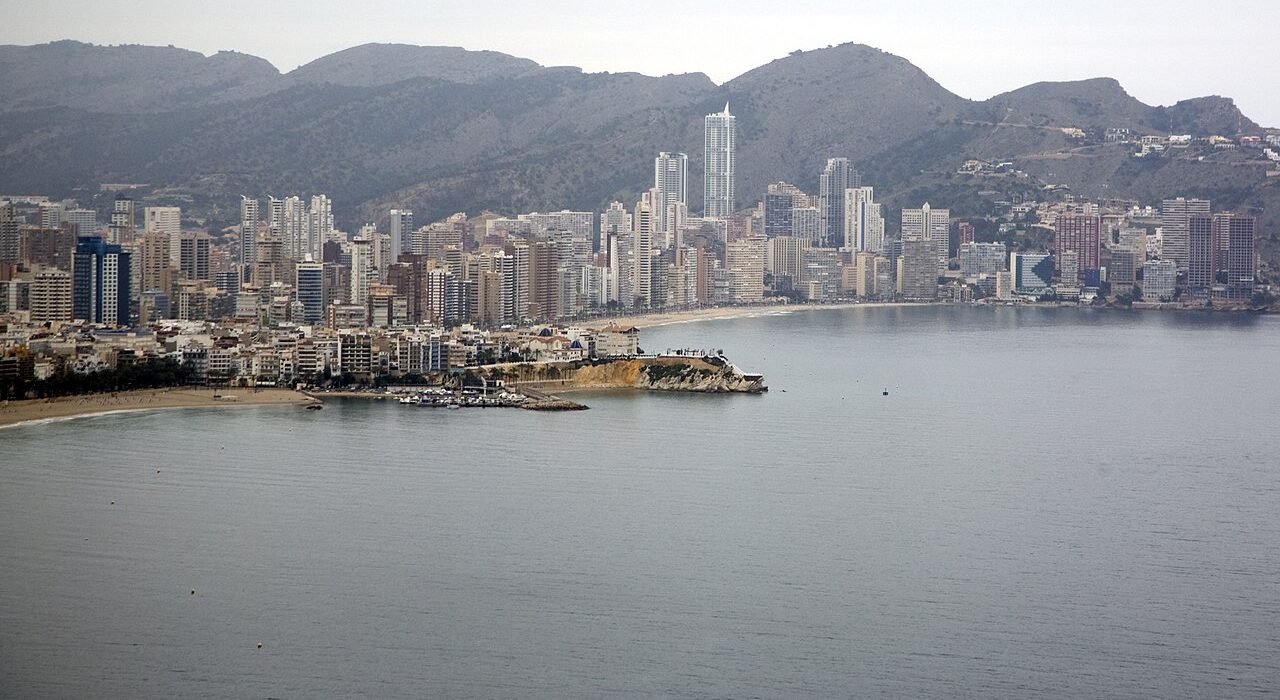
Alicante → Benidorm
45 kmHow to get from Alicante to Benidorm: quick overview
The Alicante-Benidorm route takes approximately 35 minutes by road (45 km), making it a very convenient journey for any type of traveller. The most popular option is the direct bus, with services from Alsa, FlixBus, BlaBlaCar Bus, La Unión de Benisa and Beniconnect for just €5-9 and a 40-minute journey. A private car is ideal if you want to stop in towns such as El Campello or La Vila Joiosa. The train is not a viable alternative because Benidorm does not have its own station, and there are no direct flights between the two cities either.By car from Alicante to Benidorm
The road distance between Alicante and Benidorm is 45 km, with an estimated travel time of 35 minutes without traffic. The main route is the A-31, known as the Autovía de Alicante or Autovia d’Alacant, a toll-free motorway that connects both cities directly and smoothly. The route runs parallel to the coast and offers constant views of the Mediterranean, with stretches where the silhouette of Benidorm can be glimpsed in the distance. It is a comfortable, well-signposted road with wide hard shoulders, suitable for any type of vehicle. As it is a toll-free motorway, the only direct cost is fuel, which for an average car is around €4-6 depending on consumption. That said, it is best to avoid peak times on Friday afternoons and early Sunday mornings, when weekend return traffic clogs up the access roads to the coast.By bus from Alicante to Benidorm
The bus is the most practical option for those who do not want to drive or park in Benidorm. There are direct services operated by five companies: Alsa, FlixBus, BlaBlaCar Bus, La Unión de Benisa and Beniconnect. The journey takes approximately 40 minutes, and prices range from €5 to €9 per trip, making it one of the cheapest transfers on the entire Costa Blanca. Departures are frequent throughout the day, with increased frequency in summer and at weekends. Buses usually leave from Alicante’s Estación Central (central station) and arrive at Benidorm station, very close to the centre and Playa de Levante (Levante Beach). To find the best prices, it is advisable to book in advance on the Alsa and FlixBus websites, especially in high season (July, August and public holiday weekends).Recommended stops along the way
The A-31 makes it easy to detour to several towns that are worth a stop, whether to stretch your legs, have a coffee facing the sea, or discover places with plenty of character.Sant Vicent del Raspeig / San Vicente del Raspeig
Just 10 km from Alicante, Sant Vicent del Raspeig is a logical stop if you are setting off from the capital. Its university fills the town with life, and its old quarter retains a village feel. It is worth wandering around its main square and taking the chance to have an early lunch before continuing towards the coast.Mutxamel
Mutxamel is a quiet town famous for its table grape growing and its Moors and Christians (Moros y Cristianos) festival. It is very close to Alicante and well connected, making it perfect for a brief cultural visit. Its historic centre retains narrow streets and charming squares, and from here you can access interesting wine-growing areas.Sant Joan d’Alacant
Sant Joan d’Alacant marks the transition between the Alicante metropolitan area and the northern coast. It is a modern town but with pleasant beaches and a good selection of rice restaurants. If travellers are looking for a seafood lunch before reaching Benidorm, this is a very convenient option.el Campello
El Campello is probably the stop with the most personality along the route. Its fishing harbour, hidden coves, and 16th-century watchtower make it an ideal place to stretch your legs. Here you can enjoy an authentic arroz a banda (rice cooked in fish stock) facing the sea or buy fresh fish directly from the fish market.la Vila Joiosa / Villajoyosa
Before reaching Benidorm, la Vila Joiosa is an essential stop. Its colourful houses facing the sea, its walled old quarter, and its chocolate factories are a perfect contrast to Benidorm’s more urbanised atmosphere. It is also considered the birthplace of turrón de Jijona (soft almond nougat) and has a solid dining scene.Where to stay in Benidorm
Benidorm offers accommodation for all budgets and styles. The liveliest and most practical area is the stretch between Playa de Levante and the old town, where most hotels, apartments, and restaurants are concentrated. Hotels on the Levante beachfront range from budget options (60-90€ per night in low season) to four-star resorts with sea views (120-250€). For families, the western side of Playa de Poniente is quieter and has hotels with pools and entertainment. If you prefer a more relaxed atmosphere, the upper neighbourhoods and Rincón de Loix offer apartments with good views and more affordable prices (50-80€ per night). It is advisable to book in advance in summer and during Holy Week (Semana Santa), when occupancy exceeds 90%.Where to eat along the route
The gastronomy of the Alicante-Benidorm route is one of the most outstanding on the Spanish Mediterranean. The province of Alicante and the Marina Baixa region are home to dishes that are part of the Intangible Cultural Heritage, and they are well worth trying at every stop.Arroz a banda
Arroz a banda (rice cooked in fish stock) is the king of Alicante’s seafaring cuisine. It is made by cooking rice in an intense fish and seafood broth, then serving the fish “a banda,” meaning separately, alongside homemade aioli. It is a dish of fishing origin that was born on the boats along the coast and is now served in any rice restaurant in the area. It is easy to find in El Campello and La Vila Joiosa.Coca amb tonyina
Coca amb tonyina (tuna flatbread) is a savory pie with a thin, crispy crust, filled with tuna, onion, and pine nuts. It is an emblematic bite of the Bonfires of San Juan in Alicante, but it is eaten all year round. It is perfect as an afternoon snack or a bite on the road, and it can be found in almost any traditional bakery or pastry shop in the l’Alacantí region.Olleta alicantina
Olleta alicantina (Alicante-style stew) is a hearty winter stew that combines legumes, vegetables, and pork. It is spoon food, comforting and closely tied to the festive calendar of the inland villages. Although it is not exclusive to the coast, many taverns in the area serve it during the cold season.Pilotes de dacsa
Pilotes de dacsa (corn flour meatballs) are traditional meatballs from Marina Baixa made with corn flour, beans, meat, and vegetables. They are often served in broths or stews and are a perfect example of rural eastern Spanish cuisine. They can be tried in towns like La Vila Joiosa or Finestrat.Turrón de Jijona/Alicante
Turrón (nougat) is the province’s most internationally famous sweet. The Jijona variety (soft, with a marzipan-like texture) and the Alicante variety (hard and crunchy) are made with toasted almonds and honey. La Vila Joiosa is considered the historical birthplace of this industry and still preserves workshops and museums where you can learn about how it is made.Fondillón
Fondillón is a wine unique in the world, made from overripe Monastrell grapes and aged for years in barrels. It has a naturally sweet, complex, and deep profile, ideal as an after-dinner glass. It is a scarce, almost collector’s item product, served in specialized restaurants and wine shops in the province of Alicante.Frequently asked questions about the Alicante-Benidorm route
How long does it take to get from Alicante to Benidorm?
By car, via the A-31, the journey takes approximately 35 minutes to cover the 45 km distance. By direct bus, the average duration is 40 minutes, with services from Alsa, FlixBus, BlaBlaCar Bus, La Unión de Benisa, and Beniconnect.
Which is cheaper, the train or the bus?
The bus is the only viable option because Benidorm does not have its own train station and there is no direct rail service from Alicante. Bus tickets cost between €5 and €9, compared to €4-6 for gasoline by car, so both alternatives are very economical.
Is it worth renting a car?
A car is worth it if you want to make stops in towns like El Campello, Sant Joan d’Alacant, or La Vila Joiosa, where public transport is more limited. For those who only want to go from Alicante to Benidorm and get around the latter, the direct bus is more than enough and avoids the parking problem.
When is the best time to travel?
The best time is spring (April-June) and early autumn (September-October), when temperatures are mild, hotels have better prices, and there are no summer crowds. July and August are the months with the most atmosphere, full beaches, and more frequent buses, but also the most expensive.
💡 ¿Sabías que...?
- ● El Castillo de Benidorm, situado en la Punta Canfali entre las playas de Levante y Poniente, fue arrasado en agosto de 1812 por un bombardeo de la flota inglesa al retirarse las tropas napoleónicas durante la Guerra de la Independencia. (https://www.informacion.es/benidorm/2025/02/26/benidorm-castillo-piratas-guerra-dv-loc-114698881.html)
- ● En 1740 llegó por mar a Benidorm un londro que portaba una imagen de la Virgen, hoy patrona de la villa con el nombre de Mare de Déu del Sofratge, que ostenta la Cruz al Mérito Naval concedida por la Armada. (https://benidorm.org/es/pagina/historia-de-benidorm)
- ● En 1993 el Ayuntamiento conmemoró el primer siglo de turismo en Benidorm, tomando como referencia el folleto de los Baños de la Virgen del Sufragio publicado en 1893, considerado el primer folleto turístico conocido de la ciudad. (https://www.visitbenidorm.es/ver/1322/benidorm--una-tierra-llena-de-historia--historia-del-turismo-de-benidorm.html)
- ● Benidorm desapareció como pueblo en 1503 a causa de la despoblación provocada por los continuos ataques piratas, quedando solo habitado el castillo con un retén de seis hombres dedicados a la vigilancia. (https://viajar.elperiodico.com/destinos/benidorm-irresistible-placer-culpable-81039409)
- ● El nombre de Benidorm no procede del árabe «Beni-Darhim», como propuso Gaspar Escolano, ya que jamás se ha hallado ningún Darhim, lo que hace insostenible la teoría del «hijo de». (https://www.midiariodeviajes.es/curiosidades-de-benidorm-que-no-conocias/)
📍 También te puede interesar
Qué ver en Alicante →
Qué ver en Benidorm →