Majadahonda
Comunidad de MadridClimate
What to see in Majadahonda: the essentials
Majadahonda is not just a commuter town: it is a place with a 243-hectare urban forest, a church that anchors the historic centre and a wildlife hospital that has treated more than 120,000 animals. Here is what you cannot miss.
Monte del Pilar
Monte del Pilar is an urban forest of holm oaks and pines that forms part of a woodland mass of some 800 hectares spread across Madrid, Pozuelo de Alarcón and Majadahonda. It is a remnant of what was once the Cazadero Real de Madrid (Royal Hunting Ground), a vast area where Philip II’s court was established. Inside you will find trails, signposted routes and maps available to explore it, as well as places of interest such as La Era, the Casa de Labor, La Hidro and the Torreta de Vigilancia (watchtower). It has a dog area with an agility course and maintenance and security services. It is the perfect place for a morning walk or a green getaway without leaving the municipality.
Gran Plaza 2 Shopping Centre
Gran Plaza 2 Shopping Centre, located at Calle de los Químicos, 2, is one of the main shopping and indoor leisure areas in the municipality. It has cinemas, a wide range of shops and restaurants, and a large on-site car park with 3,628 spaces that prevents street parking from becoming overwhelmed. If you are looking for an afternoon of shopping and cinema, this is your spot. It has a customer service phone line (91 172 97 22) and an official website.
Casa de la Cultura Carmen Conde
The Casa de la Cultura Carmen Conde, on Plaza de Colón, is one of the main venues for the municipality’s cultural programme, alongside the Biblioteca Municipal Francisco Umbral. It hosts cultural activities and has facilities for the development of local cultural life. Check its schedule if you fancy a concert, an exhibition or a workshop during your visit.
Majadahonda Town Hall
Majadahonda Town Hall is the seat of local government, from where the administrative life of the municipality is organised and where council meetings and institutional events are held. Its building is part of the everyday landscape of the centre and is a reference point if you need to get your bearings.
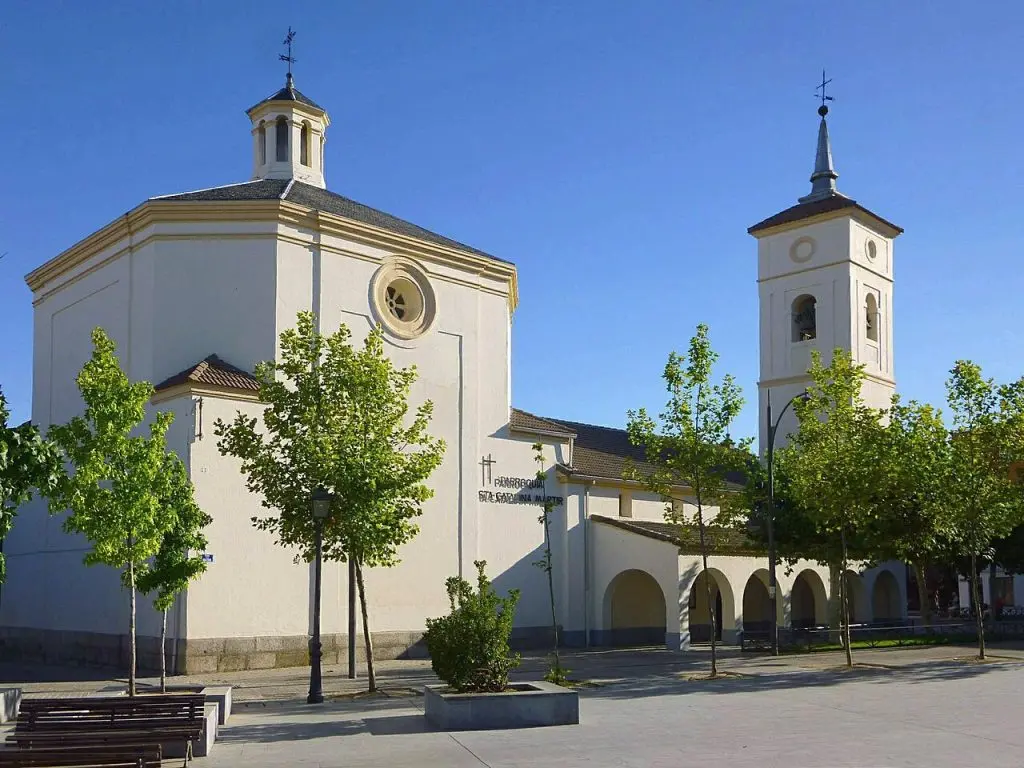
Parish Church of Santa Catalina Mártir
The Parish Church of Santa Catalina Mártir is the main church of the historic centre, located at Plaza de la Iglesia, 4. It is the town’s principal parish and its building is one of the landmarks of the municipality’s historic ensemble. It holds Sunday masses at 10:00, 11:00 (families), 12:00, 13:00 and 19:00, with opening hours from 9:30 to 13:00 and in the afternoon.
Ermita del Santísimo Cristo de los Remedios
The Ermita del Santísimo Cristo de los Remedios is one of the highest-rated in the municipality, with a score of 4.8 out of 5, and is linked to local religious tradition and the festivities of the Cristo de los Remedios.
Palacio de Cotoblanco
The Palacio de Cotoblanco is a historic building located in the surroundings of Monte del Pilar, next to the viewpoint of the same name and the Huerta Vieja. It forms part of the places of interest on the hill, belonging to the historic and scenic heritage of this urban forest that preserves traces of its agricultural and forestry past.
Gran Parque Felipe VI
Gran Parque Felipe VI is a municipal park with a skating rink, ornamental fountain, children’s play areas, an exercise area for older people, a fitness circuit, a cycle lane and running circuits.
Plaza de Colón
Plaza de Colón is the reference centre for the municipality’s cultural activity, with exhibitions, courses and workshops; its general opening hours are Monday to Friday from 09:00 to 22:00, Saturdays from 10:00 to 13:30 and 16:00 to 20:00, and Sundays with a theatre performance from 10:00 to 12:00.
Parque de Colón
Parque de Colón stands out for its bowling green and pétanque courts, accessible to people with reduced mobility, which encourage active ageing and social life, and it is a space valued as a recreation and rest area in the heart of Majadahonda.
Parque de Laguna Vieja
Parque de Laguna Vieja is laid out around a lagoon and garden and walking areas, standing out among Majadahonda’s green spaces for its size and its landscape design conceived for recreation and strolling.
Parque de Adolfo Suárez
Parque de Adolfo Suárez, located at Calle Velero, 24, has green areas and a quiet atmosphere suitable for both walking and relaxing outdoors.
Parque Cerro del Aire
Parque Cerro del Aire is an urban park appreciated for its green areas and walks, regarded as one of the municipality’s green lungs, and it has municipal sports facilities, including an athletics track, with an information line on 91 634 42 37.
GREFA (Grupo de Rehabilitación de la Fauna Autóctona y su Hábitat)
GREFA is a non-governmental, non-profit organisation founded in 1981 as an association for the study and conservation of nature. Its Wild Fauna Hospital is based in Monte del Pilar and over its history it has treated more than 120,000 animals, and it is considered the largest and most active of its kind in Europe. The centre offers guided tours with limited places per guide, so it is advisable to book in advance.
Monuments of Majadahonda
In Majadahonda you will find the monument to El Quijote, the monument to Cervantes and the Monument to Mota y Marín, fallen for God and for Spain (and Romania).
🍂 Otoño
El otoño es la mejor época para visitar Majadahonda, con temperaturas suaves y luz dorada. Septiembre trae las Fiestas Patronales en honor al Santísimo Cristo de los Remedios, y en noviembre se celebra la Fiesta de Santa Catalina. Aprovecha para pasear por la Plaza Mayor y el Gran Parque Felipe VI con ropa cómoda.
What to do in Majadahonda
Majadahonda offers walks through a 243-hectare urban forest, guided tours of a wild fauna hospital of European reference, shopping in a large shopping centre with 3,628 parking spaces and an active cultural programme in Plaza de Colón. If you happen to visit in September, the Fiestas Patronales in honour of the Santísimo Cristo de los Remedios fill the old town with a proclamation, concerts, bullfighting events, children’s activities, popular dances and fireworks. In November, the Fiesta de Santa Catalina celebrates the city’s patron saint with religious acts and celebrations. And if you are travelling with people over 60, the Semana del Mayor in May offers free workshops, excursions, dances and exhibitions.
For everyday life, the Mercado de Majadahonda is a neighbourhood and tourist meeting point with stalls selling fresh produce, gourmet products and takeaway food, as well as tapas and typical dishes. The neighbourhoods also set the pace: the Casco Antiguo invites you to wander among squares and terraces, the Zona Centro concentrates shops and restaurants, and El Carralero or Roza Martín are ideal for strolling among green areas. If you are looking for nature, Monte del Pilar offers signposted routes and a dog area with an agility course; if you are looking for indoor leisure, Gran Plaza 2 solves the afternoon with cinemas and dining.
Majadahonda in a day: express itinerary
This itinerary lets you see the essentials of Majadahonda in a full day, combining nature, the old town and leisure.
- 09:00 – Monte del Pilar: Start the day with a walk through this urban forest of holm oaks and pines. Follow its signposted trails and look out for points of interest such as the Huerta Vieja or the Torreta de Vigilancia. If you get up early, you’ll see the light filtering through the holm oaks.
- 11:30 – Parroquia de Santa Catalina Mártir: Head down to the old town and visit the municipality’s main church at Plaza de la Iglesia, 4. Take advantage of its morning opening hours (9:30 to 13:00) to go in at your leisure.
- 12:30 – Plaza de Colón and Casa de la Cultura Carmen Conde: Stroll around Plaza de Colón and check whether there’s an exhibition or cultural activity on at the Casa de la Cultura. It’s the cultural heart of the municipality.
- 14:00 – Lunch at the Mercado de Majadahonda or a tavern in the centre: Try the Russian salad with ventresca, the fried aubergines with cane honey or some truffled huevos rotos. The market is perfect for nibbling on several things in a lively atmosphere.
- 17:00 – Gran Plaza 2: Spend the afternoon shopping, at the cinema or simply strolling around this large covered shopping centre. Its car park with 3,628 spaces saves you circling around if you come by car.
- 19:30 – Parque de Colón or Gran Parque Felipe VI: End the day with a relaxing walk. Parque de Colón has a bowling green and pétanque courts; Gran Parque Felipe VI offers a cycle lane and running circuits if you still have energy left.
Where to eat in Majadahonda: local cuisine
Where to stay in Majadahonda
Casco Antiguo
Núcleo histórico de Majadahonda, con calles peatonales, plazas y edificios tradicionales. Ambiente tranquilo y familiar, con comercios locales y terrazas.
Zona Centro
Área comercial y residencial alrededor de la Gran Vía, con tiendas, restaurantes y servicios. Bien comunicada y animada durante el día.
El Carralero
Barrio residencial con amplias zonas verdes y equipamientos deportivos. Ambiente familiar y tranquilo, ideal para pasear.
Los Satélites
Zona residencial consolidada con viviendas unifamiliares y adosados. Cuenta con pequeños comercios y zonas verdes, ambiente tranquilo.
Monte del Pilar
Barrio residencial de reciente desarrollo con modernos edificios y amplias avenidas. Bien comunicado y con servicios cercanos.
Roza Martín
Zona residencial tranquila con viviendas unifamiliares y espacios verdes. Cercana al centro y con fácil acceso a la naturaleza.
How to get to Majadahonda
Majadahonda is well connected to Madrid and to Adolfo Suárez Madrid-Barajas Airport (MAD), located 35 km away by road, about 36 minutes by car. Majadahonda’s train station has no AVE service, but it does have a Cercanías connection to the capital.
| Medio | Duración | Precio aprox. | Frecuencia |
|---|---|---|---|
| Tren (cercanías) | Variable según origen | Medio | Frecuente en días laborables |
| Coche desde Madrid | Unos 20-30 min según tráfico | Medio (combustible + peajes si aplican) | Según tráfico |
| Coche desde Aeropuerto MAD | Unos 36 min | Medio-alto (combustible + peajes si aplican) | Según tráfico |
| Bus urbano | Variable según línea | Bajo | Frecuente en días laborables |
Getting around Majadahonda
Majadahonda has an urban bus service for getting between neighbourhoods. For short trips within the old town and the centre, walking is the most practical option: the pedestrian streets and squares invite you to go on foot. If you’re staying in residential neighbourhoods such as Monte del Pilar or Roza Martín, the urban bus connects you to the centre and the main shopping areas. To get to Monte del Pilar or GREFA, the easiest way is by car or by urban bus, depending on the available line.
Weather in Majadahonda
Live webcam — Las Rozas de Madrid*
Majadahonda* The nearest webcam to Majadahonda is in Las Rozas de Madrid, 5.6 km away.
Source: Windy Webcams
Best time to visit Majadahonda
Day trips from Majadahonda
Majadahonda is a convenient base for exploring the region’s cities. Its Cercanías rail connection and its proximity to central Madrid (about 35 km from the airport and less than half an hour by car from the centre) make day trips easy. You can head to Madrid for museums and city life, pop over to Pozuelo de Alarcón to keep exploring the Monte del Pilar woodland along its 450-hectare slope, or visit other municipalities in the metropolitan area with historic and culinary charm. The Cercanías network and the area’s roads make getting around the region simple.
Majadahonda curiosities you didn’t know
The name comes from a sheep shelter. Majadahonda derives from a majada honda, a shelter for sheep located on a cañada real (royal drovers’ route) that crossed Spain. So every time you stroll through the old town, you’re walking on an ancient transhumance route.
Cervantes and Quevedo mocked the name. Miguel de Cervantes and Francisco de Quevedo referred to the village as “Majalahonda”, perhaps poking fun with a Biscayan pronunciation. Golden Age literature already had this town on the map.
It was a royal hunting ground with bears. For a long time Majadahonda was a royal hunting ground with abundant deer, wild boar and bears. Today Monte del Pilar preserves that forested past as a relic of the Cazadero Real de Madrid (Royal Hunting Ground of Madrid).
A battle razed the town in 1812. During the Peninsular War, a battle was fought at Majadahonda between French troops and Wellington’s forces, and the town was razed. The area’s wartime history also left its mark during the taking of Madrid in the Civil War.
The first documentary mention dates from 1432. The first documentary mention of Majadahonda dates from 1432, and the village council was established between 1480 and 1485. In other words, this municipality has been organised as a community for more than five centuries.
Who Majadahonda is for
Majadahonda is ideal for families looking for green spaces and parks with sports facilities, for couples who prefer quiet neighbourhoods such as Los Satélites or Roza Martín, and for nature lovers who want a 243-hectare urban forest on their doorstep. It’s also a good destination for foodies after authentic tapas and for travellers who want a convenient base near Madrid without giving up neighbourhood life. If you’re after intense nightlife or mass monumental tourism, this isn’t your city; if you’re after walks, the market, the forest and tapas without the crowds, you’ll love it.
💡 ¿Sabías que...?
- ● El nombre de Majadahonda proviene de una majada honda, un refugio para ovejas situado en una cañada real que cruzaba España. (https://majadahondamagazin.es/majadahonda-entra-en-la-historia-en-el-principio-fueron-las-ovejas/)
- ● Miguel de Cervantes y Francisco de Quevedo se refirieron a la aldea como «Majalahonda», quizás ironizando con una pronunciación vizcaína. (https://majadahondamagazin.es/majadahonda-entra-en-la-historia-en-el-principio-fueron-las-ovejas/)
- ● Majadahonda fue durante mucho tiempo un cazadero real con abundantes venados, jabalíes y osos. (https://majadahondamagazin.es/majadahonda-entra-en-la-historia-en-el-principio-fueron-las-ovejas/)
- ● En 1812, durante la Guerra de la Independencia, se libró una batalla en Majadahonda entre las tropas francesas y las de Wellington, y el pueblo quedó arrasado. (https://majadahondamagazin.es/1-000-anos-de-historia-de-majadahonda-vistos-por-un-texto-religioso-desde-el-dia-de-santa-catalina/)
- ● La primera mención documental de Majadahonda data de 1432, y el concejo aldeano se erigió entre 1480 y 1485. (https://majadahondamagazin.es/adelanto-del-nuevo-libro-majadahonda-fue-secularmente-un-pequeno-lugar-de-pacificos-vecinos/)
Frequently asked questions about Majadahonda
How many days do I need to see Majadahonda?
With a full day you can see the essentials: Monte del Pilar, the Parish Church of Santa Catalina Mártir, Plaza de Colón, Majadahonda Market and Gran Plaza 2. If you want to visit GREFA at a leisurely pace, stroll through several parks and enjoy tapas without rushing, two days are perfect.
What is the best time of year to visit Majadahonda?
The best time is from June to October, with an average summer temperature of 24.7°C. September coincides with the Fiestas Patronales in honour of the Santísimo Cristo de los Remedios, featuring concerts, bullfighting events, children’s activities, popular dances and fireworks. Winter, with an average of 6.9°C, is colder and less suited to outdoor plans.
How do I get to Majadahonda from Madrid?
You can arrive by Cercanías commuter train to Majadahonda station (no AVE) or by car, a journey of about 20-30 minutes depending on traffic. There is also an urban bus connecting with the capital. Adolfo Suárez Madrid-Barajas Airport is 35 km away by road, about 36 minutes by car.
What typical dishes should I try in Majadahonda?
Don’t leave without trying the ensaladilla rusa with ventresca, fried aubergines with cane honey, tortillitas de camarones, the Cádiz-style bienmesabe (marinated dogfish) and truffled huevos rotos. All are served as a tapa or ración in the taverns and bars of the centre, and Majadahonda Market is a good spot to sample several.
What is Monte del Pilar and why is it special?
Monte del Pilar is an urban forest of holm oaks and pines that forms part of a woodland of some 800 hectares spread across Madrid, Pozuelo de Alarcón and Majadahonda. It was once part of the Cazadero Real de Madrid (Royal Hunting Ground) and today has trails, signposted routes, a dog area with an agility course and places of interest such as Huerta Vieja and the Torreta de Vigilancia.
For more practical information on opening times, tickets and cultural events, see the official Majadahonda tourism website.