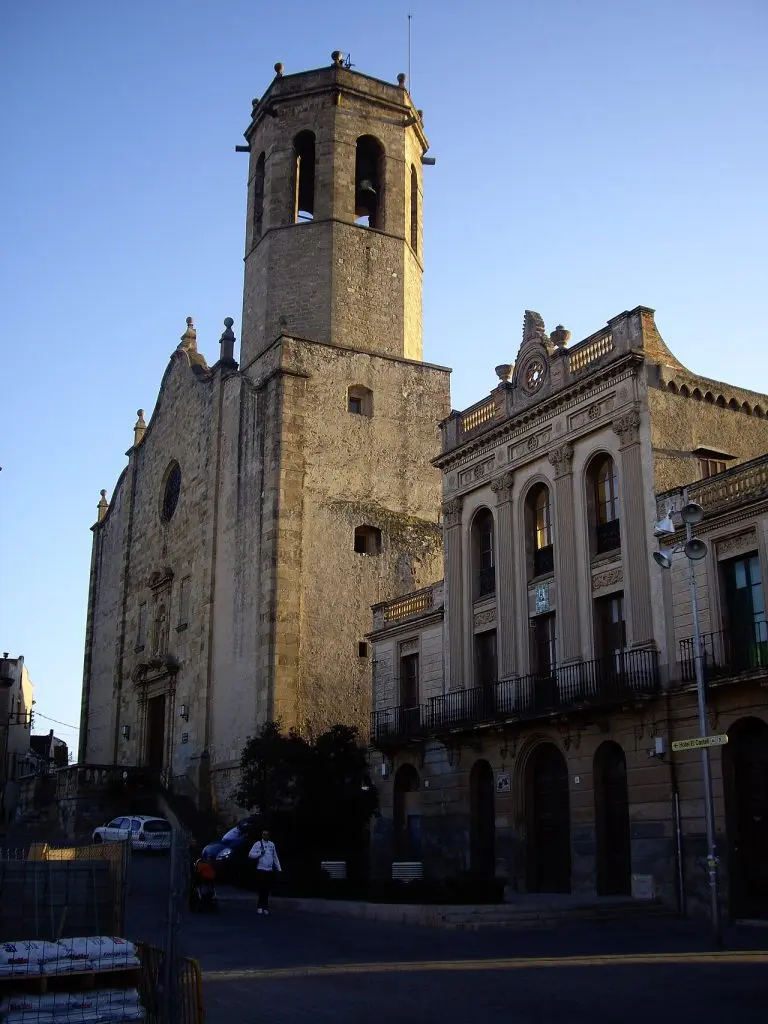
Sant Boi de Llobregat
CataluñaClimate
Just a stone’s throw from Barcelona yet with 60% of its land still forest, farmland and riverbank, Sant Boi de Llobregat strikes a balance that is hard to find in the metropolitan area: on the one hand, 2nd-century Roman baths considered the best-preserved private baths in Catalonia; on the other, an old town of medieval streets and a Baroque church that conceals the tomb of the philosopher Rafael Casanova. And while Barcelona looms just ten kilometres away, here the chargrilled carxofa (artichoke) sets the culinary calendar and the Parc de la Muntanyeta offers views over the Llobregat. It is a city to stroll through without haste, with one foot in Roman history and the other in Catalan neighbourhood life.
The must-seesWhat to see in Sant Boi de Llobregat: the essentials
Sant Boi de Llobregat concentrates its heritage interest in a compact old town, where Roman baths, Baroque churches and museums can all be explored on foot, and in a ring of green spaces and medieval towers that tell of its agricultural and defensive past. These are the visits you shouldn’t miss.
Termes Romanes de Sant Boi de Llobregat (Roman Baths)
Built in the late 2nd century AD, these private baths are considered the best-preserved in Catalonia and were declared a cultural asset of national interest in the archaeological zone category in 2016. The complex offers an insight into everyday life in a Roman villa in the Baix Llobregat, with its original bathing and heating areas. The viewing platform surrounding them is open to the public 24 hours a day, every day of the week, so you can peer in to admire them even at night or first thing in the morning. It is a brief visit but an essential one for understanding the city’s historical depth.
Església de Sant Baldiri (Church of Sant Baldiri)
The Baroque parish church is Sant Boi’s main temple and is linked to the town’s medieval origins. Inside, it preserves the altarpiece of Sant Baldiri, a heritage piece of great value that can only be viewed on the guided tours organised by the Museu de Sant Boi. The temple also holds a notable secret: the celebrated Catalan philosopher Rafael Casanova is buried here. To see the altarpiece, first head to the museum at Carrer del Pont, 7, where experts explain the temporary exhibition devoted to this piece before you enter the church.
Museu de Sant Boi
Located at Carrer del Pont, 7, this museum is the gateway to the city’s historical heritage and the starting point for the guided tours of the Sant Baldiri altarpiece. Its interpretive work brings to life pieces that might otherwise go unnoticed, connecting Sant Boi’s medieval past with today’s visitor. If local history interests you, this is the logical first stop before exploring the old town.
Museu romà (Roman Museum)
This museum complements a visit to the Roman baths and puts the area’s archaeological finds in context. It is a recommended stop for anyone wanting to delve deeper into Roman Sant Boi beyond the outdoor viewing platform.
Mosaic Terra de la Plaça Catalunya
This urban monument decorates one of Sant Boi’s busiest public spaces and surprises with its ground-level mosaic work. It is a good spot to pause for a moment while strolling between the centre and the shopping areas.
Torre de Benviure
The Torre de Benviure is a medieval defensive tower in the Can Paulet neighbourhood, declared a Cultural Asset of National Interest. Built between the 11th and 12th centuries in the Romanesque style, it formed part of the territory’s defensive and watch system. Its circular floor plan and stone walls offer a close-up look at the type of defensive towers found in the region.
Ermita de Sant Ramon (Chapel of Sant Ramon)
It is a popular destination for hikers and forms part of Sant Boi’s nature trails towards the Sant Ramon mountain. It is reached along forest paths and is the municipality’s main natural viewpoint, ideal for a walk with a panoramic reward.
Fàbrica Modernista de Can Masallera
A former Modernista factory that has been restored, it is one of the standout examples of Sant Boi’s industrial heritage. It forms part of the town’s buildings of heritage interest, alongside the 19th-century Hospital Psiquiátrico (Psychiatric Hospital) and the Can Torrents and Can Barraquer farmhouses.
Hospital Psiquiátrico de Sant Boi
Its architecture and history make it a unique feature of the city’s urban landscape. It is one of those buildings that tell a different part of Sant Boi’s story, far from the usual tourist clichés.
Masia de Can Torrents
A historic farmhouse linked to Sant Boi’s rural heritage, listed as a museum and place of interest within the old town. It forms part of the town’s group of farmhouses along with Can Barraquer and Can Comas, a testament to the agricultural past of the Baix Llobregat.
Parc de la Muntanyeta
Parc de la Muntanyeta is one of Sant Boi’s most important green and leisure spaces, with 13.3 hectares stretching between the Muntanyeta and Baldiri Aleu. Created in 1993, it combines green areas, recreational spaces and sports facilities on an inland hill rising from the Llobregat delta plain. It is the go-to green space for locals and offers views over the town centre and the river surroundings.
Plaça de la Vila de Sant Boi
Listed as a historic and protected site, this square stands out for its lively, bustling atmosphere throughout the day. Terraces, crêperies, restaurants serving a daily set menu and pizzerias where you can have breakfast, lunch, a snack or dinner cluster around it, making it the go-to spot for strolling and enjoying the town centre.
El Molí vell
A former flour mill located in the Vinyets-Molí Vell area, linked to the town’s agricultural and industrial past.
Oriol Martorell
An urban monument that forms part of Sant Boi’s sculptural landscape.
Deessa de l’aigua
An urban sculpture integrated into the city’s public spaces.
Circus Silent (Quatre actors)
A sculptural work that forms part of Sant Boi’s public art collection.
Mural
An urban artistic intervention that adds colour to the route through the city.
🍂 Otoño
Si visitas Sant Boi de Llobregat en otoño, el tiempo sigue siendo agradable y las lluvias son escasas, así que podrás pasear con tranquilidad. Es una buena época para acercarte a las Termes Romanes de Sant Boi de Llobregat o a la Torre de Benviure sin aglomeraciones. Un calzado cómodo te bastará para recorrer el centro y la Plaça de la Vila de Sant Boi.
What to do in Sant Boi de Llobregat
Sant Boi offers a programme that combines fairs of agricultural origin with food routes dedicated to the carxofa (artichoke), municipal fresh-produce markets and a network of neighbourhoods with a character all of their own that invite you to explore them on foot. The Fira de la Puríssima, in December, is the big date on the calendar: a fair with more than 75 years of history that fills the streets with family activities and a festive atmosphere. In May, the Capvuitada i festes de barri (Capvuitada and neighbourhood festivals) extends the Festa Major with celebrations in the Centre and Vinyets i Molí Vell neighbourhoods, perfect for mingling with the locals. During the Mes de la Carxofa (Artichoke Month), in March, the CarxoTapa tapas route tours bars and restaurants across the city with offerings built around the local star product. For everyday shopping, the municipal markets of la Muntanyeta, Sant Jordi and Torre la Vila are a tasty way to glimpse the Baix Llobregat’s larder, especially the Mercat de la Muntanyeta, refurbished in 2016 and with a weekly market on Saturday mornings.
Sant Boi de Llobregat in a day: express itinerary
With a full day you can cover the historic heart of Sant Boi and finish with a walk offering views. This itinerary takes you from the Roman baths to the mountain without rushing.
- 09:30 — Termes Romanes de Sant Boi (Roman Baths): start at the viewpoint open 24 hours to see the best-preserved private Roman baths in Catalonia in the morning light and without the crowds.
- 10:30 — Museu de Sant Boi and Església de Sant Baldiri: stop by the museum at Carrer del Pont, 7, to join the guided tour that lets you see the altarpiece of Sant Baldiri and learn about the tomb of Rafael Casanova.
- 12:00 — Old town and Plaça de la Vila: wander the narrow streets of the Casc Antic, pass by the Masia de Can Torrents and end up in the square for a coffee on one of its terraces.
- 13:30 — Lunch with carxofa: take the chance to try carxofa a la brasa (grilled artichoke) or an arròs amb carxofa i costella (rice with artichoke and pork rib) at any traditional Catalan restaurant in the centre.
- 16:00 — Parc de la Muntanyeta: digest your stroll among green spaces and enjoy the views over the town centre and the surrounding Llobregat area from this 13.3-hectare park.
- 18:00 — Ermita de Sant Ramon: if you still have energy, head up the forest trails to the town’s main natural viewpoint to close the day with panoramic views.
Where to eat in Sant Boi de Llobregat: local cuisine
Where to stay in Sant Boi de Llobregat
Casc Antic
Núcleo histórico de Sant Boi, con calles estrechas y edificios medievales. Alberga la iglesia de Sant Baldiri, el Museu de Sant Boi y restos del antiguo hospital. Ambiente tranquilo y auténtico, ideal para pasear y descubrir la historia local.
La Parellada
Zona residencial y comercial con amplias avenidas y parques. Cuenta con el Parc de la Parellada y diversos comercios y restaurantes. Es un área bien conectada y animada, frecuentada por familias y locales.
Ciutat Cooperativa-Molí Nou
Barrio obrero e industrial con historia cooperativista. Destaca la Colònia Güell (aunque administrativamente parte en Santa Coloma de Cervelló, muy cercana) y el entorno del riu Llobregat. Ambiente popular y reivindicativo, con espacios verdes junto al río.
Can Carreras
Barrio residencial tranquilo con viviendas unifamiliares y zonas verdes. Se encuentra cerca del Parc de Can Carreras y del Camí del Riu. Es una zona apacible, ideal para descansar y pasear.
Vinyets-Molí Vell
Zona residencial con mezcla de viviendas y pequeños comercios. Cuenta con el Parc de Vinyets y el Molí Vell, un antiguo molino harinero. Ambiente de barrio tranquilo, con servicios básicos y buena comunicación.
Casablanca
Barrio residencial situado al norte del municipio, con viviendas unifamiliares y adosados. Rodeado de colinas y bosques, ofrece un entorno natural y tranquilo. Ideal para quienes buscan naturaleza y senderismo.
How to get to Sant Boi de Llobregat
Sant Boi de Llobregat is just 10 km from Barcelona, within the metropolitan area, and its main public transport connection is the train station of Santa Coloma de Cervelló, with no AVE service. To get around the municipality, the urban bus covers local journeys. This table summarises the arrival options.
| Medio | Duración | Precio aprox. | Frecuencia |
|---|---|---|---|
| Tren hasta Santa Coloma de Cervelló | Variable según origen | Según tarifa de Renfe | Consultar horarios de Renfe |
| Bus urbano | Recorridos locales | Tarifa urbana | Frecuencia urbana habitual |
To plan up-to-date schedules and fares, the most practical option is to check the official tourism website of Sant Boi de Llobregat, where practical information on transport, events and visits is centralised.
Getting around Sant Boi de Llobregat
Sant Boi is a city that is easy to explore on foot, especially the old town and the area around Plaça de la Vila (Town Square), where the distances between the main monuments are short. For trips between more distant neighbourhoods, such as Casablanca, Ciutat Cooperativa-Molí Nou or Can Carreras, the urban bus is the public transport option available within the municipality. If your plan includes climbing up to the Ermita de Sant Ramon (Sant Ramon Hermitage) or walking the forest trails of the mountain, the most natural way to do it is on foot from the town centre. Overall, combining walks with the occasional urban bus ride is enough to get around the whole city comfortably.
Weather in Sant Boi de Llobregat
Best time to visit Sant Boi de Llobregat
Day trips from Sant Boi de Llobregat
Sant Boi’s location within the Barcelona metropolitan area makes it a practical base for exploring the Baix Llobregat region and its surroundings. The proximity of Barcelona, just 10 km away, allows for a full urban getaway without changing accommodation. Inland, the region offers a landscape dotted with masías (traditional farmhouses), riverside paths along the Llobregat and old industrial colonies that can be discovered on short trips. The train network from Santa Coloma de Cervelló station makes it easy to move between nearby towns without depending on a car. It is a good way to combine Sant Boi’s Roman and medieval history with other corners of the Baix Llobregat on the same trip.
Fascinating facts about Sant Boi de Llobregat you didn’t know
A name that changed with the war. In 1937, in the midst of the Civil War, the municipality of Sant Boi de Llobregat officially changed its name to Vilaboi. It was a brief episode, but a revealing one of how place names are also territory for historical dispute.
The best-preserved private baths in Catalonia are here. Built at the end of the 2nd century AD, the Roman baths of Sant Boi are not just any public baths: they belonged to a private villa, and their state of preservation has made them an archaeological benchmark. In 2016 they were declared a cultural asset of national interest in the archaeological zone category.
A philosopher buried in the village church. The church of Sant Baldiri, famous for its Gothic architecture, houses the tomb of Rafael Casanova, the celebrated Catalan philosopher. It is unusual to find a figure of his stature buried in a parish church in a city of this size.
More nature than asphalt. Although it is only 10 km from Barcelona, 60% of the surface area of Sant Boi de Llobregat is woodland, farmland and riverbank. That explains why, in a single day, you can visit Roman baths in the morning and lose yourself on forest trails towards the Sant Ramon mountain in the afternoon.
Who Sant Boi de Llobregat is for
Sant Boi de Llobregat is a destination for travellers who prefer the authenticity of a living city to the tourist shopfront. History and archaeology lovers will find a remarkable Roman and medieval ensemble here, with 2nd-century baths and a Baroque church that includes a philosopher’s tomb. Foodies will enjoy a local cuisine with its own identity built around the carxofa (artichoke), especially in March. Families and couples looking for a quiet base near Barcelona, with parks, markets and gentle hiking routes, also fit in well in neighbourhoods such as Casablanca, Can Carreras or La Parellada. And backpackers will find a down-to-earth atmosphere and more modest prices in Ciutat Cooperativa-Molí Nou. This is not a city of grand monuments or mass tourism: it is a city to walk, taste and understand at a leisurely pace.
💡 ¿Sabías que...?
- ● El 60% de la superficie de Sant Boi de Llobregat es forestal, agrícola y fluvial, y el municipio está situado a solo 10 km de Barcelona. (https://santboi.cat/ciutat/visita-sant-boi)
- ● Las termas romanas de Sant Boi, construidas a finales del siglo II dC, están consideradas como las termas privadas mejor conservadas de Cataluña. (https://www.museusantboi.cat/es/el-museu/)
- ● En 1937 el municipio de Sant Boi de Llobregat cambió su nombre por el de Vilaboi. (https://www.enciclopedia.cat/gran-enciclopedia-catalana/sant-boi-de-llobregat)
- ● El célebre filósofo catalán Rafael Casanova está enterrado en la iglesia de Sant Baldiri de Sant Boi de Llobregat, famosa por su arquitectura gótica. (https://viajar.elperiodico.com/escapate_cerca/pueblo-barcelona-oculta-termas-romanas-110997532)
- ● Las termas romanas de Sant Boi de Llobregat fueron declaradas bien cultural de interés nacional, en la categoría de zona arqueológica, por acuerdo de 19 de julio de 2016. (https://www.boe.es/diario_boe/txt.php?id=BOE-A-2016-8426)
Frequently asked questions about Sant Boi de Llobregat
How many days do I need to see Sant Boi de Llobregat?
With a full day you can see the essentials of the old town —the Roman baths, the Museu de Sant Boi (Sant Boi Museum), the Església de Sant Baldiri (Church of Sant Baldiri) and the Plaça de la Vila— and finish with a walk to the Parc de la Muntanyeta or the Ermita de Sant Ramon (Chapel of Sant Ramon). If you want to explore the neighbourhoods at a relaxed pace, do a hiking route and coincide with markets or fairs, 2 or 3 days will give you a more complete experience without rushing.
What is the best time of year to visit Sant Boi de Llobregat?
May to October is the best time, with an average summer temperature of 23.8°C according to climate data, ideal for strolling and enjoying outdoor routes. In winter the average drops to 10.1°C, but it is still a quiet option. If you are looking for a festive atmosphere, December with the Fira de la Puríssima (Puríssima Fair) or March with the Mes de la Carxofa (Artichoke Month) are especially recommended times.
How do I get to Sant Boi de Llobregat from Madrid?
The main rail connection is via Santa Coloma de Cervelló station, with no AVE service, so from Madrid the usual approach is to reach Barcelona first by AVE and continue by Cercanías or medium-distance train according to Renfe timetables. Once in Sant Boi, the urban bus covers local journeys.
What typical dishes should I try in Sant Boi de Llobregat?
Carxofa a la brasa (grilled artichoke) is the most emblematic dish, dressed with virgin olive oil and salt. Also typical are arròs amb carxofa i costella (rice with artichoke and pork rib), carxofes farcides de carn o botifarra (artichokes stuffed with meat or botifarra sausage), caneló de carne (meat cannelloni) and arroz con costra (rice with a crust). You will find them in traditional Catalan restaurants and on the CarxoTapa tapas route during March.
Is Sant Boi de Llobregat a good base for visiting Barcelona?
Yes, especially if you are looking for a quieter and cheaper alternative to central Barcelona. Sant Boi is only 10 km from the Catalan capital, with a train connection from Santa Coloma de Cervelló station, and it retains a setting with 60% forest, agricultural and river land that lets you switch off at the end of the day.