Getxo
País VascoClimate
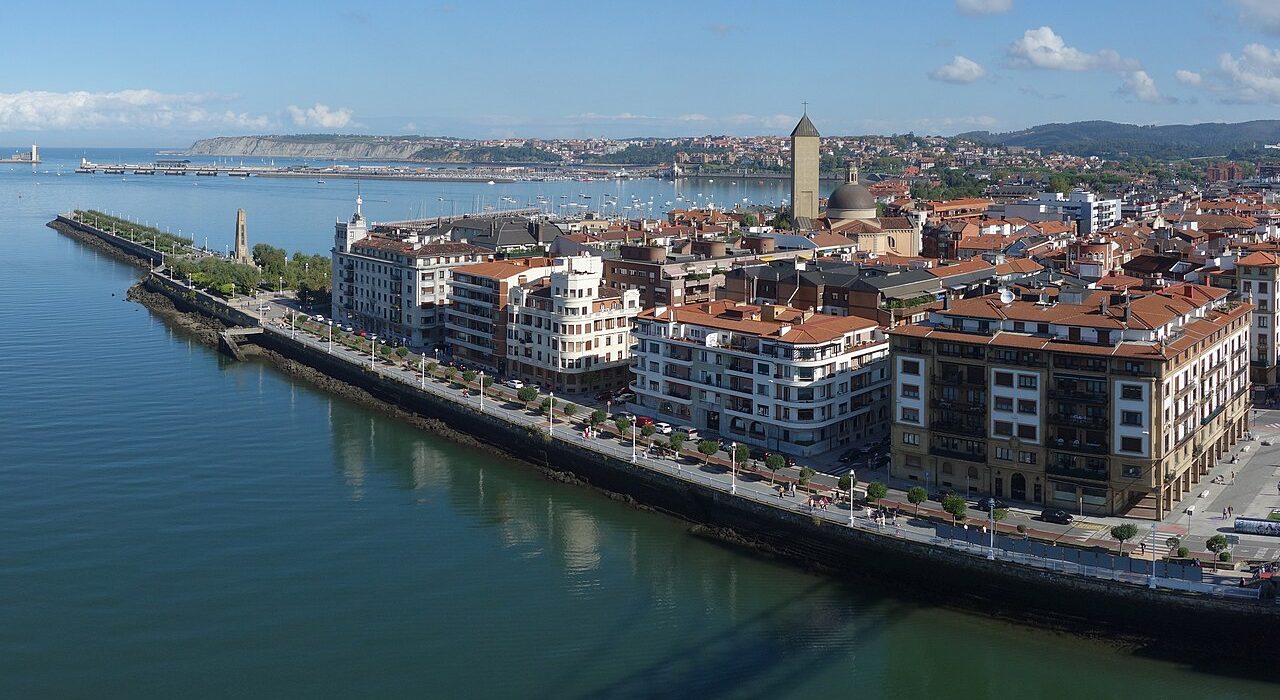
Between the elegance of the Indiano mansions and the raw force of the Cantabrian Sea, this municipality in Biscay offers a unique contrast that captivates from the very first step. Here, the calm of 77,000 inhabitants coexists with the vibrant life of a port that was the cradle of local football and is now a culinary benchmark. It is not merely a stopover on the way to Bilbao, but a destination where maritime history blends with early 20th-century architecture in a setting of cliffs and estuary.
The must-seesWhat to see in Getxo: the must-sees
Getxo offers a collection of monuments and museums that tell the story of its seafaring history and social evolution, concentrated mainly in its port and residential areas.
Monumento a los Caidos (Monument to the Fallen)
This monument stands as a solemn reminder in the city, dedicated to honoring the memory of those who lost their lives. It stands out for its classical architecture and privileged location that allows for quiet reflection, serving as a historic meeting point for locals strolling through the area.
Santurtzi Itsasoa Museoa-Museo del Mar (Santurtzi Sea Museum)
Although its name evokes the neighboring town, this museum is listed as a verified attraction in the area’s cultural offerings, focused on the maritime tradition of the Cantabrian Sea. It is the ideal place to understand the symbiotic relationship between coastal inhabitants and the ocean, displaying tools and stories of traditional fishing.
En Marco
This museum space represents the city’s most contemporary and artistic side, offering exhibitions that engage in dialogue with the urban environment. It stands out for its ability to integrate modern art into the daily lives of residents, making it a must-visit for those seeking current culture beyond the historical.
Arrantzalea eta Sardinera (The Fisherman and the Sardine Seller)
This monument pays tribute to the traditional figures of the fisherman and the woman who sold sardines, fundamental pillars of the local historical economy. The sculpture captures the essence of hard work at the port and is a powerful visual symbol of Getxo’s identity that you cannot miss photographing.
Monumento a Evaristo Churruca (Monument to Evaristo Churruca)
Dedicated to a prominent figure in local history, this monument celebrates the legacy of Evaristo Churruca in the development of the community. It is a point of interest that connects visitors with the individuals who shaped the character of the municipality, located in a setting that invites you to learn more about his biography.
Other points of interest
- The monument to the Victims of terrorism remembers with dignity those who suffered violence.
- The statue of María Díaz de Haro honors the Lady of Biscay in a prominent location.
- Juan Antonio Zunzunegui has his own monument celebrating his literary legacy.
- The Angus Young AC/DC Statue is a musical curiosity that surprises visitors.
- The Mareómetro (Tide Gauge) is a technical instrument turned into a visual point of interest.
- BilbaoPort stands out as a monument related to port activity.
- The Virgen del Carmen is a point of seafaring devotion in the area.
- Cristóbal Murrieta Mello has a tribute in front of the Town Hall, dedicated to the great local benefactor and secondarily to his partner Francisco Luciano Murrieta Ortiz.
- Víctor Chávarri has his commemorative space in the city.
- Lope García de Salazar is remembered in another of the monuments scattered throughout the town.
- The Busto al Tenor (Bust of the Tenor) pays tribute to opera in a quiet corner.
- Doctor Lorenzo Areilza has his own tribute on the public thoroughfare.
- An iron wave completes the list of urban sculptures decorating the streets.
🍂 Otoño
Si visitas Getxo en otoño, el ambiente se vuelve más tranquilo y los colores del paisaje cambian. Es el mejor momento para disfrutar de la gastronomía local y un buen txakoli bajo techo. Lleva calzado impermeable para caminar por la costa sin mojarte.
What to do in Getxo
Getxo offers specific activities tied to its festive calendar, which transforms the streets into stages for music, cinema, and seafaring tradition throughout the year.
If you visit the city in June, don’t miss the Fiestas de San Pedro (Saint Peter’s Festival) in Las Arenas, where the maritime atmosphere and the procession of the saint come to life. In July, Getxo Folk fills the squares with world music, while the International Film Festival screens movies outdoors on Ereaga beach. For fans of the fantasy genre, Bizkaia Zinefest in November offers an intense program of feature films and short films. Additionally, in September, the Mercado Medieval (Medieval Market) recreates history with period crafts and gastronomy in the old port, and in August, the tradition of the ‘Sardinada’ during the Santa María de Getxo festivities lets you enjoy free grilled sardines.
Getxo in one day: express itinerary
To make the most of a 24-hour visit, follow this route that combines history, art, and sea views:
- 10:00 – Monumento a Evaristo Churruca: Start the morning by getting to know the historical figures who shaped the city.
- 11:30 – En Marco: Spend an hour immersing yourself in local contemporary art before lunch.
- 13:30 – Arrantzalea eta Sardinera: Walk toward the port to see the tribute to the traditional trades of the sea.
- 15:00 – Santurtzi Itsasoa Museoa-Museo del Mar: Visit this space to delve deeper into the region’s maritime culture.
- 17:00 – Monumento a los Caidos: End the day with a solemn visit and a reflective stroll through the area.
Where to eat in Getxo: local gastronomy
Where to stay in Getxo
Las Arenas
Es el centro neurálgico y comercial de Getxo, situado a orillas de la ría del Nervión. Destaca por su paseo marítimo, el puente colgante (Bizkaia) y una amplia oferta de restaurantes y tiendas.
Algorta
Antiguo puerto pesquero reconvertido en zona de ocio nocturno y gastronómico, conocido por sus pintxos y ambiente juvenil. Conserva calles empedradas y casas tradicionales junto a modernos locales.
Neguri
Zona residencial de gran prestigio histórico con mansiones y palacetes de principios del siglo XX. Es un área tranquila, arbolada y elegante, ideal para pasear y ver arquitectura indiana.
Romos
Barrio costero famoso por sus playas de arena fina y su ambiente familiar durante el verano. Cuenta con un paseo marítimo lleno de heladerías y restaurantes informales frente al mar.
Gobelas
Zona residencial y universitaria cercana a la playa de Arrigunaga y al campo de golf. Ofrece un ambiente más local y tranquilo, con buenos accesos a zonas verdes.
Santa Clara
Barrio situado en la parte alta sobre las Arenas, caracterizado por ser una zona residencial densa con vistas a la ría. Es principalmente un área de vivienda local con servicios básicos.
How to get to Getxo
Connecting with the city is simple using the region’s main transport hubs.
| Medio | Estación / Punto | Notas |
|---|---|---|
| Tren | Estación de Sopela | Sin servicio AVE disponible en esta estación. |
| Bus | Terminal de Cruceros | Punto principal de llegada en autobús. |
| Urbano | Bus urbano | Red interna para moverse por el municipio. |
How to get around Getxo
To move between the different neighborhoods and attractions, the most practical option is to use the urban bus, which connects residential areas with the port and the estuary. Given the city’s topography, which combines flat areas by the sea with higher parts, public transport is essential for saving energy during your visit.
Weather in Getxo
Best time to visit Getxo
Day trips from Getxo
From Getxo you have direct access to other cities in the region that complement your trip. Being in Biscay, within the Autonomous Community of the Basque Country, you can easily explore the surroundings using the local transport network. The cities of the region offer a cultural and scenic continuity that makes leaving Getxo as interesting as staying in it.
Things you didn’t know about Getxo
This city holds secrets that go beyond the obvious, from architectural records to prehistoric findings.
Did you know that the Vizcaya Bridge (Puente Colgante de Vizcaya), which connects Getxo with Portugalete, was the world’s first transporter bridge built in 1893? It is the only one of its kind still in original operation and was declared a UNESCO World Heritage Site in 2006.
The name of the city has a very clear geological origin: it comes from the Basque word ‘Getxu’, which literally means ‘place of clay’ or ‘mud’, referring to the nature of the cliffs and lands of the coastal area.
On the beaches of Arrigunaga and Azkorri, paleontological findings of ichnites (fossilized footprints) of theropod and ornithopod dinosaurs have been made, dating back to the Aptian period, approximately 113 million years ago.
The Lezama-Leguizamón Palace, located in the Las Arenas area, houses one of the largest monumental staircases in Europe with 114 marble steps that ascend without an intermediate landing to the first floor.
Getxo is home to the Getxo International Film Festival, created in 1996, which is characterized by screening films outdoors on Ereaga beach during the month of July, attracting thousands of spectators each edition.
The ‘Sardinada’ tradition in Getxo consists of the free distribution of thousands of grilled sardines to residents during the Andra Mari festivities in early August, maintaining one of the oldest popular gastronomic gatherings in Biscay.
The Punta Galea lighthouse, located in Getxo, marks the western end of the Bilbao estuary and its meteorological records are crucial for navigation in one of the areas with the highest storm frequency in the Cantabrian Sea.
The Neguri neighborhood in Getxo was planned at the end of the 19th century as the first garden city in Spain, designed specifically to house the Biscayan industrial upper bourgeoisie in villas surrounded by vegetation.
Who Getxo is for
Getxo is a versatile destination that works perfectly for couples looking for elegant strolls in Neguri, families who need the beaches of Romos and Gobelas, and foodies who want to tour the pintxos bars of Algorta. It is also ideal for history lovers interested in the indiano architecture and the industrial heritage of the Vizcaya Bridge.
💡 ¿Sabías que...?
- ● El Puente Colgante de Vizcaya, que conecta Getxo con Portugalete, fue el primer puente transportador del mundo construido en 1893 y es el único de su tipo que sigue en funcionamiento original, siendo declarado Patrimonio de la Humanidad por la UNESCO en 2006. (UNESCO)
- ● La etimología del nombre Getxo proviene del euskera 'Getxu', que significa literalmente 'lugar de arcilla' o 'barro', haciendo referencia a la naturaleza geológica de los acantilados y tierras de la zona costera. (Euskaltzaindia (Real Academia de la Lengua Vasca))
- ● En las playas de Arrigunaga y Azkorri de Getxo se han realizado hallazgos paleontológicos de icnitas (huellas fosilizadas) de dinosaurios terópodos y ornitópodos datadas en el periodo Aptiense, hace aproximadamente 113 millones de años. (Universidad del País Vasco (UPV/EHU))
- ● El Palacio Lezama-Leguizamón, situado en la zona de Las Arenas, alberga una de las escaleras monumentales más grandes de Europa con 114 escalones de mármol que ascienden sin descanso intermedio hasta el primer piso. (Instituto Vasco de Arquitectura y Urbanismo)
- ● Getxo es sede del Festival Internacional de Cine de Getxo, creado en 1996, que se caracteriza por proyectar películas al aire libre en la playa de Ereaga durante el mes de julio, atrayendo a miles de espectadores cada edición. (Ayuntamiento de Getxo)
- ● La tradición de la 'Sardinada' en Getxo consiste en la distribución gratuita de miles de sardinas asadas a los vecinos durante las fiestas de Andra Mari a principios de agosto, manteniendo una de las convocatorias gastronómicas populares más antiguas de Bizkaia. (Ayuntamiento de Getxo)
- ● El faro de Punta Galea, ubicado en Getxo, marca el extremo occidental de la bahía de Bilbao y sus registros meteorológicos son cruciales para la navegación en una de las zonas con mayor índice de temporalidad del Cantábrico. (Autoridad Portuaria de Bilbao)
- ● El barrio de Neguri, en Getxo, fue planificado a finales del siglo XIX como la primera ciudad jardín de España, diseñada específicamente para alojar a la alta burguesía industrial vizcaína en chalets rodeados de vegetación. (Diputación Foral de Bizkaia)
Frequently asked questions about Getxo
How many days do I need to see Getxo?
With one day it is possible to see the main attractions such as the Monumento a los Caídos (Monument to the Fallen), En Marco and the harbor monuments, although a longer stay is recommended to enjoy the beaches and the gastronomy.
What is the best time of year to visit Getxo?
The best time is from August to August, when the average summer temperature reaches 19.8°C and the patron saint festivities of Santa María de Getxo are held.
How do I get to Getxo from Madrid?
You must first reach the region using the Sopela train station (no AVE) or the Cruise Terminal by bus, and from there use urban transport to access the municipality.
What typical drink should I try?
Kalimotxo is the emblematic drink that was born in the festivities of this municipality, mixing young red wine with cola, and it can be tried in any bar, especially in the Puerto Viejo de Algorta (Old Port of Algorta).