Santa Lucía de Tirajana
CanariasClimate
With more than 78,584 inhabitants, this municipality stands as the third most populated center in Gran Canaria, but its true treasure lies in the surprising duality between its vibrant coastal areas and the ancestral silence of its midlands. Here, the history of aboriginal resistance blends with daily life in an environment where traditional stone and wood architecture coexists with the modernity of its urban centers. If you are looking for an authentic experience that combines archaeological heritage, inland gastronomy, and volcanic landscapes, this corner of Las Palmas offers a unique immersion in Canarian culture far from the crowded tourist circuits.
The must-seesWhat to see in Santa Lucía de Tirajana: the must-sees
Santa Lucía de Tirajana offers a dense and varied cultural heritage, where each visit tells a part of the island’s pre-Hispanic and colonial history.
La Era del Cardón Rock Engravings
This archaeological site protected as a cultural asset is a direct window into the past, consisting of aboriginal artistic expressions engraved in the rock during the pre-Hispanic era. When visiting, you can observe up close the techniques and symbols that the ancient inhabitants left as a testimony of their existence on the island. It is an essential place to understand the spiritual and social dimension of the first inhabitants of the Canary Islands.
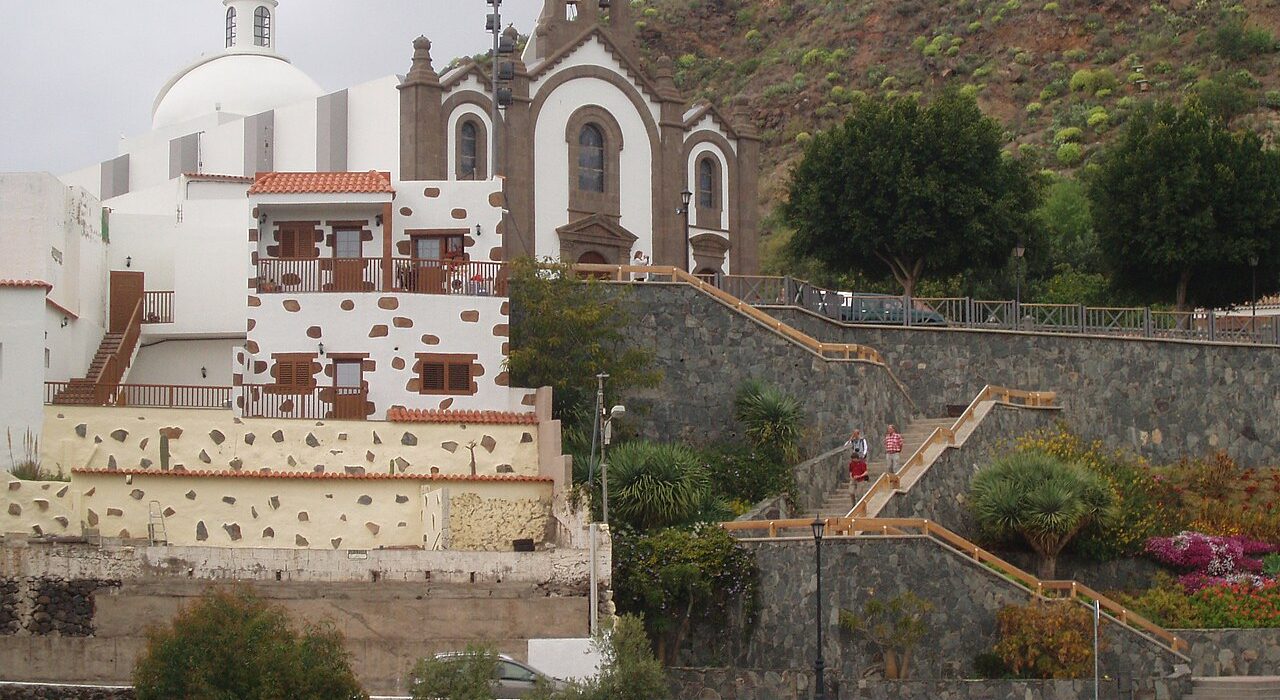
Church of Santa Lucía
Located in a small urban center at 680 meters above sea level in the midlands, this church is the heart of a historic quarter that preserves streets with traditional stone houses and carved wooden balconies characteristic of Canarian architecture. In its vicinity is the Museo Castillo de la Fortaleza (Fortress Castle Museum), dedicated to aboriginal archaeology and ethnography, which also features a beautiful garden of native flora. The combination of religious and museum architecture in this elevated setting offers unparalleled views and atmosphere.
Salinas de Tenefé (Tenefé Salt Flats)
This salt works and historic site, over 250 years old, is the oldest salt works in Gran Canaria and preserves the traditional trade of salt making. The site has high architectural and natural value, serving as a stopover point for migratory birds and harboring endemic flora, as well as including vestiges of the Second World War and a pre-Hispanic aboriginal necropolis within the protected area. It is a perfect example of how human activity has shaped the coastal landscape for centuries.
Museo del Plátano (Banana Museum)
This cultural space is exclusively dedicated to the history and culture of the banana in the Canary archipelago, offering an educational and immersive experience for all ages. It stands out for its use of innovative technologies such as augmented reality, virtual exhibitions, and 360º tours that complement the agricultural heritage offerings of the area. It is a modern and dynamic visit that explains the economic and social importance of this fruit in the region.
Art Gallery
This museum space is part of the municipality’s cultural offerings, dedicated to the exhibition and promotion of contemporary and traditional artistic expressions. Its presence in the town enriches the cultural landscape, offering visitors an opportunity to connect with local and island creativity. It is a recommended stop for those looking to complement their historical visit with a dose of current art.
Other points of interest
- La Fortaleza: The Fortaleza de Ansite is a series of rock formations that rise like silent witnesses to millennia of history at the summit, forming the main structure of the archaeological site protected as a Bien de Interés Cultural (Heritage of Cultural Interest) and a symbol of aboriginal resistance.
- Horno de Techas: Historic monument reflecting the traditional building techniques and rural life of the area.
- La lavandera: Sculpture or monument paying tribute to the traditional trade and the working women of the town.
- Facundo V. Lopez Lopez: Commemorative monument dedicated to a figure of significance to the history or culture of the municipality.
- Lagar Las Cabezadas: Heritage remains that bear witness to the old wine and agricultural production in the midlands.
- Mirador La Sorrueda: Tourist spot located in the Barranco de Tirajana that forms part of the enchanting landscape of inland Gran Canaria, surrounded by mountains and extensive groves of Canary Island date palms (Phoenix canariensis), allowing visitors to observe the intimate relationship between the palm groves and the local farmers.
- Mirador Las Tirajanas: Unique rural setting where the Presa de La Sorrueda and the La Fortaleza archaeological site are located, characterised by spectacular landscapes of mountains, cacti and Canary Island palm groves.
- Mirador de Tunte: Viewpoint offering privileged perspectives over the rural surroundings and the midlands.
- Mirador “Monte Pobre” San Bartolomé de Tirajana: Viewpoint that allows visitors to appreciate the geography shared between the neighbouring municipalities.
🍂 Otoño
Si visitas Santa Lucía de Tirajana en otoño, todavía podrás disfrutar de buenas condiciones hasta noviembre según los datos locales. Es una época tranquila para conocer el patrimonio cultural sin las multitudes estivales. Reserva con antelación si viajas en octubre, que sigue siendo temporada alta.
What to do in Santa Lucía de Tirajana
Santa Lucía de Tirajana offers cultural and festive activities that reflect its deep Canarian identity, from traditional romerías (pilgrimage festivals) to medieval markets.
During the month of May, you can immerse yourself in the Romería de San Isidro Labrador, one of the most important in Gran Canaria, where hundreds of romeros (pilgrims) dressed in traditional costumes accompany the saint from the town centre to the hermitage in the hamlet of El Hornillo. If you visit the municipality in December, don’t miss the Fiestas en Honor a Santa Lucía, which honour the patron saint with religious events and the tradition of the ‘Aguinaldos’, where musical groups roam the streets asking for villancicos (Christmas carols), as well as the Mercado Medieval (Medieval Market) that recreates the era with craft stalls and street theatre in the historic quarter. For film lovers, in March the municipality hosts activities of the Festival Internacional de Cine de Las Palmas de Gran Canaria with open-air screenings, while in August the Fiesta del Charco de La Mula invites visitors to traditional bathing and sporting competitions in the neighbourhood of the same name.
Santa Lucía de Tirajana in a day: express itinerary
If you’re short on time, this itinerary lets you cover the essentials of the local heritage and gastronomy in one action-packed day.
- 10:00 AM – Salinas de Tenefé: Start the day on the coast by visiting the island’s oldest salt works to learn about the history of salt extraction and observe the endemic flora.
- 12:30 PM – Museo del Plátano (Banana Museum): Head inland for an interactive, technology-driven visit about Canarian agriculture, ideal for all ages.
- 14:30 PM – Lunch in the Old Town: Enjoy conejo con papas (rabbit stew with potatoes) or gofio (toasted grain flour) in the historic center of Santa Lucía, soaking up the quiet, authentic atmosphere.
- 16:30 PM – Iglesia de Santa Lucía (Church of Santa Lucía) and Museo Castillo (Castle Museum): Wander the cobblestone streets, visit the church at 680 meters above sea level, and explore the aboriginal archaeology museum with its garden of native flora.
- 18:30 PM – Mirador La Sorrueda (La Sorrueda Viewpoint): End the day contemplating the palm groves and the Barranco de Tirajana (Tirajana Ravine) from this tourist enclave that sums up the beauty of the interior.
Where to eat in Santa Lucía de Tirajana: local gastronomy
Where to stay in Santa Lucía de Tirajana
Santa Lucía de Tirajana (Casco Urbano)
Es el núcleo administrativo e histórico del municipio, caracterizado por calles empedradas y arquitectura tradicional canaria. Ofrece un ambiente tranquilo y auténtico, lejos del turismo de masas de la costa, con iglesias históricas y plazas locales.
Fataga
Un pintoresco pueblo de montaña situado en un barranco profundo, conocido como el 'Pueblo de las Palmeras'. Mantiene una estética rural muy cuidada con casas blancas y balcones de madera, ideal para caminar y disfrutar de vistas panorámicas.
San Bartolomé de Tirajana
Otro núcleo histórico de interior que conserva el trazado original de los primeros asentamientos tras la conquista. Es una zona silenciosa con fuerte identidad agrícola y ganadera, perfecta para experimentar la vida local sin interferencias turísticas.
Temisas
Conocido como el pueblo de los alfareros, es un pequeño enclave rural famoso por su tradición cerámica y sus vistas espectaculares sobre el sur de Gran Canaria. El ambiente es extremadamente relajado y cultural, centrado en la artesanía local.
Cruce de Arinaga
Zona semiurbana situada cerca de la costa y la autopista, funcionando principalmente como área residencial y de servicios para los trabajadores de la zona industrial y portuaria cercana. No tiene atractivo turístico estético pero ofrece acceso práctico a la carretera.
El Tablero
Una zona residencial y comercial en expansión que sirve de nexo entre las zonas altas y la costa. Cuenta con centros comerciales locales y viviendas modernas, siendo un área funcional más que un destino de visita turística tradicional.
How to get to Santa Lucía de Tirajana
Connectivity with the island is smooth thanks to the proximity of the main airport and the land transport network.
| Medio | Duración | Precio aprox. | Frecuencia |
|---|---|---|---|
| Avión (Base Aérea de Gando – LPA) | Variable según origen | Variable | Diaria |
| Bus Urbano | Variable según ruta | Económico | Regular |
How to get around Santa Lucía de Tirajana
To move between the different hubs of the municipality, such as Vecindario, Sardina, Pozo Izquierdo, and the midlands, the main option is the urban bus. This transport system connects the coastal areas, where almost the entire population lives, with the municipal seat in the midlands, allowing access to tourist attractions and historic neighborhoods without the need for a private vehicle, although the flexibility of your own car can be useful for exploring the more remote viewpoints.
Weather in Santa Lucía de Tirajana
Best time to visit Santa Lucía de Tirajana
Day trips from Santa Lucía de Tirajana
The municipality’s strategic location makes it easy to take quick excursions to other towns in the region. Since Santa Lucía geographically borders six of the other seven municipalities on the island of Gran Canaria, you have a wide range of nearby destinations to explore the diversity of the province of Las Palmas without long journeys, taking advantage of the road network that connects the midlands with the coast and the rest of the island.
Things you didn’t know about Santa Lucía de Tirajana
Did you know that this municipality is home to the Pueblo Canario (Canarian Village), an architectural complex inaugurated in 1972 that replicates the traditional architecture of the seven Canary Islands in a single site? It is a cultural gem that encapsulates the identity of the archipelago.
The municipal territory contains part of the Barranco de Guayadeque (Guayadeque Ravine), a volcanic depression with more than 4,000 years of continuous human occupation by the aboriginal Canarians, who lived in natural caves that can still be visited today.
The etymology of the name ‘Tirajana’ is fascinating: it comes from the name of the mencey (aboriginal queen) Atidamana or from the Benahoarite word ‘tiraja’, although the most widely accepted theory links it to the pre-Hispanic name for the area.
There is a deeply rooted popular tradition at the ermita de Santa Lucía (Hermitage of Saint Lucy), whose feast day on 13 December attracts thousands of visitors due to the belief that the saint grants favors related to sight and the eyes.
Geographically it is an administrative giant: it borders six of the other seven municipalities on the island, making it one of the municipal districts with the most neighboring boundaries in the province of Las Palmas.
The municipality is famous for its production of miel de palma (palm honey), a sweet syrup extracted from the sap of the Canary Island palm through an artisanal process declared an intangible Asset of Cultural Interest.
Finally, the Cueva de las Palomas (Cave of the Doves) in Guayadeque is one of the most important archaeological sites, where bone and ceramic remains of the pre-Hispanic aboriginal culture have been found.
Who Santa Lucía de Tirajana is for
This destination is ideal for history and culture lovers who want to delve into the aboriginal past and the salt-making tradition, as well as for foodies interested in inland gastronomy with dishes such as conejo (rabbit) and gofio (toasted grain flour). It is also perfect for couples seeking the romantic tranquility of villages like Fataga or Temisas, and for families who want an educational experience in interactive museums such as the Plátano (Banana) Museum, far from the noise of sun-and-beach tourism.
💡 ¿Sabías que...?
- ● Santa Lucía de Tirajana alberga el Pueblo Canario, un conjunto arquitectónico inaugurado en 1972 que replica la arquitectura tradicional de las siete islas Canarias en un solo recinto. (Web oficial del Pueblo Canario)
- ● El municipio contiene parte del Barranco de Guayadeque, una depresión volcánica con más de 4.000 años de ocupación humana continua por los aborígenes canarios, quienes habitaban en cuevas naturales. (Patrimonio Histórico de Canarias)
- ● La etimología del nombre 'Tirajana' proviene del nombre de la mencey (reina aborigen) Atidamana o de la palabra benahoarita 'tiraja', aunque la teoría más aceptada lo vincula a la denominación prehispánica de la zona. (Diccionario de Toponimia Canaria)
- ● En este municipio se encuentra la ermita de Santa Lucía, cuya festividad el 13 de diciembre atrae a miles de visitantes debido a la tradición popular de que la santa concede favores relacionados con la vista y los ojos. (Diócesis de Canarias)
- ● Santa Lucía de Tirajana limita geográficamente con seis de los otros siete municipios de la isla de Gran Canaria, siendo uno de los términos municipales con más colindancias en la provincia. (Instituto Cartográfico de Canarias)
- ● El municipio es conocido por su producción de miel de palma, un jarabe dulce extraído de la savia de la palmera canaria mediante un proceso artesanal declarado Bien de Interés Cultural inmaterial. (Gobierno de Canarias)
- ● La Cueva de las Palomas en Guayadeque es uno de los yacimientos arqueológicos más importantes del municipio, donde se han hallado restos óseos y cerámicos de la cultura aborigen prehispana. (Museo y Parque Arqueológico Cueva Pintada)
Frequently asked questions about Santa Lucía de Tirajana
How many days do I need to see Santa Lucía de Tirajana?
With one full day you can cover the essentials such as the Salinas de Tenefé (Tenefé Salt Flats), the historic center, and a viewpoint, but 2 or 3 days are recommended to explore the different villages like Fataga and Temisas at a relaxed pace, and to attend a food or cultural event.
What is the best time of year to visit Santa Lucía de Tirajana?
According to climate data, the best time is from April to November, with average summer temperatures of 23.8°C, although the mild winter at 11.5°C is also suitable for cultural visits.
How do I get to Santa Lucía de Tirajana from Madrid?
You need to fly to Gando Air Base (LPA) in Gran Canaria and from there take a local bus or rental vehicle to reach the municipality, as it is the main airport for the province of Las Palmas.
Where can I find updated information on opening hours and tickets?
For further practical information on opening hours, tickets, and the full events calendar, you can check the official tourism website of Santa Lucía de Tirajana.