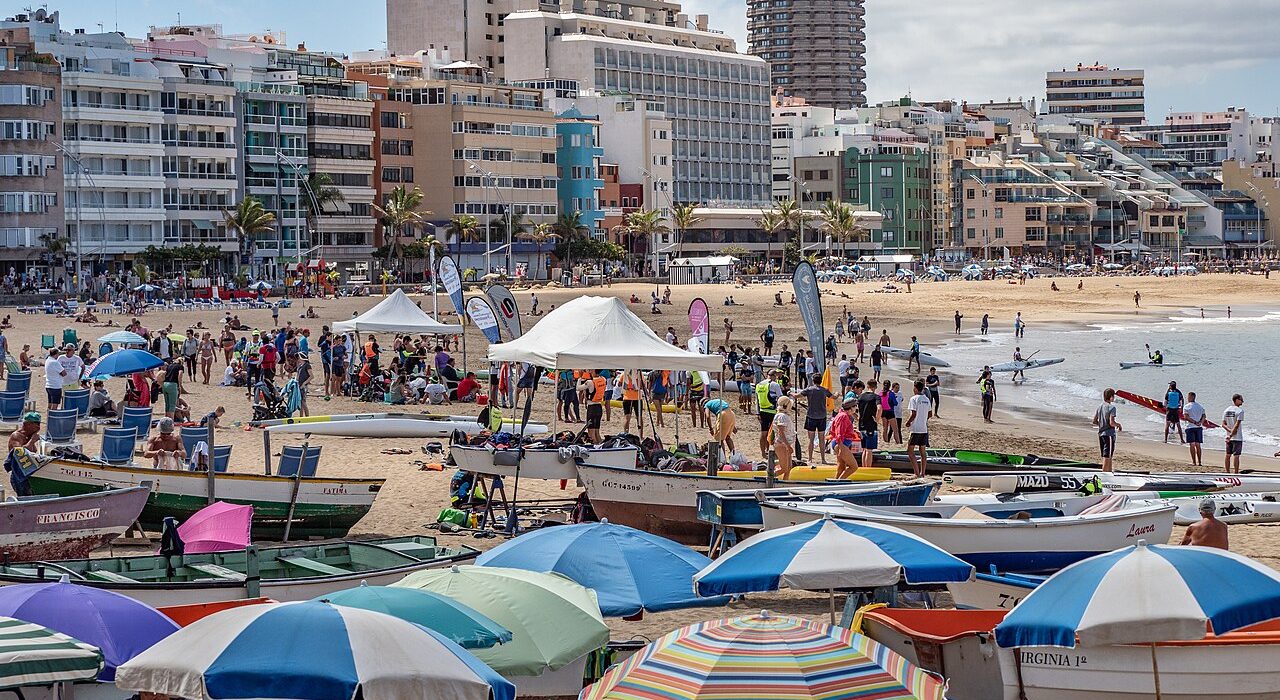
6-Day Itinerary in Gran Canaria: Overview
This 6-day itinerary covers Las Palmas de Gran Canaria, San Bartolomé de Tirajana, Telde, Santa Lucía de Tirajana, and Maspalomas with a budget of €600-900 per person. This route through Gran Canaria is designed for travelers seeking a perfect balance between beach relaxation, adventure in the southern dunes, and the majesty of the mountains inland. It is ideal for couples or groups of friends who want to explore the island’s geographic diversity without excessive rushing, enjoying both the local gastronomy and the volcanic landscapes.
Below is a summary table to quickly visualize the logistics of this 6-day trip to Gran Canaria:
| Día | Ciudad Base / Zona | Highlights Principales | Km aprox. entre paradas |
|---|---|---|---|
| Día 1 | Las Palmas de Gran Canaria | Vegueta, Las Canteras, Castillo de la Luz | 0 km (Llegada) |
| Día 2 | Telde | Cuatro Puertas, Playa de Tufia, San Francisco | 20 km |
| Día 3 | Santa Lucía de Tirajana | Mirador de la Orilla, Casco Histórico, Montaña | 35 km |
| Día 4 | San Bartolomé de Tirajana | Caldera de Los Marteles, Pico de los Pozos | 15 km |
| Día 5 | Maspalomas / San Bartolomé | Dunas de Maspalomas, Faro, Playa del Inglés | 25 km |
| Día 6 | Las Palmas de Gran Canaria | Jardín Botánico Viera y Clavijo, Relax final | 55 km |
Day 1: Urban Culture and the Best City Beach
Morning
- Exploring Vegueta (2 hours): Start your Gran Canaria route in the historic quarter. Visit the Teatro Pérez Galdós and the Cathedral of Santa Ana. It is the cultural heart of the island.
- Castillo de la Luz (1 hour): Walk toward the port to see this 15th-century fortification that protected the city from pirates.
- Recommended breakfast: Traditional café on Calle Mayor de Triana. Estimated price: €5-8 per person (coffee and toast or tortilla).
Midday
- Where to eat: Look for a restaurant in the Vegueta area to try Ropa vieja canaria (shredded beef and chickpea stew), a hearty dish of chickpeas and pulled meat. Average price: €15-20.
- Activity: A light stroll through the Mercado de Vegueta to see local products.
Afternoon
- Playa de Las Canteras: Spend the afternoon enjoying one of Europe’s best urban beaches. You can rent a bicycle or simply sunbathe on the golden sand.
- Snack: Artisan ice cream on the seafront promenade or a “barraquito” (layered coffee with condensed milk and liqueur) at a beach bar.
Night
- Dinner: Triana or La Pescadería area. Modern tapas restaurants or creative Canarian cuisine. Price: €25-35.
- Atmosphere: Las Palmas has a vibrant yet elegant nightlife. Perfect for a nighttime stroll by the sea.
Day 2: Telde and the Volcanic Coast
Morning
- San Francisco Neighborhood (1.5 hours): Visit the island’s second most important historic quarter. It is colorful and full of history.
- Cuatro Puertas and Montaña de Las Huesas (2 hours): Head to the archaeological zone. It is a sacred aboriginal site essential for understanding the history of Gran Canaria.
- Recommended breakfast: Local bakery in Telde. Price: €4-6.
Midday
- Where to eat: Restaurant in the port of Telde or near Tufia beach. Try Sancocho canario (salted fish with potatoes and gofio). Average price: €15-22.
Afternoon
- Playa de Tufia: A unique beach of black and red volcanic sand. Ideal for a different kind of walk and spectacular photos.
- Necrópolis Montaña del Gallego: If you have energy, visit this archaeological site near the coast.
- Rest: Relax on the beach or read under the shade of the trees at Tufia.
Night
- Dinner: Return to Las Palmas or dine in central Telde. Option of an extended set menu or shared plates. Price: €20-30.
- Atmosphere: A quiet night, preparing to head up to the mountains the next day.
Day 3: Santa Lucía de Tirajana and the southern viewpoints
Morning
- Historic center of Santa Lucía (2 hours): A beautiful whitewashed village. Visit the church and the Museo de la Zafra (Zafra Museum).
- Mirador de la Orilla viewpoint (1 hour): Offers stunning panoramic views of the ravine and the southern coast.
- Recommended breakfast: Café in the village square. Price: €5-7.
Midday
- Where to eat: Restaurant with views in Santa Lucía. Specializes in grilled meats or potajes (hearty stews). Average price: €18-25.
Afternoon
- Mirador El Guriete and Mirador del Polvo viewpoints: Drive or take transport to these strategic spots to see the island’s southern slopes.
- Active activity: If you enjoy hiking, there are short trails connecting these viewpoints.
- Snack: Local cheese with palm honey, typical of the area.
Night
- Dinner: In the Santa Lucía area or heading south (Maspalomas) if you prefer more atmosphere. Price: €25-35.
- Vibe: Quiet, ideal for stargazing far from the light pollution of the capital.
Day 4: San Bartolomé de Tirajana, the natural heart
Morning
- Caldera de Los Marteles (2.5 hours): An impressive volcanic crater that’s far from overcrowded. It’s a must-stop on any Gran Canaria tour that values nature.
- Pico de los Pozos de las Nieves viewpoint (1 hour): The highest point accessible by car, with views of Mount Teide’s silhouette on Tenerife (on a clear day).
- Recommended breakfast: Bring a picnic or grab coffee en route. Price: €5.
Midday
- Where to eat: Mountain restaurant in the Ayacata or Fataga area (nearby villages in San Bartolomé). Average price: €15-20.
Afternoon
- Degollada de Cruz Grande viewpoint: Spectacular views toward the Chira reservoir.
- Degollada de la Manzanilla: Another key panoramic point for understanding the island’s rugged geography.
- Rest: Time to enjoy the silence of the mountains.
Night
- Dinner: In the Maspalomas or Playa del Inglés area. Price: €30-40 (more touristy area).
- Vibe: Option for nightlife at the Yumbo Centrum if you’re looking to party, or a seaside promenade stroll if you’re looking to relax.
Day 5: Maspalomas, dunes and ocean
Morning
- Reserva Natural Especial de las Dunas de Maspalomas (Special Nature Reserve of the Maspalomas Dunes) (3 hours): A must-do walk along the marked trail. It’s a unique ecosystem in the Canary Islands.
- Faro de Maspalomas (Maspalomas Lighthouse): Iconic photo opportunity at the end of the dune walk.
- Recommended breakfast: Beach bar near the shore. Price: €6-9.
Midday
- Where to eat: Maspalomas seafront promenade. International and local variety. Average price: €20-30.
Afternoon
- Playa del Inglés: Afternoon of swimming and sun. It’s a long beach with all kinds of services.
- Charca de Maspalomas (Maspalomas Lagoon): Birdwatching from the designated viewpoints (without entering the protected area).
- Snack: Tropical fruit or a smoothie in the shopping area.
Night
- Dinner: Restaurant in Campo Internacional. Price: €30-45.
- Vibe: Maspalomas is known for its inclusive and festive atmosphere. There are bars and clubs for all tastes.
Day 6: Botanical Garden and farewell
Morning
- Jardín Botánico Viera y Clavijo (2.5 hours): Located in Tafira (near Las Palmas). It is the largest botanical garden in Spain and one of the best in the world. Explore the different climate zones of the Canary Islands.
- Recommended breakfast: Café at the Botanical Garden or in Tafira. Price: 5-8€.
Midday
- Where to eat: Last lunch in Las Palmas. Try the Potaje de berros (watercress stew) if you haven’t already. Average price: 15-20€.
Afternoon
- Shopping or Relaxing: Free time in Las Canteras for last-minute shopping or a farewell swim.
- Transfer to the airport: Depending on your flight time.
Evening
- Dinner: If your flight is at night, have a light dinner at the airport or in the city before leaving.
Recommended accommodation
For this 6-day itinerary in Gran Canaria on a mid-range budget, it is recommended to split your stay between two bases to minimize daily travel:
- Las Palmas de Gran Canaria (Days 1, 2 and 6): Look for tourist apartments or 3-star hotels in areas such as Triana, Vegueta or near Las Canteras. Price range: 70-110€ per night (double).
- Maspalomas / San Bartolomé de Tirajana (Days 3, 4 and 5): 3-4 star hotels or bungalow complexes. Staying near the dunes makes visiting the south easier. Price range: 80-130€ per night (double).
Transport between cities
To explore Gran Canaria efficiently, renting a car is the most recommended option, although public transport is viable with planning.
- Rental car: This is the most flexible option for this Gran Canaria route. It allows you to access viewpoints such as Tunte or the Caldera de Los Marteles without depending on schedules. Estimated cost: 30-50€ per day + fuel.
- Bus (Guaguas): The Global company connects Las Palmas with Maspalomas and Telde frequently.
- Las Palmas – Maspalomas: Line 1, approx. 1h 15min.
- Las Palmas – Telde: Line 2, approx. 30-40min.
- Las Palmas – Santa Lucía: Requires a transfer or specific, less frequent lines.
- Taxi / Uber: Available in the main cities, but expensive for long journeys such as Las Palmas to San Bartolomé de Tirajana (approx. 60-80€).
Estimated budget
Breakdown for a 6-day trip per person (mid-range level):
- Accommodation: 250€ – 350€ (sharing a double room).
- Food and Drinks: 200€ – 300€ (breakfasts, lunches, dinners and the occasional treat).
- Transport: 150€ – 200€ (shared rental car or transport pass + taxis).
- Activities and Entrance Fees: 50€ (Botanical Garden, museums, bike rental).
- Estimated Total: 650€ – 900€ per person (not including international flight).
On your own or on an organized tour?
When planning a 6-day trip to Gran Canaria, the question arises between total freedom and the convenience of a guide.
- On your own (Recommended for this itinerary):
- Pros: Total flexibility to stop at viewpoints like the Orilla viewpoint or spend more time at the Maspalomas Dunes. Budget control on meals.
- Cons: You need to navigate and manage your time. Parking in Las Palmas can be tricky.
- Profile: Independent travelers, couples, or groups of friends with a car.
- Organized tour:
- Pros: You don’t worry about driving on mountain roads. Local guides explain the history of sites like Cuatro Puertas (Four Doors).
- Cons: Fixed schedules, less free time at beaches, and generally more expensive if booked day by day.
- Profile: Solo travelers, older adults, or those who prefer not to drive.
Practical tips
- Changeable weather: In Gran Canaria there is a saying that there are “microclimates.” Always bring a light jacket, even in summer, especially if you are going up to the San Bartolomé de Tirajana or Santa Lucía area, where it can be cooler than on the coast.
- Book the Botanical Garden: If you travel in high season, buy tickets for the Jardín Botánico Viera y Clavijo (Viera y Clavijo Botanical Garden) online in advance to secure your visit on Day 6.
- Water and sun: UV radiation is very high all year round. Use SPF 50+ sunscreen and always carry a reusable water bottle, especially on hiking routes through the dunes or the mountains.
- Meal times: In Spain people eat lunch late (14:00 – 15:30) and dinner late (20:30 – 22:30). Adjust your body clock so you don’t find restaurants closed.
- Driving: The inland roads (toward Santa Lucía and San Bartolomé) have many curves. Drive carefully and enjoy the scenery; don’t rush.
- Tipping: Not mandatory but appreciated. Leaving the change or 5-10% in full-service restaurants is common.
Frequently asked questions
Is it necessary to rent a car to do this Gran Canaria route?
It is not strictly necessary, but it is highly recommended. Public transport (guaguas) connects Las Palmas, Telde and Maspalomas well. However, to visit the viewpoints of Santa Lucía de Tirajana, the Caldera de Los Marteles or the Botanical Garden comfortably and at your own pace, a car gives you a freedom that the bus does not offer. If you don’t drive, you can combine guaguas with day tours for the mountain areas.
What is the best time of year to visit Gran Canaria following this itinerary?
Gran Canaria is known as a miniature continent due to its stable climate. The best time is spring (April-June) and autumn (September-November), when temperatures are pleasant (20-25°C) and there are fewer tourists. However, thanks to its location, it is a viable destination all year round, even in winter, especially to escape the cold of northern Europe.
Are the tourist areas of Maspalomas and Las Palmas safe to walk around at night?
Yes, they are generally safe areas. The tourist areas of Maspalomas (Campo Internacional) and the Las Canteras promenade in Las Palmas are usually well monitored and busy. However, as in any tourist destination, it is recommended to use common sense: do not leave valuables visible in the car and avoid dark, deserted streets late at night.
What typical dish should I not miss on this 6-day trip?
If you can only try one, make it Papas arrugadas con mojo picón (wrinkled potatoes with spicy mojo sauce). They are the island’s gastronomic icon. However, for a more complete experience, also try the Queso de Flor de Guía (a cheese from the north/center area) or Vieja Sancochada (boiled parrotfish) if you like fish. All these dishes are available at the restaurants recommended in the itinerary.