4-Day Itinerary in the Region of Murcia: Overview
This 4-day itinerary covers Murcia, Cartagena, Lorca, and Molina de Segura on a budget of 250-350€ per person.
This route is designed for travelers looking to balance the historical richness of the interior with the Mediterranean charm of the coast, without spending a fortune. It’s ideal for couples, groups of friends, or small families who want to explore the Region of Murcia at their own pace, enjoying local cuisine and key monuments. Unlike crowded tours, this itinerary allows you to linger over the details, from Roman ruins to medieval fortresses.
| Día | Ciudad Base / Destino | Highlights Principales | Km Aprox. (Traslado) |
|---|---|---|---|
| Día 1 | Murcia Capital | Catedral, Real Casino, Museo Salzillo, Tapeo | 0 km (Llegada) |
| Día 2 | Cartagena | Teatro Romano, Museo Naval, Paseo Marítimo | 48 km (desde Murcia) |
| Día 3 | Lorca | Fortaleza del Sol, Colegiata San Patricio | 55 km (desde Cartagena) |
| Día 4 | Molina de Segura / Salida | Chimenea Conservera, Museo Etnográfico | 60 km (desde Lorca) |
Day 1: Murcia Capital, Baroque and Flavors of the Huerta
We begin your 4-day trip to the Region of Murcia in the capital. The first day focuses on understanding the local identity through its religious architecture and its famous tapas culture.
Morning
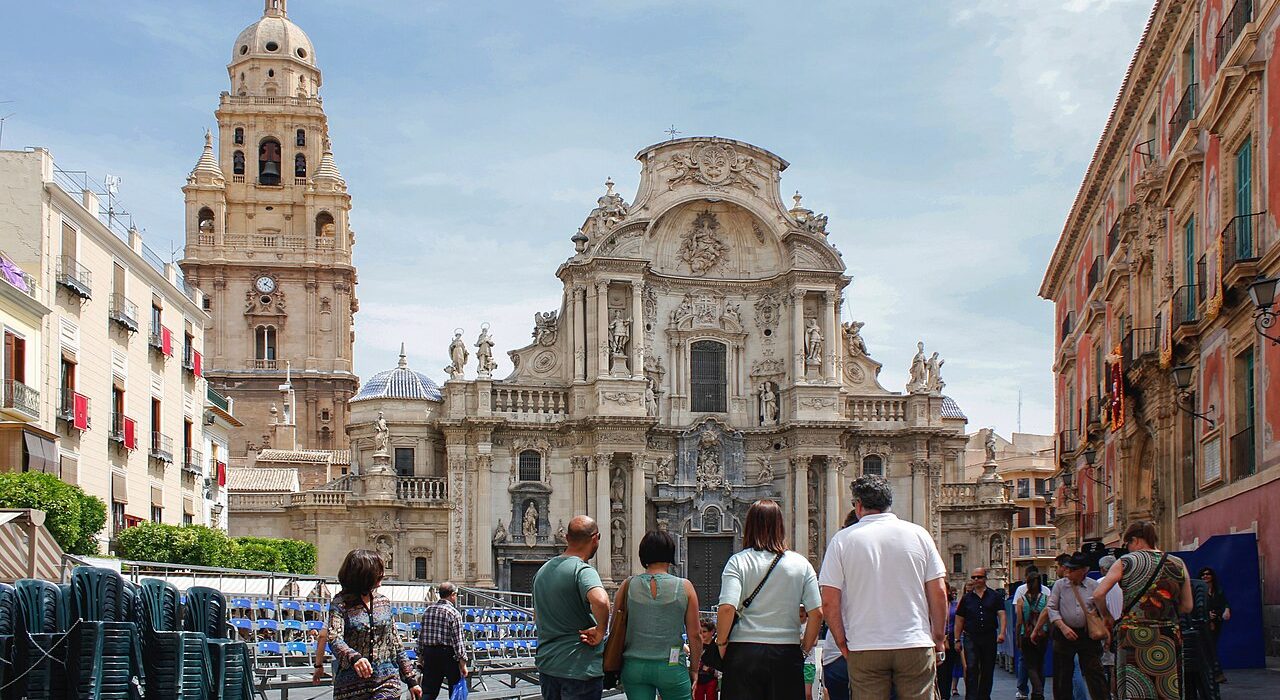
- Visit to Murcia Cathedral (2 hours): Start early to avoid lines. Climb the Bell Tower for the best views of the city. The combined ticket usually costs around 6-8€.
- Real Casino de Murcia (1 hour): Right next to the cathedral. Although it’s a private club, part of the modernist building can be visited for a symbolic fee (approx. 3-4€). It’s an architectural gem.
- Recommended breakfast: Bar La Sota or similar in the old town. Order a “Marinera” (ring-shaped bread topped with Russian salad and anchovy). Price: 2-4€ per person.
Midday
- Where to eat: Look for a set lunch menu in the Trapería or Santa Catalina area. Restaurants like “El Pasaje” or traditional taverns offer full menus for 12-15€.
- Typical dish: Try “Zarangollo” (scrambled eggs with zucchini and onion) or “Pastel de carne” (meat pie) if it’s in season.
Afternoon
- Salzillo Museum (1.5 hours): Essential for understanding Murcia’s Holy Week. Entry approx. 3-4€.
- Stroll along the Malecón and Puente de los Peligros: A peaceful walk along the Segura River. Ideal for photos.
- Afternoon snack: Don’t leave without trying “Paparajotes” (fried lemon leaves) at a pastry shop in the huerta or city center.
Night
- Dinner: Trapería area or Plaza de las Flores. Lively atmosphere and affordable prices (15-20€).
- Vibe: Murcia has a very active but accessible nightlife. You can end the night with a drink in Plaza de Santo Domingo.
Day 2: Cartagena, the Port of the Legions
Today we head to the coast for a full immersion in Roman and military history. The connection is quick: Renfe or bus connects Murcia with Cartagena in approx. 35-40 minutes (48 km).
Morning
- Roman Theatre Museum (2 hours): The jewel in the crown. A guided visit is a must, including the theatre and the modern museum. Price approx. 6-8€ (free on Sunday mornings, check the official website).
- Casa de la Fortuna (1 hour): Ruins of a well-preserved Roman domus, often included in the Theatre ticket or at a discount.
- Recommended breakfast: Café in the marina. Toasted bread with tomato and ham. Price: 4-6€.
Midday
- Where to eat: The Ensanche area or near the port. Look for rice dishes or fresh fish. Budget menu: 15-18€.
- Activity: Short walk to the Town Hall to see the modernist architecture of Víctor Beltrí.
Afternoon
- Naval Museum (1.5 hours): Located in the old Arsenal, it explains the city’s strategic importance. Free or very cheap entry.
- Port and Punic Walls walk: Stroll along the seafront. If it’s hot, you can head to a nearby cove such as Cala Cortina (you’ll need a car or local bus).
- Snack/Break: Ice cream on the seafront promenade.
Night
- Dinner: Tapas on Calle Mayor or around the Roman Theatre. More relaxed atmosphere than in Murcia city. Price: 15-20€.
- Vibe: Cartagena is quieter at night, ideal for a post-dinner stroll watching the moored boats.
Day 3: Lorca, the City of the Sun
We venture into the west of the region for a route through the Region of Murcia focused on the Middle Ages and the Baroque. The journey from Cartagena is about 55 km (approx. 45 min by car).
Morning
- Fortress of the Sun / Lorca Castle (2.5 hours): One of the largest fortresses in Spain. It includes the Torre del Espolón and the Torre Alfonsina. Entry approx. 6-8€. The views are spectacular.
- Collegiate Church of San Patricio (1 hour): Just below the castle. It stands out for its Baroque façade and the only altar dedicated to Saint Patrick in Spain.
- Recommended breakfast: Café in the Plaza de España. Price: 3-5€.
Midday
- Where to eat: Traditional restaurant in the historic centre. Try local cured meats or game stews. Average price: 15-20€.
- Activity: Visit the Palacio de Guevara (Casa del Corregidor), home to the Parador, to see the interior courtyard (free access sometimes limited).
Afternoon
- Holy Week Museum (1.5 hours): Lorca is famous for its gold embroidery. This museum is modern and very interactive. Entry approx. 4-6€.
- Castillo de Puentes (Optional – car required): If you have time and a vehicle, it’s just a few kilometres away. If not, take a stroll through the Jewish quarter.
- Snack: Convent sweets from a local pastry shop.
Night
- Dinner: La Corredera area. Local atmosphere and very affordable prices. Price: 12-18€.
- Vibe: Lorca is a city to enjoy at a leisurely pace. Few nightlife options, but plenty of historic charm.
Day 4: Molina de Segura and Industrial Heritage
The last day of your tour of the Region of Murcia is dedicated to a lesser-known but fascinating destination: Molina de Segura, strategically located on the way back to the airport or AVE station in Murcia.
Morning
- Old Cannery Chimney (1 hour): The city’s icon. A vestige of the powerful canning industry of the early 20th century. Exterior visit and surroundings.
- Carlos Soriano Ethnographic Museum (1.5 hours): Located in the Casa de la Cultura (House of Culture), it showcases traditional life in the Murcian huerta (irrigated farmland). Free entry or donation.
- Recommended breakfast: Café near Plaza de la Constitución (Constitution Square). Price: 3-5€.
Midday
- Where to eat: Menú del día (set daily menu) in Molina. It is a very residential city with a good dining scene at great prices. Price: 12-15€.
- Activity: See the Old Irrigation Waterwheel and the Monumento al Nazareno (Monument to the Nazarene).
Afternoon
- Last-minute shopping / Relax: Molina has shopping areas if you need to buy souvenirs or local produce from the huerta before leaving.
- Transfer: From Molina de Segura you are only 15-20 minutes from Murcia-Corvera Airport or Murcia del Carmen station.
Night
- End of trip: Transfer to the departure point.
Recommended accommodation
To keep the budget economical, the following strategy is recommended:
- Murcia (Days 1 and 4): Look for hostels or guesthouses in the center (Trapería/Santo Domingo area). Range: 40-60€ per night/double room.
- Cartagena (Day 2): Budget hotels near the port or tourist apartments. Range: 50-70€ per night.
- Lorca (Day 3): The Parador is luxurious, but there are very cheap 2-3 star hotels near the castle. Range: 45-60€ per night.
- Single Base Option: Staying all 4 days in Murcia city and taking day trips by public transport/car can save money on luggage transfers, although it means more daily travel time.
Transport between cities
Mobility is key for this itinerary.
- Murcia ↔ Cartagena: The fastest option is the Cercanías (commuter rail) train (Line C-1). Renfe connects Murcia del Carmen with Cartagena in approximately 35-40 minutes. Price: ~4-5€ per journey. There are also frequent intercity buses.
- Cartagena ↔ Lorca: Here public transport is slower (intercity bus, approx. 1h 15min). It is strongly recommended to rent a car for this stretch to gain flexibility. Distance: 55 km.
- Lorca ↔ Molina de Segura: By car it is about 50-60 km (45 min). By public transport it would require returning to Murcia city and making a connection.
Estimated budget
Breakdown for a budget-profile traveler (sharing a double room):
- Accommodation (3 nights): 150€ (50€/night average).
- Meals (4 days): 120€ (30€/day including set menu and budget dinner/tapas).
- Transport: 60€ (Trains + Gasoline/Shared budget car rental).
- Entrance fees and Leisure: 40€ (Roman Theater, Lorca Castle, etc.).
- ESTIMATED TOTAL: 370€ per person (can be lowered to 300€ if you cook some meals or use only public transport).
On your own or on an organized tour?
This is an important decision when planning your 4-day trip to the Region of Murcia.
Independent travel (Recommended):
- Pros: Total flexibility to eat wherever you want (crucial for budget-friendly dining), the ability to adjust your schedule around the heat, and significant savings. The region is safe and distances are short.
- Cons: Requires advance planning of train schedules or car rental.
- Profile: Independent travelers, couples, and backpackers.
Organized tour:
- Pros: Total convenience, an expert guide who explains the history (very useful in Lorca and Cartagena), and no logistics worries.
- Cons: Much higher budget (easily +€600), rigid schedules, and less time to “get lost” and discover hidden corners.
- Profile: Large groups, older adults with reduced mobility, or travelers with very little time.
Practical tips
- Summer hours: In July and August, temperatures exceed 35-40ºC. Do as the locals do: intense activity in the morning, a siesta or an air-conditioned museum at midday, and social life starting at 20:00h.
- Water: Tap water in Murcia is safe to drink but very hard (strong taste). It is recommended to buy bottled water jugs for drinking.
- Reservations: For the Roman Theatre Museum in Cartagena and the Fortress of Lorca, try to book tickets online in advance during high season to secure a spot on the guided tours.
- Gastronomy: Don’t expect free “tapas” like in other regions; here you usually pay, but the portion sizes (such as the Marinera or the Pastel de Carne) are generous.
- Transport: If you rent a car, parking in central Murcia can be expensive and difficult. Use the park-and-ride lots or the tram. In Lorca and Molina, parking is much easier and cheaper.
- Festivals: If you travel in March (Semana Santa/Holy Week) or September (Feria), book accommodation months in advance; prices double.
Frequently asked questions
Is it necessary to rent a car for this 4-day itinerary?
It is not strictly necessary if you base yourself in Murcia city and use the train for Cartagena. However, to visit Lorca and Molina de Segura comfortably and save time, renting a car for 2 days (Day 3 and 4) is the most efficient and economical option for groups of 2 or more people.
What is the best time of year to visit the Region of Murcia?
Spring (March-May) and autumn (September-November) are ideal due to the mild temperatures. Summer is very hot, perfect only if your plan is 100% beach and nighttime activities. Winter is mild and pleasant for cultural tourism.
What must I absolutely eat on this trip?
You cannot leave without trying the “Marinera” in Murcia, the “Pastel de Carne” (especially during festival season), the “Zarangollo” as a side dish or main course, and for dessert the “Paparajotes”. In Cartagena, the rice dishes are also highly recommended.
How much does it cost to enter the main attractions?
Most cultural entrance fees are between €3 and €8. The Roman Theatre of Cartagena is around €6-8, the Fortress of Lorca is similar, and Murcia Cathedral (with tower) is about €7-8. Many municipal museums such as the Salzillo or the Naval Museum have very low prices or free days.