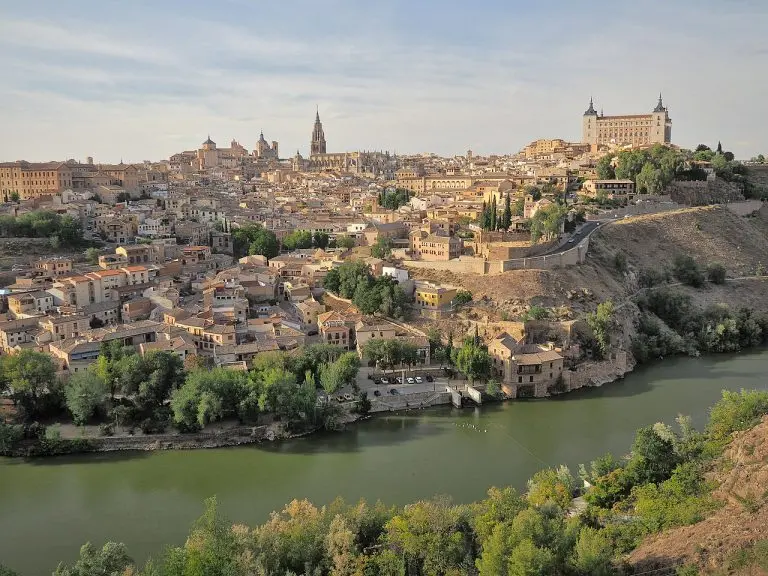
Cuenca → Toledo
180 kmHow to get from Cuenca to Toledo: quick summary
The fastest and most comfortable way to cover the 180 km separating Cuenca from Toledo is Renfe’s AVANT train, which takes between 116 and 124 minutes and offers 4 daily departures. If you prefer total flexibility and stops along the way, the car is unbeatable: 1h 55min via the A-40 and N-400, with no tolls. The Aisa bus is the cheapest option (13-21€) and is also direct, with a journey time of 120 minutes. There is no direct flight between the two cities.
Driving from Cuenca to Toledo
The drive between Cuenca and Toledo takes 1h 55min by road, covering 180 km with no tolls at all. The main route runs along the A-40 for about 122 km, a comfortable, quiet motorway that crosses the heart of La Mancha. It then joins the N-400 for about 25 km, a national road that brings you close to the Toledo metropolitan area. The final kilometres are split between the A-4 (Autovía del Sur, about 8 km) and the TO-22, the northeast access motorway into Toledo that drops you right in the city.
The A-40 is one of the calmest motorways in central Spain, ideal for a relaxed trip. Since there are no tolls, the cost of the journey is limited to fuel. If you set off early, you can make one or two stops without the trip dragging on too long. The route passes near Tarancón, Ocaña and Aranjuez, all reachable with short detours from the A-40 or the N-400.
By train from Cuenca to Toledo
According to Renfe, the fastest direct train between Cuenca and Toledo is the AVANT, which takes 116 minutes to complete the journey. The frequency is 4 trains a day, with the first train departing at 06:15 and the last at 09:51. The departure station is Cuenca-Fernando Zóbel and the destination is Toledo. All available services are AVANT, with a journey time of 116 minutes per trip.
The AVANT is a high-speed medium-distance train, with comfortable seats, air conditioning and luggage space. With only 4 daily departures, it’s worth booking in advance, especially at weekends or on public holidays. Cuenca-Fernando Zóbel station is on the outskirts of the city, well connected by road and with parking available. In Toledo, the station is close to the historic centre, making it easy to reach on foot or by taxi.
By bus from Cuenca to Toledo
The direct bus from Cuenca to Toledo is operated by Aisa, with a journey time of 120 minutes and a price ranging from 13 to 21€. It’s the cheapest option for travelling between the two cities and, being direct, requires no transfers. Frequency can vary depending on the day of the week, so it’s worth checking updated timetables on the Aisa website or at Cuenca bus station.
The bus is a good alternative if you want to save money and don’t mind a slightly slower journey than the AVANT. Buses usually have air conditioning and ample luggage space. Toledo bus station is well located, with taxi and city bus connections to reach the historic centre.
Recommended stops along the way
These six stops are verified along the route between Cuenca and Toledo. All are accessible from the A-40 or the N-400 with short detours.
- Tarancón (Tarancón): The first natural stop when leaving Cuenca, about 40 minutes from the provincial capital. It’s a good place to stretch your legs and grab a coffee. Its old town preserves churches and squares with La Mancha charm.
- Aranjuez (Aranjuez): A city declared a UNESCO World Heritage Cultural Landscape. Its Royal Palace and the gardens along the Tagus are worth a stop of at least an hour. It’s about 10 minutes from the A-4, ideal if you’re travelling by car.
- Yuncos (Yuncos): A small town in Toledo province, already within the province of Toledo. It’s a practical stop to refuel or grab a quick bite before reaching the capital. Its surroundings are typically La Mancha, with cereal fields and olive groves.
- Bargas (Bargas): Just 10 km from Toledo via the TO-22. It’s the last stop before entering the city. Its parish church and main square are a fine example of popular Toledan architecture.
- Seseña (Seseña): Known for its recent urban growth, Seseña is a common waypoint on the route. It has service areas and shops where you can take a break. It’s well connected to the A-4.
- Ocaña (Ocaña): A historic town with a beautiful arcaded main square. It’s very close to the A-4 and the A-40, making it a strategic stop. Its heritage includes convents and manor houses.
Where to stay in Toledo
The best area to stay in Toledo is the historic centre, within the city walls, so you can explore the city on foot and enjoy the evening atmosphere. There you’ll find boutique hotels, rural guesthouses and tourist apartments, with prices that typically range from 70 to 150€ per night in mid-season. Another option is the Santa Teresa neighbourhood, on the other side of the Tagus river, with more modern hotels and panoramic views of the old town. For tighter budgets, there are hostels and guesthouses from 40-60€ per night, many of them near the train station.
If you’re travelling by car, it’s worth checking whether your accommodation offers parking, as the historic centre has restricted access. Hotels on the outskirts usually have free parking and good connections to the centre by taxi or city bus.
Where to eat along the route
The cuisine on this route is a journey through the La Mancha pantry. These are the dishes and products you shouldn’t miss:
- Morteruelo (area: Cuenca): A thick stew of small game, typically hare or rabbit, with pork liver, bread, spices and olive oil. It is served hot and accompanied by bread or potatoes. It is a hearty spoon dish, perfect for the cold months.
- Ajoarriero (area: Cuenca): A paste of flaked cod mixed with potato, garlic, olive oil and paprika. It is eaten as a tapa or as a filling for empanadas. Its creamy texture and intense flavour make it very popular in bars and taverns.
- Manchego cheese (area: La Mancha): A pressed-paste cheese made with milk from Manchega breed sheep. It has a characteristic rind and an intense, slightly salty flavour. It is the perfect companion for any meal or as an appetiser with wine.
- Pisto manchego (area: La Mancha): A stew of tomato, pepper, courgette and onion, all chopped and sautéed in olive oil. It is served on its own or as a side dish, sometimes with egg. It is a tasty and very widespread vegetarian option.
- Migas manchegas (area: La Mancha): A dish made from crumbled stale bread fried with garlic, olive oil and paprika, to which pieces of chorizo, pancetta or grapes are added. It is a traditional shepherd’s recipe, ideal for sharing.
- La Mancha wine (area: La Mancha): Made mainly with Airén grapes for whites and Cencibel (Tempranillo) for reds. The area produces young and aged wines with a designation of origin. Ask for a young red to accompany meats or a chilled white with the cheese.
- Uclés wine (area: Uclés, Cuenca): Wine from the Uclés region, made with native grapes such as Tempranillo and Garnacha. The designation of origin protects red, white and rosé wines. It is a local gem worth trying.
- Méntrida wine (area: Méntrida, Toledo): Wine from the Méntrida area, known for its reds made with Garnacha and Tempranillo. The DO covers aged and young wines. Ideal for pairing with game dishes or cured cheeses.
Frequently asked questions about the Cuenca-Toledo route
How long does it take from Cuenca to Toledo?
By car, the journey takes 1h 55min via the A-40 and N-400 (180 km). By Renfe AVANT train, the time is 116 minutes. By Aisa bus, 120 minutes. There is no direct flight.
Which is cheaper, the train or the bus?
The Aisa bus is cheaper, with prices between 13 and 21€. The Renfe AVANT train tends to be more expensive, although prices vary depending on how far in advance you book and availability. For travellers on a tight budget, the bus is the best option.
Is it worth renting a car?
Yes, if you want to make stops in Tarancón, Aranjuez, Ocaña or any other town along the route. Public transport (train and bus) is direct and does not allow you to get off at intermediate points. By car, the journey is 1h 55min with no tolls and you can adapt the trip to your own pace.
When is the best time to travel?
Spring and autumn are the best seasons, with mild temperatures for strolling around Toledo and the stops along the route. Summer can be very hot in La Mancha, and winter, although cold, offers a special light and fewer tourists. Avoid bank holiday weekends if you’re looking for peace and quiet.