Salamanca → Ávila
104 kmHow to get from Salamanca to Ávila: quick summary
The route between Salamanca and Ávila takes just over an hour by road, with three main options: private car, direct Renfe train and Avanza bus. If you want the flexibility to stop in Peñaranda de Bracamonte or Santa Marta de Tormes, the car is unbeatable. If you prefer comfort and don’t mind sticking to timetables, the MD train puts you in Ávila in 65 minutes. The bus is the cheapest alternative, with tickets from €7.5 and a journey time of 90 minutes.
By car from Salamanca to Ávila
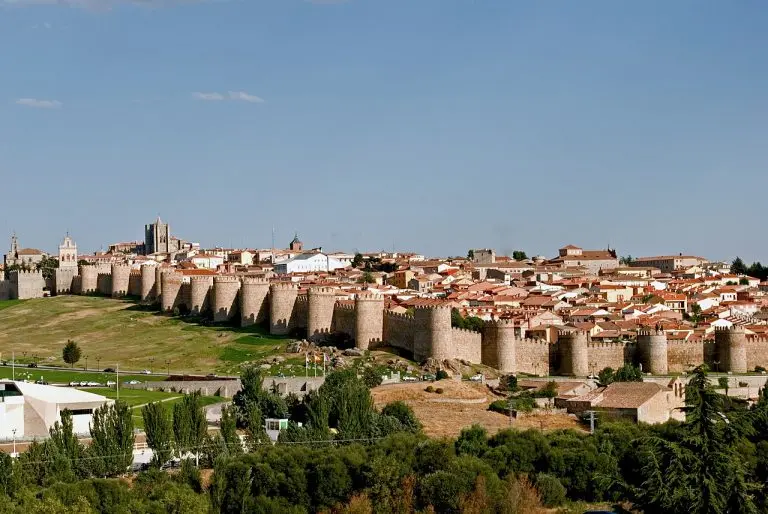
The drive takes 1 hour and 5 minutes and covers 104 km almost entirely along the A-50 motorway, with no tolls. This road connects both cities directly and accounts for about 100 km of the total route. The A-50 is a modern motorway with good surfacing and light traffic on weekdays, which makes it easy to maintain a steady speed and enjoy the landscape of the Castilian plateau: cereal fields, scattered holm oak groves and a wide horizon that changes colour with the seasons. As you approach Ávila, the silhouette of the medieval wall appears outlined against the Sierra de Gredos, a perfect preview of what awaits you. There are no tolls on this route, which makes it a very economical option if you’re travelling with companions.
By train from Salamanca to Ávila
According to Renfe, the direct train between Salamanca and Ávila operates with MD (Media Distancia) trains that complete the journey in 65 minutes on the fastest service, although some services can take up to 86 minutes. The frequency is 8 trains a day, with departures from Salamanca station from 05:47 to 20:01. The destination station is Ávila, located a short distance from the historic centre. The train is a comfortable and reliable option for those who don’t want to drive, with spacious seats and the chance to work or read along the way. Morning departures let you make the most of a full day in Ávila, and mid-afternoon trains make the return trip easy without rushing.
By bus from Salamanca to Ávila
The company Avanza operates direct buses between Salamanca and Ávila with a journey time of 90 minutes and prices ranging from €7.5 to €18 depending on how far in advance you book and the type of fare. It’s the cheapest option for individual travellers or those booking at short notice. Buses leave from Salamanca bus station and arrive at Ávila bus station, well connected to the city centre. The price difference with the train can be significant on return journeys, so if saving money is your priority, the bus is the logical choice. The journey, travelling by road, offers similar views to those from a private car, though without the freedom to stop.
Recommended stops along the way
If you’re travelling by car, these two stops let you stretch your legs and discover a little of the character of Salamanca province before crossing into Ávila territory.
Santa Marta de Tormes
Located on the outskirts of Salamanca, Santa Marta de Tormes is a town that serves as a natural gateway to the provincial capital. It’s a brief and practical stop: you can refuel, grab a coffee or simply take a break before joining the A-50. Its proximity to Salamanca makes it a convenient option if you’ve set off with just enough fuel or if you prefer to avoid the city’s urban traffic. Don’t expect grand monuments, but you will find the quiet atmosphere of a large village with all the basic services.
Peñaranda de Bracamonte
Halfway between Salamanca and Ávila, Peñaranda de Bracamonte is the most interesting stop on the route. This town in Salamanca province preserves an arcaded main square with granite porticoes and an authentic Castilian atmosphere, far from crowded tourist routes. It’s a good place for a coffee, a short stroll through the historic centre or simply to stretch your legs before tackling the second half of the journey. Its strategic position, almost at the midpoint of the route, makes it the natural stop for those travelling without rushing.
Where to stay in Ávila
The best area to stay in Ávila is the walled historic centre, where the medieval atmosphere and proximity to the city wall, the cathedral and the main restaurants justify somewhat higher prices. Here you’ll find charming hotels in restored buildings, family-run guesthouses and a parador with views of the wall. Prices range from €60 to €120 per night in mid-season, rising at weekends and on public holidays. Outside the walls, in the modern expansion area, there are cheaper options from €45 per night, with the advantage of easier parking and quick access to the outgoing roads. If you’re travelling by car, consider staying in this peripheral area to avoid traffic restrictions in the historic centre.
Where to eat along the route
The cuisine along this route combines Segovian and Ávila traditions, and it’s well worth planning a food stop or two.
Roast suckling pig
Although it originates in Segovia, roast suckling pig (cochinillo asado) can be found in many restaurants in the area and is a hearty dish: a whole piglet slow-roasted in a wood-fired oven with pork lard, salt and water. The skin comes out crispy and the meat so tender it can be cut with the edge of a plate. It’s a dish for sharing and celebrating.
Judiones de La Granja
This stew from La Granja de San Ildefonso, in the province of Segovia, is made with large white beans (judiones), chorizo, morcilla, pancetta and pork ear. It’s cooked slowly until the beans are tender and the broth is thick. It’s a spoon dish ideal for the cold months, perfect if you’re travelling in autumn or winter.
Ponche segoviano
For dessert, ponche segoviano is a rolled sponge cake filled with pastry cream and covered in icing sugar. Its main ingredients are eggs, sugar, flour, milk and cinnamon. It’s sweet, aromatic and pairs very well with an espresso after a hearty meal.
Yemas de Santa Teresa
Once in Ávila, yemas de Santa Teresa are the most emblematic sweet. They’re made with egg yolks and sugar, cooked and coated in icing sugar, forming small orange-yellow balls. They’re intense, sweet and very typical as a food souvenir. You’ll find them in practically every pastry shop in the historic centre.
Chuletón de Ávila
The chuletón de Ávila is a highly prized beef cut, usually grilled or cooked on a griddle. It’s characterised by its large size, juiciness and intense flavour, and is served rare. It’s an excellent option for meat lovers, especially at the city’s traditional grills and restaurants.
Vino de la Tierra de Ávila
To accompany your meal, the wines of Vino de la Tierra de Ávila are mainly reds and rosés, made with grapes such as Garnacha and Tempranillo. They’re characterised by their fruity aroma and smooth palate. They’re honest, unpretentious wines that pair well with the meats and stews of the region.
Frequently asked questions about the Salamanca-Ávila route
How long does it take to get from Salamanca to Ávila?
The drive takes 1 hour and 5 minutes to cover the 104 km route. By train, the fastest MD takes 65 minutes, although some services can take up to 86 minutes. By bus, the estimated time is 90 minutes. The difference between car and train is minimal, so the choice depends more on schedule flexibility and budget.
Which is cheaper, the train or the bus?
The Avanza bus is the most economical option, with tickets between 7.5€ and 18€ depending on how far in advance you book and the fare. The Renfe train tends to be more expensive, although it offers greater frequency (8 trains per day) and a slightly faster journey. If you’re travelling on a tight budget, the bus is the best option; if you value comfort and punctuality, the train is worth the price difference.
Is it worth renting a car?
Yes, especially if you want to make stops in Santa Marta de Tormes or Peñaranda de Bracamonte, or if you plan to explore the surroundings of Ávila once you’re there. A car gives you total freedom of schedules and lets you discover the local gastronomy without depending on public transport. If you’re only going to visit Ávila city centre and don’t mind adjusting to train or bus schedules, public transport is sufficient and more economical.
When is the best time to travel?
The route is pleasant at any time of year, but the spring months (April to June) and autumn (September to October) offer mild temperatures and livelier landscapes. In summer, Ávila is a cool city thanks to its altitude, ideal for escaping the heat of the south. In winter, the cold can be intense, but hearty stews and typical sweets take centre stage. If you’re travelling by car, avoid the Friday afternoon and Sunday afternoon peak hours on the A-50.
💡 ¿Sabías que...?
- ● La muralla de Ávila se construyó en el siglo I d.C., con el mismo trazado y superficie que la actual, según excavaciones arqueológicas. (https://avilaturismo.gvam.es/actividades/la-muralla)
- ● Ávila es la capital de provincia más alta de España, a 1131 m sobre el nivel del mar. (https://es.wikipedia.org/wiki/Avila)
- ● La muralla de Ávila tiene 2.516 metros de longitud y en la actualidad cuenta con 87 cubos o torreones, tras desaparecer uno en el siglo XVI para construir la Capilla de San Segundo. (https://avilaturismo.gvam.es/actividades/la-muralla)
- ● En el siglo XVI, Ávila es conocida por ser la cuna de Santa Teresa de Jesús. (https://patrimoniocultural.jcyl.es/web/es/conocimiento-difusion/ciudad-avila.html)
- ● Ávila posee los títulos de «Ávila del Rey», «Ávila de los Leales» y «Ávila de los Caballeros», otorgados por Alfonso VII, Alfonso VIII y Alfonso X, respectivamente. (https://es.wikipedia.org/wiki/Avila)
- ● La catedral de Ávila es la más antigua del gótico español. (https://patrimoniocultural.jcyl.es/web/es/conocimiento-difusion/ciudad-avila.html)
- ● La muralla de Ávila fue declarada Monumento Nacional en 1884, mucho antes que la UNESCO. (https://lamaletainquieta.com/curiosidades-avila/)
📍 También te puede interesar
Qué ver en Salamanca →
Qué ver en Ávila →