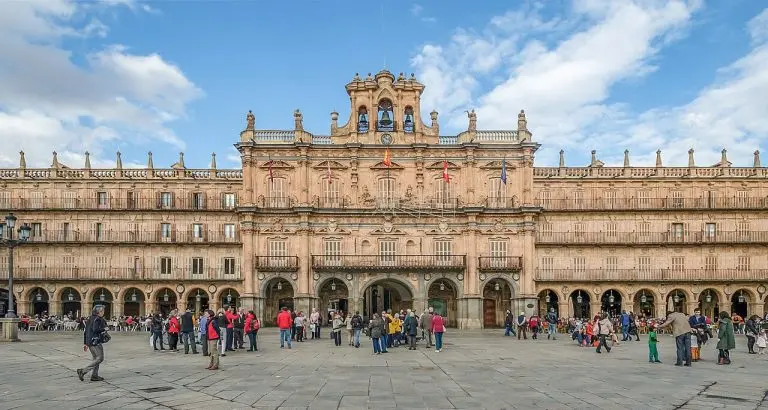
León → Salamanca
212 kmHow to get from León to Salamanca: quick summary
The fastest and most flexible option is a private or rental car, with a 212 km drive along the motorway that takes approximately 2 hours and 15 minutes with no tolls. The direct bus with ALSA or Avanza – Auto Res is the alternative for those without their own vehicle, lasting 185 minutes with regular departures. There is no direct train between the two cities, so rail is ruled out unless you want to deal with complex transfers. For those who prioritise comfort and independence, the car wins hands down; for tighter budgets, the bus does the job perfectly.
Driving from León to Salamanca
The road journey covers 212 km in 2 hours and 15 minutes, running entirely on toll-free motorways, which makes this one of the most comfortable routes in the northwest of the peninsula. The itinerary begins by taking the LE-11, León’s southern access road, for about 7 km until it links up with the A-66, the Autovía Ruta de la Plata (Silver Route Motorway), which is the backbone of the trip with 176 km of its layout. The A-66 crosses a landscape of cereal-growing plains and dehesas dotted with holm oaks, with straight stretches that invite a steady, safe pace. On the final leg, it joins the A-6, the Autovía del Noroeste (Northwest Motorway), for about 12 km before taking the exit towards Salamanca. There are no tolls along the entire route, which keeps costs down compared with similar journeys. It’s worth filling up before leaving León or at Benavente, as the intermediate stretches of the A-66 have service areas spaced far apart.
By bus from León to Salamanca
The direct bus between León and Salamanca takes 185 minutes and is operated by ALSA and Avanza – Auto Res, with departures from León’s bus station. The ticket price is not specified in the data provided, but as a medium-distance motorway route, it usually falls into a competitive budget range compared with driving if you’re travelling alone. Coaches typically make an intermediate stop at Benavente, allowing you to stretch your legs and grab something at the station. Frequency varies depending on the day of the week, so it’s worth checking the ALSA or Avanza – Auto Res websites in advance, especially at weekends or on public holidays. For students and those without a driving licence, the bus is the most practical and direct option.
Recommended stops along the way
The A-66 route offers three strategic stops that break up the monotony of the journey without taking you far from the motorway: Benavente, Trobajo del Camino and Santa Marta de Tormes. Each has its own character and is worth a brief visit.
Benavente
Benavente is the natural halfway stop, located at the junction of the A-66 and the A-6, about 70 km from León. This town in Zamora province stands out for its compact old quarter, its arcaded plaza Mayor and the church of Santa María del Azogue. It’s the perfect place for a coffee, a half-hour stroll or to refuel. As it sits right at the link between the two motorways, it doesn’t cost you any significant time.
Trobajo del Camino
Trobajo del Camino lies practically within the metropolitan area of León, just a few kilometres from the start of the journey. It’s a useful stop if you prefer an early first break or if you need to buy something before tackling the 176 km of the A-66. Its proximity to the Leonese capital makes it a convenient option for those who don’t want to stop at service areas.
Santa Marta de Tormes
Santa Marta de Tormes is the last stop before entering Salamanca, set on the banks of the Tormes river and right next to the city’s urban area. It’s ideal for a final pause, a bite to eat and preparing for arrival in the city away from the bustle of the centre. Its riverside promenade offers a first panoramic view of the surroundings that ring the charra capital.
Where to stay in Salamanca
Salamanca concentrates its hotel offering in the historic centre and the areas around the Plaza Mayor, with prices ranging from €50 to €120 per night depending on the season and category. The old town area is the most sought-after thanks to its university and monumental atmosphere, with boutique hotels, guesthouses and tourist apartments. The Van Dyck neighbourhood and Avenida de Mirat offer cheaper, quieter accommodation, about a 15-20 minute walk from the centre. For short stays, the guesthouses and pensions near the bus station are practical and usually cost around €40-60. On long weekends or during the fairs, it is worth booking in advance because the city fills up quickly.
Where to eat en route
The cuisine between León and Salamanca is one of the great attractions of the trip, with products from León, Zamora and Salamanca that deserve a stop at the table. These are the essentials by area:
- Cecina de León (area: León): cured and smoked beef or horse meat, dark red in colour with an intense flavour. It is made from the animal’s hind legs, salted and air-dried. Ideal as a starter or tapa.
- Botillo del Bierzo (area: El Bierzo, León): a thick sausage made with marinated pork, ribs and tail, stuffed into natural casing and cured. It is usually boiled with potatoes and greens, and is a hearty dish perfect for the cold months.
- Queso Zamorano (area: Zamora): a hard-paste sheep’s cheese made with raw or pasteurised milk from Churra and Castellana breed sheep. It has an intense, slightly spicy flavour, excellent with a red wine from Toro.
- Vino de Toro (area: Toro, Zamora): red wine made mainly from the Tinta de Toro (tempranillo) grape, with an intense colour, high alcohol content and powerful flavour. Whites and rosés are also produced.
- Vino de Rueda (area: Rueda, Valladolid): white wine made mainly from the Verdejo grape, fresh, fruity and with herbaceous notes. Perfect with fish or simply as an aperitif.
- Lechazo asado (area: Castile and León): suckling lamb roasted in the oven with pork lard and salt, with no other additives. It is served with salad and potatoes. It is the star dish of celebrations throughout the region.
- Vino de Cigales (area: Cigales, Valladolid): red and rosé wines made from Tempranillo and Garnacha grapes, aged in oak barrels. The rosés are especially well known and refreshing.
- Hornazo (area: Salamanca): a sausage of minced, marinated pork wrapped in bread dough and baked. It is usually eaten cold or warm, and is the traditional Salamanca snack.
- Vino de Arribes (area: Arribes del Duero, Salamanca/Zamora): red and white wines made from native grapes such as Juan García and Rufete, in the Arribes del Duero region. They have a fresh, mineral character, ideal for pairing with cured cheeses.
Frequently asked questions about the León-Salamanca route
How long does it take to get from León to Salamanca?
By car, the 212 km journey takes 2 hours and 15 minutes along the motorway with no tolls. By direct bus, the journey takes 185 minutes (approximately 3 hours and 5 minutes), according to the ALSA and Avanza – Auto Res companies.
Which is cheaper, the train or the bus?
There is no direct train between León and Salamanca, so rail is ruled out unless you opt for long, costly connections. The direct bus with ALSA or Avanza – Auto Res is the most economical and practical option for those not travelling by car.
Is it worth renting a car?
Yes, especially if you want to make stops in Benavente, Trobajo del Camino or Santa Marta de Tormes and enjoy the local cuisine along the way without being tied to timetables. A car gives you total flexibility, and the drive along the A-66 is quick and toll-free, with a moderate fuel cost for 212 km.
When is the best time to travel?
The best time is spring and autumn, when temperatures are mild and the landscapes of the meseta are at their finest. In summer, Salamanca can be hot, but the mornings are pleasant. Avoid bank holiday weekends if you want to steer clear of crowds on the road and in accommodation.
💡 ¿Sabías que...?
- ● La calle Tentenecio debe su nombre a una leyenda según la cual San Juan de Sahagún detuvo a un toro embravecido gritando «¡Tente, necio!». (https://diarium.usal.es/blanca_sa/salamanca/curiosidades-de-salamanca/)
- ● La rana esculpida en la fachada de la Universidad de Salamanca tiene la leyenda de que el estudiante que no la ve suspende el curso. (https://diarium.usal.es/blanca_sa/salamanca/curiosidades-de-salamanca/)
- ● El Mariquelo es un personaje típico de Salamanca que cada año en víspera de Todos los Santos sube al campanario de la catedral nueva para conmemorar que el terremoto de Lisboa de 1755 apenas afectó a su estructura. (https://diarium.usal.es/blanca_sa/salamanca/curiosidades-de-salamanca/)
- ● La expresión «salir por la puerta grande» nació en la Universidad de Salamanca, cuando un estudiante pasaba con éxito su examen de grado y salía por la puerta principal. (https://www.esdiario.com/castilla-y-leon/251219/124078/salamanca-curiosidades-historicas.html)
- ● En la Plaza Mayor de Salamanca hay 15.477 balcones. (https://supercurioso.com/curiosidades-de-salamanca/)
- ● La Universidad de Salamanca, creada en 1218 por Alfonso IX de León, es la universidad en activo más antigua de España. (https://www.patrimoniocastillayleon.com/es/salamanca)
- ● El astronauta de la catedral de Salamanca fue añadido en el año 1992 durante las obras de mejora por el cantero Miguel Romero. (https://supercurioso.com/curiosidades-de-salamanca/)
- ● El Lunes de Aguas es una antigua festividad que se celebra en Salamanca el día siguiente del Domingo de Resurrección, en la que antiguamente las prostitutas eran expulsadas de la ciudad hasta que volvían en barcas a través del río. (https://supercurioso.com/curiosidades-de-salamanca/)
📍 También te puede interesar
Qué ver en León →
Qué ver en Salamanca →