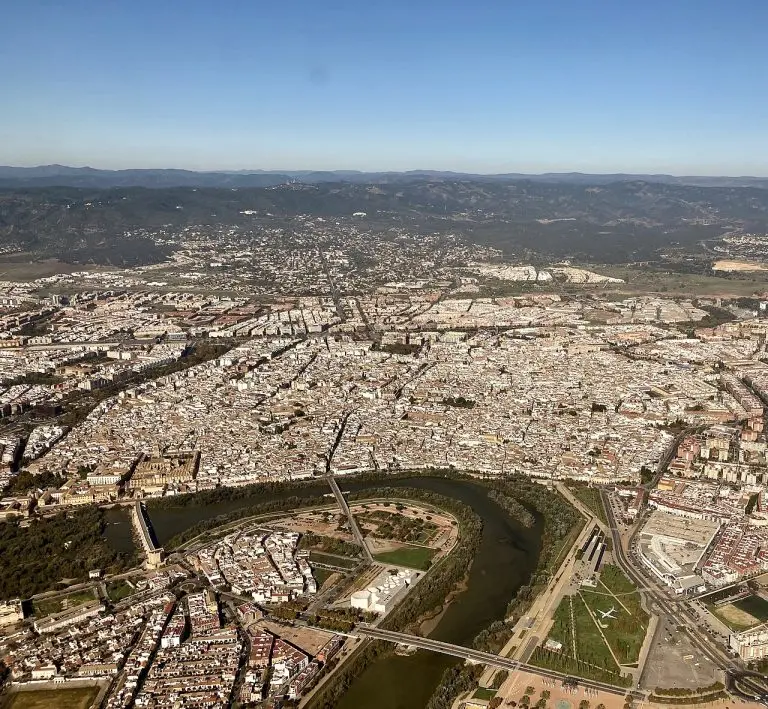
Granada → Córdoba
162 kmHow to Get from Granada to Córdoba: Quick Summary
The fastest way to travel between Granada and Córdoba is the AVE train, which covers the 162 km in just 86 minutes, while driving takes 1h 40min along the N-432 with no tolls. If you’re looking for the cheapest option, the ALSA bus offers tickets from €7, though the journey takes 150 minutes. For those who want to enjoy the Andalusian scenery and make stops in towns like Jaén or Alcalá la Real, the car is the most flexible alternative.
Driving from Granada to Córdoba
The drive between Granada and Córdoba takes approximately 1 hour and 40 minutes, covering a total distance of 162 km by road. The main route runs along the N-432, the Granada–Badajoz road, which accounts for about 141 km of the journey with no tolls, crossing a landscape of olive groves and Andalusian countryside that makes the trip especially pleasant in spring and autumn. The final 9 km are on the GR-43, which connects to the entrance of the city of Córdoba. With no tolls along the entire route, it’s an economical and direct option for those travelling in their own or a rental vehicle.
By Train from Granada to Córdoba
According to Renfe, there is a direct train between Granada and Córdoba with a frequency of 11 trains per day, the first service at 06:09 and the last at 18:17. The fastest journey is on AVE trains, with 6 daily departures and a duration of 86 minutes, followed by the ALVIA with 1 daily departure in 92 minutes and the AVANT with 4 daily departures in 106 minutes. Departure is from Granada station and arrival is at Córdoba-Julio Anguita station. Total times range from 86 to 112 minutes depending on the type of train, making rail the fastest option for this route.
By Bus from Granada to Córdoba
ALSA operates direct buses between Granada and Córdoba with a duration of 150 minutes and a price ranging from €7 to €20 per journey. It’s the cheapest alternative for travelling between the two cities, although the travel time is considerably longer than by train or car. Buses usually offer several departures throughout the day, allowing some scheduling flexibility for those who aren’t in a hurry and prioritise saving money.
Recommended stops along the way
The route between Granada and Córdoba offers numerous interesting stops, all of them accessible from the N-432 or its immediate surroundings, which can turn a journey of less than two hours into a full-day getaway.
- Jaén: The capital of the province of the same name, it is the largest stop on the route. It stands out for its Renaissance cathedral, the Santa Catalina castle with panoramic views and its compact historic centre. It is ideal for a couple of hours’ break and a coffee in the main square.
- Huétor Tájar: A town in the province of Granada known for its asparagus production and its quiet Andalusian village atmosphere. It is a brief and authentic stop to stretch your legs and buy local produce from the vega.
- Rute: A town in the province of Córdoba famous for its anise distilleries and its Christmas sweets. If you travel in season, it is worth visiting a mantecados and turrones factory, or simply strolling through its whitewashed streets.
- Aguilar de la Frontera: A town in the province of Córdoba with an interesting historical heritage, including the octagonal Plaza de San José and remains of its frontier past. It is a quiet, uncrowded stop, perfect for discovering rural Córdoba.
- Albolote: Located very close to Granada, it is the first possible stop when leaving the capital. Its parish church and the surroundings of the Cubillas park make it a quick option for those who want to take an early break.
- Alcalá la Real: Dominated by the imposing Fortaleza de la Mota (La Mota Fortress), this town in the province of Jaén is one of the most spectacular stops on the route. The fortress, visible from the road, offers guided tours and extraordinary views of the countryside.
- Alcaudete: A town in the province of Jaén with a well-preserved medieval castle and an old town with an Arab layout. It is an ideal stop for history and photography lovers, with fewer tourists than other towns in the area.
- Armilla: A city in the metropolitan area of Granada, practically attached to the capital. It is the last stop before taking the N-432 towards Córdoba, useful for refuelling or last-minute shopping.
Where to stay in Córdoba
The best area to stay in Córdoba is the historic centre, especially around the Mezquita-Catedral (Mosque-Cathedral) and the Judería (Jewish Quarter), where boutique hotels, guesthouses and tourist apartments in traditional buildings with Andalusian patios are concentrated. Prices vary depending on the season: in low season you can find double rooms from 50-70€ per night, while in spring and during the Festival de los Patios (Patios Festival) prices rise considerably, reaching 100-150€ or more. For tighter budgets, the area around the train station and the Ciudad Jardín neighbourhood offer cheaper, well-connected accommodation. Charming places to stay, such as renovated patio houses, are a unique experience and highly recommended in this city.
Where to eat along the route
The food between Granada and Córdoba is one of the great highlights of the journey, with dishes ranging from hearty stews to the most delicate sweets. In Córdoba, salmorejo cordobés is a thick cold soup made with tomato, bread, olive oil, garlic and salt, served with chopped hard-boiled egg and serrano ham; it is the signature dish of Córdoba’s cuisine, especially in summer. Rabo de toro (oxtail), slowly braised with red wine, vegetables and spices until the meat is tender and melting, is another essential classic in traditional taverns and restaurants. The flamenquín, a roll of pork filled with serrano ham, breaded and fried, is sliced and served as a typical Córdoba tapa, crispy on the outside and juicy on the inside.
In the province of Granada, habas con jamón is a spring stew of tender broad beans with serrano ham, onion and olive oil, sometimes with egg, very common throughout the area. Piononos, a traditional sweet from Santa Fe, consist of a base of rolled sponge cake with toasted cream on top; they are typical of this Granada town close to the route towards Córdoba. To drink, Montilla-Moriles wine, made mainly from Pedro Ximénez grapes in the Córdoba region, includes styles such as fino, oloroso, amontillado and Pedro Ximénez, while the Vinos de Granada Denominación de Origen offers a growing variety of reds, whites and rosés from the province of Granada.
Frequently asked questions about the Granada-Córdoba route
How long does it take from Granada to Córdoba?
The time depends on the mode of transport: by car it takes 1 hour and 40 minutes along the N-432; by AVE train the fastest journey takes 86 minutes, although AVANT trains can take up to 106-112 minutes; and by ALSA bus the trip takes 150 minutes. The total distance by road is 162 km.
Which is cheaper, the train or the bus?
The ALSA bus is the most economical option, with prices between 7 and 20€ per journey. The train, operated by Renfe, is more expensive but significantly faster: the AVE takes 86 minutes compared to 150 for the bus. If saving money is your priority, choose the bus; if you value your time, the train is worth the difference in price.
Is it worth renting a car?
It depends on your plans. If you are only going to visit Córdoba, the train is faster and more comfortable. But if you want to make stops in towns such as Jaén, Alcalá la Real, Rute or Aguilar de la Frontera, the car is the only flexible option, since public transport does not connect all these stops in a practical way. The route along the N-432 has no tolls and the olive grove scenery is well worth it.
When is the best time to travel?
Spring and autumn are the best seasons for this journey, with mild temperatures and green landscapes in the Andalusian countryside. Summer can be very hot, especially in Córdoba, where temperatures easily exceed 35°C. If you travel in May, you can enjoy the Festival de los Patios de Córdoba (Courtyards Festival), although accommodation prices rise considerably.
💡 ¿Sabías que...?
- ● En Córdoba se encontraron restos de un anfiteatro romano con capacidad para entre 30.000 y 50.000 espectadores, uno de los mayores del Imperio, con 180 metros de eje. (https://www.abc.es/espana/andalucia/cordoba/sevi-anfiteatros-porticos-y-aduanas-ultimos-diez-hallazgos-sobre-historia-cordoba-202110271806_noticia.html)
- ● La Mezquita-Catedral de Córdoba tiene 23.400 m² y llegó a ser la segunda más grande del mundo, solo superada por La Meca. (https://www.lavanguardia.com/historiayvida/mas-historias/20240305/9530078/historia-5-curiosidades-mezquita-cordoba-pmv.html)
- ● Córdoba es la única ciudad del mundo con cuatro bienes declarados Patrimonio de la Humanidad por la UNESCO: el centro histórico, la Fiesta de los Patios, Medina Azahara y la mezquita-catedral. (https://www.lavanguardia.com/magazine/viajes/20250919/11060582/curiosidades-enamorarse-cordoba-caballerizas-reales-callejon-salmorejo.html)
- ● En la Plaza de las Tendillas de Córdoba hay un reloj de torre único en el mundo: las horas y las medias se anuncian con toques de guitarra flamenca al ritmo de soleá. (https://www.lavanguardia.com/magazine/viajes/20250919/11060582/curiosidades-enamorarse-cordoba-caballerizas-reales-callejon-salmorejo.html)
- ● La Mezquita-Catedral de Córdoba fue declarada Patrimonio de la Humanidad por la UNESCO en 1984. (https://www.elespanol.com/cultura/patrimonio/20180916/cosas-inesperadas-mezquita-cordoba-seguro-no-sabes/338466521_0.html)
- ● La quibla de la Mezquita de Córdoba no está orientada hacia La Meca, sino hacia el río Guadalquivir. (https://www.elespanol.com/cultura/patrimonio/20180916/cosas-inesperadas-mezquita-cordoba-seguro-no-sabes/338466521_0.html)
- ● Córdoba fue fundada por los romanos a mediados del siglo II a. C. y se convirtió en capital de la Hispania Ulterior en tiempos de la República romana. (https://es.wikipedia.org/wiki/C%C3%B3rdoba_(Espa%C3%B1a))
📍 También te puede interesar
Qué ver en Granada →
Qué ver en Córdoba →