Málaga → Ronda
100 kmLeaving behind the coastal bustle of the Costa del Sol to venture into the mountainous heart of Andalusia is one of the most rewarding experiences you can have on a short trip. In barely an hour, the landscape changes dramatically: the infinite blue of the Mediterranean gives way to the ochre and green tones of the Serranía (mountain range), and the salty breeze turns into pure mountain air, all while you approach one of the most spectacular towns in Spain, perched atop a vertiginous gorge.
How to get from Málaga to Ronda: quick summary
The fastest and most flexible way to travel from Málaga to Ronda is by private car, covering the distance in approximately 1 hour and 15 minutes, although the bus offers an economical and direct alternative for those who prefer not to drive. If you are a traveler who values freedom above all else, a private vehicle is your best ally, as it allows you to control your schedule and make stops at your leisure in the villages that dot the route. On the other hand, if you are traveling solo or as a couple and looking to save on fuel and parking costs, the bus network is robust and reliable, connecting both cities without complicated transfers, although the journey stretches considerably to 150 minutes. There is no direct train option, which rules out this route for travelers seeking rail comfort, forcing you to choose between the autonomy of the wheel or the relaxation of a bus seat.
By car from Málaga to Ronda
The drive between Málaga and Ronda is mainly via the A-45 and A-7 motorways, covering a total distance of 100 kilometers in an estimated time of 1 hour and 15 minutes. This route is particularly attractive for drivers because it avoids tolls, which means significant savings in travel costs compared with other toll roads in Spain. The A-7, known as the Autovía del Mediterráneo or Autovia de la Mediterrània, acts as the main exit route from the city of Málaga, offering well-maintained asphalt and clear signage that makes navigation easy even for those unfamiliar with the area. You will then connect with the A-45, the Autovía de Málaga, which will take you inland into the province. With no need to stop at toll booths, the flow of driving is continuous and smooth, allowing you to maintain a constant cruising speed that makes the hour and a quarter journey fly by. It is important to note that, although the distance is short (100 km), the terrain changes progressively, so driving requires attention but is very pleasant thanks to the views that open up toward the sierra as you move away from the coast.
By bus from Málaga to Ronda
The bus journey from Málaga to Ronda is a viable and direct option operated by several companies such as Damas, Avanza, Autocares Sierra de las Nieves and Interbus, with a total journey time of 150 minutes. The existence of multiple operators on this route is excellent news for travelers, as it guarantees a certain level of competition that usually translates into good departure frequency and a variety of schedules adapted to different needs, whether for getting up early to make the most of the day or for traveling leisurely in the afternoon. The ticket price ranges from a highly competitive minimum of €11.76 to a maximum of €21.98, depending on how far in advance you book, the company chosen and the time of year. Although the 150-minute travel time is more than double that of driving, this format allows passengers to completely disconnect from the road, read, work or simply enjoy the scenery through the window without the stress of driving. The companies mentioned above usually have modern fleets that offer comfort during the two and a half hours the journey lasts, making the wait worthwhile for the financial savings and the peace of mind of not having to find parking upon arriving in the city.
Recommended stops along the way
If you decide to make the journey by car, there are several verified strategic points where it is highly advisable to stop to stretch your legs and change the pace of the trip. The first logical stop is Cártama, a municipality that acts as the gateway to the Guadalhorce Valley region; it is an ideal place to take a short break, grab a quick coffee, and observe the typical architecture of the white villages before heading further into the mountains. Continuing along the route, we come to Pizarra, another enclave located on the railway line that offers a quiet, rural atmosphere, perfect for travelers seeking a more peaceful stop away from the noise of the highway to breathe fresh air before the final stretch. Finally, Cártama Station represents a specific point of interest for travelers who combine means of transport or who are curious about the area’s railway infrastructure; although there is no direct train to Ronda, this station is an important communication hub at the starting point that deserves a mention if you are planning complex logistics or simply want to see how regional transport connects. These three stops—Cártama, Pizarra, and Cártama Station—break up the monotony of the 100 kilometers of road and allow you to divide the journey into more digestible and enriching experiences.
Where to stay in Ronda
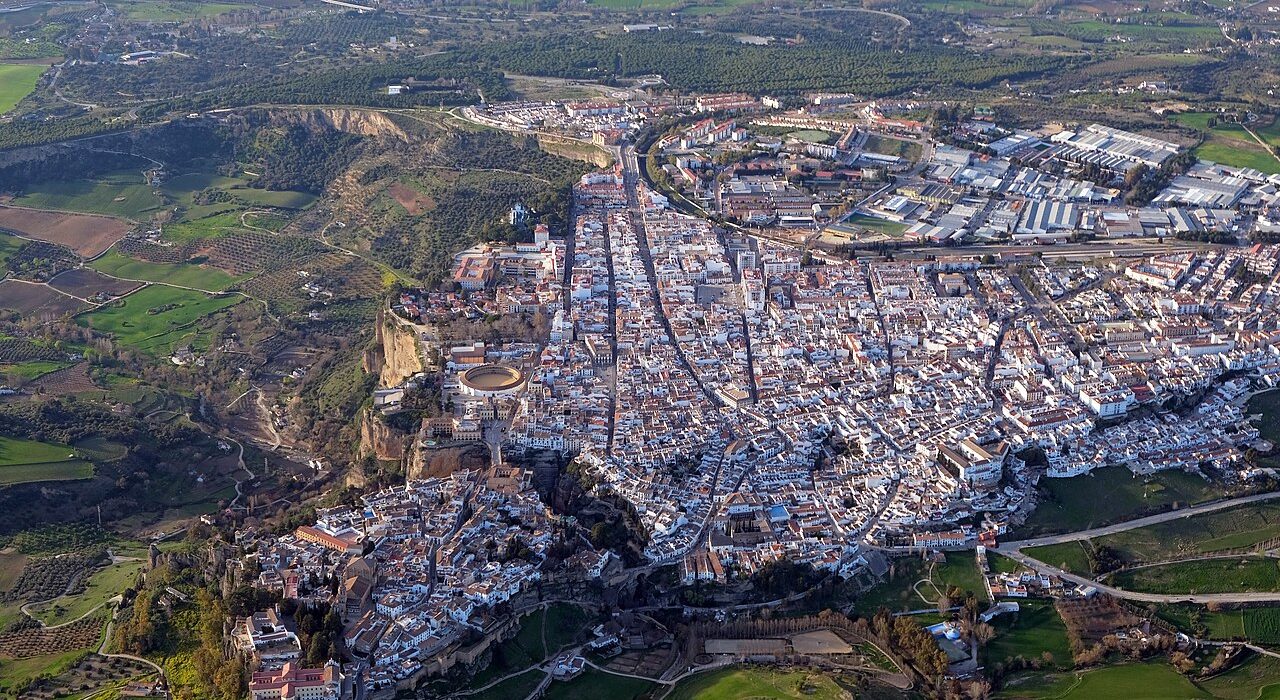
To choose the perfect accommodation in Ronda, it is essential to prioritize location in relation to the Old Town and the views of the Tajo gorge, as the city’s topography completely defines the visitor’s experience. The most recommended areas tend to be those within the walled enclosure or in its immediate surroundings, where you can wake up to the city’s iconic views and have the main tourist attractions just a few steps from your room. As for types of accommodation, Ronda offers a range that goes from charming hotels located in restored historic buildings, which usually offer more personalized service and unique atmospheres, to more functional and budget-friendly options ideal for backpackers or travelers passing through. Price ranges can vary considerably depending on the season, with spring and autumn being periods of high demand when costs rise, while in winter it is possible to find more affordable deals. Since there is no direct train that easily brings massive day-trip excursions from distant cities, the city maintains a more leisurely tourism, which allows you to enjoy peaceful accommodations. It is recommended to look for establishments that offer views of the mountains or the valley, as the magic of Ronda lies as much in its interior as in the landscape that surrounds it, turning the hotel itself into part of the tourist itinerary.
Frequently asked questions about the Málaga–Ronda route
How long does it take to get from Málaga to Ronda?
Travel time varies dramatically depending on the means of transport you choose: if you travel by private car on the A-7 and A-45, the 100 km journey takes approximately 1 hour and 15 minutes. By contrast, if you opt for public transport by bus with companies such as Damas or Avanza, you should allow a travel time of 150 minutes, that is, two and a half hours, due to intermediate stops and the speed of the vehicle.
Which is cheaper, the train or the bus?
Comparing prices directly is complicated because there is no direct train between these two cities, so the bus becomes the default public transport option. The cost of a bus ticket ranges between €11.76 and €21.98, which is generally cheaper than the total cost of renting a car and paying for fuel for a solo traveler, although the car can work out more cost-effective if you are traveling in a group of 3 or 4 people.
Is it worth renting a car?
Yes, it is worth renting a car if you value freedom of movement and want to make the most of the recommended stops along the route such as Cártama, Pizarra, and Estación de Cártama (Cártama Station), as well as cutting travel time in half (1h 15min compared to 150 min). However, if your budget is tight and you do not mind spending more time on the journey, the bus is a valid alternative that spares you the stress of driving on mountain roads and looking for parking in Ronda.
When is the best time to travel?
Although climate data is not specified, the best time to travel is usually when conditions on the A-7 and A-45 roads are optimal and tourism does not saturate the capacity of buses from companies such as Interbus or Sierra de las Nieves. Traveling in the low season can help you secure the lowest prices in the €11.76 bus range and enjoy the stops in Cártama and Pizarra with greater peace and quiet.
📍 También te puede interesar
Qué ver en Málaga →
Qué ver en Ronda →