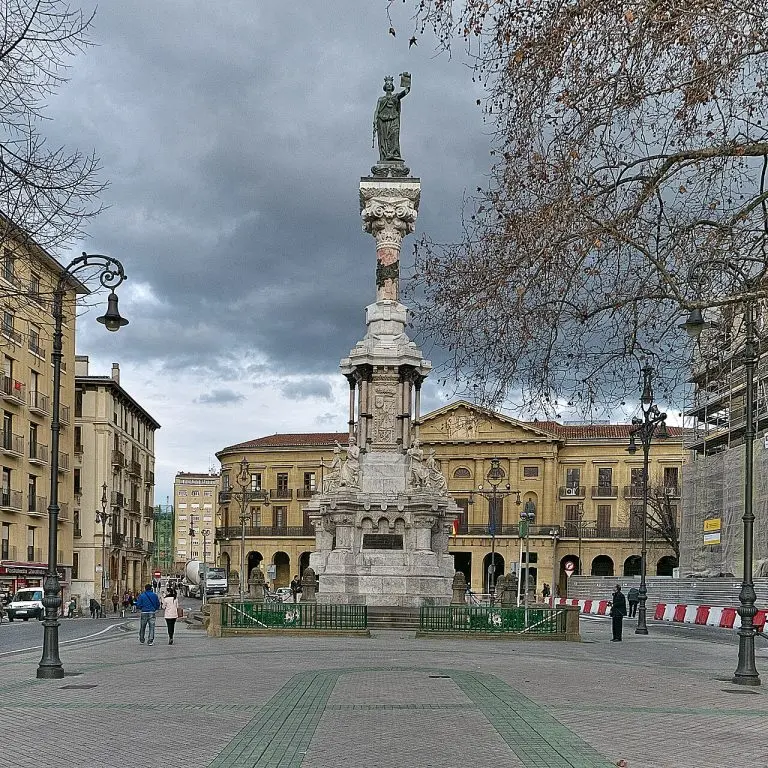
Zaragoza → Pamplona
177 kmSome journeys are enjoyed more for what they hide along the way than for the destination itself, and this is one of them. Crossing from Zaragoza to Pamplona means leaving the monumental Ebro behind to venture into green Navarre, with the constant temptation to detour to Tudela for tapas or to hit the brakes at the vineyards that announce the land of wine and vegetables. Barely 177 kilometres separate the two cities, but the trip can become a delightful little culinary and scenic route if you know where to look.
How to get from Zaragoza to Pamplona: quick summary
The fastest and most flexible option is the car: 177 km on the motorway, covered in 1 hour and 50 minutes, with tolls and stops at your leisure. The direct Renfe train is a comfortable, worry-free alternative, with 11 daily services and a journey time of between 107 and 153 minutes depending on the type of train. The direct bus, operated by Inter-Arriaga, Interbus and Líneas Regulares de Navarra, takes about 137 minutes and is the cheapest option, with tickets between €16.10 and €18.50. There is no direct flight between the two cities. For travellers in a hurry, the Intercity is unbeatable; for tight budgets, the bus; and for those who want to explore the Ribera Navarra or make culinary stops, the car is clearly the winner.
By car from Zaragoza to Pamplona
The road route covers 177 km in approximately 1 hour and 50 minutes, travelling mainly on two toll motorways: the AP-68 and the AP-15. Leave Zaragoza on the AP-68 towards Logroño; this road will accompany you for about 83 km of the journey, crossing the arid landscapes of the Ebro valley dotted with orchards and vineyards. You will then join the AP-15, known as the Nafarroako autobidea, which also covers about 83 km to Pamplona. The toll makes the trip more expensive, but the smooth traffic and good road surface make up for it. If you decide to make stops, the exits towards Tudela, Borja or Utebo are well signposted and let you stretch your legs without straying too far from the main route.
By train from Zaragoza to Pamplona
Renfe operates 11 direct trains a day between Zaragoza Delicias and Pamplona/Iruña, with a journey time ranging from 107 to 153 minutes depending on the type of train. The fastest service is the Intercity, with 2 daily departures completing the trip in 107 minutes. Next are the ALVIA trains, with 3 daily services and 119 minutes of travel; the MD, with 1 daily departure and 119 minutes; and the REG.EXP. trains, with 5 daily departures and a duration of 130 minutes. The first train leaves at 05:58 and the last at 20:03, which gives you room both to rise early and to travel after work. Prices vary depending on how far in advance you book, the type of train and the class, but the convenience of not worrying about tolls or parking makes the train a highly competitive option for business trips or weekend getaways.
By bus from Zaragoza to Pamplona
The direct bus connects Zaragoza with Pamplona in 137 minutes, operated by Inter-Arriaga, Interbus and Líneas Regulares de Navarra. The ticket costs between €16.10 and €18.50, making it the cheapest alternative for this route. The journey is somewhat longer than by car or on the fastest trains, but the value for money is hard to beat. Coaches usually offer reclining seats, air conditioning and, on some services, free wifi connection. For students, backpackers or those travelling on a tight budget, the bus is the sensible choice: you pay less than €20 and it drops you in the centre of Pamplona with no parking hassles.
Recommended stops along the way
These are the verified stops you can make between Zaragoza and Pamplona, ideal for stretching your legs, refuelling or discovering a charming corner.
- Tudela (Tudela): The capital of the Ribera Navarra is the most obvious and rewarding stop. Just a few minutes from the AP-68, Tudela boasts an old town with Mudéjar churches, an imposing cathedral and one of the best tapas scenes in Navarra. Its narrow streets beside the Queiles river invite a short but intense stroll.
- Ejea de los Caballeros (Ejea de los Caballeros): Although slightly off the main route, this Cinco Villas town is a good halt if you’re after peace and quiet. It stands out for its Romanesque heritage and for being the gateway to the Bardenas Reales, a semi-desert landscape that surprises anyone who isn’t expecting it.
- Berriozar (Berriozar): Already on the outskirts of Pamplona, Berriozar is a quiet municipality with green spaces and good access. It’s a practical stop if you want to avoid city-centre traffic before entering the Navarran capital, or if you’re looking for a supermarket or café without any hassle.
- Villava / Atarrabia (Villava / Atarrabia): This village, famous as the birthplace of cyclist Miguel Induráin, lies to the northeast of Pamplona. Its riverside walk along the Ultzama is pleasant and offers a local view far from the tourist bustle. A good spot for a coffee before the final kilometres.
- Sarriguren (Sarriguren): A modern, planned town known for its contemporary architecture and wide avenues. If you’re travelling for work or want a functional stop with petrol stations and set-menu restaurants, Sarriguren delivers without taking you barely off the road.
- Utebo (Utebo): Just 12 km from Zaragoza, Utebo is an early but interesting stop thanks to its Mudéjar tower, declared a UNESCO World Heritage Site. If you don’t want to lose time, you can see it from the car, but it’s worth pausing for ten minutes to photograph it.
- Borja (Borja): Internationally famous for its restored eccehomo, Borja is a town with a well-kept historic centre and century-old wineries. It’s about 20 minutes from the motorway, so it’s a stop for those in no hurry who want to combine history, wine and a curious anecdote to tell.
Where to sleep in Pamplona
Pamplona offers accommodation for every budget, concentrated mainly in three areas: the Casco Viejo, the Ensanche and the outlying neighbourhoods well connected by city bus. The Casco Viejo is ideal for those who want to soak up the atmosphere of bars and pedestrian streets, with boutique hotels, guesthouses and pensions in historic buildings; prices here tend to be higher, especially during San Fermín. The Ensanche, around avenida Carlos III, is home to chain hotels and tourist apartments, with an excellent choice of restaurants and shops. For tighter budgets, the neighbourhoods of Iturrama, San Juan and Mendebaldea offer simple guesthouses and pensions at more restrained prices, well connected to the centre on foot or by villavesa (city bus). Prices vary greatly by season: a double room can range from 50-70 € in basic guesthouses to 120-200 € in 4-star hotels, with notable peaks during the Sanfermines (July), when it’s best to book months in advance.
Where to eat along the route
This journey is a feast for the palate, with products ranging from the drylands of Aragon to the market gardens of Navarre. These are the typical dishes and products you can look for in restaurants, bars and markets along the way.
- Ternasco de Aragón (area: Aragon, Zaragoza and nearby comarcas): Roast or grilled young lamb, the flagship of Aragonese gastronomy. It is made with lamb of native breeds and traditionally served with panadera potatoes or salad. Order it in asadores in Zaragoza or in villages such as Borja or Ejea.
- Cebolla dulce de Fuentes de Ebro (area: Fuentes de Ebro, Zaragoza): A sweet, mild onion grown on the banks of the Ebro. It is eaten fresh, in salads or cooked, and stands out for its low pungency. It is a local product you will find in Zaragoza markets and on the menus of restaurants in the area.
- Vino de Cariñena (area: Cariñena, Zaragoza): Red, white and rosé made mainly from Garnacha grapes. The Cariñena DO is one of the oldest denominations of origin in Spain. It pairs perfectly with ternasco and Aragonese cured meats.
- Espárragos de Navarra (area: Navarre, especially the Ribera): White and green, with a tender texture and delicate flavour. They are eaten fresh, preserved or grilled. In Tudela and the surrounding area they are almost a religion; try them in any menú del día.
- Pimiento del Piquillo de Lodosa (area: Lodosa and Ribera del Ebro, Navarre): A small red pepper, sweet and with thin flesh. It is roasted, peeled and eaten preserved or stuffed. It is a classic tapa in bars in Tudela and Pamplona, often stuffed with cod or meat.
- Vino de Navarra (area: Navarre): Reds, whites and rosés made with Garnacha, Tempranillo and Chardonnay, among others. The Navarra DO brings together several subzones and offers excellent value for money. Navarrese rosés are especially fresh and versatile.
- Chuletillas de cordero al sarmiento (area: Navarre, Ribera and the central zone): Lamb chops grilled over vine-shoot embers, which give them a characteristic smoky aroma. They are served with salad or potatoes. It is a celebration dish in asadores in the Ribera Navarra and around Pamplona.
Frequently asked questions about the Zaragoza-Pamplona route
How long does it take to get from Zaragoza to Pamplona?
By car, the road journey covers 177 km and takes approximately 1 hour and 50 minutes. By train, the fastest Intercity takes 107 minutes, while the ALVIA and MD take 119 minutes and the REG.EXP. around 130 minutes. By bus, the journey takes 137 minutes.
Which is cheaper, the train or the bus?
The bus is clearly cheaper, with tickets between €16.10 and €18.50. The Renfe train tends to be more expensive, especially in higher classes or if booked at short notice, although promotional fares can come close to bus prices. If your priority is saving money, choose the bus; if you value speed and comfort, the Intercity or ALVIA justify the extra cost.
Is it worth renting a car?
Yes, especially if you want to make stops along the way such as Tudela, Borja or Utebo, which are not well connected by direct public transport between Zaragoza and Pamplona. A car gives you complete freedom to explore the Ribera Navarra and stop to eat wherever you like. If you’re only going to Pamplona and don’t plan to leave the city, the train or bus are more practical and save you tolls and parking.
When is the best time to travel?
Spring and autumn are ideal: mild temperatures, green landscapes in Navarra and fewer crowds than in summer. Avoid the first half of July if you’re not interested in the Sanfermines, as Pamplona fills up and accommodation prices soar. Winter can be cold but quiet, and summer offers long days to make the most of terraces and outdoor stops.
📍 También te puede interesar
Qué ver en Zaragoza →
Qué ver en Pamplona →