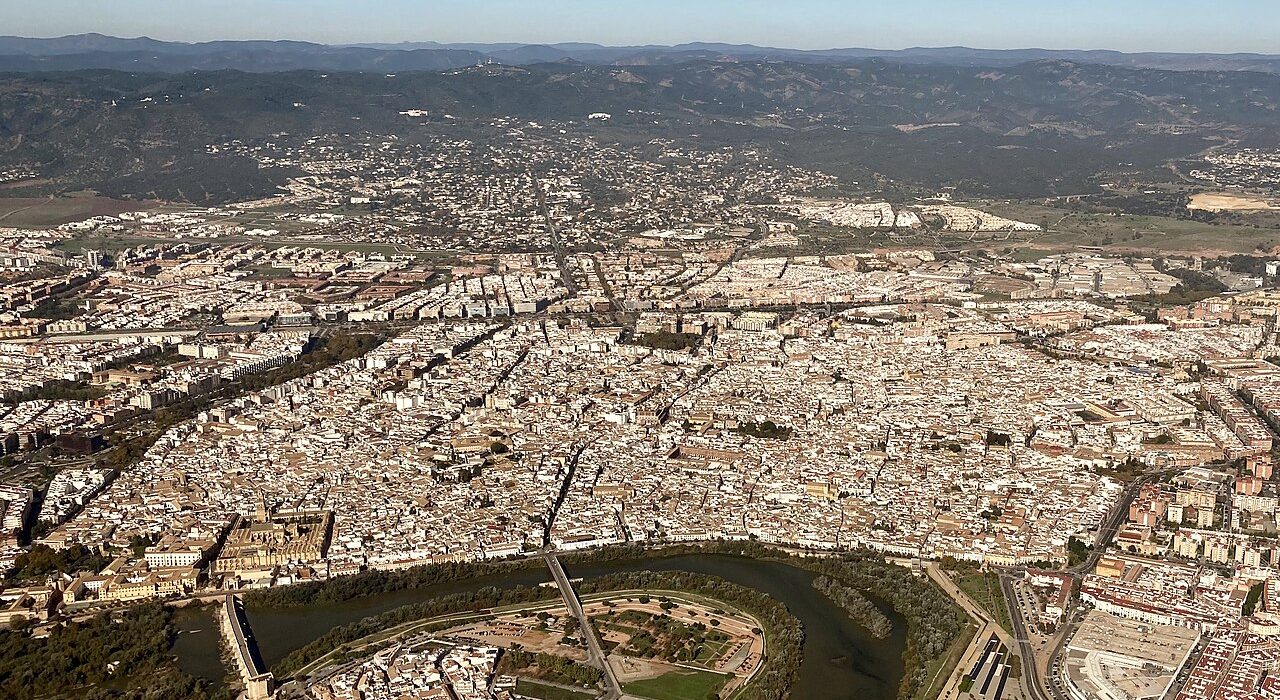
Madrid → Córdoba
399 kmLeaving the frenetic capital behind to delve into the heart of Andalusia is one of the most rewarding journeys you can make on the peninsula, where the plains of La Mancha gradually transform into endless olive groves beneath a cloudless sky. Whether you choose the dizzying speed of the AVE or the freedom of the open road, this journey of almost 400 kilometers is an invitation to discover the essence of Spain, connecting two historic worlds in just a few hours.
How to Get from Madrid to Córdoba: Quick Overview
The fastest and most efficient way to travel from Madrid to Córdoba is undoubtedly the high-speed train, although driving offers the best flexibility for exploring the towns along the route. If your priority is budget, the bus is the economical option, while the car is ideal if you plan to do some rural tourism along the way. For the business traveler or those seeking absolute comfort, the AVE is unbeatable, reducing the journey to just over an hour and a half, whereas driving will take you a full 4 hours via the southern motorway.
By Car from Madrid to Córdoba
The main and most direct route for driving from Madrid to Córdoba is via the Autovía del Sur (A-4), which connects the capital with southern Spain without tolls. According to verified data, the total distance by road is 399 km, which translates to an estimated driving time of 4 hours under normal traffic conditions. Although the Spanish motorway network is extensive, for this specific journey the A-4 is the backbone, offering a wide and safe route.
It is important to know the alternatives and connections within the provided road network. The A-4 remains toll-free for the entire journey, making it a very economical option compared to other toll motorways. Other motorways listed in the national network, such as the A-42 (Autovía de Toledo) or the A-43 (Autovía del Guadiana), can serve as secondary or connecting routes if you decide to detour to visit cities like Toledo or Ciudad Real before reaching your final destination. There are also variants such as the A-5R or the A-41 (the latter with a toll on the Ciudad Real – Puertollano section), but for most drivers, the A-4 remains the main artery that guarantees the estimated 4-hour time.
By Train from Madrid to Córdoba
The train is the fastest option for traveling from Madrid to Córdoba, with journeys that can last as little as 102 minutes according to the operator Renfe. The departure station is Madrid Puerta de Atocha – Almudena Grandes, a modern and well-connected transport hub, while arrival is directly at Córdoba station, strategically located for accessing the historic center. The frequency is excellent, with a total of 38 daily trains operating between 7:00 in the morning and 21:20 at night, allowing for great schedule flexibility.
Within Renfe’s offering, there are different modalities adapted to various needs. The most premium and fastest service is the AVE, with 27 daily departures covering the distance in 102 minutes. For those seeking a balance between price and time, there is the AVLO, with 5 daily trains and a duration of 117 minutes. The ALVIA (5 trains/day, 107 min) and Intercity (1 train/day, 112 min) services are also available. This variety ensures that, regardless of your schedule or budget, there is always a train available to connect the capital with the Caliphal city in less than two hours.
By bus from Madrid to Córdoba
The bus is the most economical alternative for traveling from Madrid to Córdoba, with fares ranging between €9 and €43 depending on how far in advance you book and demand. The main companies operating this route are Socibus and Secorbus, offering a direct service that avoids complicated transfers. Although the travel time is significantly longer than by train or car, clocking in at 255 minutes (approximately 4 hours and 15 minutes), it is a viable option for budget-conscious travelers who are not in a hurry.
Recommended stops along the way
If you decide to make the journey by car, the route is dotted with charming towns that deserve a pause to stretch your legs or enjoy the local gastronomy. Below, we detail the verified stops in logical order from the departure from Madrid:
- Pozuelo de Alarcón: Located very close to the start of the route, this is a residential and business area that marks the exit from Madrid’s urban density. It is a good point to check the condition of the vehicle before heading onto the motorway.
- Boadilla del Monte: Another town in the metropolitan area that serves as the last urban stop before seriously taking the A-4 motorway. It features green areas and historic palaces that contrast with the landscape to come.
- Navalcarnero: Already further from the capital, this municipality offers a first glimpse of the area’s traditional architecture. It is a quiet place, ideal for a quick coffee before continuing south.
- La Puebla de Montalbán: Entering the province of Toledo, this town is famous for its connection with the Order of Santiago. Its historic quarter and views of the Tagus River make it a culturally rich stop halfway along the route.
- Ciudad Real: Capital of the province of the same name, it is a must-stop for literature lovers, as it is the land of Don Quixote. Here you can visit the Don Quixote Museum (Museo del Quijote) and enjoy La Mancha cuisine before getting back on the A-4.
- Miguelturra: Known as “the gateway to La Mancha,” this town is practically attached to Ciudad Real. It is famous for its festivals and lively atmosphere, being an excellent place to try the traditional migas (fried breadcrumbs) or gazpacho manchego (a hearty meat and game stew).
- Puertollano: Situated in a valley surrounded by mountain ranges, this city has an important industrial and mining past. It is a strategic point on the route, especially if you take the connection via the A-41, offering full services for the traveler.
- Almagro: Although it requires a small detour from the main route, it is the crown jewel for a stopover. World-famous for its Classical Theatre Festival (Festival de Teatro Clásico) and its arcaded Plaza Mayor, it is one of the most beautiful villages in Spain and well worth the detour.
Where to stay in Córdoba
To stay in Córdoba, the most recommendable option is to look for areas near the historic center or in the Judería (Jewish Quarter) area, although these tend to be more expensive. If you are looking for tranquility and more moderate prices, well-connected peripheral neighborhoods are a good choice. Price ranges vary enormously depending on the season; in spring, during the Patios Festival (Festival de los Patios), prices skyrocket, while in winter you can find more economical deals. It is advisable to book in advance, especially if you are traveling on weekends or holidays, to ensure the best value for money.
Frequently asked questions about the Madrid-Córdoba route
How long does it take to get from Madrid to Córdoba?
Travel time varies depending on the mode of transport: by car it takes 4 hours (399 km), by AVE train it’s 102 minutes, and by bus it’s 255 minutes.
Which is cheaper, the train or the bus?
Generally, the bus is cheaper, with prices ranging from €9 to €43, while AVE train tickets tend to have higher fares, although these vary depending on how far in advance you book.
Is it worth renting a car?
Yes, it’s worth it if you plan to make tourist stops in towns like Almagro or Ciudad Real, as public transport doesn’t cover all these locations with the same flexibility.
When is the best time to travel?
The best time depends on your interests: spring is ideal for the weather and the Patios (Courtyard Festival), but it’s more expensive; winter is cheaper and less crowded, although it’s colder.
📍 También te puede interesar
Qué ver en Madrid →
Qué ver en Córdoba →