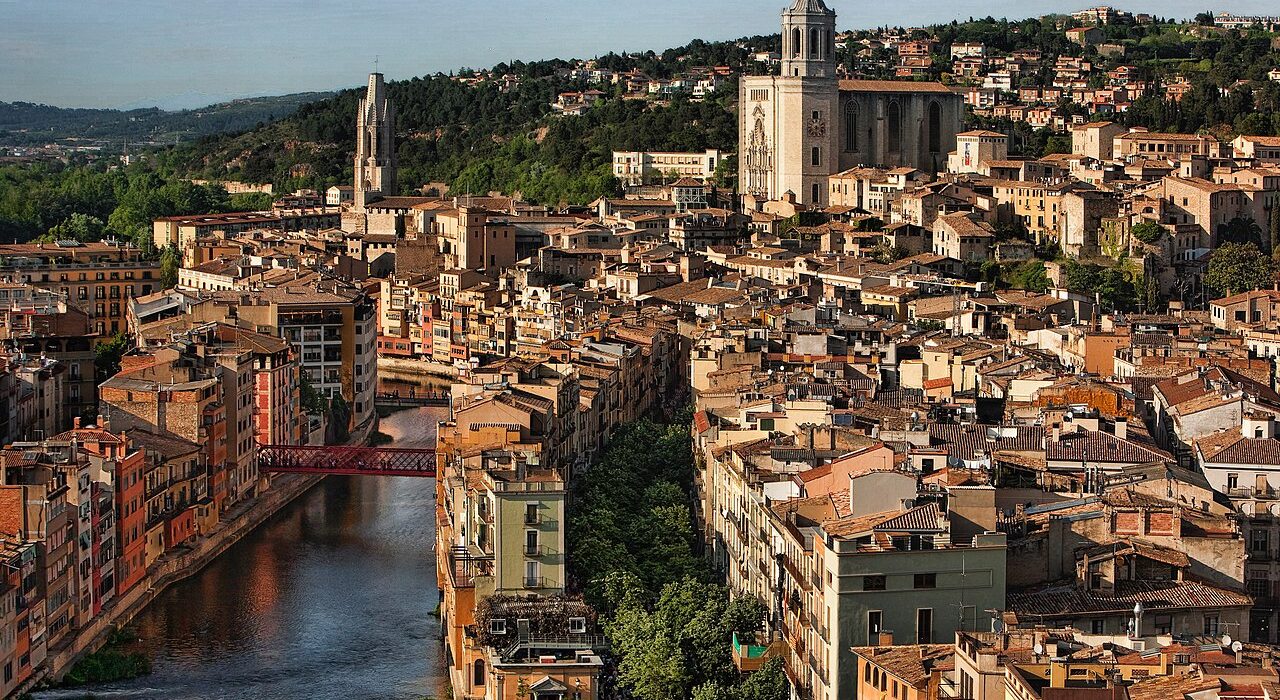
Imagine crossing the Vallès plain and seeing the Mediterranean Sea peeking shyly through pine forests before the medieval silhouette of Girona appears on the horizon in just under an hour. This route, one of the most dynamic corridors in Catalonia, combines the dizzying speed of the AVE with the freedom of a road that winds through historic villages and golden coastline.
How to get from Barcelona to Girona: a quick overview
The fastest and most efficient way to travel from Barcelona to Girona is undoubtedly the high-speed train, although driving offers the greatest flexibility for exploring the coast.
For travellers who prioritise time and comfort, the train is the top choice, with 63 daily connections that turn the journey into a simple, 20-minute hop on the fastest services. However, if your plan involves moving freely around the area or carrying bulky luggage, driving your own vehicle along the A-2 is ideal, covering the 100 kilometres in about an hour. The bus is also a viable alternative operated by well-established companies, though journey times can vary. There are no direct flights, so the choice essentially comes down to land: rail or road.
By car from Barcelona to Girona
Driving from Barcelona to Girona is a smooth experience covering exactly 100 kilometres by road, with an estimated travel time of 1 hour.
The main route for this journey is the A-2, officially known as the Autovía del Nordeste (Northeast Motorway). One of the great advantages of this road is that it is toll-free, making for an economical and direct journey north. This motorway connects the Catalan capital with the interior and the northern coast, ensuring a steady flow of traffic. In addition to the A-2, drivers can opt for the N-152z, the road linking Barcelona with Ripoll, which is also toll-free. This option can be appealing for those looking to avoid congestion on the main motorway or seeking a more scenic drive, although the 1-hour timeframe remains the standard benchmark for the journey under normal traffic conditions. As there are no toll costs on these verified routes, the travel budget focuses exclusively on fuel and vehicle wear and tear.
By train from Barcelona to Girona
The train is the fastest and most frequent transport option, operated by Renfe with departures from Barcelona-Sants station to Girona station.
The rail offering is exceptionally extensive, with a frequency of 63 trains per day ensuring a connection is always available for travellers. The service hours are very broad, starting with the first train at 5:56 am and ending with the last at 23:20, making it easy to plan a round trip in a single day without rushing. Within this wide offering, Renfe deploys different types of trains tailored to various speed and budget needs. For those seeking maximum speed, the AVE is the jewel in the crown, with 10 daily services covering the distance in just 20 minutes. It is followed by the AVANT, with 17 trains per day and a journey time of 39 minutes. Also available are the AVE INT (2 trains/day, 41 minutes) and the EUROMED (1 train/day, 49 minutes). For more economical options or those connecting with more intermediate stops, there are MD trains, with 21 daily services and a duration of 79 minutes, and REGIONAL trains, with 12 daily services and a travel time of 82 minutes. The departure station, Barcelona-Sants, is a major transport hub, while the arrival at Girona station places the traveller just a short distance from the historic centre.
By bus from Barcelona to Girona
There are direct bus services operated by Sagalés and FlixBus that connect both cities on a regular basis.
Although specific travel times and prices may vary depending on the season and demand, the presence of two major operators like Sagalés and FlixBus ensures competition that usually benefits travelers in terms of availability. Sagalés is a company with deep roots in the region, known for its local and regional transport network, while FlixBus offers an international network that makes connections easier for tourists arriving from abroad. Covering a distance of just 100 kilometers, the bus is a solid overland option, especially for those who prefer not to drive or are looking for an alternative to the train. It is advisable to check both companies’ platforms for exact timetables on the day of travel, as frequency may be adjusted according to passenger demand.
Recommended stops along the way
The route between Barcelona and Girona is dotted with charming towns that are well worth a pause to stretch your legs or enjoy a meal.
- Santa Coloma de Gramenet: Located very close to the start of the route, this city is an interesting urban meeting point just as you leave the density of Barcelona, ideal for a quick first stop.
- Badalona: With its famous seafront promenade and Roman history, Badalona offers a direct connection to the Mediterranean Sea, allowing travelers to enjoy the sea breeze before heading further north.
- Montcada i Reixac: This town is a key communications hub on the route. Its surroundings combine industrial areas with natural spaces like the Serralada de Marina Park, offering a scenic contrast.
- Barberà del Vallès: Located in the heart of the Vallès Occidental region, this is a strategic stop that showcases the residential and commercial fabric of Barcelona’s metropolitan area.
- Parets del Vallès: Known for its industrial heritage and murals, Parets offers an authentic glimpse of life in the inland towns surrounding the capital.
- Palafolls: As you approach the northern coast, Palafolls serves as a gateway to the Maresme region, with a quieter and greener environment.
- Malgrat de Mar: This stop is essential for sun and beach lovers. Situated on the coast, Malgrat de Mar allows you to enjoy a stroll on the sand and by the sea before continuing the journey to Girona.
- Mataró: The capital of the Maresme region, Mataró is a vibrant city with an active port and a rich textile history. It is perhaps the most complete stop for enjoying local cuisine and an urban atmosphere by the sea.
Where to stay in Girona
For an overnight stay in Girona, the most recommended areas are concentrated in the Barri Vell (Old Town) and the modern area around the train station and the Onyar River.
The Barri Vell is the historic heart of the city, where cobblestone streets and colorful facades hide boutique hotels and charming apartments. Staying here means being just steps away from the Cathedral and the houses on the river, although prices tend to be higher due to high tourist demand. On the other hand, the modern area near the train station and the river offers a wide variety of international chain hotels and mid-range options, ideal for business travelers or families seeking comfort and accessibility. Price ranges in the city are varied: you can find budget hostels for backpackers, competitively priced three-star hotels, and luxury four- and five-star establishments offering premium services. The choice will depend on whether you prioritize a central location or modern amenities.
Frequently asked questions about the Barcelona-Girona route
How long does it take to get from Barcelona to Girona?
Travel time varies significantly depending on the mode of transport. By car, the 100 km journey takes approximately 1 hour. By train, the duration ranges from 20 minutes on the fastest AVE to 82 minutes on regional trains. There are no direct flights.
Which is cheaper, the train or the bus?
Generally, the bus tends to be the most economical option on routes of this distance, although exact prices are not specified in the current data and depend on how far in advance you book. The companies Sagalés and FlixBus compete in this sector. The train offers variable fares depending on the type (AVE vs Regional), with regional trains being cheaper than high-speed services.
Is it worth renting a car?
Yes, it is worth it if you plan to visit the recommended stops such as Mataró, Malgrat de Mar or Badalona at a leisurely pace, as a car gives you total freedom. In addition, the A-2 and N-152z roads are toll-free, which reduces the cost of the journey compared to other toll routes.
When is the best time to travel?
The best time to travel depends on your interests, but the frequency of trains (63 per day) allows you to travel at any time. The train schedule from 5:56 to 23:20 makes day trips easy. To enjoy coastal stops like Malgrat de Mar, the summer months are ideal, while spring and autumn are recommended for visiting the city of Girona without the crowds.