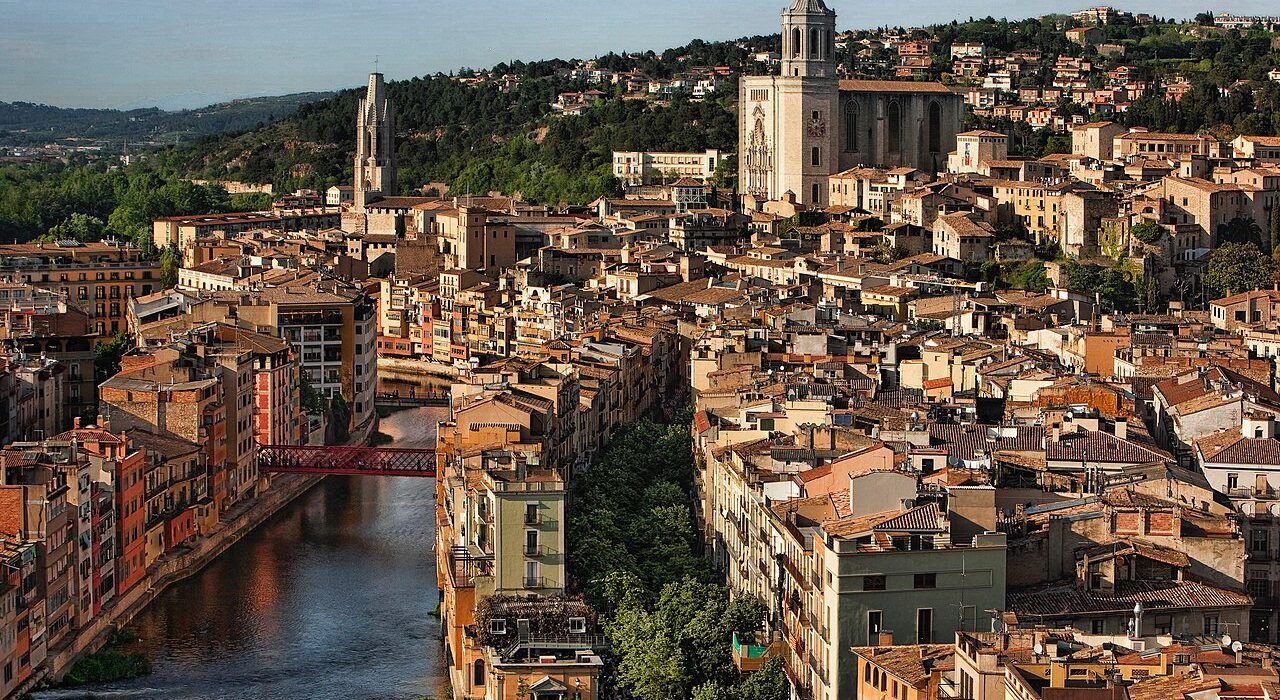
Barcelona → Girona
100 kmHow to get from Barcelona to Girona: quick overview
You have four main ways to cover the 100 km separating Barcelona from Girona: car, train, bus (and, already ruled out, the small plane, because there is no direct flight between the two cities). If you prioritize speed, Renfe’s AVE is unbeatable: it gets you to Girona in 20-92 minutes depending on the service. If you’re looking for price, the Sagalés or FlixBus bus costs around 17-17.99 € for 105 minutes of travel. And if you prefer total freedom to stop in Mataró or Malgrat de Mar, the car via the A-2 or the N-152z takes you there in approximately 1 hour.
For a weekend getaway, the train is the most comfortable option: you leave from Barcelona-Sants and arrive in central Girona without thinking about parking. For a more slow travel route with gastronomic and beach stops, the car wins hands down.
By car from Barcelona to Girona
The road route totals 100 km and is covered in approximately 1 hour via the A-2, the Autovía del Nordeste (Northeast Highway, also called Autovia del Nord-est), a toll-free road linking Barcelona with inland Catalonia as far as Girona. It is the most direct option and the one used daily by those heading north from the Catalan capital.
The alternative, also toll-free, is the N-152z, known as the N-152z Barcelona-Ripoll, which offers a route closer to the pre-coastal towns and is interesting if you want to improvise stops in places like Parets del Vallès or Barberà del Vallès. Both roads are in good condition and have service areas where you can refuel and stretch your legs before reaching your destination.
By train from Barcelona to Girona
There is indeed a direct train between Barcelona and Girona, operated by Renfe, departing from Barcelona-Sants station and arriving at Girona station. The frequency is extremely high: 63 daily trains, with the first service at 5:56 h and the last at 23:20 h, giving you absolute flexibility to plan your day.
The fastest is the AVE, with 10 daily departures completing the journey in just 20 minutes. Behind it come the AVANT (17/day, 39 min), the AVE Internacional (2/day, 41 min), the EUROMED (1/day, 49 min), the Media Distancia (21/day, 79 min), and the Regional (12/day, 82 min). The variety is such that you can adjust your purchase to your budget: the MD and Regional trains are the most economical, while the AVE gets you to Girona almost before you have time to open your book.
By bus from Barcelona to Girona
There is also a direct bus between the two cities, operated by Sagalés and FlixBus. The journey takes about 105 minutes and the ticket ranges between 17 € and 17.99 €, a very tight price range that makes it the cheapest option for traveling between Barcelona and Girona. It is ideal for those traveling without hurry, carrying a backpack, and preferring to save money to spend on Girona’s gastronomy.
Recommended stops along the way
If you’re driving, the route lends itself to small detours that are worth a stop. Here are a few towns located on or very close to the route:
- Badalona: the first major coastal city north of Barcelona. Its seafront promenade, the ruins of the Baetulo neighborhood, and its tapas bars are perfect for a first coffee or vermouth before getting on the highway.
- Mataró: capital of the Maresme region, with a pleasant historic center, the basilica of Santa María, and quiet beaches. Ideal for stretching your legs and buying some fresh fruit at the municipal market.
- Santa Coloma de Gramenet: a municipality right next to Barcelona with interesting modernist industrial heritage, such as Refugi 307, a former Civil War air-raid shelter converted into a memorial space.
- Parets del Vallès: a town in Vallès Oriental very close to the A-2. A good stop to refuel and try a butifarra de perol (Catalan pork sausage cooked in a pot) with mongetes (white beans) at some long-standing restaurant.
- Montcada i Reixac: another stop in the Vallès area, known for its medieval bridge over the Ripoll river and its centuries-old masías (Catalan farmhouses).
- Palafolls: a small town in southern Maresme, already close to the interchange junction toward Girona. Its agricultural surroundings are worth a quick visit.
- Barberà del Vallès: a municipality in Vallès Occidental with excellent road connections. It’s a practical stop to fill up on fuel and grab a quick bite.
- Malgrat de Mar: already on the Girona coast, this Maresme town is perfect for one last swim or a seafood rice dish before heading inland toward Girona city.
Where to stay in Girona
Girona’s historic center is the most sought-after area to stay, especially around the Barri Vell (Old Quarter), the Jewish Quarter, and the Rambla de la Llibertat, where you’re within walking distance of the main monuments and restaurants. This is where you’ll find charming hotels in old buildings, converted rural houses, and tourist apartments full of character. Prices per night typically range from €80 to €160 for a standard double room, depending on the season.
If you’re looking for more budget-friendly options, the neighborhoods of Sant Narcís, Santa Eugènia, and Devesa are about a 15-20 minute walk from the center and offer hostels, guesthouses, and functional hotels for €50-90 a night. You can also look toward Celrà or Salt, municipalities adjacent to Girona with rural lodgings and agrotourism accommodations for €60-110, ideal if you’re traveling with family or a dog.
Where to eat along the route
Catalan cuisine is one of the great highlights of the trip. These are the dishes you shouldn’t miss between Barcelona and Girona:
- Escudella i carn d’olla: the quintessential Catalan stew, a hearty one-pot dish with pilota (a large meatball), cured sausages and all kinds of meats (beef, chicken, pork). It is traditionally served in two stages: first the soup with galets pasta shells, then the meats with the pilota, potato and chickpeas.
- Pa amb tomàquet: rustic bread rubbed with ripe tomato, extra virgin olive oil and salt, often served with cured sausage or cheese. It is the foundation of everyday Catalan food and usually accompanies almost any dish.
- Botifarra de perol amb mongetes: slow-cooked pork sausage (de perol) served with stewed white ganxet beans. It is a hearty dish very typical of the Catalan pre-Pyrenean regions.
- Queso Rocafort: soft paste and washed rind cheese made from cow’s milk, with a strong, penetrating and slightly spicy flavor. It is made in the traditional way in farmhouses of La Garrotxa, a region the route crosses on the way to Girona.
- Suquet de peix: rock fish stew (monkfish, hake, scorpionfish) with potatoes, tomato, garlic and saffron, similar to a Catalan marmitako. It is a typical dish of the coastal towns of Girona such as Palamós or Calella de Palafrugell.
- Coca de recapte: thin flatbread topped with escalivada (roasted pepper, eggplant and onion) and sardines or sausage. It is a preparation deeply rooted in the popular cuisine of Girona and its regions.
- Crema catalana: creamy dessert made with egg yolks, milk, sugar and cornstarch, flavored with cinnamon and lemon peel, covered with a layer of caramelized sugar on top. There is a Protected Geographical Indication under that name.
- Vino DO Empordà: reds, whites and rosés produced in the province of Girona, with varieties such as garnacha, samsó and macabeo on slate soils (llicorella). The DO Empordà covers much of the final stretch toward Girona.
- Ratafia: sweet, aromatic liqueur made by macerating green walnuts, aromatic herbs and spices in brandy or anise. It is the typical drink of Alt Empordà, especially around Peralada.
Frequently asked questions about the Barcelona-Girona route
How long does it take to get from Barcelona to Girona?
It depends on the means of transport. By car, via the A-2 or the N-152z, the 100 km are covered in approximately 1 hour. By AVE train, the fastest journey is 20 minutes; AVANT services take about 39 minutes, International AVE 41 min, EUROMED 49 min, Media Distancia 79 min and Regionales 82 min. By bus, the journey takes about 105 minutes with Sagalés or FlixBus.
Which is cheaper, the train or the bus?
The bus is the most economical option, with tickets from €17 to €17.99 according to Sagalés and FlixBus. The train has a much wider range: Renfe’s Regionales and Media Distancia services are quite affordable, while the AVE, although it is the fastest (20 minutes), usually has higher fares. If budget is the priority, the bus wins; if you are looking for a balance between time and price, the AVANT (39 min) is a good middle ground.
Is it worth renting a car?
It depends on the plan. If you are only going to visit Girona city, the train from Barcelona-Sants is the most comfortable and fastest option: you arrive in the center without worrying about parking. However, if your route includes stops on the coast (Badalona, Mataró, Malgrat de Mar) or in towns in the Vallès area (Parets del Vallès, Barberà del Vallès, Montcada i Reixac), the car via the A-2 or the N-152z gives you a freedom that public transport cannot match. For a mixed city-beach-gastronomy route, the car is well worth it.
When is the best time to travel?
The best time is spring (April-June) and early autumn (September-October), when temperatures are mild, the roads and trains are not overcrowded and the light is beautiful for photographing both the facades of Girona’s Barri Vell (Old Quarter) and the vineyards of the DO Empordà in full harvest. July and August work well for combining Girona with the beach on the Costa Brava, although you will find more crowds and higher accommodation prices. Winter, except during the Christmas period, is quiet and very pleasant for a gastronomic getaway.
📍 También te puede interesar
Qué ver en Barcelona →
Qué ver en Girona →