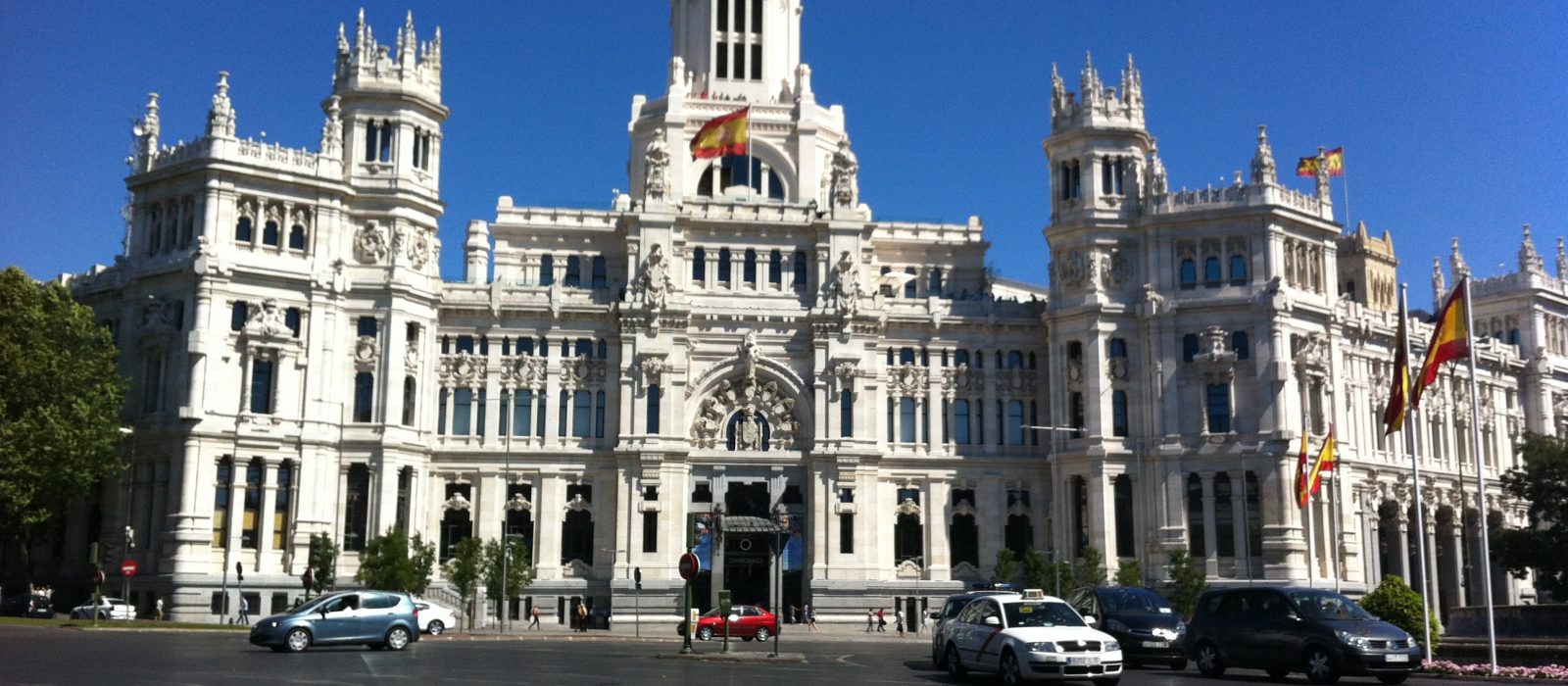
Tenerife → Madrid
How to get from Tenerife to Madrid: a quick overview
The journey between Tenerife and Madrid is made exclusively by plane, with a flight time of 180 minutes, or by a combination of ferry and road, as there is no direct land connection due to the sea separating the islands from the mainland.
To plan your trip clearly, it’s essential to understand that you’re faced with two very different options: the speed of air travel or the maritime experience of bringing your own vehicle. Below, we present a direct comparison based on current operational data so you can visualise the key differences in time and cost.
| Medio | Duración | Precio aprox. | Frecuencia |
|---|---|---|---|
| Avión (Vuelo directo) | 180 min (3 horas) | 40€ – 204€ | ~9 vuelos al día |
| Ferry + Carretera | Travesía larga + conducción | Desde 116€ (con coche) | Varias salidas semanales |
Your choice of transport depends entirely on your traveller profile. If time is your priority and you’re travelling solo or as a couple with hand luggage, the plane is the undisputed choice, connecting the islands with the capital in just three hours. On the other hand, if your trip involves relocation, a long holiday, or you simply don’t want to give up your own vehicle, the ferry is the only viable route, although it requires adding the sailing time from the ports of Huelva or Cádiz to Santa Cruz de Tenerife, plus the subsequent overland journey to Madrid.
By plane from Tenerife to Madrid
The direct flight from Tenerife to Madrid takes 180 minutes and is operated by airlines such as Iberia, Air Europa, Ryanair, and Iberia Express, with an average frequency of around 9 daily flights.
This route is one of the busiest in the Canary Islands archipelago, guaranteeing great schedule flexibility. When searching for your ticket, you’ll find that the air connection is mainly to Tenerife North Airport (IATA code: TFN), located in the Los Rodeos area, although there are also options landing at Tenerife South Airport (IATA code: TFS), closer to the tourist areas in the south of the island. On the mainland side, all flights land at Adolfo Suárez Madrid-Barajas Airport (IATA code: MAD).
As for costs, the market is very dynamic. You can find budget fares around €40 if you book in advance or travel in the low season, while on specific dates or with flexible fares, the price can rise to €204. It’s important to note that this maximum price usually corresponds to specific return fares or high-demand dates, and is not the annual average. The advantage of flying lies in its efficiency: in under three hours, you go from the island climate to the bustle of the capital, with no intermediate stops to lengthen the journey.
Once you land at Madrid-Barajas, getting to the city centre is straightforward. The airport has metro connections (line 8), express buses (Exprés Aeropuerto), and taxis, allowing you to reach Puerta del Sol (Gate of the Sun) or Gran Vía (Great Way) in approximately 30-45 minutes depending on traffic and your arrival terminal (T1, T2, T3, or T4). If you arrive at Tenerife North, the airport is just a 10-15 minute drive from the centre of Santa Cruz de Tenerife, while Tenerife South requires about 45-50 minutes of driving to reach the island’s capital.
By ferry from Tenerife
The ferry from Tenerife does not arrive directly in Madrid; instead, it connects the island with the mainland ports of Huelva and Cádiz, from where you will need to continue your journey by road or train to the capital.
This option is ideal for those who need to transport their own car or prefer to avoid flying. The shipping companies covering this maritime route are Fred. Olsen Express and Baleària. Fred. Olsen Express operates the direct route from the port of Huelva to Santa Cruz de Tenerife; it is known for being one of the fastest connections on this type of crossing, although it can sometimes include a technical stop in Gran Canaria. For its part, Baleària operates the route connecting the port of Cádiz with Santa Cruz de Tenerife.
The exact duration of the sea crossing varies according to weather conditions and the specific route, as this is a long-distance journey that generally involves spending the night on board. The frequency of departures is several times a week, so it is necessary to check the timetables in advance to coordinate your arrival on the mainland with your plans in Madrid.
In terms of prices, the fare structure is different from that of flying. The indicated cost for travelling with a car and passenger in a cabin, purchasing a return ticket and applying the resident discount, starts from €116. This price is significantly lower than the sum of a flight plus car rental at the destination, but you must add the cost of fuel and tolls from Huelva or Cádiz to Madrid. It is crucial to differentiate between the price per foot passenger and the price per vehicle, as they are not directly comparable; bringing the car makes the ticket more expensive, but provides you with total mobility once on solid ground.
Plane or ferry? Which suits you best
The decision between plane and ferry depends exclusively on whether you need to transport your own vehicle, with the ferry being the only option for this, while the plane is superior in speed and frequency.
If we analyse the total “door-to-door” time, the plane is the absolute winner. A 180-minute flight plus the transfer to central Madrid allows you to be in your hotel in less than 5 hours from the moment you leave home in Tenerife. In contrast, the ferry involves a sea crossing of many hours (often overnight), plus disembarkation in Huelva or Cádiz and approximately 5-6 hours of additional driving to Madrid. This makes the ferry a journey of at least 24 hours total duration.
As for price, the plane can be cheaper (from €40) if you travel light and without a car. However, if you add the cost of a flight for two people plus a week’s car rental in Madrid, the ferry (from €116 with car included) becomes very competitive economically. The deciding factor is luggage and comfort: the plane has weight and volume restrictions, whereas on the ferry you can load your car boot with everything you need without strict hand luggage limits. Moreover, the ferry offers the flexibility of having your own car in Madrid, something invaluable if you plan to explore the surrounding region or if your stay is a long one.
Taking your car on the ferry
Loading your car onto the ferry is a straightforward process carried out at the ports of Huelva or Cádiz, allowing you to arrive in Tenerife with your own vehicle ready to drive.
To use this service, you must arrive at the embarkation port in advance, generally between 2 and 3 hours before departure, to check in your vehicle. The ferry companies Fred. Olsen Express and Baleària have facilities equipped for loading cars, vans, and motorcycles. Once at the port, follow the signs to the vehicle boarding area, where staff will direct you where to park your car inside the ship’s hold.
This process involves an additional cost on top of the foot passenger ticket, but as mentioned earlier, combined fares (person + vehicle) can be very advantageous, starting from €116 on promotional or resident rates. It is important to keep in mind that, upon arrival in Santa Cruz de Tenerife, vehicle disembarkation can take some time depending on the stowage order, so patience is recommended and follow the crew’s instructions. Once on Canarian soil, you will have your car immediately available to explore the island without depending on public transport or rentals.
Where to stay in Madrid
Madrid offers a wide variety of areas to stay, from the historic centre to more residential neighbourhoods, with prices varying according to category and proximity to points of interest.
For a traveller arriving from Tenerife who wants to make the most of their stay, the most recommended areas are the Centro (Centre, including Sol, Gran Vía, and Ópera) and the Salamanca district. Staying in the Centro will allow you to have the main tourist attractions, such as the Puerta del Sol and the Palacio Real (Royal Palace), within a few minutes’ walk. It is the most convenient option for short stays, although prices tend to be higher and noise can be a factor to consider.
The Salamanca district is ideal if you are looking for a quieter, more elegant experience, with excellent shops and restaurants, though it is a little further from the main historic monuments, requiring the use of the metro. In terms of accommodation types, the city offers the full spectrum: 5-star luxury hotels, 4-star boutique hotels, budget guesthouses, and a large supply of tourist apartments. Price ranges are very wide; you can find basic rooms from €60-80 per night in low season, while top-category hotels in the centre can range between €150 and €300 or more per night. Booking in advance is key, especially in spring and autumn.
What to eat in Madrid
Madrid’s cuisine is hearty and traditional, with standout dishes such as Cocido Madrileño (Madrid-style stew), Callos a la Madrileña (Madrid-style tripe), Huevos Rotos (broken eggs with fries), and the famous Bocadillo de Calamares (calamari sandwich).
If you visit Madrid, trying the Cocido Madrileño is a must. This is no ordinary dish; it’s an institution. It’s a chickpea stew slowly cooked with various meats (bacon, shin of beef, hen) and vegetables. The most traditional way to serve it is in “tres vuelcos” (three stages): first the broth, then the chickpeas and vegetables, and finally the meats. It’s a heavy dish, ideal for cold days or for regaining your strength after a long journey.
For something quicker and more popular, the Bocadillo de Calamares is the king of the street. It consists of battered and fried squid rings, served inside a crusty bread roll. It’s the typical lunch in the bars surrounding the Plaza Mayor and is perfect for eating standing up or on a terrace while you watch the city’s bustle. Another offal classic is Callos a la Madrileña, a stew of beef tripe cooked with chorizo, morcilla (blood sausage), and paprika, offering an intense, distinctive flavour much appreciated by locals.
Finally, you can’t leave without trying Huevos Rotos. This dish consists of fried eggs with runny yolks placed on a bed of diced fried potatoes, often accompanied by jamón serrano (cured ham) or chorizo. When you break the yolk over the hot potatoes, it creates an irresistible creamy sauce. The average price per person in a traditional restaurant to try these dishes ranges from €25 to €40, depending on whether you include a drink and dessert, although the sandwiches can cost less than €10.
Best time of year for this trip
The best time to travel from Tenerife to Madrid is during spring and autumn, when the weather on the peninsula is mild and pleasant for walking around the city.
Visiting Madrid in spring (April, May, June) or autumn (September, October) will allow you to enjoy the parks, such as El Retiro, and the outdoor terraces without suffering the stifling summer heat or the intense winter cold. Moreover, these seasons usually offer a better balance between price and tourist numbers compared to the peak months.
It’s important to bear in mind the high-season factor. During the summer, both flights and ferries to and from the Canary Islands tend to fill up quickly and prices rise considerably due to high holiday demand. If you travel in July or August, it’s almost essential to book weeks or months in advance to secure a spot and avoid top rates. The same applies during holiday periods such as Christmas or Semana Santa (Holy Week), when the connection between the island and the mainland is vital for many residents, saturating the available supply.
Frequently asked questions about the Tenerife–Madrid route
How long does it take from Tenerife to Madrid?
The direct flight duration is 180 minutes (3 hours). If you opt for the ferry, the sea crossing from Huelva or Cádiz to Santa Cruz de Tenerife is a long journey (usually overnight) and you must add the road travel time from the mainland port to Madrid.
Can you drive from Tenerife to Madrid?
There is no continuous road. To go by car, you must load your vehicle onto a ferry from the port of Santa Cruz de Tenerife bound for Huelva or Cádiz. Once on the mainland, you can drive your own car to Madrid.
Which is cheaper, the plane or the ferry?
It depends on your needs. The plane can cost from €40 per person, ideal if you are travelling light. The ferry with car and passenger starts from €116 (resident return fare), which is more economical if you need a vehicle at your destination, but more expensive if you are just one person without a car.
When is the best time to travel?
The best time is spring and autumn due to the pleasant weather in Madrid. It is advisable to avoid summer if possible, as flights and ferries fill up and prices rise significantly due to the high season.
📍 También te puede interesar
Qué ver en Tenerife →
Qué ver en Madrid →