Barcelona → Tarragona
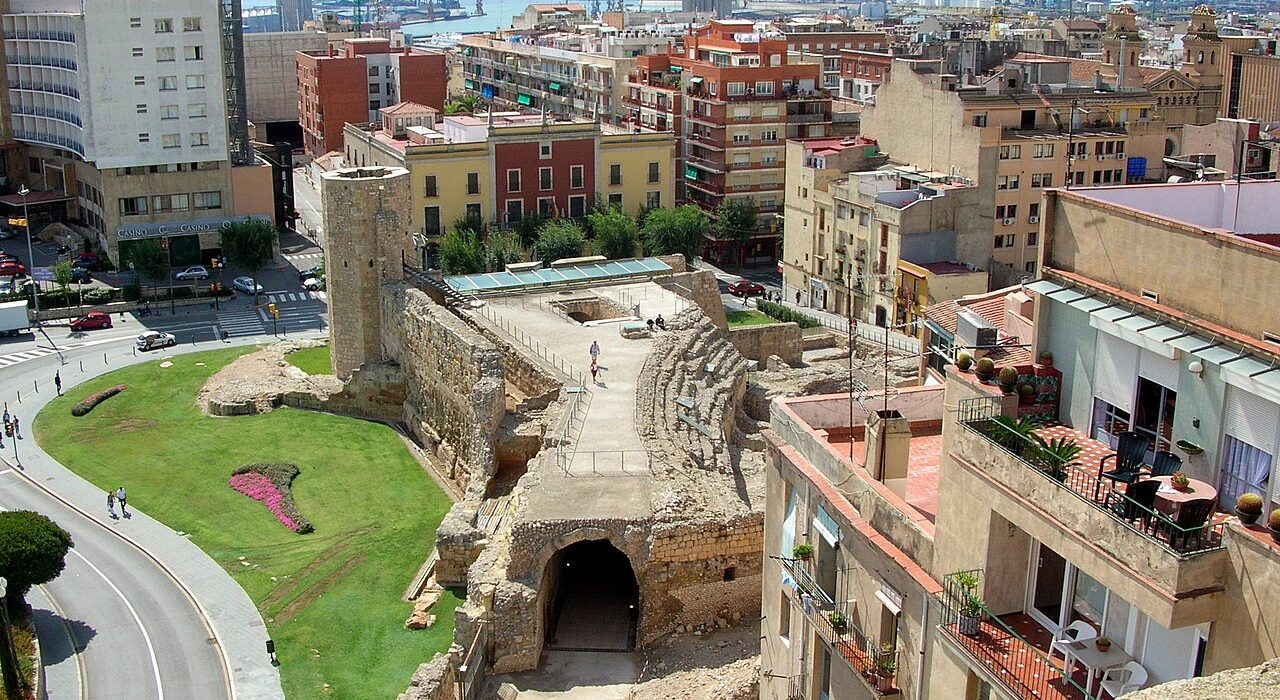
99 kmFew getaways in Catalonia pack as much into so short a stretch as the run down from Barcelona to Tarragona. Barely an hour separates the Catalan rambla from the Roman amphitheater gazing out over the Mediterranean, and along the way the A-7 motorway serves up views of sea and Penedès vineyards that already hint at what awaits you at the end: history, beaches, and a formidable table.
How to get from Barcelona to Tarragona: quick overview
The Barcelona-Tarragona connection offers train, bus, and car options, making it one of the best-served routes in Catalonia. The AVE covers the 99 km between Barcelona-Sants and Camp de Tarragona in approximately 31 minutes, an unbeatable option if you are after speed. The ALSA or Empresa Plana bus takes about 80 minutes and is the cheapest alternative, with tickets from €9.34. Driving, with no tolls on the A-7, A-2, or A-27, takes around 1 hour and is ideal if you want to stop in towns of Baix Llobregat or along the coast. There is no direct flight between the two cities due to their proximity.
By car from Barcelona to Tarragona
The drive from Barcelona to Tarragona covers 99 km in approximately 1 hour, entirely on toll-free motorway. The fastest and most common option is the A-7 (Autovía del Mediterráneo / Autovia de la Mediterrània), which hugs the coast and lets you enjoy sea views and pass through towns such as Castelldefels or Sitges before heading south.
If you prefer a more inland route, the A-2 (Autovía del Nordeste / Autovia del Nord-est) connects Barcelona with Camp de Tarragona through the Llobregat corridor, passing through municipalities such as l’Hospitalet de Llobregat, Sant Feliu de Llobregat, Pallejà, or Corbera de Llobregat. It is a fast, toll-free road with good surfacing and service areas.
The A-27 (Autovia Tarragona-Montblanc / Autovia Tarragona-Montblanch) is the best choice if your final destination is the city of Tarragona itself from the north, as it links with the A-7 and avoids the detour via Reus. All three options run entirely on toll-free roads, making this one of the most comfortable and predictable journeys on the Mediterranean arc.
By train from Barcelona to Tarragona
The train is, according to Renfe, the fastest and most frequent way to cover the route: up to 74 daily services link Barcelona-Sants with Camp de Tarragona station. The first train leaves at 5:45 h and the last at 21:45 h, so flexibility is total.
The fastest service is the AVE, with 14 daily frequencies completing the journey in just 31 minutes and a starting price of around €8-15 per journey on standard fare. The AVANT, also with a 31-minute journey, adds 8 daily frequencies aimed at commuters and business travelers. Other services such as the AVE Internacional (32 min), Intercity (33 min), EUROMED (33 min), ALVIA (34 min), or the AVANT Express (35 min) offer alternatives with little difference in time but different stopping patterns and pricing.
For those who prioritize price over speed, the REG.EXP. (Regional Exprés) runs 34 daily trips in 87 minutes, and the REGIONAL completes the journey in 125 minutes with 1 daily frequency. Both offer significantly lower fares, generally below €7, although the duration doubles compared to the AVE.
By bus from Barcelona to Tarragona
The direct bus is a solid alternative for those who prefer to save money or not be tied to the train schedule. The companies ALSA and Empresa Plana operate the line with an average duration of 80 minutes and prices ranging from €9.34 to €11 per journey, depending on schedule and how far in advance you book.
ALSA offers several daily departures from Barcelona to Tarragona, including the city’s bus station, while Empresa Plana reinforces the service with connections to Camp de Tarragona and intermediate towns. Buying your ticket online in advance usually guarantees the lowest prices in the range, and departures are concentrated in morning and afternoon slots, with less availability at midday and at night.
Recommended stops along the way
The Barcelona-Tarragona corridor passes through regions with towns that deserve a pause, whether to stretch your legs, have breakfast, or take a look at a market. These are the verified stops along the route.
- Esplugues de Llobregat: a municipality right next to Barcelona that combines residential areas with walks along the foothills of Collserola. Ideal for a quick coffee stop before taking the A-2.
- l’Hospitalet de Llobregat: the second most populated city in Catalonia, with good dining options and transport connections. A logical point to refuel or do your last urban shopping before heading out.
- Cornellà de Llobregat: known for its Creu Alta tower and for being home to one of the largest shopping centers in the metropolitan area, perfect for a family stop.
- Sant Feliu de Llobregat: a town with character on the banks of the river, with a pleasant old town and the church of Sant Llorenç as a landmark.
- Pallejà: a quiet town in Baix Llobregat, perfect for a brief rural breather and for enjoying views of the Llobregat River.
- Corbera de Llobregat: located in the hills, it offers hiking routes and viewpoints if you have a bit more time.
- Castelldefels: already on the coast, with a long beach and a lively seafront promenade. Excellent for a lunch facing the sea if you choose the route along the A-7.
- Torredembarra: a coastal town near Tarragona, with a beach, marina, and notable modernist heritage, especially the well-known “Casa del Pescador” (Fisherman’s House).
Where to stay in Tarragona
Accommodation in Tarragona is concentrated in three clearly distinct areas, each with its ideal audience. The historic center (Part Alta), around the cathedral and Rambla Nova, is the most authentic option: charming hotels, family-run guesthouses, and tourist apartments predominate, with prices typically ranging between €70 and €160 per night for a double room.
The area around Miracle Beach and El Serrallo, facing the sea and near the amphitheater, concentrates mid-range and upscale hotels, as well as vacation apartments. It is the perfect choice for summer, with rates that in high season can exceed €180, but drop to €80-110 in autumn and winter.
Finally, the Camp de Tarragona area and nearby municipalities (Reus, Vila-seca, Salou) offer more functional hotels and better value for money, especially resorts with pools in Salou. Here it is easy to find doubles from €60 in low season and more complete packages in summer.
Where to eat along the route
The Barcelona-Tarragona route is a succession of gastronomic stops. Here are five specialities you should not miss, all with verified geographical designation.
- Calçots with Romesco sauce (Valls / Tarragonès): tender spring onions roasted over a live flame, served on a roof tile and peeled by the diner. They are dipped in romesco, a thick sauce made with tomato, ñora pepper, roasted garlic and nuts. Ideal season: January to March.
- Xató (Garraf, Sitges and Vilanova i la Geltrú): escarole salad with desalted cod, anchovies, tuna and Arbequina olives, bound with a complex vinaigrette made from almonds, hazelnuts, ñora pepper and fried bread. It is typically served in February, during the Xató festival in Vilanova.
- Cava from Penedès: traditional-method sparkling wine made from Macabeu, Xarel·lo and Parellada. The Penedès region, crossed by the motorway, is dotted with wineries open to visitors. Ideal for a tasting before arriving in Tarragona.
- Fideuà (Costa Dorada, Tarragona): a seafood paella in which rice is replaced by thin, curved noodles, cooked in a fish and seafood stock and served with alioli. The quintessential seaside fork dish.
- Tarragona wine (Tarragonès / Camp de Tarragona): fresh Macabeo and Parellada whites for everyday drinking, and the classic “Tarragona Clàssics” —fortified and rancio wines— to finish a meal. Do not forget to order a Priorat or a Montsant if the occasion calls for it.
Frequently asked questions about the Barcelona-Tarragona route
How long does it take to get from Barcelona to Tarragona?
By car, the 99 km are covered in approximately 1 hour via the A-7, A-2 or A-27. By train, according to Renfe, the AVE and AVANT complete the journey in just 31 minutes, while REG.EXP. services take 87 minutes and the REGIONAL takes 125 minutes. By bus, ALSA and Empresa Plana estimate around 80 minutes of travel time.
Which is cheaper, the train or the bus?
The bus is the most economical option: ALSA and Empresa Plana offer tickets between €9.34 and €11. The AVE can be found from around €8 on a Promo fare, but the usual price is around €12-25. The regional train (REG.EXP.) starts from approximately €5-7, making it the cheapest option if duration does not matter.
Is it worth renting a car?
It is only worth it if you plan to stop in towns in Baix Llobregat (Sant Feliu, Esplugues, Corbera) or along the coast (Castelldefels, Torredembarra), or if you want to visit wineries in Penedès or inland villages. To go directly to Tarragona, the AVE is faster (31 min vs 1 h) and avoids the stress of parking. The three motorways (A-7, A-2 and A-27) are toll-free, so fuel costs are low.
When is the best time to travel?
The best time is spring (April-June) and early autumn (September-October), when the weather is mild, the beaches are quiet, and the calçots season takes place in winter and the Xató season in February. In summer, roads and trains experience peak occupancy, especially in July and August, with price increases in accommodation and possible traffic jams on the A-7 at weekends.
💡 ¿Sabías que...?
- ● Tarragona fue conquistada por los arabo-bereberes entre los años 714 y 716. (https://hoycuriosidades.com/paises/curiosidades-acerca-de-tarragona/)
- ● El Circo de Tarragona podía acoger hasta 30.000 espectadores, donde se realizaban carreras de bigas y de carruajes. (https://hoycuriosidades.com/paises/curiosidades-acerca-de-tarragona/)
- ● La catedral de Tarragona quedó inconclusa en 1348 por falta de mano de obra y financiamiento debido a la peste bubónica, y aún hoy le faltan los pináculos de la fachada. (https://www.economiadigital.es/tendenciashoy/destinos/tarragona-curiosidades.html)
📍 También te puede interesar
Qué ver en Barcelona →
Qué ver en Tarragona →