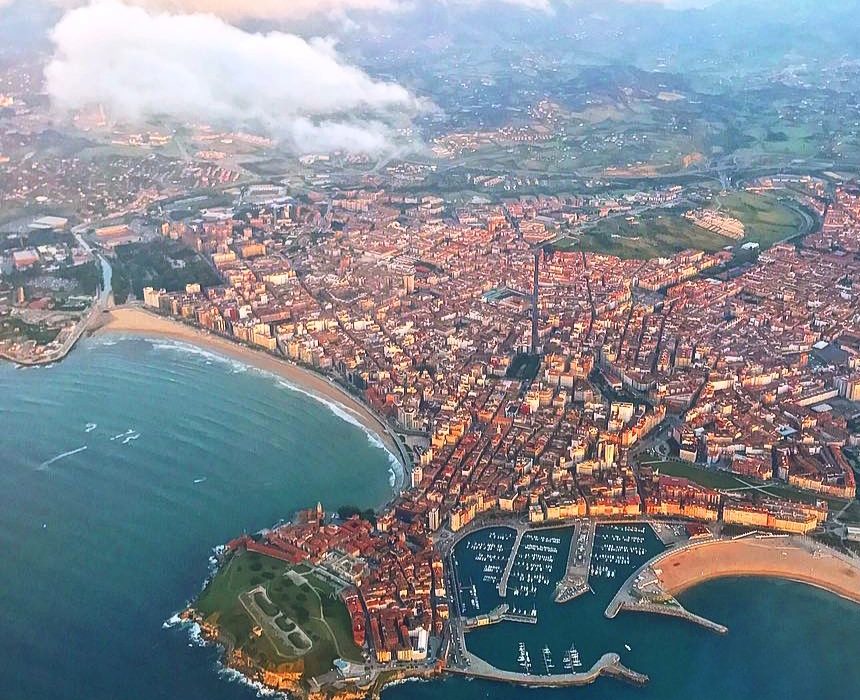
Oviedo → Gijón
30 kmHow to get from Oviedo to Gijón: quick summary
The Oviedo–Gijón route takes about 25 minutes by road (30 km) and 26–31 minutes by Renfe train. A rental car offers the freedom to stop in La Pola Siero; Renfe’s ALVIA is the most comfortable option for arriving directly in the centre without worrying about parking; and the ALSA or Ebrobus SLU bus is the most economical alternative from €3. If you are travelling light, the train wins for convenience; if you have a large suitcase or want to explore villages along the route, the car is your ally.By car from Oviedo to Gijón
The road journey covers 30 km and takes approximately 25 minutes. Four motorways structure the route with no tolls on any section, depending on the route you choose: the A-66 (Autovía Ruta de la Plata), the A-8 (Autovía del Cantábrico), the A-63 (Autovía Oviedo-La Espina) and the A-64 (Autovía Oviedo-Villaviciosa). All are free and well maintained, making this connection one of the most comfortable in the north of the peninsula without having to pay a penny. If you prioritise speed and directly connecting the two urban centres, the A-8 (Autovía del Cantábrico) links Oviedo with Gijón almost directly along the coast. The A-64 works especially well if you are going to stop in La Pola Siero, as it passes very close to the town centre. Petrol stations and service areas are frequent on all options, so stopping to refuel will not be a problem whether you have an electric or combustion car.By train from Oviedo to Gijón
According to Renfe, the railway operator for the line, there is a direct train between Oviedo/Uviéu and Gijón/Xixón with up to 12 daily frequencies. The first train leaves at 10:36 and the last at 22:24, allowing you to organise your day with room to spare. The range of trains is wide: ALVIA (3 services per day, 26 min), AVE (3/day, 27 min), AVLO (2/day, 27 min), REGIONAL (2/day, 26 min) and MD (2/day, 26 min). The ALVIA is the fastest with a 26-minute journey. The ticket price varies according to the type of train and the timetable, falling within typical Renfe ranges for regional journeys. The stations are located in the centre of both cities: in Oviedo, Oviedo/Uviéu station is a short walk from the old town; in Gijón, Gijón/Xixón station is a few minutes’ walk from San Lorenzo Beach. For the traveller without a car, this is the most comfortable and predictable option.By bus from Oviedo to Gijón
The direct Oviedo–Gijón bus is operated by ALSA and Ebrobus SLU, with an approximate duration of 30 minutes per journey. The price ranges from €3 to €6.36, making it the cheapest of the three options. The central stops in both cities make it especially useful if you are travelling light and looking to save money. If your priority is price and you do not mind adding a few minutes to the journey compared to the ALVIA, the bus fits the bill perfectly. Frequency is usually good during the day, although for very early or late services it is advisable to check updated timetables on ALSA before buying.Recommended stops along the way
La Pola Siero
Just a few minutes from Oviedo via the motorway, La Pola Siero is the main town of the municipality of Siero and one of the most characterful stops on the route. Its old town is dominated by the Town Hall, a historic building with a stone façade and arcades where locals still gather to pass the time. The town buzzes with commercial life: cider houses, shops selling Asturian products, and bakeries where you can try bollos preñaos (savoury buns stuffed with chorizo) fresh from the oven, still steaming. Beyond its atmosphere, Siero is famous for hosting the Fiesta del Caracol (Snail Festival), the most crowded summer pilgrimage in Asturias, though any weekend is a good time to sit down at a table. If you make a pit stop in La Pola Siero, order a cachopo (breaded stuffed veal cutlet) or a fabada (Asturian bean stew) to refuel before covering the final kilometres to Gijón. The A-64 motorway is the most convenient connection to get back on the road after your visit.Where to stay in Gijón
Gijón offers accommodation for every budget and style. If you want to be in the thick of it, the area around San Lorenzo Beach and the La Arena neighbourhood is home to most of the boutique hotels, with prices starting in the mid-range bracket (€80–120/night) and rising in summer or on key dates such as Semana Grande (the city’s main summer festival). For tighter budgets, the hostels and family-run guesthouses of the old town and Cimadevilla (the old fishermen’s quarter) let you sleep just steps from the cider houses for under €50/night, depending on the season. If you’re travelling as a family or prefer peace and quiet, the rural lodgings and charming hotels in nearby municipalities (Villaviciosa, Llanera) are a 15–25 minute drive away and usually offer better prices and more space. A tip before booking: in summer and during events such as the Gijón International Film Festival, it’s wise to book ahead; in autumn and winter there’s more availability and lower rates.Where to eat along the route
Fabada Asturiana
The emblematic dish of Asturian cuisine. It’s slow-cooked with fabes (large white beans), chorizo, Asturian morcilla (blood sausage) and lacón (cured pork shoulder), and it’s the best way to warm up after a day of rain and northern breeze. In Oviedo and Gijón it’s served in virtually every traditional cider house.Cachopo
Two thin veal fillets stuffed with jamón serrano (cured ham) and cheese, breaded and fried. Pair it with chips or Padrón peppers and you’ll understand why Asturians defend it fiercely. In Gijón there are specialist restaurants where one serving is enough for two people.Queso Cabrales
A natural blue cheese made from cow’s, sheep’s and/or goat’s milk, matured in caves in the Picos de Europa mountains. Its sharp flavour and intense aroma make it an inseparable companion to cider and the perfect gift to take home. Always order it with sparkling cider to appreciate the contrast.Vino de Cangas
From south-western Asturias, this wine is made with native grapes such as Albarín Blanco and Carrasquín in an area of heroic viticulture. Fresh whites and mineral reds that pair perfectly with local cheeses and meats.Carne Gobernada
Veal slowly cooked with onion, garlic and white wine until the meat is tender and juicy. Typical of Oviedo, it’s served with chips and is a lighter alternative to fabada for those who prefer meat.Chopa a la Sidra
Chopa, a rock fish, stewed in natural Asturian cider with sliced potatoes and onion. It’s the classic seafaring dish of Gijón, found on the menus of the taverns in Cimadevilla.Frequently asked questions about the Oviedo–Gijón route
How long does it take to get from Oviedo to Gijón?
The journey by road (30 km) takes about 25 minutes by car. On a direct Renfe train, the fastest ALVIA takes 26 minutes, and the rest of the services range between 26 and 31 minutes. The direct bus takes around 30 minutes.
Which is cheaper, the train or the bus?
The bus (ALSA or Ebrobus SLU) is the most economical option: between €3 and €6.36 per journey. Renfe train prices start higher depending on the type (ALVIA, AVE, AVLO, REGIONAL or MD). If budget is the priority, the bus wins; if you prefer comfort and are leaving from the city center, the train is worth it.
Is it worth renting a car?
It is worth it especially if you want to stop in La Pola Siero or explore the Cantabrian coast beyond Gijón. For an urban visit only to Oviedo and Gijón, the Renfe train drops you in the center of both cities and the bus is cheap and direct. With a car you add flexibility, but it is not essential.
When is the best time to travel?
The best time to make the most of the route is between May and October, when the weather allows you to combine city and beach (especially Playa de San Lorenzo, right in Gijón). In summer there are more events, but also more people and high prices; September is the sweet spot: good weather, cider houses in full swing and fewer crowds. Winter has its gastronomic charm (fabada, cachopo, cider) and accommodation prices drop.
💡 ¿Sabías que...?
- ● El estadio Municipal de El Molinón, donde juega el Sporting de Gijón, fue inaugurado en 1908, lo que lo convierte en el estadio de fútbol más antiguo de España. (https://cronicoviajero.com/curiosidades-gijon/)
- ● En el Parque Isabel la Católica de Gijón se encuentra el primer monumento dedicado a Alexander Fleming en todo el mundo. (https://cronicoviajero.com/curiosidades-gijon/)
- ● En el Museo Casa Natal de Jovellanos de Gijón se conserva un kit para vampiros de 1975, obra original de José María Navascués, con estaca y martillo. (https://migijon.com/6-curiosidades-de-gijon-que-quizas-desconocias/)
- ● Las primeras imágenes de televisión en Gijón se pudieron ver el 30 de agosto de 1960 alrededor de las cuatro y cuarto de la tarde, en un televisor expuesto en el escaparate de 'Radio Ortega'. (https://migijon.com/6-curiosidades-de-gijon-que-quizas-desconocias/)
📍 También te puede interesar
Qué ver en Oviedo →
Qué ver en Gijón →