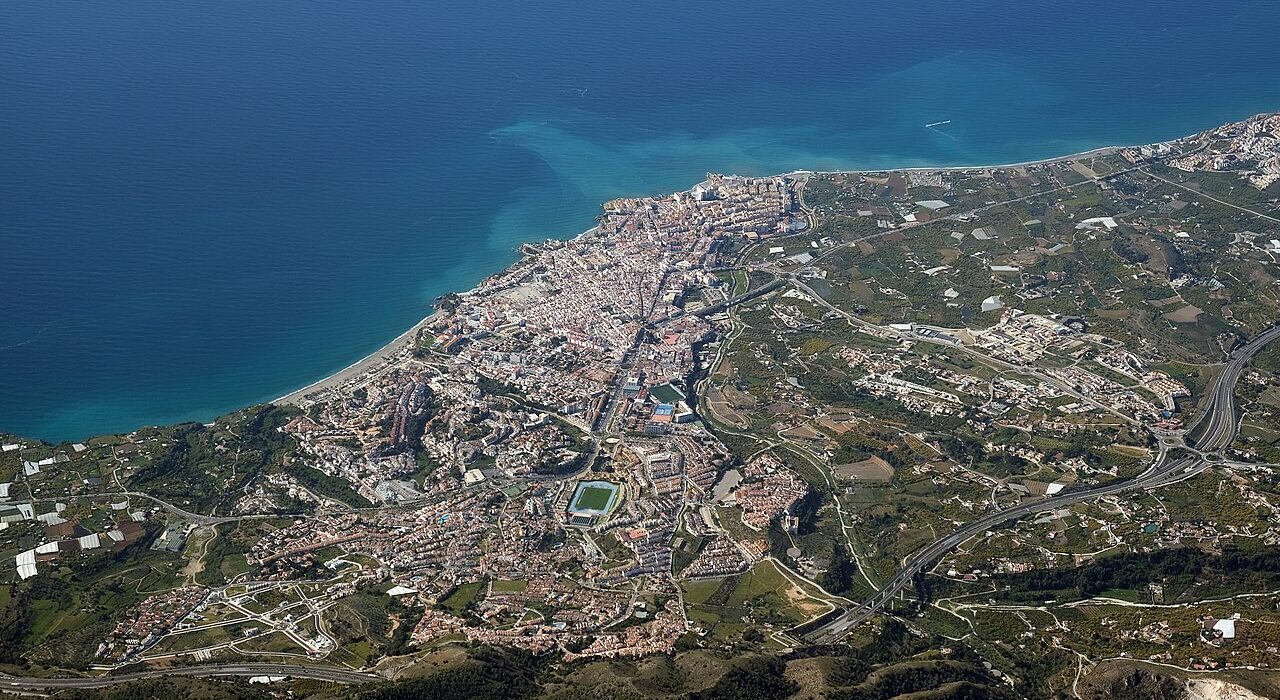
Málaga → Nerja
55 kmHow to get from Málaga to Nerja: quick overview
The road distance between Málaga and Nerja is 55 km, a journey that takes approximately 45 minutes by car via the A-7 and the A-45, both toll-free. To get there you have three main options: private car, direct bus, or private transfers. There is no direct train or flight connecting the two towns, so the car and the bus take almost all the spotlight.If you are traveling with flexibility and like to stop wherever you feel like it, a rental car is your best ally: you can stop in Rincón de la Victoria, Vélez-Málaga, or Torrox without depending on schedules. If you prefer to forget about the wheel and spend little, the direct ALSA bus takes about 60 minutes and the ticket ranges between 2 and 5 €, a bargain by Málaga standards. For backpackers and couples in no hurry, the bus is more than enough; for families with luggage or people who want to explore villages, the car is worth it.
By car from Málaga to Nerja
Covering the 55 km between Málaga and Nerja by car takes about 45 minutes by highway, as long as you do not hit heavy summer traffic or the typical Friday afternoon jams. The most common route is to take the A-7, known as the Autovía del Mediterráneo (Mediterranean Highway), a toll-free road that hugs the coast and gives you spectacular views of the Axarquía coastline for almost the entire journey. From Málaga city you head toward Almería and, within a few minutes, you are already rolling along beside the sea.The A-7 is the queen of roads for this route: free, well paved, and with generous shoulders. It takes you straight to Nerja, passing through coastal towns such as Rincón de la Victoria and Torre del Mar. If you are coming from the interior of the province or from Córdoba, the A-45, called Autovía de Málaga, brings you to the capital of Málaga without tolls, and from there you connect with the A-7 heading east. Both highways are in excellent condition and have service areas where you can refuel, grab a coffee, or stretch your legs before continuing.
A practical tip: between June and September, try to avoid leaving between 17:00 and 19:00, when Málaga locals return from the beach and the A-7 turns into a parking lot. Early in the morning or late in the afternoon, the drive is a delight and you can stop wherever you like without stress.
By bus from Málaga to Nerja
There is indeed a direct bus between Málaga and Nerja, operated by ALSA, with a duration of approximately 60 minutes and a price that ranges between 2 and 5 € depending on schedule and availability. It is probably the most comfortable and cheapest way to make the journey if you do not have your own car.The buses depart from the Málaga Bus Station and drop you in the center of Nerja, very close to the Balcón de Europa (Balcony of Europe), so you do not need a taxi or extra transport upon arrival. The frequency is usually good throughout the year and is reinforced in summer, when tourists flood the coast. Buying your ticket in advance on the ALSA website guarantees a better price and a seat, especially if you travel on weekends or holidays. The buses are modern, with air conditioning and wifi on most services.
For round trips on the same day, the bus is perfect: you leave in the morning, swim at the Nerja beaches, eat some pescaíto frito (fried fish), and return late in the afternoon without having spent more than 10 € on transport. If your plan is also to move around nearby villages such as Frigiliana or Cómpeta, consider combining bus + local taxi or renting an electric bike in Nerja.
Recommended stops along the way
The A-7 invites you to pull over: every ten minutes a coastal town appears with its beach, its espeto (sardine skewer) and its viewpoint. These are the three stops that best complement the route and deserve at least a coffee or a quick dip.Rincón de la Victoria
Just 15 km from Málaga city, Rincón de la Victoria is your first taste of Málaga’s eastern coast. It has well-kept urban beaches, a lively seafront promenade and a prehistoric cave (the Cueva del Tesoro, or Treasure Cave) that, according to legend, once held the treasures of the Moorish king. It’s perfect for breakfasting on a mollete (soft bread roll) with olive oil before continuing your journey, or for stretching your legs after the traffic jam leaving Málaga.
Vélez-Málaga
Capital of the Axarquía region, Vélez-Málaga is the most cultural stop on the route. Its historic center preserves Renaissance churches, the Palacio de los Marqueses de Salinas (Palace of the Marquises of Salinas) and a lively covered market where you can buy goat cheese, raisins and mangoes. If you like the mix of beach and inland, you can park the car here, visit the center and drive down in five minutes to Torre del Mar for a swim.
Torrox
Torrox boasts of having the best climate in Europe, as its entrance sign proclaims, and it’s not wrong. Its old town is a labyrinth of whitewashed alleyways crowned by a Mudéjar church, and its beach is wide and peaceful. It’s a must-stop for fans of choto con almendras (kid goat with almonds), because here it’s prepared with a masterful hand. It’s worth getting lost for a while in its streets before continuing the final few kilometers to Nerja.
Where to stay in Nerja
Nerja offers accommodation for every budget and style. The most central and sought-after area is around the Balcón de Europa, where boutique hotels with sea views and tourist apartments with terraces are concentrated, ideal for couples. Here prices in high season can soar to 150-200 € per night, but in spring and autumn you can find rooms for under 80 €.If you’re looking for a more family-friendly atmosphere and gentler prices, the Playa Torrecilla and Burriana area is full of vacation apartments, charming guesthouses and small family-run hotels. For 50-90 € a night you can get an apartment five minutes from the beach. For tighter budgets, there are hostels and pensions in the old town with dorm beds from 20 € per night and double rooms for 40-60 €.
In summer, booking in advance is essential, because Nerja fills up with European tourists (mainly British, Nordic and German). In winter, by contrast, there are excellent deals and the town breathes tranquility. If you rent a car, look for accommodation with parking; the center is a difficult area for parking.
Where to eat along the route
The Axarquía is one of the cradles of Málaga cuisine, and this route is a festival for the palate. Here are six dishes you absolutely must try.Espetos de sardinas (sardine skewers)
Fresh sardines skewered on canes and grilled over a wood fire, usually right on the beach sand, are the most iconic dish of Málaga and the entire Axarquía coast. You eat them with your hands, with a squeeze of lemon, and they taste of summer, sea, and the Mediterranean. You’ll find them at virtually any beach bar (chiringuito) in the area.
Ajoblanco
A cold soup made from ground almonds, bread, garlic, extra virgin olive oil, and vinegar, served with grapes or melon. It’s Málaga’s white gazpacho, smoother and creamier than its red cousin. Perfect for hot days, it’s prepared in almost every restaurant in the region.
Fritura malagueña (Pescaíto frito)
An assortment of fresh fish and seafood coated in flour and fried in olive oil: anchovies, squid, red mullet, dogfish… It’s the most cheerful way to eat the day’s catch, and along the Axarquía coast they do it brilliantly.
Emblanco de pescado
A light soup of white fish (hake or rosada) with potatoes, carrots, and onion, slow-cooked over low heat. Typical of Nerja and the whole Axarquía, it’s comforting on cooler days and an excellent starter if you’re planning to follow it with a good portion of pescaíto.
Choto con almendras (kid goat with almonds)
Kid goat meat cooked in an almond-based sauce, an inland dish with Moorish roots. Although it’s eaten throughout the Axarquía, mountain villages like Frigiliana prepare it masterfully. If you stray a little from the route, it’s well worth trying.
DO Málaga wine
The sweet and fortified wines from the Málaga Denominación de Origen (Designation of Origin), made with Moscatel and Pedro Ximénez grapes, are the perfect accompaniment to any meal. The Axarquía subzone produces some of the most aromatic ones. Order a glass of “Málaga Virgen” or a moscatel to finish your meal like a true malagueño.
Frequently asked questions about the Málaga-Nerja route
How long does it take to get from Málaga to Nerja?
By car, the 55 km are covered in about 45 minutes via the A-7, with no tolls. On a direct ALSA bus, the journey takes approximately 60 minutes. If you travel at rush hour or in the height of summer, allow between 50 minutes and 1.5 hours depending on traffic.
Which is cheaper, the train or the bus?
There is no direct train between Málaga and Nerja, so the cheapest option is the ALSA bus, with tickets ranging from 2 to 5 €. It is, in fact, one of the most economical connections in the entire province.
Is it worth renting a car?
It depends on your plan. If you just want to go from Málaga to Nerja and swim, the direct ALSA bus covers the route more than adequately. If, however, you want to stop in Rincón de la Victoria, Vélez-Málaga, Torrox, or head up to Frigiliana, a rental car gives you enormous freedom for very little money per day. For groups of three or four people, it usually pays off by far compared to taxis or local buses.
When is the best time to travel?
The best time to do this route is spring (April-June) and autumn (September-October): the weather is warm but without the summer crowds, the beach bars are open, and accommodation prices drop by up to 40%. Summer is perfect for beach lovers, but there’s more traffic on the A-7 and Nerja’s hotels fill up. Winter is quiet, ideal for hiking and gastronomy, although some coastal areas close for the season.
📍 También te puede interesar
Qué ver en Málaga →
Qué ver en Nerja →