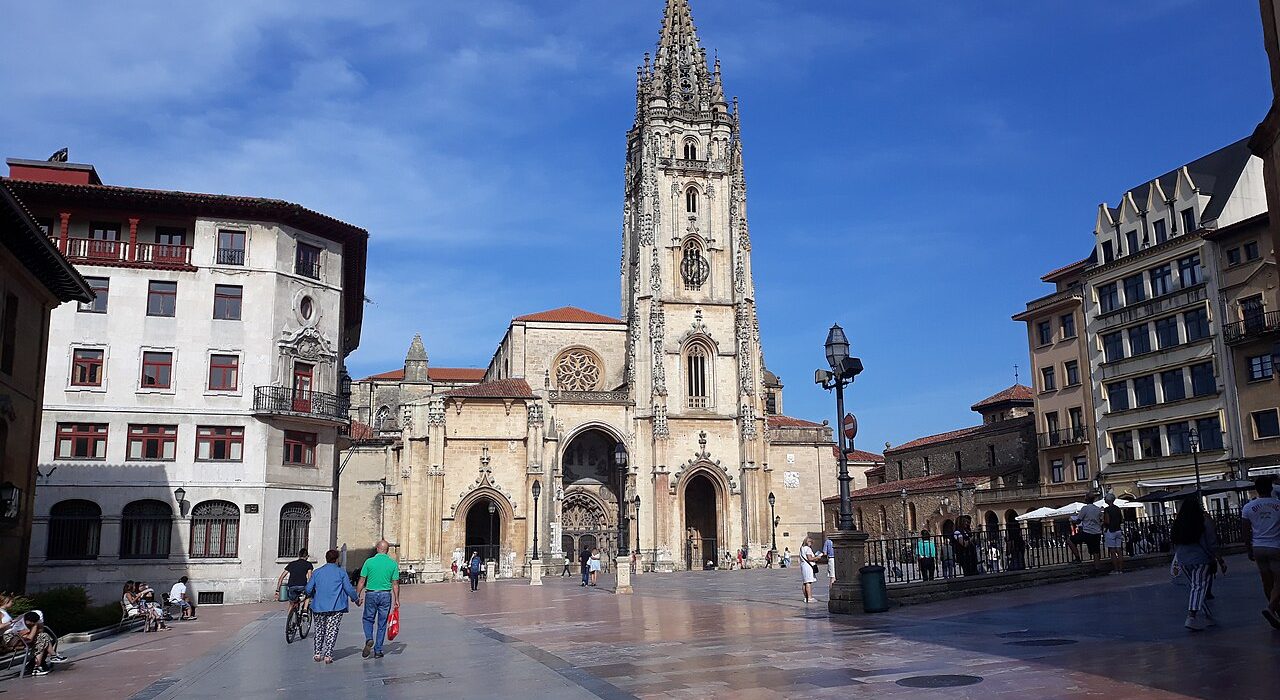
Gijón → Oviedo
30 kmBarely 30 kilometers separate two of Asturias’ most vibrant capitals, a journey so short you can enjoy the green landscape flowing past the window before you even finish your coffee. The Gijón-Oviedo connection is one of the most convenient in northern Spain: toll-free highways, a train that gets you to the heart of Oviedo in under half an hour, and even a stop with a cider-house flavor if you feel like extending the route by a few minutes.
How to get from Gijón to Oviedo: quick overview
The train is the fastest and most comfortable option for covering the 30 km between Gijón and Oviedo, with ALVIA services completing the journey in 25 minutes and frequencies of up to 11 daily trains operated by Renfe. The ALSA bus is the most economical alternative, with tickets from €2.55 and a 30-minute journey. A private car offers the advantage of being able to stop in Siero or move around freely upon arrival, with no tolls on any of the available highways. If you’re looking for the best time-to-price ratio, the train wins; if you’re traveling on a tight budget, the bus is unbeatable; and if you want flexibility to explore, your own or a rental car remains a great choice.
By car from Gijón to Oviedo
The driving route between Gijón and Oviedo covers 30 km in approximately 25 minutes by highway, with no tolls along the entire route. The most direct option is the A-64 (Oviedo-Villaviciosa Highway), which connects both cities quickly and smoothly. The A-8 (Cantabrian Highway) is another common alternative, especially if coming from the coast or heading to other northern towns. The A-66 (Ruta de la Plata Highway) also connects the area as part of the east-west axis running through Asturias. To access from the interior or the southwest, the A-63 (Oviedo-La Espina Highway) links to the main network at no cost to the driver.
The condition of these roads is generally good, with wide shoulders and service areas along the main stretches. Since there are no tolls on any of the highways mentioned, the only cost of the car journey will be fuel, which for an average car is around €3-5 per trip. Parking in Oviedo can be somewhat more complicated than in Gijón, especially in the historic center, but there are several underground parking garages near the main tourist areas. If you plan to move around the city afterward or take excursions to the surrounding areas, the car will give you a freedom that public transport cannot match.
By train from Gijón to Oviedo
Renfe operates up to 11 direct daily trains between Gijón/Xixón and Oviedo/Uviéu, with the ALVIA service as the fastest option completing the journey in 25 minutes. The first trains leave at 5:58 in the morning and the last one runs at 20:25, allowing you to organize your day with total flexibility. In addition to the ALVIA (3 daily frequencies in 25 minutes), Renfe offers AVE (4 trains/day in 26 minutes), AVLO (1 train/day in 27 minutes), Media Distancia MD (1 train/day in 27 minutes) and REGIONAL (2 trains/day in 28 minutes). Prices depending on the fare and type of train range from €2.65 to €14.85, with frequent promotional fares if booked in advance.
The departure station is Gijón/Xixón, located just a few minutes from the city center and well connected by urban transport. The train drops you off at Oviedo/Uviéu, very close to the old town and a short walk from the Cathedral, the Campoamor Theater and Uría Street, the capital’s main shopping artery. Traveling by train lets you forget about the wheel, enjoy the views of the Nalón valley and arrive in the center without worrying about parking. For those who prioritize comfort and punctuality, the ALVIA is the best choice; for the more budget-conscious, the REGIONAL or MD offer practically the same duration at a lower price.
By bus from Gijón to Oviedo
ALSA is the company that operates the bus route between Gijón and Oviedo, with a journey time of approximately 30 minutes and prices ranging from €2.55 to €5.70 per trip. It is a very economical and reliable option, especially suited to those travelling with light luggage and looking for the lowest possible cost. Buses depart from Gijón station and arrive at Oviedo station, both well connected to the historic centres of each city. Frequency is usually high throughout the day, although it is advisable to check updated timetables on the ALSA website before travelling.
For such short distances, the bus competes head-to-head with the train in terms of duration, and clearly beats it on price: it is practically impossible to find a cheaper ticket. If your priority is to spend as little as possible and you don’t mind giving up some of the train’s comforts, the bus is the logical choice. That said, at peak times traffic on the A-64 can lengthen the journey, whereas the train runs on rails and maintains better punctuality.
Recommended stops along the way
If you have time and are travelling by car, it is well worth considering a stop in La Pola Siero, the capital of the municipality of Siero, located halfway between Gijón and Oviedo. This small town combines a cider-making tradition with a lively commercial atmosphere thanks to its weekly market, one of the most important in Asturias. Stopping for a culín de sidra (small glass of cider) in one of its llagares (cider mills) or sidrerías (cider houses) is almost obligatory if you pass through here, as the municipality is one of the region’s major producers of natural cider. Those travelling by public transport can also get there by making a short detour from Oviedo, as La Pola has its own train station.
Where to stay in Oviedo
Oviedo’s old town is the most sought-after area to stay, as it is within easy walking distance of the main monuments such as the Cathedral, Plaza Trascorrales and Campoamor. Here you will find charming hotels and the occasional converted rural house, with prices generally starting from €70-90 per night for a standard double room. The area around Calle Uría and the surroundings of the train station offer more functional and economical options, with chain hotels and guesthouses from €50-70 per night, ideal for short stays or business trips. For tighter budgets, city-centre hostels and family-run guesthouses allow you to sleep in Oviedo from €30-45 per person.
If you prefer a quieter atmosphere without giving up proximity to the centre, the neighbourhoods of San Lázaro or El Cristo de las Cadenas are residential alternatives with good public transport links. Those arriving by car will appreciate hotels with their own parking, especially in the centre where street parking can be difficult. Booking in advance, especially at weekends and during events such as the Princess of Asturias Awards, is the key to finding the best available rates.
Where to eat along the route
Fabada Asturiana (Asturian bean stew) is the area’s most emblematic dish, a hearty stew of fabes (Asturian white beans) with compango, a mix of cured meats that includes chorizo, Asturian morcilla (blood sausage), and lacón (cured pork shoulder). Perfect for warming up on cool days, you’ll find it in virtually any traditional cider house or restaurant in both Gijón and Oviedo. Cachopo is another specialty no visitor should miss: two large breaded and fried veal fillets filled with serrano ham and cheese, usually served with fried potatoes. Although it originated in Asturias as a hearty dish, it has become a true regional gastronomic institution.
Chorizo a la Sidra (chorizo in cider) is a classic in Asturian cider houses: chorizo cooked in natural cider and served hot as an appetizer or starter. Always pair it with a culín (small glass) of cider poured in the traditional escanciado style. Cabrales Cheese, with protected designation of origin, is a natural blue cheese made artisanally from raw cow’s, goat’s, and/or sheep’s milk, aged in natural caves in the Picos de Europa mountains. Its strong, spicy flavor makes it an intense experience, ideal for cheese lovers. Asturian Cider, the region’s quintessential drink, is obtained from the fermentation of apple juice and is served escanciada (poured from height) to oxygenate it and enhance its properties. Finally, Cangas Wine, produced in southwestern Asturias with native grape varieties, is the liquid surprise that proves Asturias also makes fine red and white wines.
Frequently asked questions about the Gijón-Oviedo route
How long does it take to get from Gijón to Oviedo?
The journey between Gijón and Oviedo covers 30 km and takes about 25 minutes by car on the motorway. By train, according to Renfe, ALVIA services take 25 minutes, the AVE 26 minutes, the AVLO 27 minutes, and regional trains between 27 and 28 minutes. The ALSA bus takes approximately 30 minutes to cover the same distance.
Which is cheaper, the train or the bus?
The ALSA bus starts at €2.55 per journey, while Renfe tickets range from €2.65 to €14.85 depending on the type of train and fare. In general, the bus is more economical if purchased without advance booking, although Renfe’s promotional fares on Regional trains can compete on price.
Is it worth renting a car?
If you only plan to travel between Gijón and Oviedo, it’s not necessary: the train and bus cover the route in under 30 minutes with high frequency. A car is worth it if you plan to stop in La Pola Siero, explore nearby municipalities, or move around Asturias with flexibility. The A-64, A-8, A-66, and A-63 motorways are toll-free, so the only extra cost will be fuel.
When is the best time to travel?
The best time to explore this route is between spring and autumn, when Asturias’ green landscape is at its most splendid and the days are longer. In autumn, cider season is also in full swing. Winter has its charm, especially during events such as the Princess of Asturias Awards or Christmas, although the days are shorter and it can rain frequently. In summer, the mild temperatures invite you to combine the visit with beaches and mountain routes.
📍 También te puede interesar
Qué ver en Gijón →
Qué ver en Oviedo →