Total Solar Eclipse in Logroño — August 12, 2026: Exact Timings and Where to Watch
In Logroño the eclipse will be TOTAL; totality begins at 20:28 and lasts 1 min 22 s. This event marks the first total solar eclipse visible from the Iberian Peninsula in 121 years, breaking the astronomical drought since 1905. The capital of La Rioja occupies a privileged position within the path of totality, offering a unique window of daytime darkness for travelers and astronomers. This guide details verified timings, critical observation points due to the Sun’s low altitude, and the logistics required to ensure a safe and successful experience.
Eclipse Timings in Logroño
The chronology of the phenomenon in Logroño follows a precise sequence of phases defined by the Moon’s position over the solar disk. The event begins with first contact, marking the start of the partial phase, when the Moon starts to “bite” the Sun. After nearly an hour of progressive darkening, totality is reached—the climax moment when the solar corona becomes visible. Finally, last contact closes the event. All times reflected here are in local summer time (CEST, UTC+2) and derived from ephemeris calculations by NASA and the IGN.
| Fase | Hora local en Logroño (CEST) |
|---|---|
| Primer contacto (empieza la fase parcial) | 19:33:13 |
| Empieza la totalidad | 20:28:09 |
| Máximo del eclipse | 20:28:50 |
| Termina la totalidad | 20:29:31 |
| Último contacto (termina la fase parcial) | 21:15:33 |
| Duración de la totalidad | 1 min 22 s |
| Magnitud | 1.0067 |
Source: NASA Five Millennium Catalog. Local CEST (UTC+2) hours on August 12, 2026.
It is essential to contextualize the duration of totality in Logroño compared to other points on the peninsula. With 1 minute and 22 seconds, Logroño offers a complete experience, although slightly shorter than the peninsular maximum recorded in Oviedo (1 minute and 49 seconds). This difference occurs because Logroño is not located on the central line of the lunar shadow, but rather on the southern edge of the path of totality. This implies that the Moon will cover the Sun almost completely (magnitude 1.0067), but the time of total coverage will be less than at the geometric center of the shadow. Even so, 82 seconds are sufficient to observe the corona, prominences, and the drastic change in temperature and ambient light.
Where to view the eclipse in Logroño
The critical variable for choosing a location in Logroño is not just the absence of clouds, but the geometry of the horizon. During totality, the Sun will be extremely low over the west-northwest horizon, at an altitude of barely 10 to 12 degrees. Any obstacle in that direction (buildings, mountains, or tall trees) could truncate the view of the total phase. Therefore, the priority is to find open spaces with a clear view toward the west.
Based on Logroño’s urban topography and data from our observation database, these are the recommended locations:
- Paseo del Espolón: This is the quintessential urban option. This wide, tree-lined promenade offers a clear orientation toward the west. Being located in the city center, it allows for a quick evacuation after the event. However, it is vital to find a spot where the tree line does not block the final degrees of the solar horizon. The breadth of the promenade can accommodate a large crowd, although saturation will be high.
- High areas of the Casco Antiguo (Old Town) (Calle Portales / Mercado de San Blas market): Although the streets are narrow, the elevated zones near the market or the upper terraces of Calle Portales can offer sightlines over the rooftops toward the west. The advantage here is integration with the city’s gastronomic offerings, allowing you to wait for the event in comfort. It is necessary to verify on-site that no modern buildings are blocking the view at 10–15 degrees of elevation.
- Parque del Ebro (Ebro Riverbank): Located north of the center, this park offers a cleaner horizon toward the west, away from the density of downtown buildings. Proximity to the river reduces the risk of vertical obstructions. It is an ideal place to set up tripods and telescopes with greater stability than on urban asphalt. The park’s orientation facilitates viewing the eclipsed sunset without major architectural interference.
- Puente de Piedra (Stone Bridge) surroundings: The open areas near the bridge, especially on the side facing the sunset, offer a broad perspective. The bridge itself can serve as a photographic foreground element, although care must be taken not to end up behind its structure during totality. It is a natural meeting point for large groups.
- Parque de la Grajera (West Zone): Located on the southwestern periphery, this large park features open areas and gentle hills. Being further from the center, light pollution will be lower (though irrelevant during the day), and the probability of finding a gap without buildings is maximum. It requires travel by vehicle or bicycle, but guarantees a clean horizon.
The observation note for Logroño highlights its inland location, which statistically favors clear skies in August compared to the coast. However, the low solar altitude means that fog or local calima (haze) can be additional risk factors to consider when making the final choice of the exact spot within the city.
The August sky in La Rioja: real probabilities
Weather is the most critical uncontrollable factor. According to historical data from AEMET for the La Rioja area and the Ebro Valley in August, the probability of clear skies ranges between 70% and 85%. This positions Logroño as one of the destinations on the peninsula with the best climate guarantees for this event. However, August in the interior of the peninsula carries specific risks that must be managed.
Typical risks include extreme heat, with temperatures potentially exceeding 35°C even at 20:00, and the possibility of isolated afternoon storms developing during the day. Although less frequent than in the northern plateau, these storms can appear rapidly. The technical recommendation is to monitor the 24–48 hour forecast using high-resolution models (such as the ECMWF’s HRES or the AEMET model). Have a “Plan B” for mobility: if there are low clouds to the west, moving 20 km in the opposite direction of the wind can save the observation. Hydration is critical; wait for the event with water and sun protection until the minute before totality.
How to get to Logroño for the eclipse
Access logistics will be complex due to the massive influx expected across the entire path of totality. Logroño is well connected via the A-12 and AP-68 motorways. For those coming from the north, we have prepared a detailed route from Vitoria-Gasteiz to Logroño that optimizes travel times and avoids usual bottlenecks. Traffic is estimated to gridlock access roads on the afternoon of August 12.
The winning strategy is to arrive the day before, on August 11. Attempting to enter the city on the morning of the eclipse could result in hour-long delays preventing you from reaching your spot in time for first contact at 19:33. If arriving by train, Logroño station is well located, but anticipate saturation in taxi and urban bus services. Internal mobility on the day of the event will be slow; once you park or reach your observation zone, consider not moving your vehicle until nightfall.
Where to sleep: book now or arrive the day before
The reality of accommodation within the path of totality is harsh: availability for August 2026 will sell out well in advance, possibly starting in 2025. Prices will rise as the date approaches. The honest recommendation is to book NOW an option with free cancellation as insurance. If Logroño is fully booked or excessively expensive, the alternative strategy is to stay in cities outside the path (such as Zaragoza or Burgos) and travel on the morning of the 12th. However, sleeping in Logroño allows you to enjoy the city calmly on the morning of the eclipse and avoid travel stress on the key day.
Safety: 30 seconds you must read
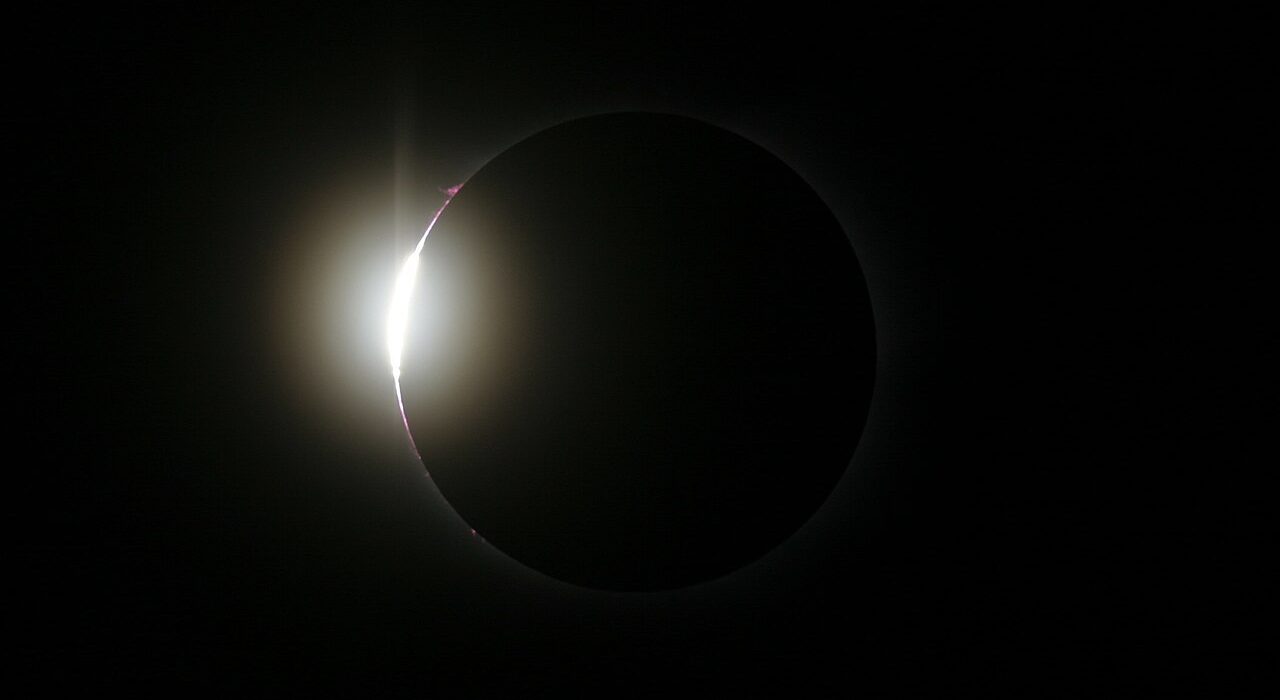
Visual safety is non-negotiable. During ALL partial phases (from 19:33 to 20:28 and from 20:29 to 21:15), it is mandatory to use ISO 12312-2 certified solar protection glasses. Looking at the Sun without protection during these moments can cause permanent and irreversible retinal damage in seconds. Only during the brief period of totality (1 min 22 s in Logroño), when the solar disk is 100% covered and the sky darkens like night, is it safe to look with the naked eye. As soon as the “diamond ring” (the first ray of sunlight) reappears, you must put your glasses back on immediately. For more technical details, consult our complete guide to the eclipse in Spain.
- ISO 12312-2 eclipse glasses — one per person, purchased in advance. Do not use normal sunglasses, X-rays, or smoked glass. View options on Amazon ES.
The eclipse near Logroño
If Logroño doesn’t fit your plans or you’re looking to maximize the duration of totality, other towns in La Rioja and Navarre within the path offer slightly longer viewing times or different horizon conditions. The table below compares key data for nearby cities to help you decide on your final location.
| Ciudad | Distancia | Duración totalidad | Inicio totalidad |
|---|---|---|---|
| Vitoria-Gasteiz | 47 km | 1 min 04 s | 20:27:43 |
| Bilbao | 98 km | 0 min 31 s | 20:27:23 |
| Burgos | 104 km | 1 min 44 s | 20:28:24 |
| Zaragoza | 157 km | 1 min 25 s | 20:29:02 |
Make the most of your trip: what to see in Logroño
The eclipse occurs at sunset, leaving the morning and early afternoon of August 12 free for sightseeing. Logroño is famous for its gastronomy and compact historic center. We recommend visiting the Museo de la Rioja (La Rioja Museum) or strolling down Calle Laurel before heading to your observation point. To plan your cultural stay, consult our complete guide on what to see and do in Logroño. Combining Riojan wine culture and gastronomy with a historic astronomical event makes this trip a unique experience.
Frequently asked questions
What time is the eclipse in Logroño?
The partial phase begins at 19:33:13 CEST. Totality runs from 20:28:09 to 20:29:31, with maximum eclipse at 20:28:50. The partial phase ends at 21:15:33.
How long does totality last in Logroño?
1 min 22 s. Being outside the central line, the duration is shorter than the peninsula’s maximum (Oviedo, 1 min 49 s).
Will the eclipse be total in Logroño?
Yes. Logroño lies within the path of totality with a magnitude of 1.0067. The Moon will completely cover the Sun for 1 min 22 s.
Do I need eclipse glasses?
Yes — ISO 12312-2 certified glasses are required during all partial phases. Only during totality can you look at the Sun with the naked eye. Sunglasses do NOT provide protection.
What if it’s cloudy in Logroño on August 12?
The probability of clear skies in this area is 70–85% (historical AEMET data). BEST statistical weather conditions. Hydration is important. Check the AEMET forecast 24–48 hours in advance and remain mobile.
When will the next total solar eclipse visible from Spain occur?
Very soon: 2027-08-02. An exceptional streak for the same region.
Conclusion
The total solar eclipse of August 12, 2026, is a once-in-a-lifetime event for a generation of travelers in Spain. With planning —choosing a location near the central line, checking the AEMET forecast 24–48 hours in advance, using ISO 12312-2 glasses during partial phases, and booking accommodation early— you can experience one of nature’s most impressive spectacles. Use this guide alongside our city guides and itineraries to design the perfect trip.