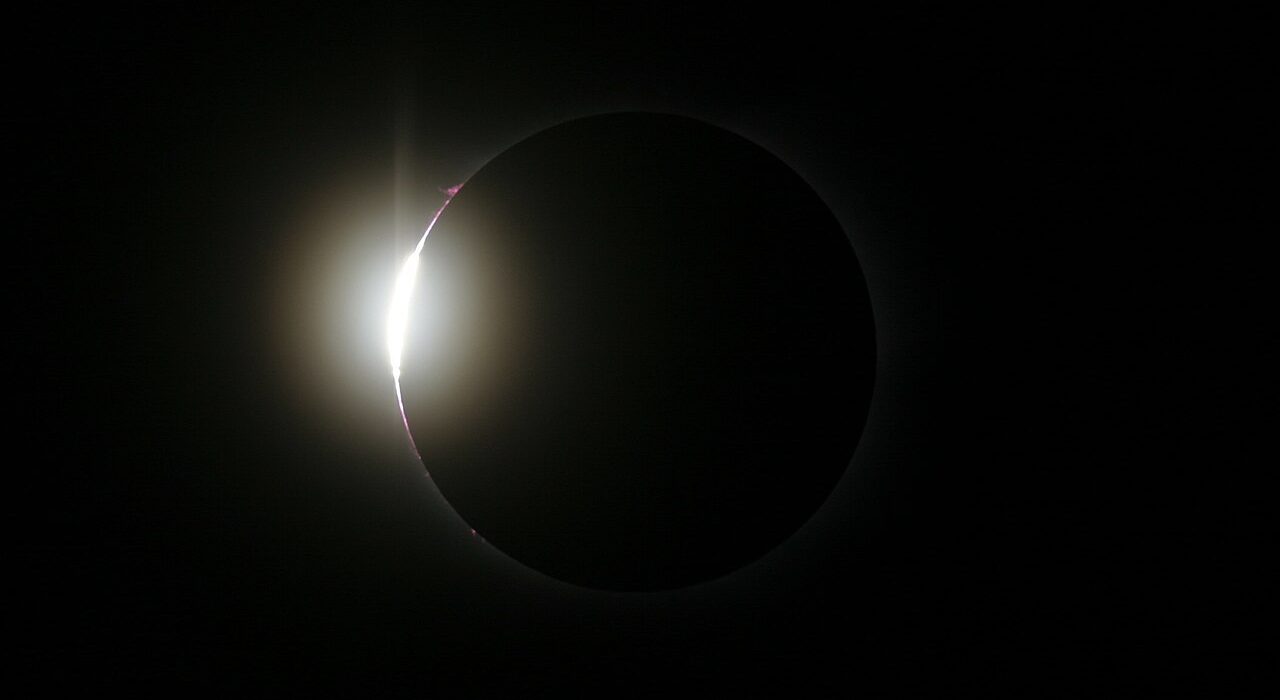
Total Solar Eclipse in Gijón — August 12, 2026: Exact Timings and Where to Watch
In Gijón the eclipse will be TOTAL; totality begins at 20:26 and lasts 1 min 45 s. This phenomenon marks the return of the lunar shadow to the Iberian Peninsula after a 121-year wait, being the first total eclipse visible since 1905. This technical guide for travelers details the exact minutes of the event, observation points with a clear western horizon, and the logistics required to ensure a safe experience in this Asturian city.
Eclipse Timings in Gijón
The astronomical event will unfold during the late afternoon and evening of August 12, 2026. The following data, verified by NASA and the Instituto Geográfico Nacional (IGN), establishes the exact temporal sequence for the city. First contact marks the beginning of the partial phase, when the Moon starts to “bite” the solar disk. The critical phase is totality, which occurs when the Sun is completely covered. All times are expressed in local summer time (CEST, UTC+2).
| Fase | Hora local en Gijón (CEST) |
|---|---|
| Primer contacto (empieza la fase parcial) | 19:31:02 |
| Empieza la totalidad | 20:26:48 |
| Máximo del eclipse | 20:27:40 |
| Termina la totalidad | 20:28:33 |
| Último contacto (termina la fase parcial) | 21:20:46 |
| Duración de la totalidad | 1 min 45 s |
| Magnitud | 1.0127 |
Source: NASA Five Millennium Catalog. Local CEST times (UTC+2) on August 12, 2026.
With a totality duration of 1 minute and 45 seconds, Gijón occupies a privileged position, very close to the peninsula’s maximum, which will be reached in Oviedo (1 min 49 s). Being on the central line of the path of totality guarantees that the eclipse will be total rather than annular, allowing observation of the solar corona. This duration is sufficient for high-quality visual and photographic observations, although it demands precise planning due to the brevity of the phenomenon.
Where to Watch the Eclipse in Gijón
The determining factor for choosing a location in Gijón is the western horizon. Since totality occurs shortly before sunset, the Sun will be low above the horizon (between 10° and 12° in altitude). Any obstacle, building, or elevation in that direction will block the view of the main event.
Based on urban topography and verified access, these are the two optimal places for observation:
- Playa de San Lorenzo (San Lorenzo Beach): This is the most accessible and popular option. The extensive stretch of sand offers a clean horizon towards the west and northwest. The main advantage is the absence of direct architectural obstructions facing the sea. However, high crowd density is expected. It is recommended to arrive early to secure a spot on the sand away from promenade areas that could generate shadows or overcrowding.
- Jardín Botánico Atlántico (Atlantic Botanical Garden): Located in the La Guía area, this venue offers controlled open spaces and a favorable orientation towards the west. Unlike the beach, the vegetative environment may require finding specific clearings among the trees to guarantee a direct line of sight to the low Sun. It is an ideal alternative for those who prefer a more organized and less crowded setting than the coast, provided the absence of tree canopies in the western line of sight is verified.
It is essential to remember that the “observation note” for this city highlights the combination of Cerro de Santa Catalina (Santa Catalina Hill) with the oceanic horizon. While the hill offers panoramic views, the vegetation and structures within the park may complicate the view of the low Sun if the exact spot is not chosen. The beach and the botanical garden present lower risk profiles regarding horizontal obstructions.
The August Sky in Asturias: Real Probabilities
Weather is the most uncertain variable for astrotourism in northern Spain. According to historical data from AEMET for the Galicia and Cantabrian Coast area (which includes Gijón), the probability of clear skies in August ranges between 30% and 50%. The typical risk during this evening time slot is the formation of coastal fog or low cloud cover (‘orballo’), which could hide the Sun precisely during totality.
The operational recommendation is to monitor the weather forecast 24 to 48 hours before the event. If models indicate persistent cloudiness on the coast, consider a Plan B inland. Short trips toward the interior, such as to Oviedo or even Lugo, can offer more stable skies by avoiding the direct influence of the sea breeze that generates low stratus clouds. Geographic flexibility is your best insurance against bad weather.
How to Get to Gijón for the Eclipse
Asturias’s road infrastructure will face extreme pressure on August 12. Heavy traffic is expected on access routes to the path of totality. The most sensible strategy is to overnight in the city or arrive the day before. If your base of operations is Oviedo, use our planned route to calculate realistic travel times: Oviedo to Gijón route.
Avoid relying on last-minute arrivals on the day of the eclipse. Access to popular observation areas like San Lorenzo Beach (Playa de San Lorenzo) may be closed once maximum safety capacity is reached. Public transport will be a viable option, but with saturated frequencies. Logistic planning must prioritize arriving at the observation zone at least 2 hours before first contact (19:31).
Where to Sleep: Book Now or Arrive the Day Before
Hotel availability within the path of totality will be exhausted months in advance. Accommodations in Gijón and surrounding areas have been booked since 2025 for this historic event. Our honest recommendation is to book accommodation with a free cancellation policy immediately. If you cannot find a place in Gijón, consider staying in nearby cities outside the path of totality and traveling on the morning of the 12th, although this increases logistical risk.
Safety: 30 Seconds You Must Read
Visual safety is non-negotiable. You must use certified solar protection glasses (ISO 12312-2 standard) during ALL partial phases of the eclipse. Looking at the Sun without protection, even when partially covered, causes irreversible retinal damage. It is only safe to look with the naked eye during the 1 minute and 45 seconds of totality (when the solar disk disappears completely). As soon as the first ray of light reappears (diamond ring), put your glasses back on immediately. Consult our complete guide to the eclipse in Spain for more technical details.
- Eclipse Glasses ISO 12312-2 — one per person, purchased in advance. View options on Amazon ES.
The Eclipse Near Gijón
If conditions in Gijón are not optimal or you seek to maximize the duration of totality, there are other nearby towns within the path. The following comparison table shows data for neighboring cities, allowing you to evaluate last-minute moves based on the weather.
| Ciudad | Distancia | Duración totalidad | Inicio totalidad |
|---|---|---|---|
| Oviedo | 26 km | 1 min 49 s | 20:27:05 |
| Ponferrada | 134 km | 1 min 27 s | 20:28:44 |
| Santander | 150 km | 1 min 04 s | 20:26:57 |
| Lugo | 165 km | 1 min 24 s | 20:28:07 |
Make the Most of Your Trip: What to See in Gijón
Since the eclipse occurs at sunset, the morning and early afternoon of August 12 remain free for tourism. Gijón offers a rich cultural and gastronomic lineup that complements the astronomical experience. To plan your stay, consult our detailed guide: what to see and do in Gijón. Enjoy the city before turning your attention to the sky.
Frequently Asked Questions
What time is the eclipse in Gijón?
The partial phase begins at 19:31:02 CEST. Totality runs from 20:26:48 to 20:28:33, with maximum eclipse at 20:27:40. The partial phase ends at 21:20:46.
How long does totality last in Gijón?
1 min 45 s. The city lies on the central line, close to the maximum possible duration in Spain.
Will the eclipse be total in Gijón?
Yes. Gijón is within the path of totality with a magnitude of 1.0127. The Moon will completely cover the Sun for 1 min 45 s.
Do I need eclipse glasses?
Yes — ISO 12312-2 certified glasses are required during all partial phases. Only during totality can you view the Sun with the naked eye. Sunglasses do NOT provide protection.
What if it’s cloudy in Gijón on August 12?
The probability of clear skies in this area is 30–50% (historical AEMET data). Have a Plan B inland (Lugo, Oviedo) or be ready to move based on the AEMET forecast 24 hours in advance. Check the AEMET prediction 24–48 hours beforehand and maintain flexibility.
When will the next total solar eclipse visible from Spain occur?
Very soon: 2027-08-02. An exceptional streak for the same region.
Conclusion
The total solar eclipse of August 12, 2026, is a once-in-a-lifetime event for a generation of travelers in Spain. With careful planning —choosing a location near the central line, checking the AEMET forecast 24–48 hours in advance, using ISO 12312-2 glasses during partial phases, and booking accommodation early— you can experience one of nature’s most spectacular displays. Use this guide alongside our city guides and itineraries to design the perfect trip.