Granadilla de Abona
CanariasClimate
Granadilla de Abona is not just a stopover on the way to southern Tenerife, but a destination where the wind shapes the landscape and Guanche history coexists with the volcanic coastline. Forget the massively developed beaches; here you will find golden and red sands protected as natural monuments, where the traditional fishing activity of Los Abrigos blends with world-class surfing in El Médano. With a population of 53,000, this municipality offers a Canarian authenticity that goes far beyond sun-and-beach tourism, inviting you to explore everything from historic mountain town centers to integral marine nature reserves.
The must-seesWhat to see in Granadilla de Abona: the must-sees
Playa de El Médano
This beach is world-famous for its wind conditions, but its ecological value is equally impressive, with volcanic sand dunes where protected native plant communities thrive. It forms an integral part of the Montaña Pelada and Montaña Roja natural monuments, creating a unique volcanic coastal landscape you should not miss. It is the perfect place to observe the interaction between the Atlantic Ocean and the island’s geology in a well-preserved setting.
Puerto de Los Abrigos
This coastal enclave is a traditional harbor known for its vibrant fishing activity and its dining scene within the town of Los Abrigos. It serves as a key base for boat excursions and offers privileged access to nearby swimming areas in the south of the island. Strolling around here lets you connect with the municipality’s real seafaring life, far from the conventional tourist circuits.
Iglesia de San Antonio de Padua and the Main Parish Church
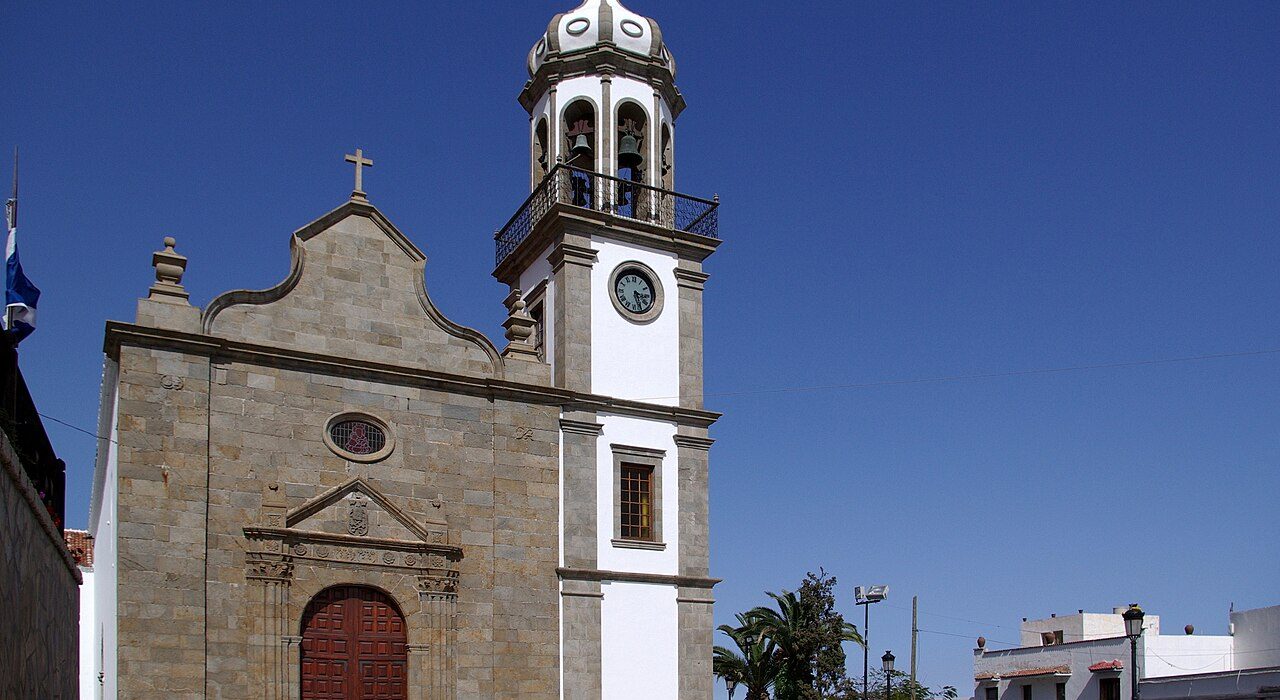
The main religious temple in Granadilla de Abona is the Parroquia Matriz de Santo Domingo de Guzmán (Main Parish Church of Saint Dominic of Guzmán), built in the 18th century with traditional Canarian architecture that blends 18th- and 19th-century styles. Although there is a Church of San Antonio de Padua declared a Site of Cultural Interest, official records place it in the municipality of El Tanque, so in Granadilla the standout is the historic structure that preserves valuable movable assets. This building acts as the nerve center of the patron saint festivities and is a key example of local religious devotion.
Museo de Historia de Granadilla Abona
Opened in 2002, this museum is housed in a typical Canarian house dating from the late 19th century, located on one of the stately streets of the town’s historic quarter. Its rooms chronologically display the history of the municipality from the time of the Guanches to the present day, exhibiting collections on traditional customs, crafts, and tools. It is a must-stop to understand the cultural and social evolution of the region before exploring its landscapes.
Montaña Roja
This is a protected Special Nature Reserve with dune ecosystems and native vegetation similar to those of Montaña Pelada, notable for its red-sand volcanic cone suitable for hiking. Access allows you to observe volcanic formations, fossil dunes, and nebkas on the slopes from the coast of El Médano, offering spectacular views. The area also features historical remains such as bunkers and an old telegraph station, making it an ideal spot for birdwatching and water sports.
Other points of interest
- Old cave houses: A monument that reflects the traditional architecture and the adaptation to the terrain of the municipality.
- Working Water Canal: A historic infrastructure that forms part of the industrial and agricultural heritage of the area.
- Mirador de Chiñama: A strategic viewpoint to take in panoramic views of the natural surroundings.
- Los Abrigos Natural Pools: Formed by volcanic rocks, they offer crystal-clear waters that mix with the ocean in a natural setting highly prized for its scenic beauty, with access available all year round.
- Cuevas de Chimiche: A complex of natural caves used as a hospitality establishment, where the structure blends singularly with the volcanic surroundings to offer a unique dining experience.
🍂 Otoño
Si visitas Granadilla de Abona en otoño, el clima se mantiene estable y cálido gracias a su baja precipitación anual. Es un momento excelente para hacer senderismo o relajarse en la costa con más tranquilidad. Consulta siempre el viento antes de acercarte a las zonas más expuestas del litoral.
What to do in Granadilla de Abona
Granadilla de Abona offers specific activities ranging from hiking in nature reserves to immersing yourself in traditional festivals such as the Romería de San Isidro Labrador (Pilgrimage of Saint Isidore the Laborer) in May. You can take part in the Granadilla de Abona Carnival in February, enjoying parades of comparsas and murgas (street performance troupes), or attend the Fiestas Patronales (Patron Saint Festivities) in honor of Saint Augustine of Hippo in August with their open-air dances and processions. For history lovers, the Mercado Medieval de Granadilla (Granadilla Medieval Market) in December recreates the atmosphere of the era with craft stalls and performances, while in October the Fiestas in honor of the Virgen del Rosario bring life to hubs such as El Médano and La Jaca.
Granadilla de Abona in one day: express itinerary
If you are short on time, this route will allow you to see the essentials of the municipality by combining coast, history, and nature in a single day.
- 09:00 – Montaña Roja: Start the day with a morning walk in this Special Nature Reserve to see the fossil dunes and the volcanic cone before the temperature rises.
- 11:30 – Playa de El Médano: Head down to the coast to relax on the volcanic sand beaches and watch water sports enthusiasts making the most of the constant wind.
- 14:00 – Puerto de Los Abrigos: Make your way to this coastal enclave to eat fresh local fish in an authentic seafaring atmosphere.
- 16:30 – Museo de Historia de Granadilla Abona: Visit this typical 19th-century Canarian house in the historic center to learn about the time of the Guanches and local customs.
- 18:30 – Parroquia Matriz de Santo Domingo de Guzmán: End the day admiring the traditional 18th-century Canarian architecture in the heart of the town center.
Where to eat in Granadilla de Abona: local gastronomy
Where to stay in Granadilla de Abona
El Médano
Es el núcleo turístico principal del municipio, famoso por sus vientos constantes y ambiente relajado. Destaca por su larga playa de arena dorada, el paseo marítimo lleno de restaurantes y su carácter internacional orientado al deporte acuático.
Granadilla de Abona (Casco Urbano)
Es el centro administrativo e histórico del municipio, ubicado en el interior alejado de la costa. Ofrece una atmósfera canaria tradicional con calles empedradas, arquitectura local y una vida cotidiana auténtica lejos del turismo masivo.
La Tejita
Zona costera conocida principalmente por albergar una de las playas naturales más grandes y salvajes de Tenerife. Es un área de protección ambiental limitada por la Montaña Roja, ideal para el senderismo y el aislamiento natural más que para el ocio urbano.
San Isidro
Un barrio costero situado entre El Médano y Los Cristianos, caracterizado por ser una zona residencial tranquila con pequeñas calas y puertos deportivos. Mantiene un perfil bajo con pocos servicios turísticos concentrados, siendo más frecuentado por residentes locales.
El Salto
Pequeño núcleo costero al oeste del municipio, conocido por sus acantilados y piscinas naturales formadas por la lava. Es una zona muy tranquila, sin apenas infraestructura hotelera, visitada principalmente para disfrutar de baños en aguas cristalinas y paisajes volcánicos.
How to get to Granadilla de Abona
The municipality is well connected via the southern road network and has direct access from the island’s main airport.
| Medio | Ruta / Acceso | Detalles |
|---|---|---|
| Avión | Aeropuerto de Tenerife Sur (TFS) | El aeropuerto más cercano, situado en la misma región sur de la isla. |
| Bus Interurbano | Estación de Guaguas de Granadilla (TITSA) | Conexión regular con otras partes de la isla operada por la compañía TITSA. |
| Coche | Autopista TF-1 | Vía principal que recorre el sur de la isla y conecta directamente con el municipio. |
| Coche | Carreteras TF-28, TF-64, TF-636, TF-655 | Vías secundarias que permiten acceder a diferentes núcleos y zonas del interior. |
How to get around Granadilla de Abona
To move between the different neighborhoods and attractions, public transport is a viable option thanks to the urban bus network that covers the municipality. However, to explore areas such as La Tejita or El Salto with greater freedom, using the TF-1, TF-28, or TF-64 roads in a private vehicle is recommended given the spread of points of interest between the coast and the town center.
Weather in Granadilla de Abona
Best time to visit Granadilla de Abona
Day trips from Granadilla de Abona
From Granadilla you can easily organize excursions to other cities in the region to complement your visit. The proximity to Tenerife South Airport makes it easy to connect with the rest of the island, and the TF-1 motorway provides quick access to other coastal municipalities in the south or to head inland to discover Tenerife’s geographical diversity.
Things you didn’t know about Granadilla de Abona
The municipality is home to one of the most extensive beaches in southern Tenerife, Playa de la Tejita, which stretches approximately 1,400 meters in length and is considered one of the few natural beaches of red volcanic sand on the island that has not been massively developed.
Its coastline is particularly notable for the presence of Punta de La Rasca, the first maritime area protected as a Integral Marine Reserve in the Canary Islands since 1995, a key fact for marine biology enthusiasts.
The name ‘Granadilla’ comes from the abundance of granadillos (small pomegranates) that existed in the area after the conquest, while ‘Abona’ refers to the ancient Menceyato de Abona, one of the nine Guanche kingdoms into which the island was divided before Castilian colonization in the 15th century.
The town was a partial filming location for the movie ‘Clash of the Titans’ (Furia de Titanes, 2010), where its volcanic and arid landscapes in the Montaña Roja area stood in for the terrains of Greece and Libya for several action sequences.
Granadilla de Abona is home to the Auditorio de Tenor Alfredo Kraus, a modern venue inaugurated in 2008 with a capacity of more than 1,000 spectators, named in honor of the famous tenor although he was not born there, making it a key cultural point in the south of the island.
Montaña Roja (Montaña de las Coloradas) is a volcanic cone about 170 meters high located next to Playa de la Tejita, formed by reddish pyroclastic materials due to iron oxidation, and is one of the most photographed geological icons in southern Tenerife.
The municipality has a total area of 163.62 km², making it one of the largest municipal areas in the province of Santa Cruz de Tenerife, stretching from sea level to almost 2,000 meters of altitude at its boundaries with Vilaflor.
Who Granadilla de Abona is for
This destination is perfect for travelers seeking authenticity and nature, from backpackers drawn to the surfer vibe of El Médano to families who prefer the tranquility of natural beaches like La Tejita or El Salto. It is also ideal for history and gastronomy lovers who want to explore the traditional town center and try local products such as gofio and almogrote in a less crowded setting than other tourist spots in the south.
💡 ¿Sabías que...?
- ● El municipio cuenta con una de las playas más extensas del sur de Tenerife, Playa de la Tejita, que se extiende aproximadamente 1.400 metros de longitud y es considerada una de las pocas playas naturales de arena volcánica roja en la isla no urbanizada masivamente. (Ayuntamiento de Granadilla de Abona / Turismo de Tenerife)
- ● En su costa se encuentra el Monumento Natural de los Roques de García y la Reserva Natural Especial de los Malpaíses de Güímar (compartida), pero destaca especialmente la presencia del pecio de la fragata 'The Gribshunden' no, error, el pecio relevante local es el del barco 'El Peñón' o restos arqueológicos submarinos; sin embargo, el dato verificable es la existencia de la Punta de La Rasca, primer espacio marítimo protegido como Reserva Marina Integral en Canarias desde 1995. (Gobierno de Canarias - Red de Espacios Naturales Protegidos)
- ● El nombre 'Granadilla' proviene de la abundancia de granadillos (granadas pequeñas) que existían en la zona tras la conquista, mientras que 'Abona' hace referencia al antiguo Menceyato de Abona, uno de los nueve reinos guanches en los que se dividía la isla de Tenerife antes de la colonización castellana en el siglo XV. (Real Academia Canaria de la Historia / Toponimia de Canarias)
- ● La localidad fue escenario de rodaje parcial de la película 'Furia de Titanes' (Clash of the Titans, 2010), donde sus paisajes volcánicos y áridos de la zona de Montaña Roja suplantaron a los terrenos de Grecia y Libia para varias secuencias de acción. (Film Commission Tenerife / Prensa Ayuntamiento Granadilla)
- ● Granadilla de Abona alberga el Auditorio de Tenor Alfredo Kraus, un recinto moderno inaugurado en 2008 con capacidad para más de 1.000 espectadores, nombrado en honor al famoso tenor aunque él no nació allí, siendo un punto cultural clave en el sur de la isla. (Ayuntamiento de Granadilla de Abona)
- ● La Montaña Roja (Montaña de las Coloradas) es un cono volcánico de unos 170 metros de altura situado junto a la playa de la Tejita, formado por materiales piroclásticos de color rojizo debido a la oxidación del hierro, y es uno de los iconos geológicos más fotografiados del sur de Tenerife. (Instituto Geográfico Nacional / Gobierno de Canarias)
- ● El municipio tiene una superficie total de 163,62 km², lo que lo convierte en uno de los términos municipales más extensos de la provincia de Santa Cruz de Tenerife, abarcando desde el nivel del mar hasta casi los 2.000 metros de altitud en sus límites con Vilaflor. (Instituto Nacional de Estadística (INE))
- ● Una tradición singular es la bajada de la Rama, aunque es más famosa en Agaete, en Granadilla se celebra con fuerza la festividad de San Isidro Labrador en mayo, donde se realizan romerías agrícolas que mantienen vivas las tradiciones campesinas del antiguo Menceyato de Abona. (Patronato de Turismo de Tenerife)
Frequently asked questions about Granadilla de Abona
How many days do I need to see Granadilla de Abona?
1 or 2 days is enough to visit the main attractions such as Playa de El Médano (El Médano Beach), Montaña Roja (Red Mountain) and the Museo de Historia (History Museum), although you could extend your stay to enjoy the local fiestas or explore all of its coastal neighborhoods.
What is the best time of year to visit Granadilla de Abona?
The best time is from January to December thanks to its stable climate, with average temperatures of 23.8°C in summer and 19.0°C in winter, and very low annual rainfall of 117.2 mm according to available climate data.
Where can I find official information about opening hours and events?
For further practical information about museum opening hours, fiesta schedules and tourist details, you can check the official Granadilla de Abona tourism website.