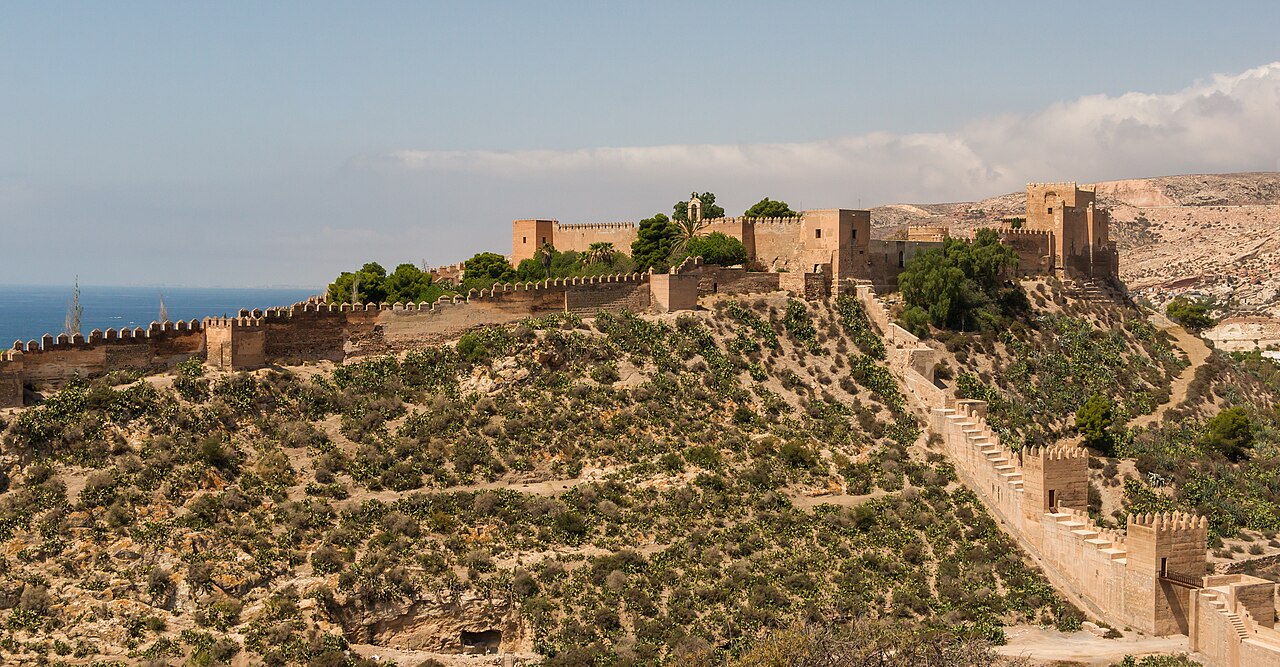
Sevilla → Almería
410 kmTraveling from Seville to Almería means crossing the threshold from Andalusia’s greenest landscapes into the sun-scorched, lunar terrain of the southeast — a journey where history and nature melt together under the sun. Although there is no direct rail connection linking these two capitals in a flash, the road offers an unparalleled visual experience, allowing you to stop in whitewashed villages and monumental cities that seem frozen in time.
How to get from Seville to Almería: quick overview
The most efficient and recommended way to travel between these two cities is by car or bus, since the train does not offer a viable direct connection.
If you value freedom and want to explore the stops along the way, the car is your best ally, covering the 410 kilometers in about 4 hours and 15 minutes. On the other hand, if you’re looking for comfort and don’t want to worry about driving, the direct ALSA bus is a solid option, with a duration of 230 minutes and prices ranging from 34 to 62 euros. The choice depends entirely on your travel style: the adventurous driver will choose the road, while the practical traveler will opt for the bus.
By car from Seville to Almería
The road route connects Seville and Almería via a network of toll-free highways that cross the heart of Andalusia.
The journey covers a total distance of 410 km, with an estimated driving time of 4 hours and 15 minutes under normal conditions. The best part of this route is that all the main roads involved are toll-free highways, making the trip very economical in terms of road infrastructure.
The main connecting routes
For this journey, you’ll encounter a variety of highways that ensure smooth and safe driving:
- A-92 (Autovía de Tabernas): This is the main artery of your trip. It is the backbone that crosses Andalusia from west to east and will carry you for most of the journey.
- A-66 (Autovía Ruta de la Plata): A key toll-free route connecting north and south, serving as the starting point or initial connection from Seville.
- A-4 (Autovía del Sur): Another vital connection in the Andalusian network, free of tolls, providing access to different areas of the region.
- A-45 (Autovía de Málaga): Although its name points toward the Málaga coast, it is part of the toll-free highway network that structures the territory you’ll travel through.
- A-44 (Autovía de Sierra Nevada-Costa Tropical): This road will offer you spectacular views, connecting the snowy mountains with the coast, and it is completely free.
- A-7 (Autovía del Mediterráneo): Also known as the Mediterranean Highway, it is an essential toll-free route for travel along the coast and nearby inland areas.
- A-49 (Autovía del V Centenario): Completes the network of toll-free highways available to plan your route with flexibility.
Since there are no tolls on any of these roads (A-66, A-7, A-45, A-4, A-44, A-49, A-92), the only variable cost will be fuel, making the car a very competitive option compared to other forms of transport if you’re traveling in a group.
By bus from Seville to Almería
The bus is the only direct public transport option linking Seville with Almería on a regular basis and without transfers.
The company responsible for operating this service is ALSA, one of the leading road transport operators in Spain. This service is ideal for travelers who prefer not to drive or who want to avoid the stress of traffic.
Key facts about the bus journey
- Duration: The journey takes an estimated 230 minutes, that is, approximately 3 hours and 50 minutes.
- Price: The ticket cost varies depending on how far in advance you book and on demand, ranging between 34 and 62 euros.
- Comfort: As it is a direct service, you won’t have to worry about changing buses at intermediate stations.
Recommended stops along the way
Breaking up the journey into stages or making short technical stops in strategic towns can turn a simple transfer into a small travel adventure.
Below, we detail the verified points where it is worth stopping to stretch your legs, grab a coffee, or briefly explore the surroundings:
- Dos Hermanas: Located very close to the start of the route, this town is perfect for a first rest stop. It is a strategic point for leaving the Seville metropolitan area and beginning to head into the countryside.
- Gelves: Another stop near the starting point that offers a change of pace. Stopping here allows you to enjoy some tranquility before tackling the miles of highway.
- El Parador de las Hortichuelas: This spot is ideal for a food or rest break. Paradores (state-run heritage hotels) usually offer good facilities for travelers passing through, making it an oasis along the route.
- Huétor Tájar: Located in the province of Granada, this stop marks the progress inland. It is a charming place to break up the monotony of driving and breathe fresh air.
- Padul: Known for its natural wealth, Padul is a must-stop if you love nature. It is an excellent midway point to recharge your batteries halfway through the journey.
- Alhendín: As you approach the city of Granada, Alhendín offers a different perspective on the trip. It is a town that deserves a brief visit to understand the geographical transition of the area.
- Granada: Without a doubt, the star stop of the entire route. Although it slightly detours from the direct route, Granada is an essential monumental city. If you have time, spending a few hours wandering through the Albaicín neighborhood or seeing the Alhambra from afar completely justifies the trip.
- Aguadulce: This stop signals the proximity to the end of the journey and the entry into the province of Almería. It is the last breather before reaching the capital, already offering the characteristic climate and light of the Almerian Levante.
Where to stay in Almería
Almería offers a variety of accommodation areas to suit different budgets and travel styles, from the historic heart to the coast.
Once you arrive at your destination, you’ll have several options for resting after the 4 hours and 15 minutes of travel. There’s no single “best” place—it depends on what you’re looking for:
- Historic Centre: Ideal if you want to be close to the Cathedral, the Alcazaba and the best tapas restaurants. It’s the most vibrant area for an evening stroll.
- Port Area and Seafront Promenade: Perfect for those seeking sea views and ocean breezes. It’s a quiet area but well connected to the centre.
- Outskirts and Beach: If you’re travelling by car, staying on the outskirts or near the nearby beaches can offer better prices and greater tranquillity, though you’ll need the vehicle to get around.
As for price ranges, being a medium-sized city, you can find everything from budget options such as guesthouses to top-category hotels, although prices fluctuate depending on high or low season.
Frequently asked questions about the Seville-Almería route
How long does it take to get from Seville to Almería?
Travel time varies depending on the mode of transport chosen. If you go by car, the 410 km journey takes approximately 4 hours and 15 minutes. If you opt for the direct ALSA bus, the duration is 230 minutes (3 hours and 50 minutes).
Which is cheaper, the train or the bus?
Currently, there is no direct train between Seville and Almería, so that option is not viable for a straightforward journey. The most economical and direct public transport option is the bus, with prices ranging from 34 to 62 euros depending on the ALSA company.
Is it worth renting a car?
Yes, it’s worth it if you plan to make stops along the route. Given that there are 8 verified recommended stops (such as Granada, Padul or Aguadulce) and all the roads (A-92, A-66, etc.) are toll-free motorways, the car gives you total freedom to explore Andalusian geography at your own pace.
When is the best time to travel?
The best time to travel depends on your climate preferences. As a route that crosses the interior of Andalusia and reaches the southeast, spring and autumn tend to offer more pleasant temperatures for driving the 410 km and visiting the recommended stops such as Granada or Huétor Tájar without the extreme summer heat.
📍 También te puede interesar
Qué ver en Sevilla →
Qué ver en Almería →