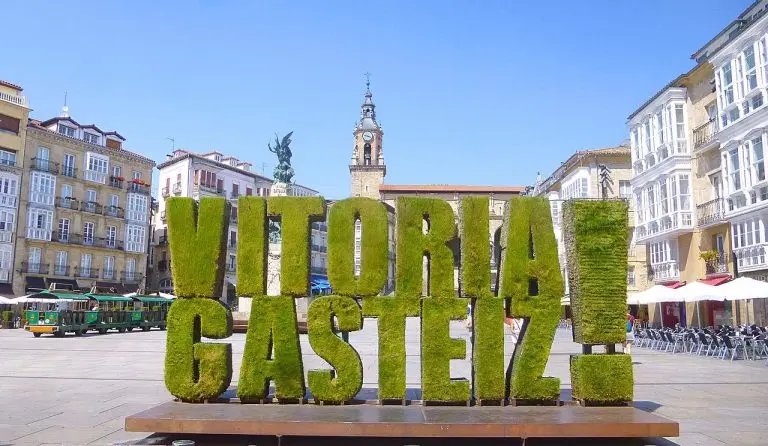
Bilbao → Vitoria-Gasteiz
65 kmSome journeys are enjoyed more for what happens along the roadside than for the destination itself, and this is one of them. Crossing from Bilbao to Vitoria-Gasteiz is a trip of barely 65 kilometres that works like a gastronomic and scenic time tunnel: you leave behind the industrial buzz and the sea air of the Botxo to plunge, in under an hour, into the green, stately calm of the capital of Álava. The motorway winds between hills clad in oaks and beeches, and it pays to arrive with an appetite, because here every stop is an excuse to try a pintxo, a txakoli or a chuletilla sizzling by the grill.
How to get from Bilbao to Vitoria-Gasteiz: quick summary
The fastest and most flexible way to link Bilbao with Vitoria-Gasteiz is by car, with a direct 65 km route that takes around 45 minutes combining the AP-68 toll motorway and the N-622 national road. If you’d rather not drive, the direct bus is an excellent alternative: it takes 52 minutes and is operated by Autobuses La Unión, ALSA and Bilmanbus. There is no direct train between the two cities, so rail is ruled out unless you want to complicate things with connections. For a getaway without your own vehicle, the bus is unbeatable; to explore intermediate stops such as Durango or Laudio, the car is almost essential.
By car from Bilbao to Vitoria-Gasteiz
The drive takes 45 minutes if traffic cooperates, covering a total distance of 65 km by road. The main route combines two roads: the AP-68 motorway, which accounts for some 36 km of the journey and is a toll road, and the N-622 national road, which adds roughly 20 km at no extra cost. The AP-68 is a comfortable, well-maintained motorway, with a layout that crosses the Nervión valley and offers constant views of green hillsides; the toll is paid on the corresponding stretch and the price varies by season, but it usually falls within an affordable range for such a short trip. The N-622 takes over to bring you closer to Vitoria-Gasteiz with a more relaxed profile, ideal for those who prefer to avoid tolls or are looking for a slightly slower pace on the final leg of the journey. It’s worth checking traffic conditions early in the morning on weekdays, especially on the approaches to Bilbao, because it’s a route heavily used by people who work in one city and live in the other.
By bus from Bilbao to Vitoria-Gasteiz
The direct bus is the most practical option if you don’t have a car: the journey takes 52 minutes and is covered by three companies, Autobuses La Unión, ALSA and Bilmanbus. Buses leave very frequently throughout the day, which makes it easy to improvise the trip without much planning. The single ticket price isn’t set at a single rate, but it usually falls within an economical range, especially if you book in advance or take advantage of ALSA promotional fares. Comfort is notable: reclining seats, air conditioning and, on many services, free wifi. For students, seniors or travellers with luggage, the bus is a highly competitive alternative to the car, especially if you don’t plan to detour to any intermediate stop.
Recommended stops along the way
The route between Bilbao and Vitoria-Gasteiz packs a collection of towns with a character all their own into just a few kilometres, perfect for stretching your legs and sampling local cuisine without straying too far from the AP-68 or the N-622.
Durango
Durango is a town with a compact, lively old quarter, famous for its weekly market and as the gateway to Urkiola Natural Park. It’s worth parking up and strolling along Barrenkale street, packed with pintxos bars, or heading over to the Torre de Lariz, a Renaissance palace that contrasts sharply with the industrial architecture of the surrounding area. If you’re travelling by car, it’s a logical stop before joining the AP-68 towards Vitoria-Gasteiz.
Amorebieta
Amorebieta is a quiet town, known for its industrial heritage and for the nearby Oma forest, a natural work of art painted by the artist Agustín Ibarrola. Although the forest requires a short detour, the town itself offers a pleasant break with cafés and bakeries where you can try Basque pastries. It’s a good option for a brief stop if you’re travelling with children or simply want to avoid the densest stretch of traffic near Bilbao.
Arrigorriaga
Arrigorriaga sits at the gates of Bilbao and stands out for its medieval bridge and the old ironworks that recall the steelmaking past of the Nervión valley. It’s a short stop, ideal for a coffee before hitting the motorway, and its riverside walk lets you stroll for a few minutes along the river in complete peace. Don’t expect grand monuments, but you will find an authentic atmosphere free of mass tourism.
Laudio / Llodio
Laudio, also known as Llodio, is the most populous town in the Ayala region and a very interesting halfway point for a meal. Its urban centre preserves ancestral manor houses and a Gothic bridge over the river Nervión, and its dining scene is remarkably varied for its size. If you like cheese, you’re in an area with a strong cheesemaking tradition, so take the chance to buy some local produce before continuing on to Vitoria-Gasteiz.
Galdakao
Galdakao is a strategic stop thanks to its proximity to Bilbao and the famous Bizkaia suspension bridge, although the latter lies somewhat further north. Within the municipality itself, the views over Mount Eretza stand out, along with a lively neighbourhood scene with pintxos bars frequented by locals rather than tourists. It’s perfect for a late breakfast or a quick shop before starting the motorway stretch.
Where to stay in Vitoria-Gasteiz
Vitoria-Gasteiz offers accommodation for every budget, concentrated mainly in the Casco Viejo, the Ensanche and the area around the Catedral Nueva. The Casco Viejo is the most atmospheric option, with cobbled streets, pintxos bars on every doorstep and historic buildings; nightly rates usually range from €60 to €120 in charming hotels and guesthouses. The Ensanche, more spacious and stately, is home to mid-range chain hotels and tourist apartments with rates between €70 and €150, ideal for families or work stays. If you’re looking for something cheaper, hostels and guesthouses near the bus station cost around €40-70 per night. For a quieter experience, the outskirts and the green belt offer rural hotels and farm stays from €80, with the advantage of easy parking and waking up to views of the mountains of Álava.
Where to eat along the route
The cuisine you’ll find between Bilbao and Vitoria-Gasteiz is a journey in itself, with dishes ranging from the seafaring traditions of Biscay to the hearty roasts of Álava. There’s no need to seek out fine-dining restaurants: roadside bars and cider houses hide genuine gems.
Bacalao al pil-pil
Bacalao al pil-pil is a traditional Basque dish made with desalted cod loin, garlic, guindilla pepper and olive oil. It’s cooked at low temperature to emulsify the oil with the cod’s gelatin, creating a smooth, glossy sauce that’s served with the fish itself. It’s a must-try in Bilbao or at any Biscayan restaurant along the route.
Txipirones en su tinta
Txipirones en su tinta are baby squid cooked in a dark sauce made with their own ink, onion, tomato and white wine. They’re usually served with white rice or bread, and their intense, briny flavour makes them a classic of Bizkaia’s cuisine. Order them as a ración or as a pintxo for a lighter version.
Pintxos
Pintxos are small portions of food served in bars, generally on a slice of bread. They can come with tortilla, ham, anchovies, peppers and endless creative combinations. In Bilbao and the villages along the route, going for pintxos is a social ritual: you order one or two at the bar, pair them with a txakoli or a zurito, and move on to the next place.
Txakoli wine
Txakoli is a young white wine, lightly sparkling and with high acidity, made mainly from Hondarrabi Zuri grapes in Bizkaia and Álava. It’s traditionally poured from a height to bring out its aroma and fine bubbles. It pairs wonderfully with fish, seafood and anchovy or bonito pintxos.
Patatas a la riojana
Although its origins are in La Rioja, patatas a la riojana appear frequently in the area of influence along the route. It’s a hearty stew of potatoes, chorizo and sometimes pork rib, cooked with paprika and broth. Perfect for cold days or for refuelling before continuing your journey.
Chuletillas de cordero
Chuletillas de cordero are grilled milk-fed lamb chops, very typical in the Vitoria-Gasteiz area and the Rioja Alavesa. They’re served with coarse salt and sometimes with roasted peppers, and their smoky, juicy flavour makes them the star dish of Álava’s grill houses. Order them medium, with a red wine from Rioja Alavesa.
Rioja wine
Rioja wine is a red (as well as white and rosé) made mainly from Tempranillo grapes in the Rioja region. Rioja Alavesa, very close to Vitoria-Gasteiz, is a subzone within the DOCa Rioja and produces some of the most elegant and long-lived reds in Spain. A glass of Rioja Alavesa is the perfect finish to any meal on this route.
Frequently asked questions about the Bilbao-Vitoria-Gasteiz route
How long does it take to get from Bilbao to Vitoria-Gasteiz?
By car, the 65 km journey takes about 45 minutes via the AP-68 and the N-622. By direct bus, the trip takes 52 minutes with Autobuses La Unión, ALSA or Bilmanbus. There is no direct train, so any rail option would involve transfers and more time.
Which is cheaper, the train or the bus?
The bus is the cheapest and most direct option, with single tickets that usually fall within a low price range, especially if you book in advance. The train has no direct connection between Bilbao and Vitoria-Gasteiz, so aside from being more expensive due to transfers, it is less practical. For tight budgets, the bus is clearly the winner.
Is it worth renting a car?
Yes, if you want to make the most of recommended stops such as Durango, Amorebieta, Arrigorriaga, Laudio/Llodio or Galdakao. A car gives you the freedom to stop for a meal, take photos or detour to a viewpoint. If you are only going to move between the city centres of Bilbao and Vitoria-Gasteiz, the direct 52-minute bus is enough and cheaper.
When is the best time to travel?
Spring and autumn are ideal: mild temperatures, green landscapes and fewer crowds than in summer. In winter there can be fog on the AP-68 and the N-622, especially early in the day, so it is worth checking road conditions. Summer offers more daylight hours to explore the stops, but also more traffic on the approaches to Bilbao.
💡 ¿Sabías que...?
- ● En la Plaza del Machete, en época medieval, el Procurador General juraba su cargo sobre un machete con la amenaza de que le fuera cortada la cabeza si no cumplía. El juramento incluía la fórmula 'le sea cortada la cabeza con el alfanje de hierro y acero agudo tal y de la forma del machete vitoriano'. (https://www.tierrasinsolitas.com/curiosidades-de-vitoria-gasteiz-que-quiza-no-sabias/)
- ● Bajo el casco antiguo de Vitoria-Gasteiz existe un túnel secreto que conecta el Palacio de Escoriaza-Esquivel con la Catedral de Santa María. Aunque no está abierto al público, se cree que se usó para transportar mercancías o como ruta de escape en tiempos de conflicto. (https://www.noticiasdealava.eus/que-mundo/2024/10/13/cinco-secretos-vitoria-seguramente-no-sabias-8801417.html)
- ● El fuero de Vitoria fue concedido en 1181 por el rey navarro Sancho VI el Sabio. La ciudad recibió primero el nombre de 'Nova Victoria', pero los habitantes siguieron usando el nombre tradicional de Gasteiz, lo que dio lugar al nombre actual Vitoria-Gasteiz. (https://turismo.euskadi.eus/es/blog/que-ver-en-el-casco-viejo-de-vitoria-gasteiz/webtur00-contfichapost/es/)
- ● La Casa del Cordón debe su nombre al cordón franciscano esculpido en su fachada. Es uno de los edificios más destacados del casco antiguo, junto con la Torre de los Iruña-Doña Otxanda, que hoy alberga el Museo de los Naipes. (https://www.noticiasdealava.eus/que-mundo/2024/10/13/cinco-secretos-vitoria-seguramente-no-sabias-8801417.html)
- ● Vitoria-Gasteiz cuenta con 42 metros cuadrados de zonas verdes por habitante y casi medio centenar de kilómetros para pasear, andar en bici, observar aves o dar paseos a caballo. (https://www.vitoria-gasteiz.org/docs/wb021/contenidosEstaticos/adjuntos/es/29/02/52902.pdf)
📍 También te puede interesar
Qué ver en Bilbao →
Qué ver en Vitoria-Gasteiz →