Barcelona → Sitges
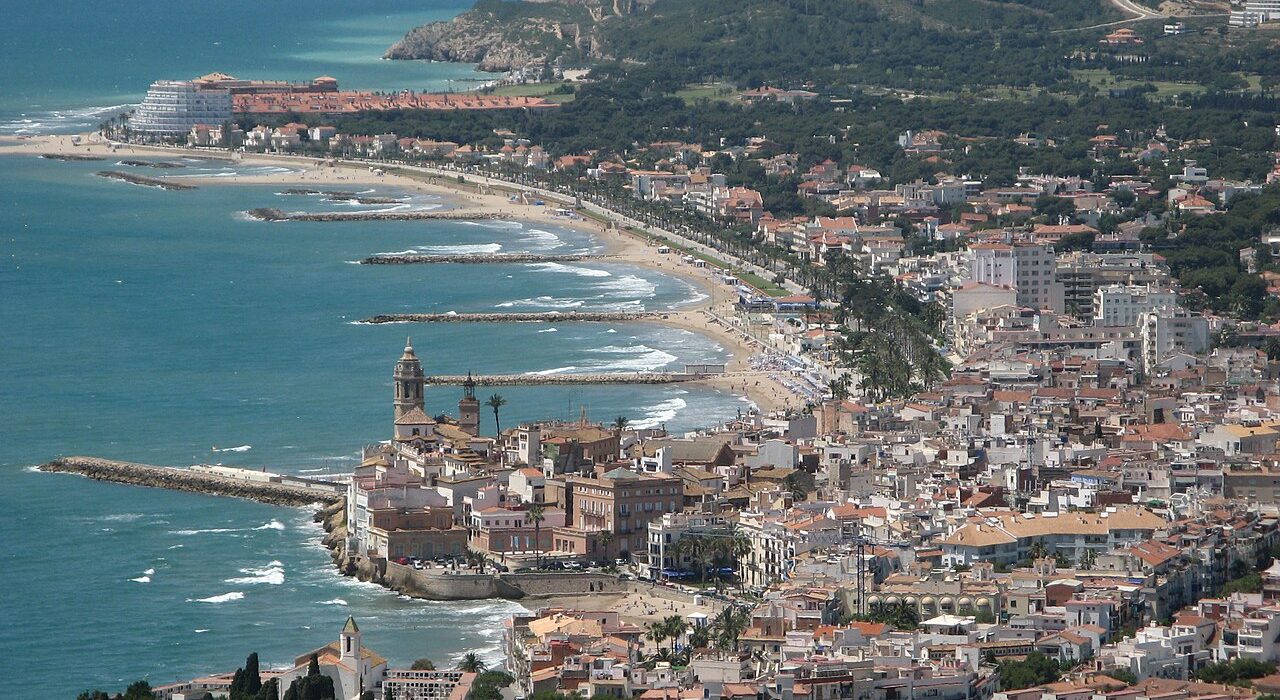
42 kmImagine escaping the hustle and bustle of the big city and, in less than an hour, feeling the salty Mediterranean breeze caress your face as the whitewashed houses of a coastal village appear on the horizon. This journey is not just a commute; it is a magical transition from a cosmopolitan metropolis to the golden calm of the Catalan coast, where time seems to stand still to the rhythm of the waves.
How to get from Barcelona to Sitges: quick summary
The fastest way to get there is by bus (34 minutes), but the car offers the greatest freedom to explore the 42-kilometer route.
To travel from Barcelona to Sitges, you have three main options adapted to different needs and budgets. If you seek maximum speed and an affordable price, the direct BusGarraf bus is unbeatable with its 34-minute journey. On the other hand, if you value comfort and do not want to worry about traffic or parking, the Renfe train is a solid option, albeit slightly slower, with 21 daily connections. Finally, renting a car or using your own is the ideal choice for those who desire total flexibility, allowing stops in intermediate towns like Castelldefels or el Prat de Llobregat before reaching your final destination. The distance is short, barely 42 km, making any of these options a very viable excursion even for a half-day trip.
By car from Barcelona to Sitges
The car journey covers an exact distance of 42 kilometers and takes approximately 35 minutes using the A-2 motorway.
Driving from Barcelona to Sitges is a simple and direct experience thanks to excellent road infrastructure. The main route you must take is the A-2, known as the Autovía del Nordeste (Northeast Motorway). A major advantage of this road is that it has no tolls, making the trip more economical and fluid. Upon leaving Barcelona, the motorway quickly connects you to the coast, allowing you to enjoy changing views as you move away from the metropolitan area. Since the estimated time is only 35 minutes, it is a perfect route to avoid the stress of traffic jams if you travel during off-peak hours. Furthermore, arriving by car gives you the advantage of mobility once in Sitges to explore nearby coves or neighboring villages without depending on public schedules.
By train from Barcelona to Sitges
The direct train service is operated by Renfe, with a frequency of 21 trains per day and a duration ranging between 50 and 66 minutes.
The railway is a very popular option for those who prefer to relax during the journey. According to Renfe data, the fastest type of train available on this route is the REG.EXP. (Regional Exprés). This service connects the origin station, Barcelona-Estació De França, with the destination station, Vilanova I La Geltrú, naturally passing through Sitges. It is important to plan your schedule, as the first train departs at 6:15 in the morning and the last one at 21:45, covering most of the day but requiring attention if you plan to return late at night. With 21 trains available daily, you have a fairly high frequency that allows you to organize your visit with some leeway, although the travel time is longer than by car or bus, ranging between 50 and 66 minutes depending on intermediate stops.
By bus from Barcelona to Sitges
The BusGarraf company operates the fastest direct service, with a journey time of just 34 minutes and fares ranging between €2 and €9.
If efficiency and savings are your priority, the bus is the winning option. The company BusGarraf offers a direct connection that is faster than the train, completing the journey in just 34 minutes. This makes it the quickest mode of transport listed. As for cost, it is very affordable, with fares ranging from €2 to €9, depending possibly on the ticket type or how far in advance you book. It is an ideal option for travelers who do not want to deal with parking in Sitges, which can be complicated during peak season, nor with fixed train schedules, offering a perfect balance between price and time.
Recommended stops along the way
The 42-kilometer route offers eight verified stops that enrich the journey before reaching the final coastal destination.
Although the trip is short, the Llobregat area is full of interest. Here are the stops you cannot miss if you are driving:
- l’Hospitalet de Llobregat: Just outside Barcelona, this dense and vibrant city is an important communications hub and offers a first glimpse of Catalan urban life beyond the capital center.
- Sant Feliu de Llobregat: A municipality with a charming old town and historic gardens, ideal for a brief cultural stop before getting closer to the sea.
- Pallejà: Known for its natural surroundings and the Creu de Pallejà park (Creu de Pallejà Park), it is a green breath of fresh air in the middle of the route.
- Esplugues de Llobregat: Famous for its ceramics museum and quiet residential atmosphere, it is a perfect stop to stretch your legs.
- Castelldefels: This is perhaps the most relevant stop before Sitges. Famous for its extensive beach and medieval castle, it is a perfect preview of what awaits you on the Garraf coast.
- Corbera de Llobregat: A town with a well-preserved historic core and privileged views, it offers a different perspective further away from the shoreline.
- Cornellà de Llobregat: With significant industrial heritage and the Can Buxeres park, it showcases the region’s working-class history.
- el Prat de Llobregat: Home to the airport, but also to wetlands and protected natural spaces worth visiting if you have time before continuing towards Sitges.
Where to sleep in Sitges
Accommodation in Sitges is concentrated mainly in the historic center and the beach area, offering everything from boutique hotels to tourist apartments.
Although we cannot cite specific hotel names, it is useful to know how the areas are distributed when looking for lodging. The most recommended area is the historic center (casco antiguo), where you will sleep surrounded by cobblestone streets, bars, and restaurants, with the Basilica of Sant Bartomeu i Santa Tecla as a neighbor. It is the most atmospheric option but also the noisiest. On the other hand, the beach area offers hotels with sea views and a more relaxed atmosphere, ideal for families. Regarding price ranges, Sitges is an established tourist destination, so prices can vary from budget options in hostels or shared apartments to mid-range and high-end hotels, especially during the summer season. It is recommended to book in advance to secure the best rates, as demand is high year-round due to its international fame.
Where to Eat Along the Route
The local gastronomy blends Sitges’ seafaring tradition with the hearty dishes of inland Catalan cuisine.
You can’t end your trip without trying the rich culinary offerings awaiting you. Here are the essential dishes to look for on the menus:
- Xató: This is the star dish of the Garraf region and Sitges. It’s an escarole salad served with shredded cod, tuna, anchovies, and olives. What makes it unique is its sauce, a complex blend based on almonds, hazelnuts, garlic, ñora peppers, fried bread, oil, and vinegar. It’s an explosion of flavors that defines the region.
- Malvasía de Sitges: To accompany your meal or as dessert, this wine is a must. It’s a sweet and aromatic dessert wine made from the native Malvasía grape. It’s a singular product, highly prized and with its own designation of origin, perfect for pairing with typical sweets.
- Pa amb tomàquet: The fundamental accompaniment on any Catalan table. It consists of slices of toasted bread rubbed with ripe tomato, a drizzle of extra virgin olive oil, and a pinch of salt. Simple but essential to start any meal.
- Botifarra amb mongetes: If you’re looking for something heartier, this dish combines flavorful botifarra, a type of traditional sausage, with sautéed white beans. It’s a classic of traditional Catalan cuisine that provides the energy needed for a day of sightseeing.
- Suquet de peix: Since you’re heading to the coast, this seafood stew is indispensable. Suquet is a fish and shellfish dish, usually including monkfish, sea bream, or prawns, cooked with potatoes and a picada (a ground mixture of nuts, garlic, and herbs). It’s a dish that exalts the fresh flavors of the Mediterranean.
- Crema Catalana: For the finale, this traditional dessert based on egg yolks, milk flavored with cinnamon and lemon zest, is the quintessential sweet option. It’s topped with a layer of sugar caramelized right before serving, which crunches when broken with a spoon.
Frequently Asked Questions about the Barcelona-Sitges Route
How long does it take to get from Barcelona to Sitges?
It depends on the transport: by car it takes 35 minutes, by bus 34 minutes, and by train between 50 and 66 minutes.
What is cheaper, the train or the bus?
The BusGarraf bus is usually more economical and faster, with prices between €2 and €9, while the train takes longer.
Is it worth renting a car?
Yes, if you want to make stops on routes like l’Hospitalet, Castelldefels, or el Prat, as the car gives you total freedom over the 42 km distance.
When is the best time to travel?
Any time is good, but if you use the train, keep in mind that the last one departs at 21:45, so for late dinners, the car or bus is better.
📍 También te puede interesar
Qué ver en Barcelona →
Qué ver en Sitges →